

-
Leon Zhang sales consultant
-
Email: zxl635973785@gmail.com
-
Phone/WhatsApp: +86 13655813266
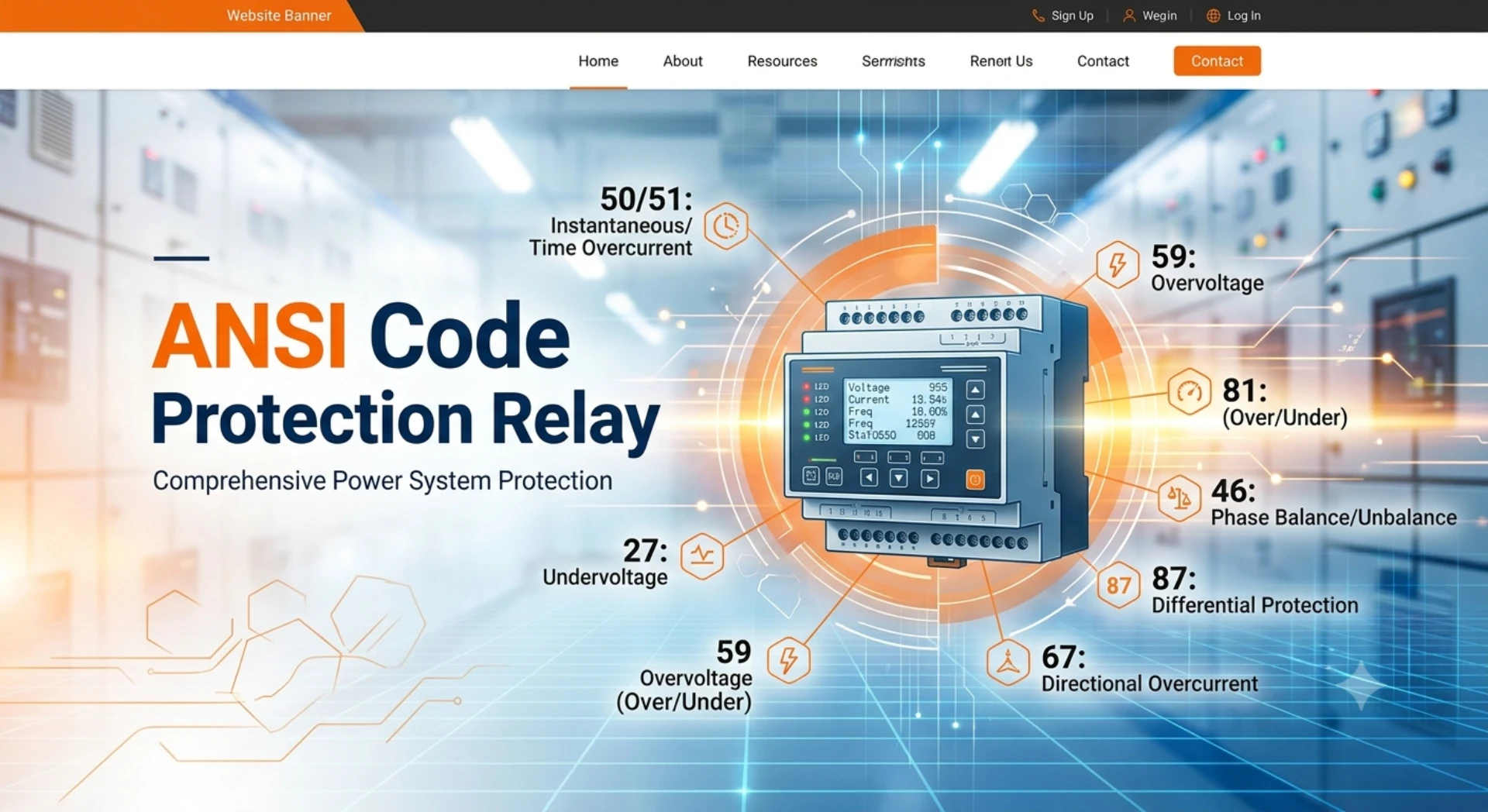
ANSI Code Protection Relay
Overview of ANSI Protection Relay Codes
ANSI protective relay device numbers, standardized under the IEEE C37.2 standard, are a universal functional coding system for protective relays and intelligent electronic devices (IEDs) in power systems.
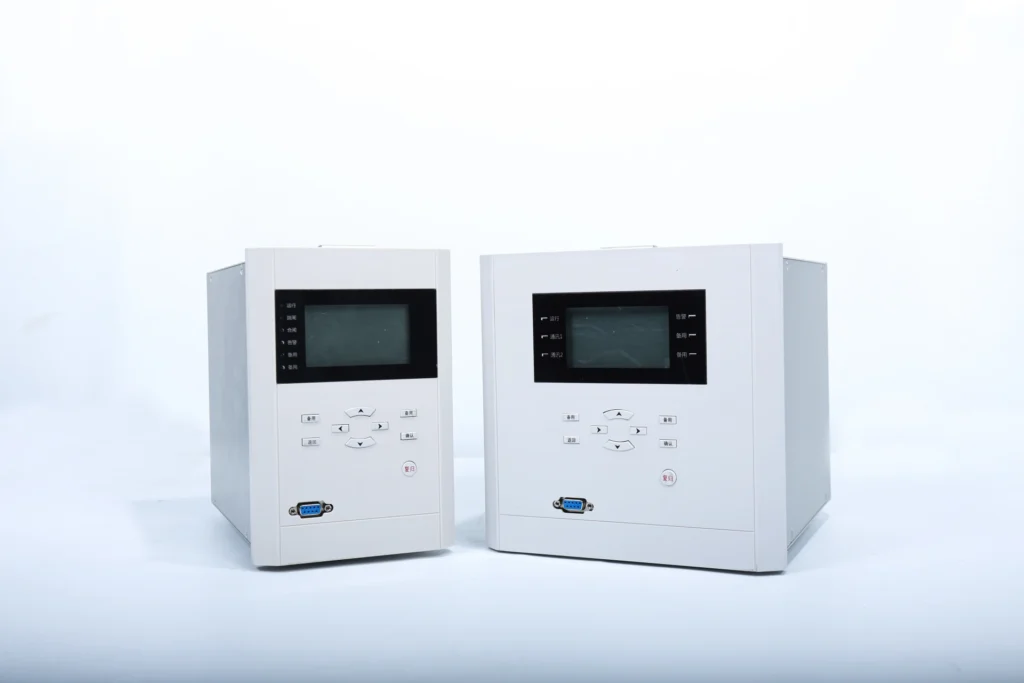
Unlike customized functional names from different manufacturers, ANSI Code Protection Relay delivers unified, globally recognized numerical identifiers for power protection and control functions.
Modern digital protective relays and IEDs adopt an integrated design. A single device can embed dozens of protection relay ansi codes standard protection functions, replacing traditional discrete electromechanical relays.
This coding system is widely applied in electrical schematic design, SLD (Single Line Diagram) drawing, relay configuration, factory acceptance testing, and on-site operation & maintenance, serving as the core technical language for global power EPC projects.
The core values of protection relay ansi numbers standardization are summarized as follows:
- Unify global protection function definition, eliminating manufacturer technical barriers
- Simplify engineering drawing design and technical document compilation
- Improve the compatibility and interchangeability of ABB, Siemens, SEL, Schneider and other mainstream relay devices
- Standardize project selection, configuration, setting calculation and fault analysis processes
Classification & Full List of Common ANSI Protection Functions
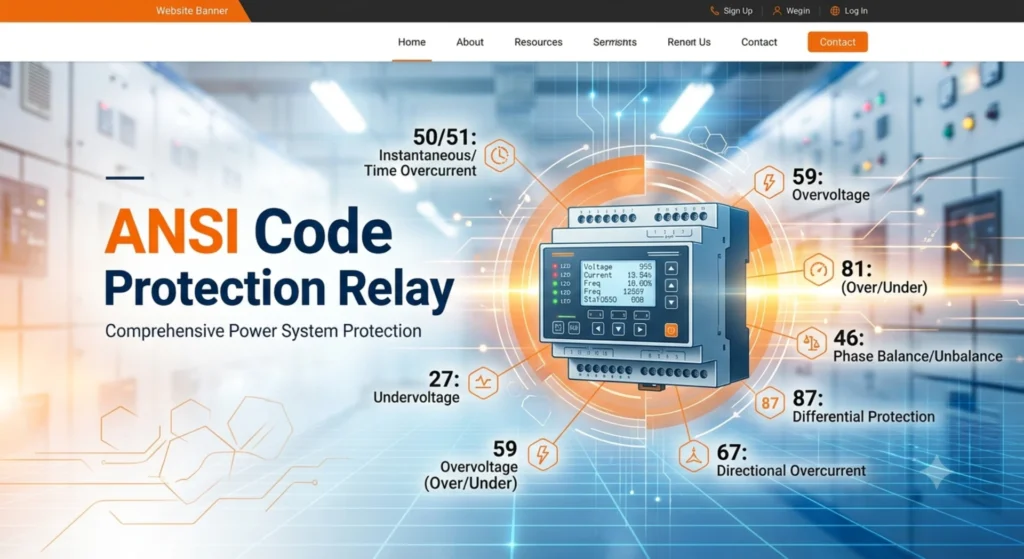
According to power system application scenarios, protective functions are divided into 9 core categories, covering current, voltage, frequency, differential, distance, power, motor thermal, logic control and special protection, fully adapting to the protection configuration needs of lines, transformers, generators and motors.
Overcurrent & Earth Fault Protection
It is the most basic and widely used primary protection listed in the protection relay ansi code table for distribution feeders, industrial power systems and medium-voltage lines, mainly used for rapid removal of phase-to-phase and grounding short-circuit faults.
| ANSI Code | Full Name | Functional Description & Application |
|---|---|---|
| 50 | Instantaneous Overcurrent Protection | Trips immediately when fault current exceeds the threshold; fast-acting primary protection for short-circuit faults |
| 51 | Time Overcurrent Protection | Inverse-time or definite-time overcurrent tripping; acts as backup protection for lines and equipment |
| 50N / 50G | Instantaneous Earth Fault Protection | Instant tripping for zero-sequence grounding faults, applicable to neutral grounded systems |
| 51N / 51G | Time-Delayed Earth Fault Protection | Time-limited zero-sequence grounding protection, cooperating with upstream and downstream protection stages |
| 67 | Directional Overcurrent Protection | Identifies fault direction to avoid mal-operation of overcurrent protection in loop networks |
| 67N | Directional Earth Fault Protection | Directional judgment for grounding faults, suitable for complex grid and multi-power supply systems |
Voltage Protection
Mainly used for grid voltage anomaly monitoring and equipment safety protection, this function specified in ansi code relay protection is widely matched with motors, transformers and power grid stability control systems.
| ANSI Code | Full Name | Functional Description & Application |
|---|---|---|
| 27 | Undervoltage Protection | Trips or locks equipment when system voltage drops abnormally to prevent motor stalling and grid collapse |
| 59 | Overvoltage Protection | Protects equipment insulation from damage caused by abnormal overvoltage |
| 59N | Zero-Sequence Overvoltage Protection | Monitors unbalanced zero-sequence voltage, applicable to ungrounded neutral system grounding fault detection |
| 47 | Negative Sequence / Phase Sequence Protection | Identifies phase sequence error and three-phase voltage unbalance to protect rotating equipment |
Frequency Protection
It is a key protection covered in ansi numbers protection relays for power grid islanding judgment and generator grid-connection control, ensuring system frequency stability and safe grid-connection operation.
| ANSI Code | Full Name | Functional Description & Application |
|---|---|---|
| 81U | Under Frequency Protection | Trips when system frequency is lower than the rated value, preventing system frequency collapse |
| 81O | Over Frequency Protection | Protects against frequency over-limit caused by generator no-load or light-load over-speed |
| 81R | Rate of Change of Frequency (ROCOF) Protection | Judges grid islanding state rapidly, core protection for distributed power grid-connection |
Differential Protection
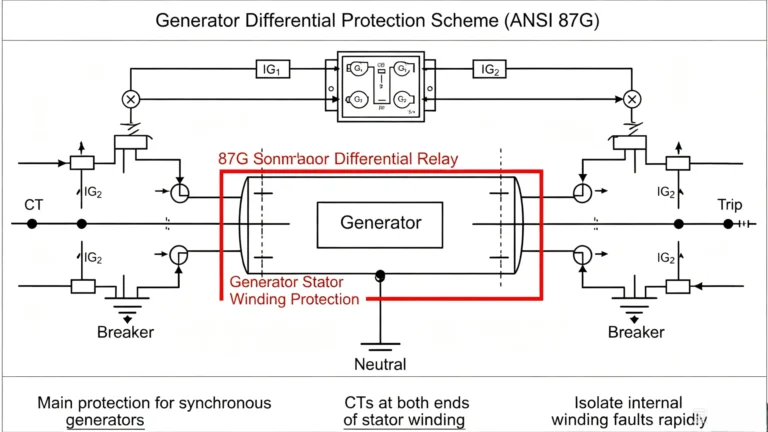
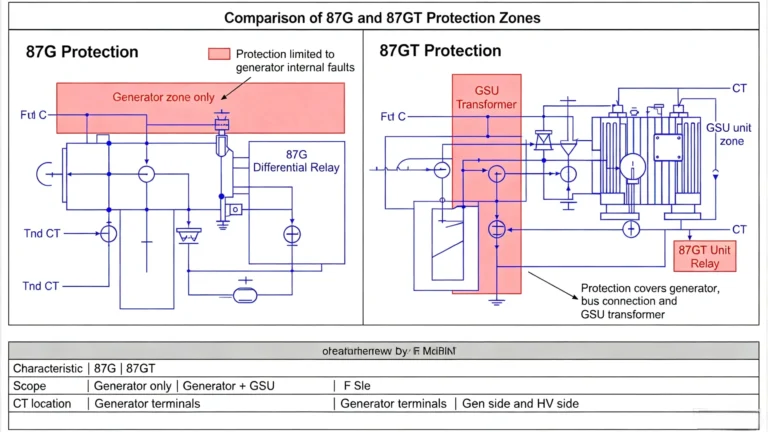
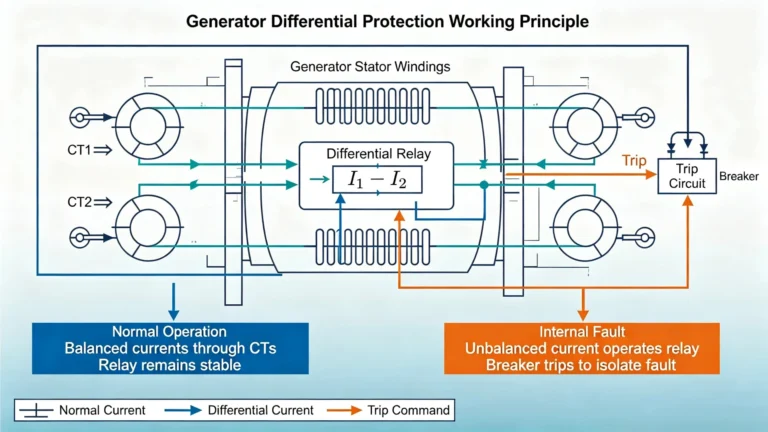
Differential protection defined by differential protection relay ansi code is the main high-precision primary protection for core power equipment, with extremely high fault sensitivity, applicable to key equipment such as transformers, generators, busbars and high-voltage lines.
| ANSI Code | Full Name | Functional Description & Application |
|---|---|---|
| 87 | General Differential Protection | Realizes fault judgment by comparing current difference at both ends of protected equipment |
| 87T | Transformer Differential Protection | Primary protection for main transformers, removing internal winding short-circuit faults |
| 87G | Generator Differential Protection | Protects generator stator winding internal short-circuit faults |
| 87B | Busbar Differential Protection | Rapid tripping for substation busbar short-circuit faults |
| 87L | Line Differential Protection | Primary protection for long-distance high-voltage transmission lines |
Distance Protection
| ANSI Code | Full Name | Functional Description & Application |
|---|---|---|
| 21 | Distance / Impedance Protection | Judges fault location by measuring line impedance; serves as primary and backup protection for 110kV and above high-voltage transmission lines, with segmental setting characteristics |
Power & Direction Protection
Focuses on power direction, excitation state and power factor monitoring, mainly used for generator and grid tie-line protection.
| ANSI Code | Full Name | Functional Description & Application |
|---|---|---|
| 32 | Reverse Power Protection | Prevents reverse power transmission of generators to avoid unit damage and grid accidents |
| 40 | Loss of Excitation Protection | Special protection for generator excitation loss fault, avoiding generator out-of-step operation |
| 37 | Under Power Protection | Monitors active power under-limit state of grid-connected equipment |
| 55 | Power Factor Protection | Controls system power factor to prevent reactive power over-limit and grid loss increase |
Thermal & Motor Protection
Special protection for motors, pumps, fans and other rotating equipment specified by ansi protective relay designation numbers, targeting overload, unbalance and stalling faults.
| ANSI Code | Full Name | Functional Description & Application |
|---|---|---|
| 49 | Thermal Overload Protection | Simulates equipment heat accumulation to protect motors and transformers from long-term overload damage |
| 46 | Negative Sequence Current / Phase Unbalance Protection | Protects equipment from heating damage caused by three-phase current unbalance |
| 48 | Stall / Failed Start Protection | Rapid tripping when motor starts abnormally or stalls under load |
| 51LR | Motor Locked Rotor Protection | Extended function of mainstream relays, dedicated to motor locked rotor fault protection |
Control & Auxiliary Logic Functions
It is the auxiliary guarantee for relay protection action and system logic interlock, realizing trip locking, alarm and control signal output.
| ANSI Code | Full Name | Functional Description & Application |
|---|---|---|
| 86 | Lockout Relay | Locks trip state after fault action to prevent repeated closing on fault |
| 94 | Trip Relay | Outputs trip command to drive circuit breaker opening |
| 74 | Alarm Relay | Outputs alarm signal for abnormal operating conditions without tripping |
| 69 | Control Interlock Switch | Realizes equipment operation interlock and permission control |
| 85 | Carrier Communication Protection | Realizes inter-station protection signal transmission and cooperative action |
Special Protection Functions
Special functional protection for grid-connection synchronization, out-of-step, breaker failure and insulation monitoring scenarios.
| ANSI Code | Full Name | Functional Description & Application |
|---|---|---|
| 25 | Synchrocheck Protection | Verifies voltage, frequency and phase angle consistency before generator/line grid-connection to ensure safe closing |
| 78 | Out-of-Step Protection | Identifies system out-of-step oscillation faults to prevent large-scale grid disconnection |
| 64 | Ground Insulation Protection | Stator grounding and system insulation monitoring protection for generators |
| 50BF | Breaker Failure Protection | Trips adjacent breakers when the local breaker fails to open, removing fault isolation dead zone |
Engineering Matching Configuration of Typical IED Devices
Different from traditional single-function relays, digital IEDs integrate multiple protection relay ansi device numbers protection functions. The standard configuration of common feeder protection IEDs in EPC projects is as follows, which covers all mainstream fault scenarios of distribution lines:
- Basic overcurrent protection: 50 / 51 (phase overcurrent) + 50N / 51N (ground overcurrent)
- Directional protection: 67 / 67N (adapting to multi-power supply grid)
- High-voltage line core protection: 21 (distance protection)
- Grid stability protection: 81U / 81O / 81R (frequency protection)
- Logic safety protection: 86 (trip locking)
- Fault backup protection: 50BF (breaker failure protection)
Core Engineering Application Value of ANSI Coding System
In international EPC, power design and equipment operation & maintenance projects, ANSI code protection relays featuring unified protection relay number ansi have become the universal technical standard, with irreplaceable core advantages:
First, global standardization. Based on IEEE C37.2 standard, it is compatible with all mainstream relay brands worldwide, realizing zero technical barriers in cross-regional project cooperation.
Second, engineering simplification. Unified numerical codes replace lengthy functional descriptions, greatly optimizing SLD drawings, protection schematic diagrams and parameter lists, improving project design and review efficiency.
Third, improved maintainability. Unified coding rules enable engineers to quickly identify device functions, locate fault causes and complete parameter setting and daily maintenance, reducing human error rates.
Fourth, digital adaptation. It is highly compatible with IEC 61850 substation automation system, providing standardized functional mapping basis for digital substations and intelligent power grids.
Summary
ANSI protection code is the basic technical language of modern power system protection. The multi-function integrated design of digital protective relays and IEDs based on ANSI codes realizes full coverage of current, voltage, frequency, differential, distance and special fault protection. Standardized ANSI function configuration is not only the core basis for power engineering design, equipment selection and setting calculation, but also an essential professional skill for EPC engineers, debugging technicians and operation & maintenance personnel.
Our full series digital protective relays strictly comply with IEEE C37.2 ANSI standards with complete standard protection functions integrated. Welcome global EPC contractors, power investors and engineering distributors to contact us for customized solutions and competitive factory direct prices.
FAQ
Q1: What is ANSI Code Protection Relay?
A1: It refers to protective relays and IEDs that follow IEEE C37.2 standard ANSI device numbers, using unified numeric codes to mark all power protection functions for global engineering communication.
Q2: Why is ANSI Code Protection Relay widely used in international EPC projects?
A2: It eliminates confusing brand-specific function names. Engineers can read schematics, set protection values and debug devices without extra translation.
Q3: What standard governs ANSI Code Protection Relay function numbers?
A3: All protection function codes adopt the IEEE C37.2 standard, the universal rule for global power protection equipment.
Q4: Can one ANSI Code Protection Relay carry multiple ANSI protection functions?
A4: Yes. Modern digital IEDs integrate dozens of ANSI codes, replacing multiple old single-function electromechanical relays.
Q5: Which fault types can ANSI Code Protection Relay cover?
A5: It supports overcurrent, undervoltage, frequency, differential, distance, motor stall, ground fault and islanding protection for generators, transformers and feeders.
Q6: Who needs to master ANSI Code Protection Relay configurations?
A6: EPC designers, relay commissioning technicians, substation O&M staff and overseas power equipment distributors.
Q7: Does your ANSI Code Protection Relay support customized ANSI function combinations?
A7: Absolutely. We offer flexible function configuration to match medium-voltage feeder, generator and transformer protection schemes for global clients.
Q8: Is there a complete ANSI code table matched with your ANSI Code Protection Relay?
A8: Yes. We provide full ANSI device number table, setting guides and schematic samples free for all cooperative customers.
Q9: What industries apply ANSI Code Protection Relay most frequently?
A9: Industrial power plants, distribution grids, mining power systems, solar/wind power stations and overseas medium-voltage EPC projects.
Q10: How to get quotation and technical datasheet of your ANSI Code Protection Relay?
A10: Contact our sales team directly. We supply factory-direct pricing, custom protection schemes and full English technical documents.
About Author

Hello, I'm Leno Zhang. I have 15 years of experience in the power relay protection industry with extensive pre-sales and after-sales project experience. Our company specializes in various complete sets of relay protection and automation equipment. I can assist customers in solving all practical on-site project challenges and provide optimal integrated solutions.
Tell Us Your Requirement
High Quality
Stable performance, reliable design, ensuring safe operation for power system protection and grid stability.
Fast Delivery
Timely delivery to support your urgent orders and project schedules efficiently and professionally at any time.
Best Warranty
Professional Warranty: Reliable after-sales support for stable relay protection and long-term customer satisfaction.