

-
Leon Zhang sales consultant
-
Email: zxl635973785@gmail.com
-
Phone/WhatsApp: +86 13655813266
Protection and Control Panels
Protection and control panels for substations, power plants and industrial power systems, integrating protective relays, measurement, control, communication and monitoring functions according to project requirements.
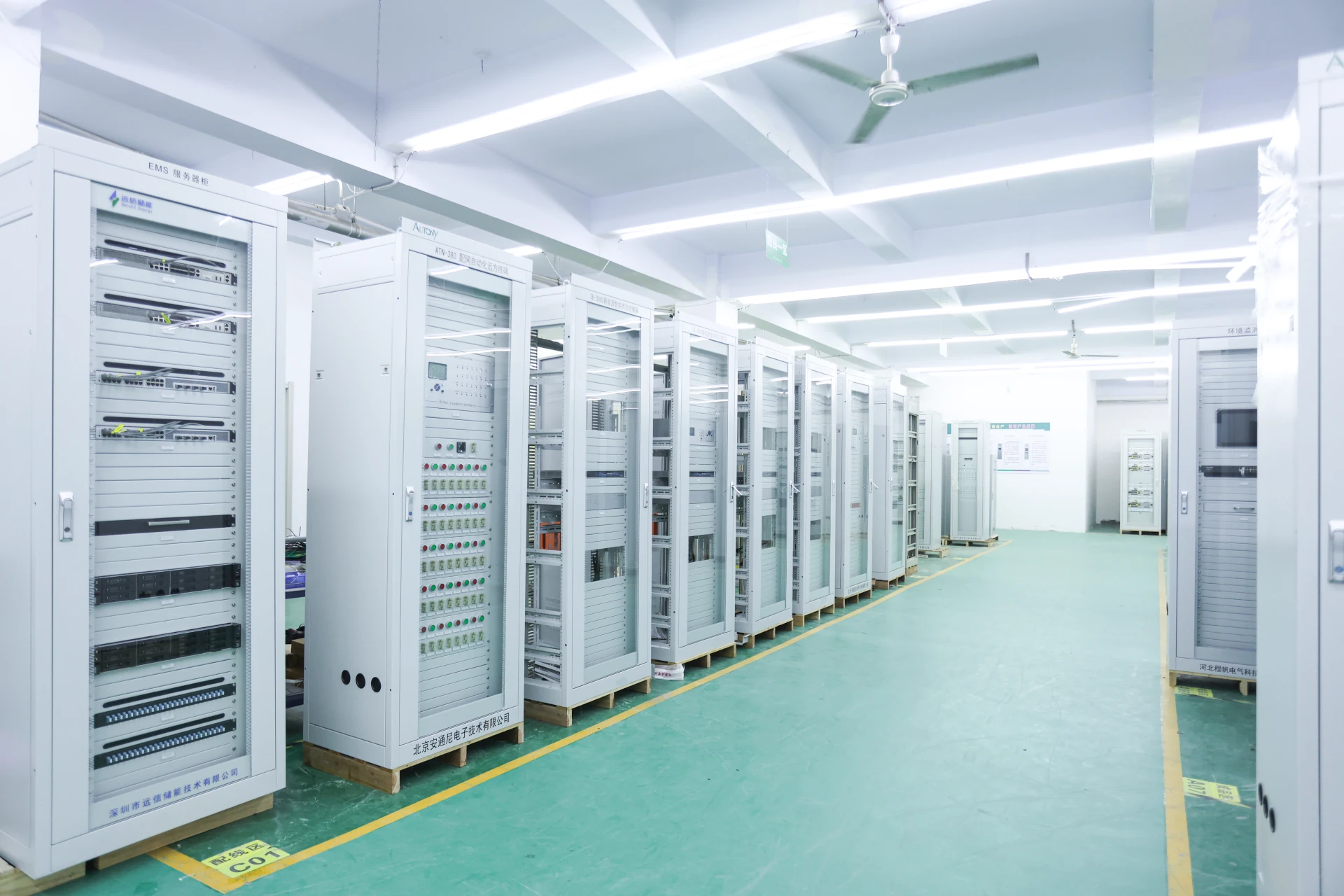
Protection and Control Panels
Explore protection and control panels for substations, power plants and industrial power systems. Find transformer, generator, line, busbar, metering, PLC and RTU panels with customized protection, control and communication solutions.
Meanwhile, the internal configuration of panels is not fixed, which shall be subject to the technical requirements of specific projects.
If you have any project consultation, scheme matching or customized configuration demands for protection and control panels, feel free to contact our professional technical team for one-stop customized solutions.
Showing all 12 results
-
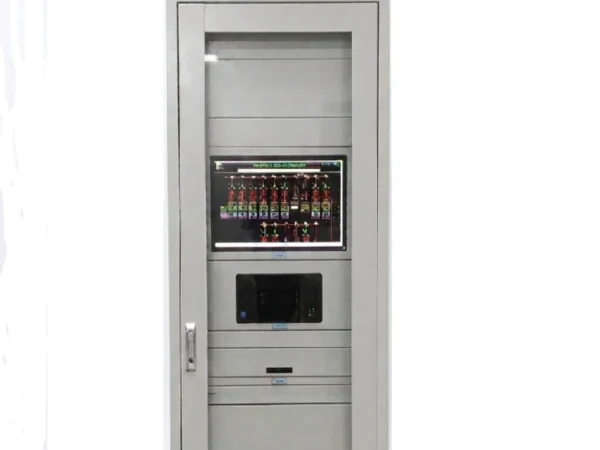
11kV/22kV Power Monitoring SCADA Cabinet
-
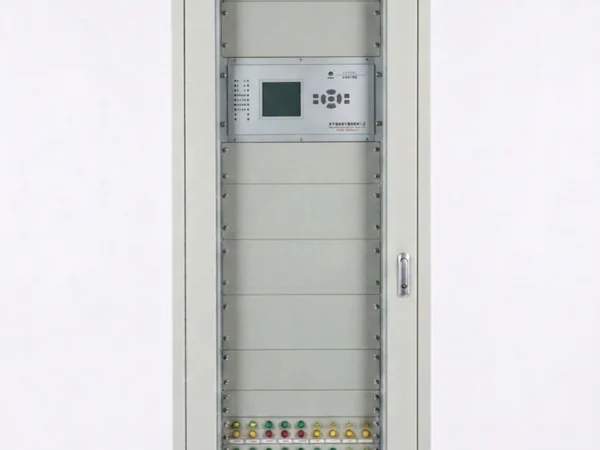
87B Busbar Differential Protection Panel Introduction
-
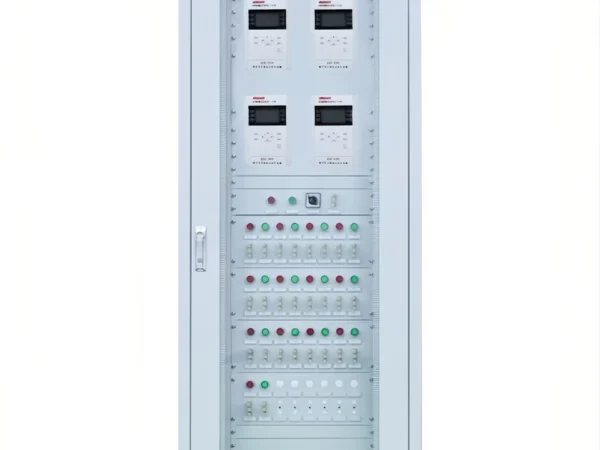
ATN-400 Transformer protection panel
-
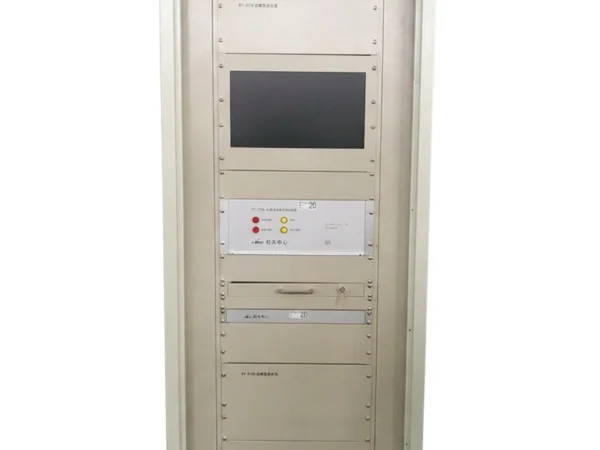
Digital Fault Recorder Panel (DFR/FDR) 16B
-
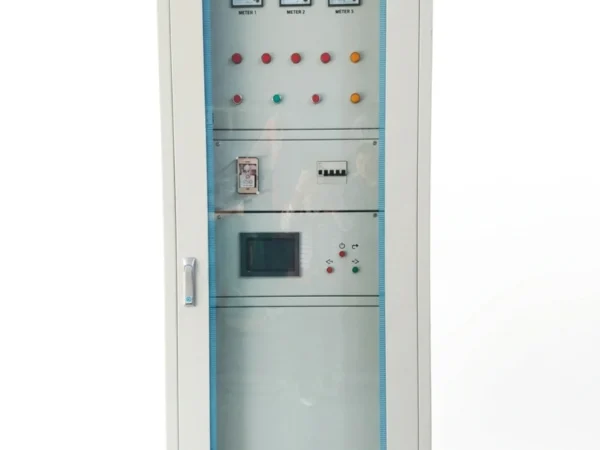
Excitation Panel | Power System Excitation Control Cabinet ATN-400
-
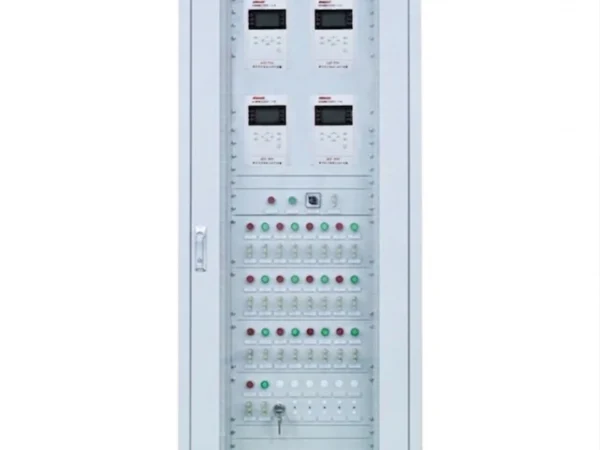
Generator Protection Relay Panel
-
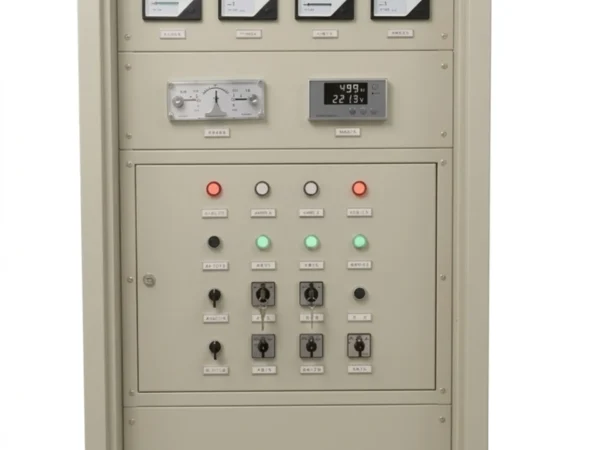
Generator Synchronization Panel for Automatic Generator Paralleling
-
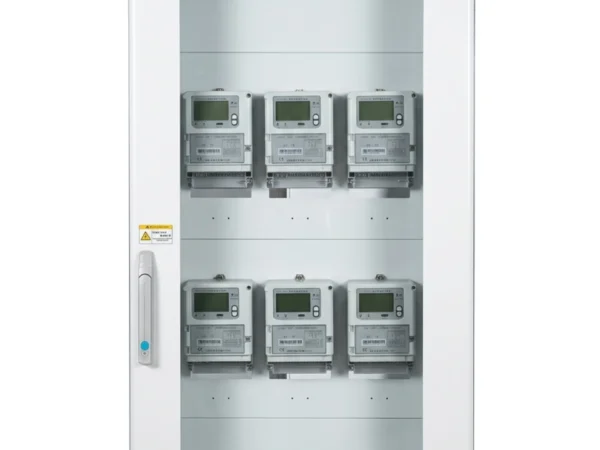
High-Precision Metering Panel ATN-400
-
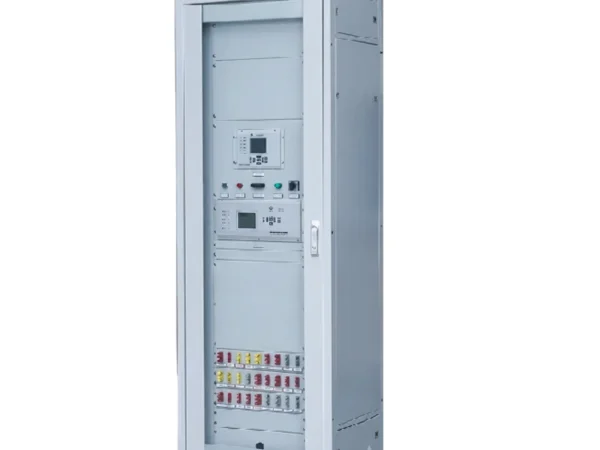
Line Protection and Control Panel
-
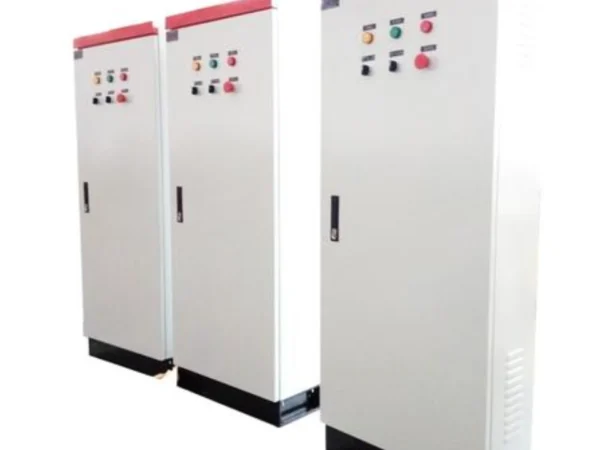
PLC Control Panel for Hydropower and Pumping Stations
-
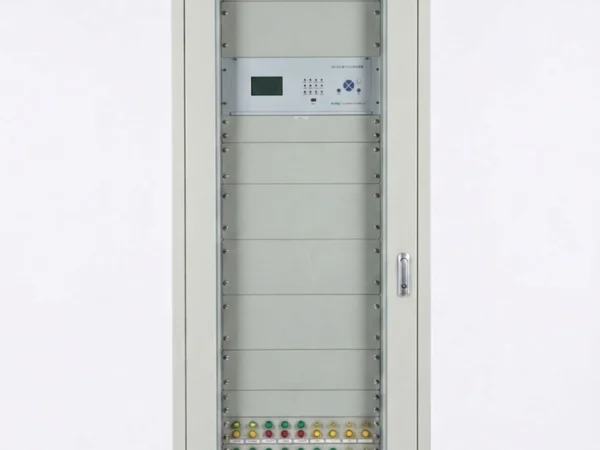
Premium Common Measurement and Control Panel-ANT 400
-
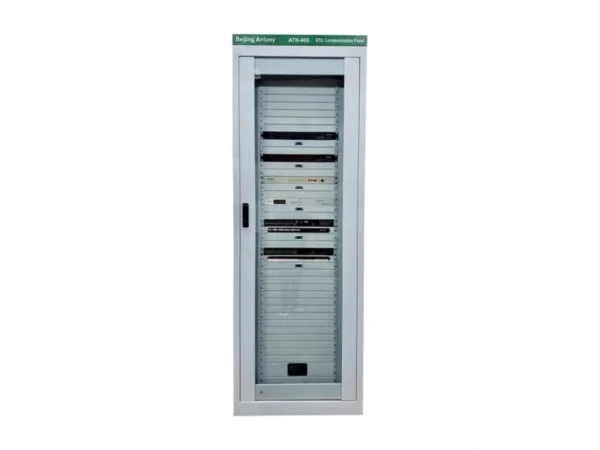
RTU Communication Panel | Substation Communication Panel ATN 400
Protection and control panels for substations, power plants and industrial power systems, integrating protective relays, measurement, control, communication and monitoring functions according to project requirements.
What Are Protection and Control Panels?
Protection and control panels are secondary electrical equipment assemblies used to protect, monitor, measure and control primary equipment in substations, power plants and industrial power systems.
Protection
Protection refers to the immediate isolation of faults—such as short circuit, overcurrent, earth fault, differential fault, overvoltage, undervoltage, reverse power, and frequency abnormalities—in a power system, to prevent equipment damage and ensure the safety of both personnel and assets.
Control
Control encompasses the automated operation and coordinated management of equipment in the power system, including circuit breakers, disconnectors, generator synchronizing, transformers, and motors.
It supports remote or local switching (open/close), operating state transition, and sequence process control, effectively enhancing system flexibility and response speed, improving intelligent management levels, while reducing manual intervention, lowering operational risks, and ensuring power supply safety and reliability.
Monitoring
Monitoring refers to the real-time acquisition and tracking of key electrical quantities in the power system, including voltage, current, power, and frequency, while also supervising equipment operating status, recording fault events, and logging alarm information.
It enables dynamic awareness and full-process data traceability of system operation, providing operators with accurate equipment health status and early anomaly warnings. This supports fault analysis and decision-making, ensuring the safe and stable operation of the power system.
Where is it used?
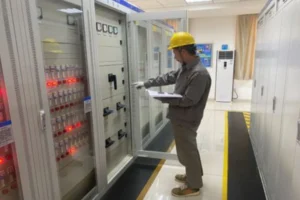
1. Power Plants
-
Generator protection and control – monitoring stator/rotor conditions, excitation control, and synchronizing
-
Unit auxiliary transformers – protection for step-up and station service transformers
-
Fault recording – capturing disturbance data for post-event analysis
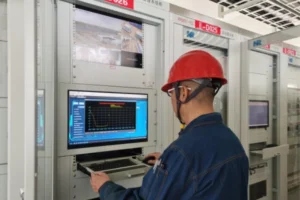
2. Substations (Transmission & Distribution)
-
Transformer protection – main and backup protection for power transformers (two-winding, three-winding, auto-transformers)
-
Busbar protection – fast differential protection to isolate bus faults
-
Feeder / line protection – overcurrent, distance, and directional protection for incoming/outgoing lines
-
Voltage and reactive power control – capacitor bank and reactor control
3. Industrial Facilities
-
Steel mills, cement plants, chemical plants, oil & gas refineries – motor protection, feeder protection, and load shedding
-
Data centers and commercial buildings – backup power management and uninterruptible power supply (UPS) integration
-
Mining operations – ruggedized panels for harsh environments (high dust, humidity, temperature extremes)
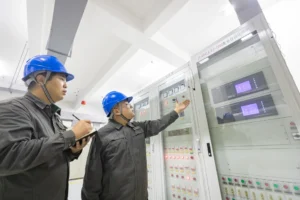
4. Renewable Energy Projects
-
Wind farms – collector line protection, transformer protection at each turbine, and SCADA integration
-
Solar PV plants – inverter protection, medium-voltage transformer protection, and grid interconnection panels
5. Rail and Transportation Infrastructure
-
Railway traction substations – protection for traction transformers and feeder lines
-
Airports and seaports – critical load management and backup power protection
6. Smart Grid and Digital Substations
-
IEC 61850-based substations – digital panels with GOOSE/SV communication for peer-to-peer protection and control
-
Unattended / remote-controlled substations – panels with full SCADA integration for four-remote functions (telemetry, telesignaling, telecontrol, teleregulation)
Summary Table
| Sector | Typical Applications |
|---|---|
| Power Generation | Generators, excitation, step-up transformers |
| Transmission Substations | HV transformers, busbars, transmission lines |
| Distribution Substations | MV/LV transformers, feeders, capacitor banks |
| Industry | Motors, process loads, emergency power systems |
| Renewables | Wind/solar collector systems, inverter stations |
| Infrastructure | Railways, airports, seaports, data centers |
What Is Inside a Protection and Control Panel?
The composition of protection and control panels varies significantly depending on the panel type and project requirements. The following takes a transformer protection panel as an example.
Typical Components Inside a Transformer Protection Panel
| Equipment / Component | Function |
|---|---|
| Transformer Main Protection Relay | Provides differential protection (87T) as the primary protection for internal transformer faults |
| Transformer Backup Protection Relay | Provides overcurrent (50/51), earth fault (50N/51N), overexcitation (24), and other backup protections |
| Circuit Breaker Operating Unit / Trip-Close Circuit | Executes trip and close commands from the protection relay to operate the circuit breaker |
| CT / PT Terminal Blocks | Connects secondary signals from current transformers and voltage transformers for protection and measurement use |
| Measuring Instruments | Displays electrical parameters such as current, voltage, and power during transformer operation |
| Fault Recorder Module | Records fault waveform data for post-event analysis |
| PLC or Automation Device | Implements auxiliary automation functions such as transformer cooling fan control and on-load tap changer control |
| HMI (Human-Machine Interface) | Provides local display of operating status, event logs, and protection setting viewing/modification |
| Communication Gateway / Switch | Supports protocols such as IEC 61850 and Modbus for data exchange with monitoring systems and dispatch centers |
| Switches / Pushbuttons / Indicator Lights | Enables local circuit breaker operation, signal reset, and status indication |
| Terminal Blocks | Provides electrical connections between internal panel devices and external primary equipment (CTs, PTs, circuit breakers, etc.) |
| Power Supply Module | Supplies stable DC/AC power to all devices within the panel |
Summary
The composition of a protection and control panel varies by panel type and project requirements. Taking a transformer protection panel as an example, core devices include main and backup protection relays, operating circuits, CT/PT interfaces, communication modules, and power supplies, while the specific configuration must be custom-designed based on transformer parameters, system connection schemes, automation levels, and user technical specifications.
Types of Protection and Control Panels
Substation Protection and Control Panels
Substation protection and control panels are used to protect, monitor and control electrical equipment in substations. They can integrate protection relays, circuit breaker control circuits, metering, indication, alarm and communication functions according to the substation protection scheme. Our substation panels can be configured for busbar, transmission line, transformer and feeder protection applications and manufactured according to project drawings and technical requirements.
- Busbar Protection Panel
- Line Protection & Control Panel
- Transformer Protection Panel
- Feeder Protection Panel
Generator Protection & Control Panels
- Generator Protection Panel
- Generator Synchronizing Panel
- Excitation Panel
Measurement & Automation Panels
- Metering Panel
- PLC Control Panel
- RTU Communication Panel
- SCADA Monitoring Panel
- Common Measurement & Control Panel
Fault Recording Panels
- Digital Fault Recorder Panel
Protection and Control Panel List
| Panel Name | Function Description |
|---|---|
| Bus Differential Protection Panel | Trips within milliseconds for internal bus faults and reliably blocks operation under external faults to prevent large-scale power outages; applicable to 11kV ~ 110kV busbars |
| Transformer Protection & Control Panel | Integrates electrical and non-electrical protections to provide full-range protection and measurement for main transformers, ensuring safe and stable equipment operation |
| Fault Recorder Panel | Automatically records fault waveforms and outputs files in standard formats, supplying accurate data for fault analysis and protection performance verification |
| Generator Excitation Panel | Outputs adjustable excitation current and integrates AVR and PSS to maintain constant terminal voltage and guarantee transient stability of generating units |
| Generator Protection & Control Panel | Equipped with complete ANSI-standard protective functions together with electrical measurement and control modules to comprehensively secure generator set operation |
| Generator Synchronizing Panel | Automatically checks synchronizing conditions and supports dual manual/automatic modes to realize smooth, shock-free grid connection of generators |
| Metering Panel | Conducts high-precision measurement of active and reactive power energy, supports time-of-use tariff metering and remote data transmission, serving as the legal basis for electricity settlement |
| PLC Control Panel | Executes sequence control for switches and auxiliary equipment in accordance with preset logic with high reliability; suitable for substation automation scenarios |
| Common Measurement & Control Panel | Centrally collects all station-wide common electrical and non-electrical data and uploads to SCADA systems to improve operation and maintenance efficiency of auxiliary equipment |
| RTU Communication Panel | Aggregates operational data of all on-site equipment, supports mainstream power communication protocols for remote transmission, and realizes four-remote functions for dispatch centers: remote measuring, remote signaling, remote control and remote regulation |
| Line Protection & Control Panel | Integrates main and backup protections with real-time measurement and switching control, enabling fast isolation of faults on transmission and distribution lines |
| Power SCADA Monitoring Panel | Graphically displays power grid primary topology and operational parameters, integrating real-time monitoring, fault alarming and remote control into one integrated unit |
Protection Panel vs Control Panel: What Is the Difference?
| Item | Protection Panel | Control Panel |
|---|---|---|
| Main purpose | Fault detection & isolation | Equipment operation & control |
| Main equipment | Protection relays / IEDs | PLC / HMI / control circuits |
| Typical signals | CT/PT, protection inputs | Status, commands, interlocks |
| Application | Substation, generator, transformer | Power plant, substation, industrial systems |
Modern protection and control panels often combine both functions.
Applications of Protection and Control Panels
Substations
- 11kV
- 22kV
- 33kV
- 66kV
- 110kV
Power Plants
- Hydropower
- Thermal power
- Gas power
- Solar power
Industrial Power Systems
- Mining
- Oil & gas
- Manufacturing
- Water treatment
- Large industrial plants
Custom Protection and Control Panel Solutions
Technical Parameters
When customers make product inquiries, they are requested to provide relevant technical requirements, including drawings, technical documents, and other supporting materials, so that we can accurately understand the project needs and carry out customized solution design.
Pre-sales technical communication
Technical communication covers single-line diagram review, relay selection, protection scheme design, panel layout, and other related aspects, ensuring a comprehensive and accurate understanding of project requirements and laying a solid foundation for subsequent customized design.
Equipment Production
The equipment manufacturing process includes the preparation of various drawings, such as schematic diagrams, layout plans, and secondary wiring diagrams. These drawings are then reviewed and confirmed with the customer to ensure their accuracy before production proceeds in accordance with the specified requirements.
Prior to delivery, each unit undergoes rigorous testing and commissioning, with all test data and results thoroughly documented to ensure that the equipment performance fully complies with the technical specifications.
On-site SAT and Commissioning
We fully support on-site commissioning throughout the entire process, promptly responding to and resolving any issues that arise to ensure efficient and smooth progress.
Meanwhile, we provide a complete set of supporting technical documents, including product manuals, certificates of conformity, and factory inspection reports, to ensure the successful acceptance of the project.
Protection and Control Panel FAT Testing
- Wiring inspection
- Continuity test
- Insulation test
- Relay setting verification
- Protection logic test
- DI/DO test
- Analog signal test
- Trip circuit test
- Interlock test
- Communication test
- GOOSE test
- Functional test
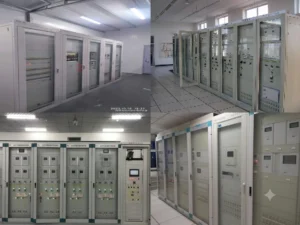
Selection Guidelines for Protection & Control Panels
Confirm System Voltage Level and Equipment Type
Clarify the voltage level of the power system (11kV to 110kV as the mainstream range) and core primary equipment under protection, including busbars, transformers, generators, transmission lines and more. Specialized protection panels shall be configured for different types of primary equipment.
Match Standard Protection Functions
Based on operational risks of equipment, select panels integrated with full ANSI standard protection logics, such as differential protection, overcurrent protection, earth fault protection and reverse power protection, to realize rapid fault isolation.
Comply with Project-Specific Technical Requirements
There are no universal fixed standards for the internal layout, signal interfaces and communication protocols of panels.
All configuration schemes shall be implemented in strict accordance with the bidding documents and technical specifications of the corresponding power plant or substation project.
General Equipment & System Integration Inquiry
Whether you need individual protection relays, control panels, or a complete secondary system integration, please fill in the form below. We provide technical parameters, competitive quotations, engineering drawings, and on-site support. Our expert team is ready to assist you within 24 hours.
High Quality
Stable performance, reliable design, ensuring safe operation for power system protection and grid stability.
Fast Delivery
Timely delivery to support your urgent orders and project schedules efficiently and professionally at any time.
Best Warranty
Professional Warranty: Reliable after-sales support for stable relay protection and long-term customer satisfaction.