
Contact Form Demo

Distribution Automation Systems and Equipment

Distribution automation systems for feeders and substations. Fault location, isolation, and service restoration (FLISR) for smarter grids.

Distribution automation

Distribution Automation Systems and Equipment

Distribution automation systems combine intelligent field devices, protection relays, communication networks and control systems to monitor and operate electrical distribution networks remotely. An automated distribution system can improve fault detection, feeder control, outage restoration and overall grid reliability.

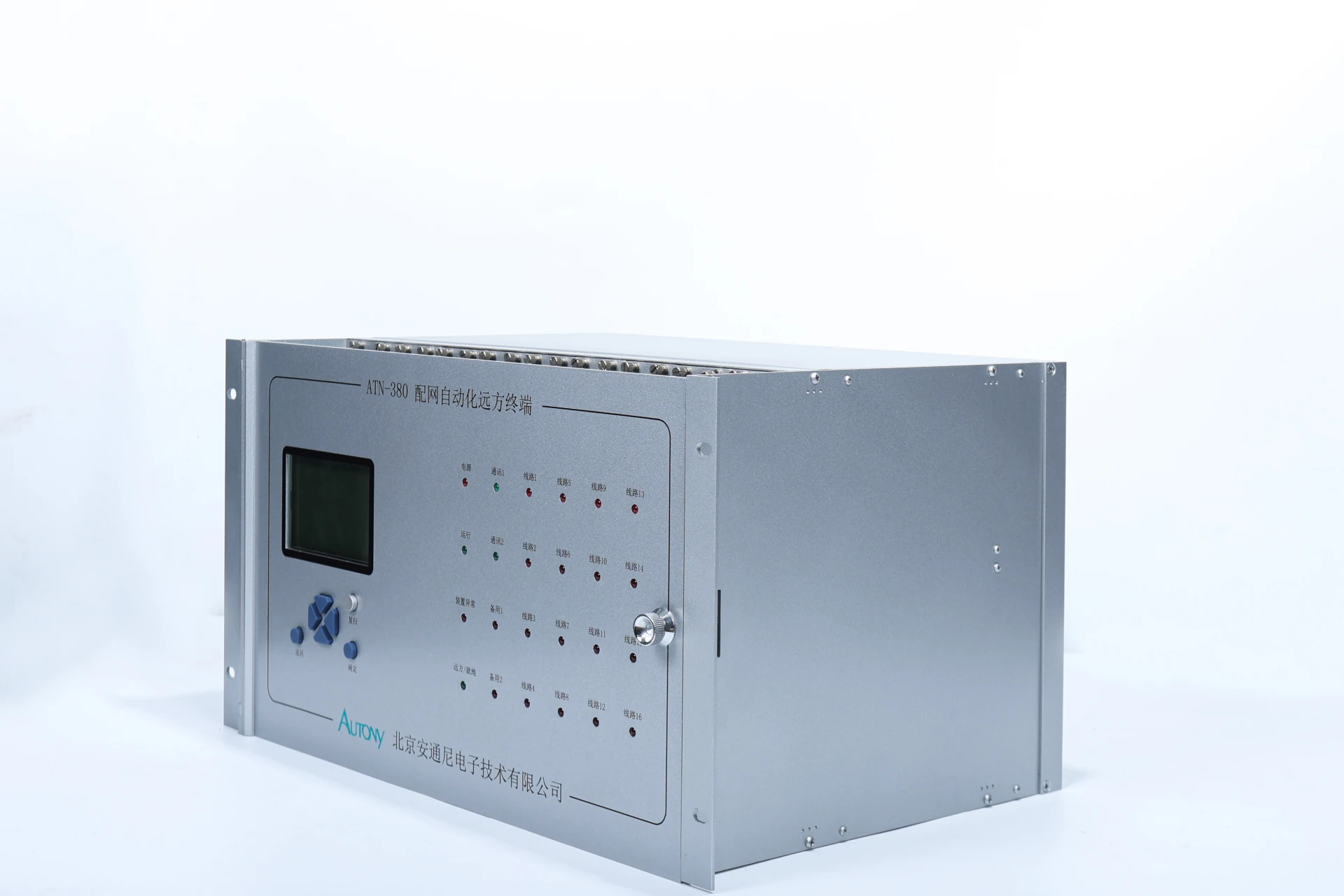
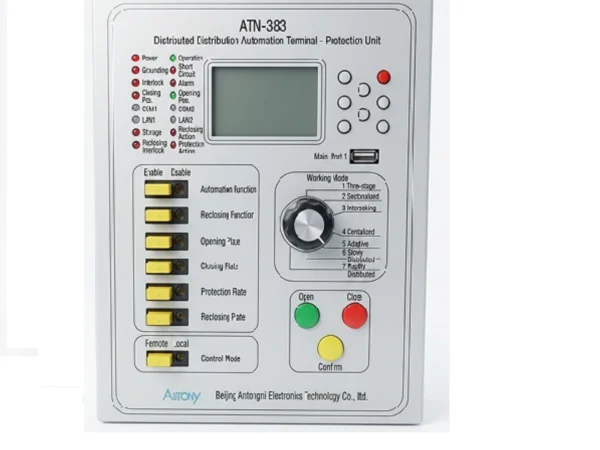
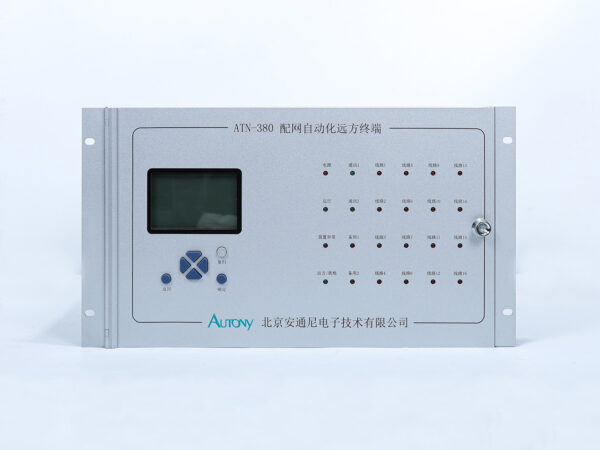
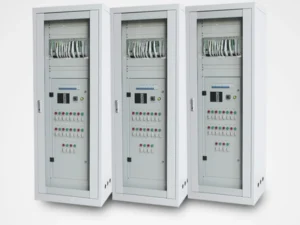
As a professional manufacturer of DTU equipment, we provide substation-dedicated DTUs featuring stable wireless data transmission and strong anti-interference capability. Direct factory supply ensures quality control and competitive pricing.

Feel free to contact us anytime for product specifications and the best quotations.

What Is an Automated Distribution System?

Distribution Automation (DA) utilizes intelligent field devices, protection relays, communication networks, and control systems for remote monitoring and optimized operation of distribution networks.

Its working principle is: DTUs/FTUs, relays, and sensors collect line data and transmit it to the master station via communication networks. The master station analyzes the data and automatically or remotely issues commands for fault isolation, switching, and power restoration. Advanced systems can achieve fault self-healing without manual intervention.

Core equipment includes DTUs/FTUs, protection relays, sensors, communication devices, reclosers, and master station systems.

Key benefits include: improved reliability, reduced O&M costs, enhanced grid efficiency, better power quality, and support for DER integration, ultimately enabling unattended operation and intelligent, efficient management of distribution substations.

How Does Distribution Automation Work?

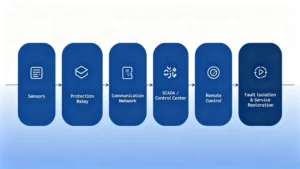
Distribution Automation operates through a continuous closed-loop process of data acquisition, analysis, decision-making, and control execution, as follows:

  1. Sensors: Installed at key points such as feeders and transformers, they monitor voltage, current, and other parameters in real time to detect abnormalities like overcurrent and undervoltage.

  2. Protection Relays: Receive sensor signals, detect faults, and issue trip commands or alarms, while coordinating with downstream devices for selective protection.

  3. RTU/IED: Act as the local data processing and communication hub, collecting and converting data, executing local logic, buffering fault records, and performing autonomous actions even when communication is lost.

  4. Communication Network: Transmits field data to the control center via fiber optic, 4G/5G, radio, or Ethernet, ensuring high reliability and low latency.

  5. SCADA/Control Center: Displays the entire network status on a graphical interface, supporting real-time monitoring, historical data analysis, and decision-making.

  6. Remote Control: Operators issue commands such as switch open/close and setting adjustments via SCADA; advanced systems can auto-generate commands.

  7. Fault Isolation & Restoration: Detection → Location → Isolation → Restoration of healthy sections via alternate paths. The entire process takes seconds to minutes.

Distribution Automation Equipment

Distribution automation relies on coordinated operation of multiple devices to achieve real-time monitoring, fault detection, isolation, and restoration. Key equipment includes:

Protection Relays

Continuously monitor voltage, current, frequency, and other parameters. Upon detecting faults such as overcurrent, short circuits, or earth faults, they issue trip commands or alarms. Features include selective coordination, event recording, waveform capture, and IEC 61850 communication.

RTU / IED (Remote Terminal Unit / Intelligent Electronic Device)

Serve as the data acquisition and control interface between field devices and SCADA. They collect and upload data from sensors and relays, while receiving and executing remote control commands. IEDs support local logic processing; RTUs focus on data concentration.

Automatic Reclosers

Used on overhead lines. Automatically trip upon fault detection and reclose after a preset delay to clear temporary faults. If the fault is permanent, they lock out after multiple reclosing attempts. Reduces outage time caused by transient faults.

Sectionalizing Switches

Divide the distribution network into zones. Work with upstream protection to isolate faulted sections and restore power to healthy sections. Support remote or local operation; not designed to interrupt fault current.

Fault Indicators

Installed on lines or cable terminals. Provide mechanical or visual indication upon fault occurrence, guiding crews to locate fault points quickly. Advanced models support remote communication for fault location reporting.

Communication Equipment

Provide reliable, high-speed data links between field devices and the control center. Common media include fiber optic, 4G/5G, radio, and Ethernet (IEC 61850). Support redundant configurations for enhanced reliability.

SCADA (Supervisory Control and Data Acquisition) System

Serves as the central control platform of distribution automation. Collects real-time data from the entire network, displays status on a graphical interface, and supports remote monitoring, alarm management, historical data storage, and integration with DMS/ADMS for intelligent decision-making and optimized operation.

Summary

Protection relays detect faults; RTUs/IEDs aggregate data; reclosers clear temporary faults; sectionalizers isolate permanent faults; fault indicators aid location; communication equipment connects all layers; and SCADA provides centralized control and decision-making. Together, they form a complete automation system that enhances reliability, reduces outage time, and enables smart, efficient distribution management.
Distribution Automation Applications

Feeder Automation

Enables remote monitoring and control of feeder status, enabling fast fault isolation and restoration, improving load balancing and operational visibility.

Fault Detection, Isolation and Restoration

(FDIR)Automatically detects faults → isolates faulted sections → restores healthy sections via alternate paths. Enables self-healing and significantly reduces outage duration.

Remote Switching

Allows remote open/close of switches via SCADA without field dispatch. Ideal for network reconfiguration, emergency response, and maintenance isolation—fast and safe.

Voltage Regulation

Monitors feeder voltage in real time and automatically adjusts transformer tap changers or capacitor banks to maintain voltage within limits, improving power quality and reducing losses.

Load Management

Monitors and controls loads during peak periods by shedding non-critical loads or shifting consumption, balancing supply and demand, preventing overloads, and deferring capacity upgrades.

Outage Management

Combines field fault signals with customer outage reports to quickly locate outage scope, support crew dispatch, restoration planning, and improve customer communication.

Grid Monitoring

Continuously collects data from sensors, relays, and meters to provide real-time visibility into voltage profiles, power flows, harmonics, and equipment status, supporting trend analysis and predictive maintenance.

Distributed Energy Resource (DER) Integration

Monitors DER (solar, storage, wind) output, manages bi-directional power flows, and coordinates protection and control strategies to enable safe integration of high-renewable penetration.

Summary

Distribution automation applications cover the full spectrum—from feeder control and fault self-healing to remote switching, voltage regulation, load management, outage handling, and DER integration—transforming traditional distribution networks into active, intelligent, and self-healing modern grids.

Automated Distribution vs Traditional Distribution

Traditional Distribution Automated Distribution
Manual switching Remote/automatic switching
Manual fault detection Automated fault detection
Field inspection Remote monitoring
Long outage restoration Automated restoration
Limited communication Real-time communication
Local control Centralized/remote control

What is Distribution DTU

Distribution DTU

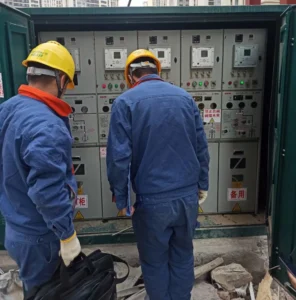
A Distribution DTU (Distribution Terminal Unit) is a core automation device installed in distribution substations, ring main units (RMUs), and switchgear. It collects field data from protection relays, sensors, and switches, and transmits it to the SCADA master station, while also executing remote control commands received from the master station.

Key Features:

Feature Description
Data Acquisition Collects voltage, current, switch status, and alarm signals
Communication Supports Modbus, IEC 60870-101/104, IEC 61850 via fiber/Ethernet/4G/5G
Remote Control Executes open/close commands from SCADA
Fault Handling Detects and reports faults, supports remote location and isolation
Local Logic Executes pre-programmed logic even during communication loss
Event Logging Time-stamped event and fault records
Power Supply Dual power input for continuous operation
Environment Industrial-grade wide temperature design, strong anti-interference

Typical Applications:

  • Distribution substations

  • Ring main units (RMUs)

  • Pole-mounted switches

  • Industrial power distribution systems

Core Role:

The DTU serves as the bridge between field devices and the control center, enabling real-time grid visibility, remote operation, fast fault isolation, and unattended substation management—making it an indispensable component in distribution automation.

Differences Between Centralized and Distributed DTU

Centralized DTU

A single high-capacity device installed in a substation or switchgear room, centrally collecting data from multiple feeders and communicating directly with the SCADA master station.

Advantages Disadvantages
Easy installation and maintenance Single point of failure
Lower hardware cost per bay Extensive cabling required
Simple coordination with master station Limited scalability
Centralized event/fault recording Potential communication bottleneck

Distributed DTU

One small DTU deployed per feeder or RMU, operating independently for local data acquisition and control, while interconnecting with neighboring DTUs and the master station via communication networks.

Advantages Disadvantages
No single point of failure, high reliability Higher total hardware cost
Reduced cabling More complex system configuration
Flexible scalability Requires robust communication network
Fast local response, supports self-healing More challenging maintenance and troubleshooting

Comparison Summary

Aspect Centralized DTU Distributed DTU
Deployment One per substation One per feeder/RMU
Failure Impact Entire station affected Only one feeder affected
Cabling Heavy cabling Network-dependent
Scalability Limited Flexible
Cost Low hardware + high cabling High hardware + low cabling
Best For Small networks, retrofits Large networks, greenfield, self-healing

Selection Suggestion

Choose centralized for small-scale, cost-sensitive projects; choose distributed for large-scale, high-reliability, expandable, and self-healing applications.

Our Product Advantages

We supply complete centralized and distributed DTU series. Our products cover full distribution automation scenarios and balance cost performance and high-end performance.
  • Full-scenario Adaptation: All products comply with State Grid standards. Centralized models fit low-cost renovation projects. Distributed models support high-end intelligent power distribution. Custom modular configurations match various ring main units and switch cabinets.
  • High Operational Reliability: We adopt industrial-grade components with wide temperature adaptability and strong anti-interference ability. Distributed DTU eliminates single-point faults and supports fast FA self-healing. Centralized DTU maintains stable operation with ultra-low failure rate.
  • High Precision & Fast Response: High-precision sampling algorithms ensure accurate data collection and reliable fault identification, including short circuits and small-current ground faults. Distributed DTU realizes millisecond-level fault isolation and independent grid self-healing without master station intervention.
  • Easy Maintenance & High Compatibility: Support mainstream protocols including Modbus and IEC61850. Seamlessly connect with SCADA and distribution master stations. Support simple debugging, accurate fault positioning, remote parameter configuration and online upgrades to reduce O&M costs.
  • High Cost Performance & Complete Services: In-house R&D and production remove intermediate links, offering competitive prices under equal performance. We provide customized solutions, on-site commissioning, technical guidance and lifelong after-sales support for stable project operation.

FAQ

What Is Distribution Automation?

Distribution Automation (DA) uses intelligent field devices, communication networks, and central control systems to monitor, control, and optimize distribution networks in real time—improving reliability, efficiency, and power quality.

What Is an Automated Distribution System?

An integrated infrastructure of sensors, relays, RTUs/IEDs, communication, and SCADA that enables real-time monitoring and remote/automatic grid operation, turning passive networks into self-healing, active systems.

Distribution Automation vs Distribution Management System

Aspect DA DMS
Scope Field-level control Software-based analysis & planning
Function Remote switching, FDIR, voltage regulation Power flow, state estimation, outage planning
Role Provides data & control (eyes & hands) Provides decision support (brain)

What Is Feeder Automation?

Automation applied to distribution feeders—remote monitoring of voltage, current, and power flow, plus remote control of switches, reclosers, and sectionalizers for fast fault isolation and restoration.

FLISR: Fault Location, Isolation and Service Restoration

Automated fault handling: Locate fault via sensors/indicators → Isolate by opening upstream/downstream switches → Restore healthy sections via alternate paths. Enables self-healing and reduces outage time.

Distribution Automation Equipment Guide

Equipment Role
Protection Relays Fault detection and tripping
RTU/IED Data collection and remote control
Reclosers Clear temporary faults
Sectionalizers Isolate faulted sections
Fault Indicators Pinpoint fault location
Communication Equipment Data transmission
SCADA Central control platform

How Does Distribution Automation Work?

Continuous closed-loop process: field devices collect data → send via communication networks to SCADA → system analyzes and detects faults → automatically or remotely issues commands (open/close switches, adjust voltage) → achieves fast fault response and grid optimization.

Distribution Automation for Smart Grids

DA is the foundation of smart grids, enabling demand response, DER integration (solar, wind, storage, EVs), self-healing, AMI, dynamic voltage control, and grid analytics—providing the visibility and control needed for modern, renewable-rich power systems.

General Equipment & System Integration Inquiry

Whether you need individual protection relays, control panels, or a complete secondary system integration, please fill in the form below. We provide technical parameters, competitive quotations, engineering drawings, and on-site support. Our expert team is ready to assist you within 24 hours.
Contact Form Demo

High Quality

Stable performance, reliable design, ensuring safe operation for power system protection and grid stability.

Fast Delivery

Timely delivery to support your urgent orders and project schedules efficiently and professionally at any time.

Best Warranty

Professional Warranty: Reliable after-sales support for stable relay protection and long-term customer satisfaction.