What is substation protection and control equipment?
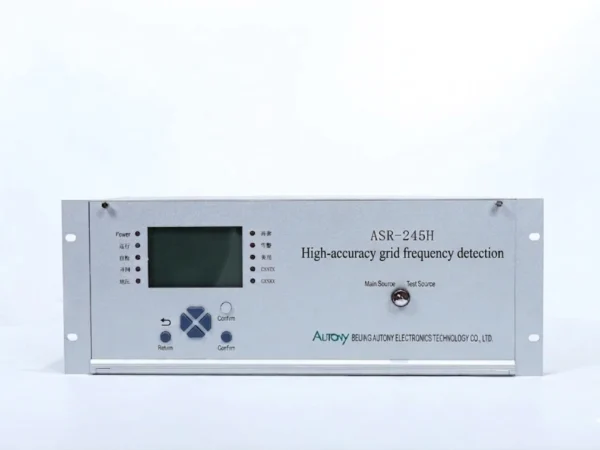
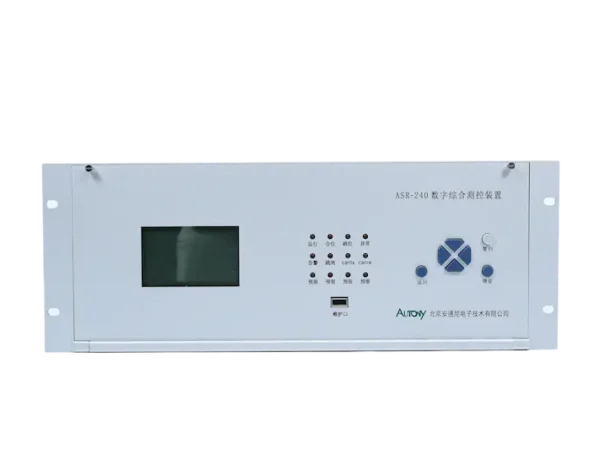
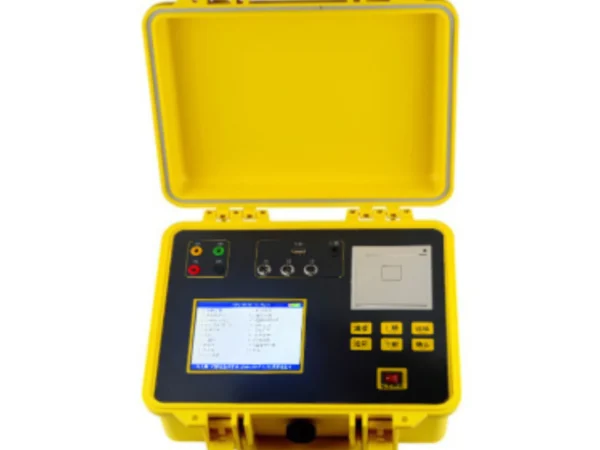
Substation protection and control equipment includes substation auxiliary equipment and other secondary power devices, which together form the core of the secondary systems in modern power stations.
In addition to conventional protective relays, a power station is equipped with various auxiliary devices such as relay protection devices, fault recorders, RTUs, M&C panels, communication equipment, and other associated components — all of which fall under the category of substation auxiliary equipment.
Categories of Substation Protection and Control Equipment
Measurement and Control Equipment
Measurement & Control Unit
A key substation device that acquires analog/status signals from primary equipment and executes control commands. Communicates via IEC 61850 or Modbus with SCADA. Serves as the interface between primary equipment and the automation system for data acquisition and command execution.
RTU (Remote Terminal Unit)
A telecontrol device that collects field data from substations and communicates with master stations via protocols like IEC 104 or DNP3. Also receives and executes remote control commands. Essential for remote monitoring and unmanned substations.
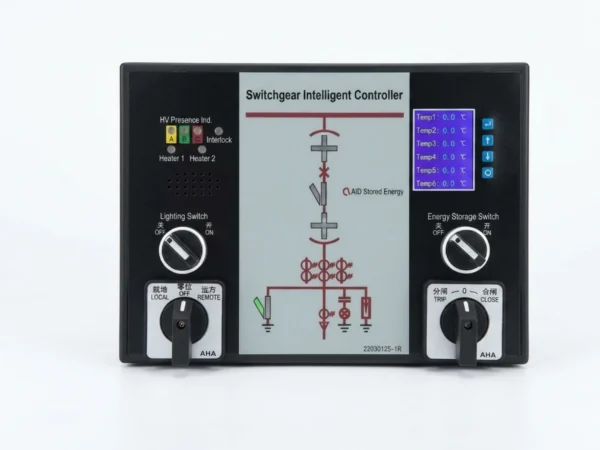
Smart Switchgear Controller
An intelligent device for MV/LV switchgear, integrating protection, control, monitoring, and communication. Supports remote breaker operation, status monitoring, fault detection, and interlocking. Ideal for smart grids and digital distribution networks.
Substation Automation & SCADA
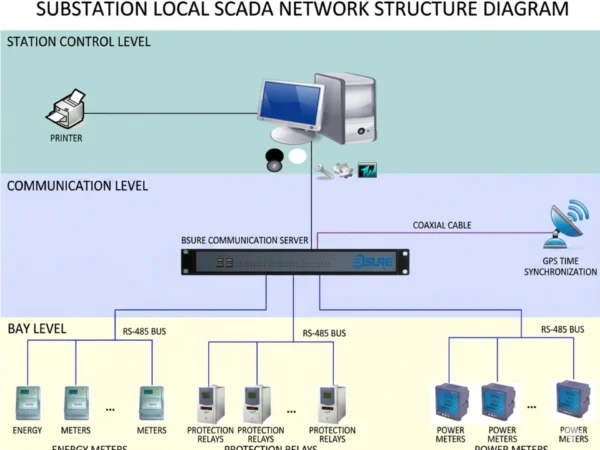
SCADA
A centralized system that monitors and controls field devices across substations. Collects real-time data from RTUs and remote devices, displays system status, and enables remote command execution. The brain of power system monitoring and dispatch.
RTU (Remote Terminal Unit)
A telecontrol device that collects field data from substations and transmits it to SCADA master station via protocols like IEC 104 or DNP3. Receives and executes remote control commands. Essential for unmanned substations.
Communication Gateway
A protocol conversion device that bridges different communication protocols (IEC 61850, IEC 104, Modbus, DNP3) between substation devices and control centers. Provides data filtering, security, and remote access management. Acts as a translator between heterogeneous systems.
Industrial Ethernet Switch
A rugged network device designed for harsh power environments. Provides high-speed, reliable data communication between substation devices using IEC 61850 GOOSE/SV. Features redundant power, wide temperature tolerance, and ring network redundancy for high availability.
Fault Recording & Power Quality Monitoring
Fault Recorder
A device that continuously monitors system parameters and automatically records waveforms during faults. Captures voltage, current, frequency, and breaker status for post-fault analysis, fault location, and protection evaluation. Essential for root cause analysis and system reliability improvement.
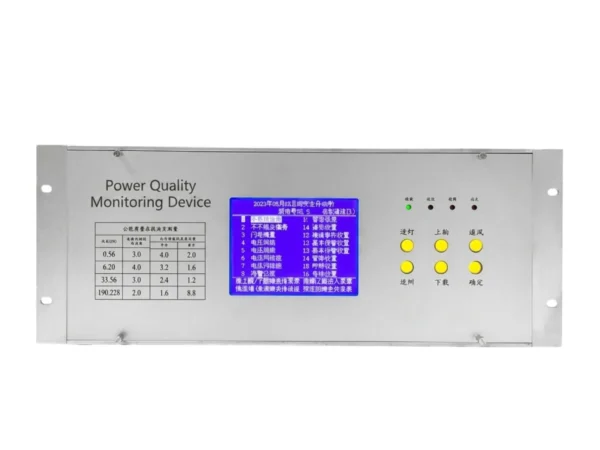
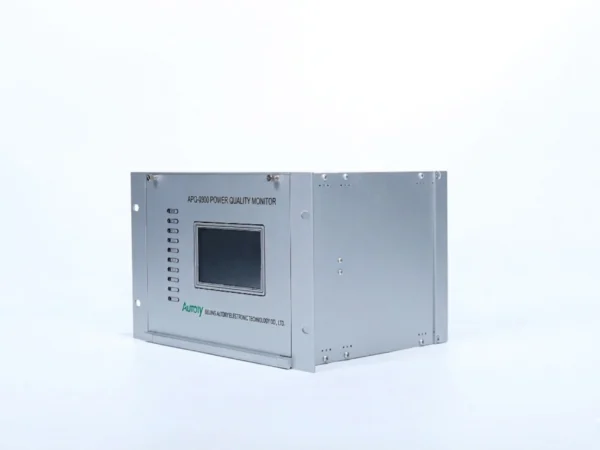
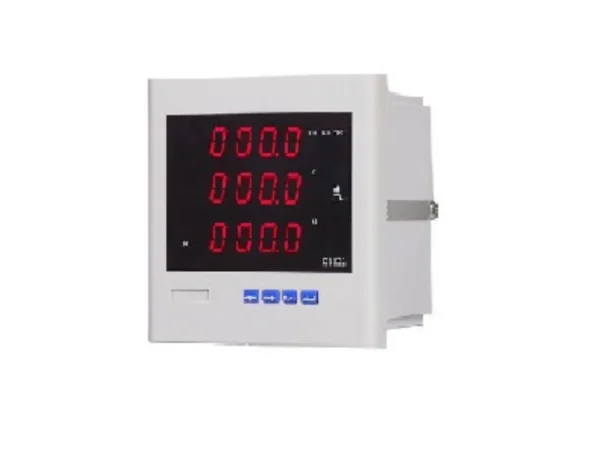
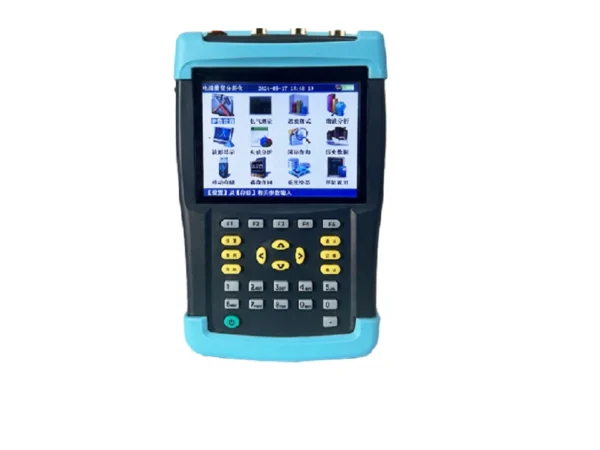
A device that measures and analyzes voltage sags/swells, harmonics, unbalance, flicker, and frequency deviations. Used in industrial plants, data centers, and renewable sites to ensure compliance with power quality standards and protect sensitive equipment.
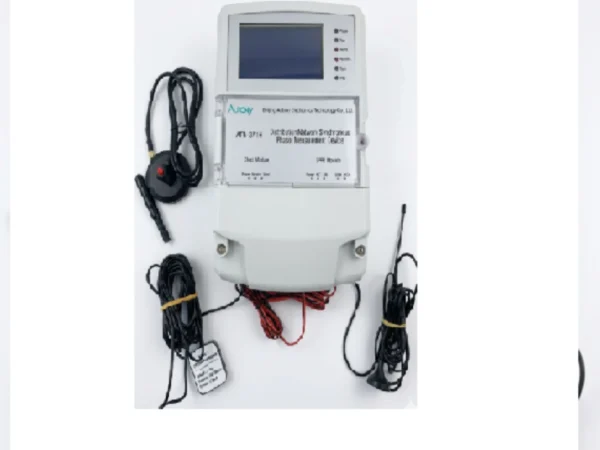
An advanced device that provides time-synchronized voltage and current phasor measurements using GPS. Delivers high-speed, time-stamped data for wide-area monitoring, oscillation detection, and transient stability analysis. Key enabler for WAMS and smart grid situational awareness.
Auxiliary / Switching Equipment
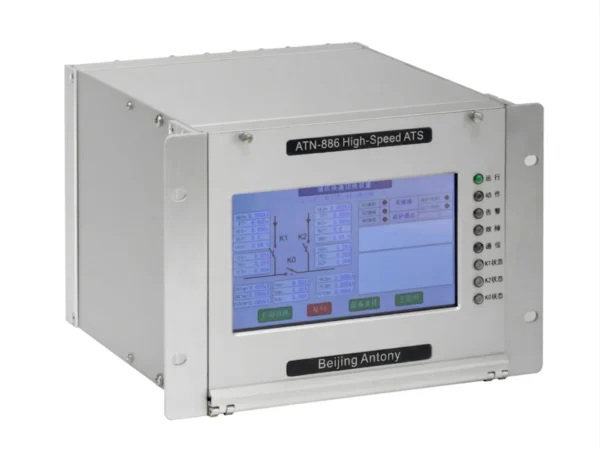
Automatically transfers load from primary to backup source when main power fails. Ensures continuous supply to critical loads. Commonly used in substations, data centers, hospitals, and industrial facilities requiring high availability.
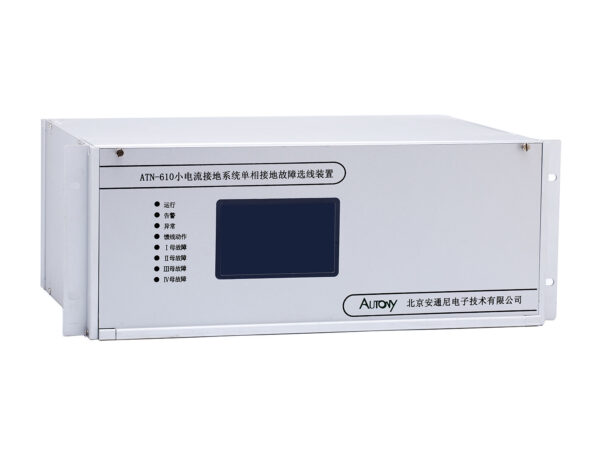
A protection function used in unearthed or high-resistance grounded systems to identify the faulty feeder during earth faults. Detects fault direction or compares zero-sequence currents to pinpoint and isolate the faulty line, improving distribution network reliability.
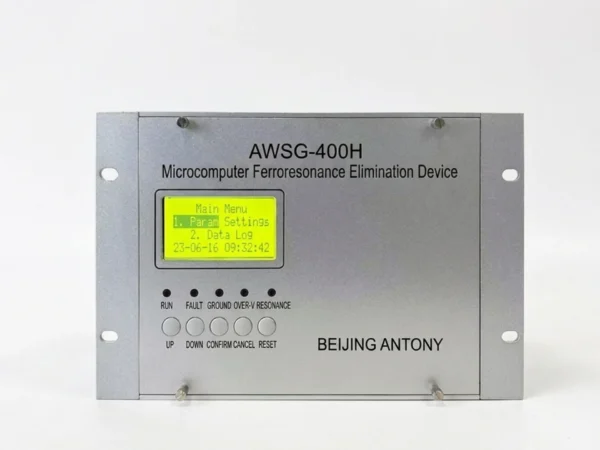
Resonance Eliminator
A device that suppresses ferroresonance in voltage transformer (VT) circuits. Ferroresonance can cause severe overvoltages and equipment damage. The device detects and dampens resonance by inserting appropriate impedance, protecting VT and other equipment.
Substation Protection and Control Equipment List
| Equipment |
Main Function |
Typical Application |
| Protection Relay |
Fault detection and tripping |
Transformer, feeder, line |
| Protection & Control Panel |
Integrated protection and control |
Substations |
| Bay Control Unit |
Bay-level monitoring/control |
10–220 kV substations |
| RTU |
Remote data acquisition/control |
SCADA |
| SCADA System |
Station monitoring and control |
Substations |
| Fault Recorder |
Fault waveform recording |
Protection analysis |
| Communication Gateway |
Protocol conversion/data exchange |
Substation automation |
| Power Quality Monitor |
PQ monitoring |
Industrial/grid substations |
| PMU |
Synchronized phasor measurement |
Transmission substations |
| ATS |
Automatic power transfer |
Critical loads |
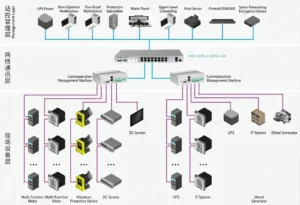
Substation Protection and Control System Architecture
Substation Primary vs Secondary Equipment
| Primary Equipment |
Secondary Equipment |
| Transformer |
Protection Relay |
| Circuit Breaker |
BCU |
| Busbar |
RTU |
| CT/PT |
SCADA |
| Disconnect Switch |
Protection Panel |
| Transmission Line |
Fault Recorder |
Protection and control equipment belongs to the secondary system of a substation. Unlike primary equipment such as transformers, circuit breakers, and switchgear that directly handle high-voltage power, the secondary system operates at low voltage and is responsible for monitoring, protecting, controlling, and communicating the status of the primary equipment. It ensures safe, reliable, and stable operation of the entire substation.
Modern substations rely heavily on digital secondary devices such as protective relays, RTUs, MCUs, communication gateways, and industrial switches, which are interconnected via standard protocols like IEC 61850. These devices form the “nervous system” of the substation, enabling real-time data exchange, intelligent decision-making, and remote control — all essential for smart grid applications.
Substation Protection and Control Equipment by Voltage Level
11kV / 10kV
- Feeder Protection
- Transformer Protection
- BCU
- RTU
- SCADA
33kV
- Feeder Protection
- Transformer Differential
- Busbar Protection
- Communication
66kV
- Line Protection
- Transformer Protection
- Busbar Protection
- SCADA
110kV
- Line Differential
- Distance Protection
- Transformer Differential
- Busbar Protection
- Station Automation
Applications of Substation Protection and Control Equipment
Substation protection and control equipment is widely deployed across various industry sectors to ensure safe, reliable, and efficient power system operation. Key application areas include:
Utility Substations
Utility substations form the backbone of the public power grid. Protection and control equipment ensures grid stability, fault isolation, and power quality management. Devices such as line protection relays, transformer differential relays, and bay control units are extensively used to protect transmission and distribution networks.
Industrial Substations
Industrial facilities such as steel mills, cement plants, and manufacturing plants have high internal power demands. Protection equipment safeguards critical motors, feeders, and transformers against faults, minimizing production downtime. Motor protection relays, feeder protection relays, and ATS systems are commonly deployed in these environments.
Renewable Energy Substations
Renewable energy sources such as solar and wind require dedicated substations to collect and transmit power to the grid. Protection equipment must handle bidirectional power flow, fluctuating generation, and grid interconnection requirements. Directional overcurrent relays, synchro-check relays, and anti-islanding protection are essential.
Solar Power Substations
Solar farms, especially large-scale PV plants, use collector substations to combine multiple inverter outputs and step up voltage for transmission. DC-side leakage monitoring, AC-side feeder protection, and transformer protection are key applications. SEF relays and 50N/51N relays are widely used for earth fault protection in solar projects.
Wind Power Substations
Offshore and onshore wind farms use substations to collect power from multiple wind turbines and transmit it to the grid. Protection equipment must handle frequent voltage fluctuations and transient conditions. Directional overcurrent protection, voltage/frequency protection, and fault ride-through (FRT) control are critical for wind power applications.
Hydropower Stations
Hydropower stations require protection for generators, step-up transformers, and transmission lines. Generator stator earth fault protection (64G), differential protection (87T), and overcurrent protection are commonly used. These devices ensure safe operation of hydro turbines and generators, preventing catastrophic damage from faults.
Data Center Substations
Data centers demand ultra-high reliability and power quality. Protection and control equipment ensures uninterrupted power supply (UPS) and backup generator coordination, with fast fault clearing to prevent IT equipment downtime. ATS systems, power quality monitors, and fast-acting protection relays are essential in this sector.
Oil & Gas Facilities
Oil refineries, pipelines, and offshore platforms operate in harsh environments with explosive atmospheres. Robust protection equipment is required to ensure personnel safety and process continuity. Motor protection relays, feeder protection, and earth fault monitoring are widely deployed, with equipment designed for hazardous area compliance.
Summary Table:
How to Select Substation Protection and Control Equipment
Selecting the right protection and control equipment for a substation requires careful consideration of multiple technical and project-specific factors. The following 10 key aspects should be evaluated during the selection process:
Voltage Level
The voltage level of the substation determines the insulation requirements, CT/VT ratings, and the type of protection relays needed. For LV systems (≤ 35kV), conventional overcurrent and earth fault relays are typically sufficient. For MV systems (35kV–220kV), more sophisticated protection such as differential and distance protection may be required. For HV/EHV systems (≥ 220kV), redundant and high-speed protection schemes with telecommunication channels are essential.
Substation Configuration
The physical and electrical configuration of the substation — such as single busbar, double busbar, ring bus, or breaker-and-a-half scheme — directly impacts the protection and control architecture. More complex configurations require additional bay control units, busbar protection, and interlocking logic to ensure proper fault isolation.
Protection Scheme
The protection scheme defines which protection functions are required for each equipment type (transformers, feeders, motors, generators, etc.). Typical schemes include overcurrent, differential, distance, directional, and earth fault protection. Selection should be based on fault analysis, system grounding method, and coordination study results.
Communication Protocol
Selecting a communication protocol is essential for integration with SCADA and control centers. Common protocols include Modbus RTU/TCP, IEC 60870-5-101/104, DNP3, and IEC 61850. The choice depends on regional practice, utility requirements, and existing system compatibility. For digital substations, IEC 61850 is becoming the standard choice.
IEC 61850 Requirement
If IEC 61850 is required, the equipment must support GOOSE and SV messaging for fast peer-to-peer communication and process bus data exchange. Devices should comply with IEC 61850-8-1 and -9-2 standards, and mapping of data models to the relay’s logical nodes should be verified.
Redundancy
For critical substations, equipment redundancy is essential to ensure reliability. Redundancy can be achieved through dual protection relays (main and backup), redundant power supplies, dual communication networks, and redundant RTUs or gateways. The level of redundancy depends on the importance of the substation and the cost of failure.
FAT Requirements
Factory Acceptance Testing (FAT) is a critical step to verify equipment performance before shipment. The FAT procedure should include functional tests, accuracy verification, communication tests (including IEC 61850), and I/O verification. The FAT plan must be agreed upon between the buyer and manufacturer, with formal test reports provided.
Environmental Conditions
Equipment must be selected based on site environmental conditions including temperature range, humidity, altitude, dust levels, and seismic requirements. For outdoor substations, weatherproof enclosures and wide-temperature-rated devices are required. For offshore or desert installations, special coatings and cooling systems may be necessary.
Project Documentation
Complete project documentation is essential for successful implementation. This includes single-line diagrams, setting calculation sheets, wiring diagrams, user manuals, and communication mapping tables. The manufacturer should provide clear and comprehensive documentation in the required language, with version control and revision tracking.
Commissioning Support
On-site commissioning support ensures that the protection and control equipment is correctly installed, configured, and tested before energization. This includes supervision of secondary injection testing, protection setting verification, communication testing, and coordination with upstream/downstream protection. The manufacturer should provide experienced commissioning engineers and clear handover procedures.
Our Substation Protection & Control Equipment Supply Scope
| Category |
Key Deliverables |
| Protection Relays |
50/51, 50N/51N, 67, 87, 21, 81 relays |
| Protection Panels |
Custom panels with wiring, labeling, and internal cabling |
| BCU |
Bay-level control, interlocking, GOOSE support |
| RTU |
Telecontrol data acquisition, IEC 104/DNP3 |
| SCADA |
Centralized monitoring, alarm management, remote control |
| Communication |
Switches, gateways, fiber converters, network redundancy |
| Fault Recording |
High-resolution oscillography, event recording |
| Measurement |
MCUs for analog/digital data acquisition |
| FAT |
Full factory testing, witnessed by customer |
| Documentation |
Manuals, diagrams, setting sheets, test reports |
Our Advantages
We cooperate with qualified and experienced manufacturers.
Our manufacturing and engineering team supports product configuration, assembly, testing and project delivery for substation protection and control equipment.
Complete Product Portfolio
Our product coverage includes: Power Quality Monitoring Devices, Intelligent Meters, PMU Systems, SCADA Systems, Switchgear Intelligent Display Units, Auto Transfer Devices, Protection Relays and full-set substation automation equipment.
Reliable Supply Chain
We cooperate with qualified and experienced manufacturers, providing stable product quality, competitive prices, flexible OEM solutions and fast delivery.
Professional Engineering Support
Our technical team provides one-stop support including product selection, technical specification review, protection scheme optimization, communication configuration and project technical guidance.
Strict Quality Assurance
All products pass strict pre-delivery tests, including function testing, communication debugging, accuracy calibration and Factory Acceptance Testing (FAT).
FAQ
What is substation protection and control equipment?
Substation protection and control equipment refers to the secondary devices that monitor, protect, control, and communicate the status of primary equipment such as transformers, circuit breakers, and switchgear. It ensures safe, reliable, and stable operation of the power system.
What equipment is included?
It includes protection relays, BCUs (Bay Control Units), RTUs (Remote Terminal Units), measurement and control units (MCUs), communication gateways, industrial Ethernet switches, fault recorders, power quality monitors, and SCADA systems. These devices work together as an integrated system.
What is the difference between primary and secondary equipment?
Primary equipment handles high-voltage power directly, including transformers, circuit breakers, disconnectors, and switchgear. Secondary equipment operates at low voltage and is responsible for monitoring, protection, control, and communication of the primary equipment. Primary equipment carries the power; secondary equipment protects and manages it.
What protection relays are used in substations?
Common protection relays include overcurrent relays (50/51), earth fault relays (50N/51N), directional overcurrent relays (67), differential relays (87), distance relays (21), and frequency relays (81). The specific types depend on the protected equipment and system requirements.
What is the role of RTU and SCADA?
RTU collects field data from substation equipment and transmits it to the SCADA master station, while also executing remote control commands. SCADA is the central system that monitors, controls, and manages the entire power network, providing operators with real-time visibility and control.
What communication protocols are used?
Common communication protocols include Modbus RTU/TCP, IEC 60870-5-101/104, DNP3, and IEC 61850. IEC 61850 is becoming the standard for digital substations, supporting GOOSE and SV for fast peer-to-peer communication.
How do I select equipment for a substation project?
Selection should consider voltage level, substation configuration, protection scheme requirements, communication protocol, IEC 61850 compliance, redundancy needs, environmental conditions, and FAT requirements. A complete coordination study and setting calculation should also be performed.
Can you supply complete protection and control panels?
Yes, we design and manufacture fully assembled protection and control panels that integrate multiple relays, auxiliary devices, test blocks, and terminal strips. Panels are customized to project specifications and undergo full factory testing before delivery for plug-and-play installation on site.