

-
Leon Zhang sales consultant
-
Email: zxl635973785@gmail.com
-
Phone/WhatsApp: +86 13655813266
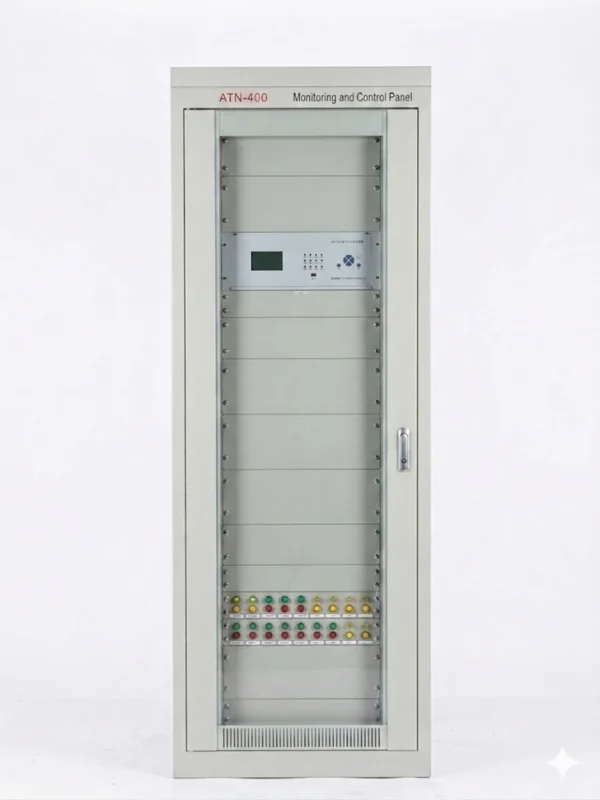
Premium Common Measurement and Control Panel-ANT 400
Overview of Substation Common Measurement and Control Panel
The common measurement and control panel, also defined as the professional IEC 61850 Substation Automation Panel and core sas control panel in power systems, is the core equipment of the Substation Automation System (SAS)
Send your requirements, we will quote for you within 12 hours
Description
Overview of Substation Common Measurement and Control Panel
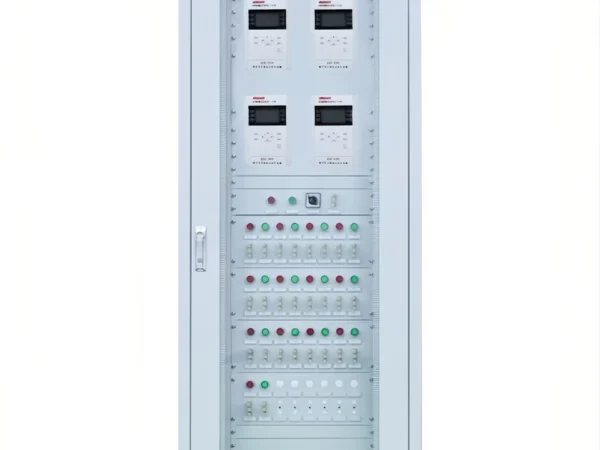
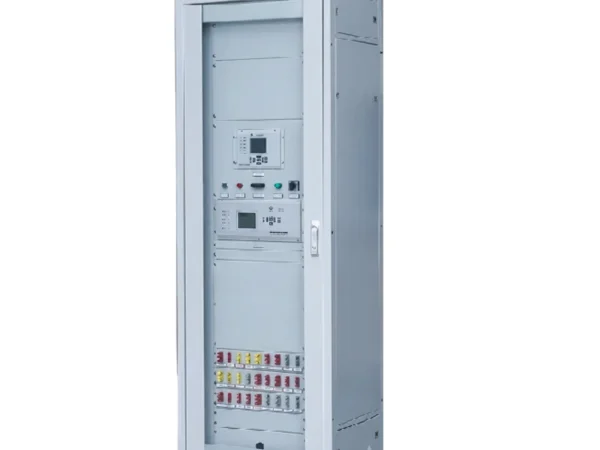
- The common measurement and control panel, also defined as the professional IEC 61850 Substation Automation Panel and core sas control panel in power systems, is the core equipment of the Substation Automation System (SAS).
- To answer what is sas panel in simple terms, the sas panel in substation / panel sas is the centralized monitoring and control cabinet specially applied to data collection, logical management and control, and status monitoring of all public equipment and busbar systems in the substation, excluding the independent protection and measurement & control units for intervals such as main transformers and power lines.
- Line bay controllers manage individual lines, while ANT400 general control panel centrally oversees busbars, station transformers and DC systems, uploading data to SCADA. Unlike single-bay control panels, it focuses on unified management of substation public auxiliary systems.
- With four remote functions, this SAS panel gathers field data, converts and uploads to monitoring platform, and executes remote commands. As core secondary equipment, it ensures stable and efficient substation operation.
Cabinet Composition
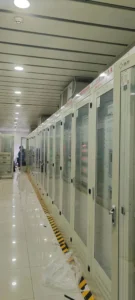
- The common measurement and control panel, namely the standard IEC 61850 Substation Automation Panel, is an integrated complete-set secondary cabinet composed of various special power equipment. Taking a conventional 110kV substation as an example, this core sas control panel features a clear hierarchical structure and well-defined division of responsibilities, which is the typical structural feature of mainstream panel sas products.
|
Hierarchical Structure
|
Core Equipment
|
Main Functions
|
|---|---|---|
|
Core Control Layer
|
Common measurement and control device, communication management unit
|
Data collection and calculation, communication protocol conversion, data interaction, core logic processing of sas panel
|
|
Signal Input and Output Layer
|
Transmitters, photoelectric isolation modules, control relays
|
Isolation and conversion of strong and weak electrical signals, execution of switching (closing/tripping) control, signal transmission support for panel sas
|
|
Human-Machine Interaction Layer
|
Industrial touch screen, indicator lights, operation buttons
|
On-site local data viewing, parameter setting and equipment commissioning, on-site man-machine interaction of sas control panel
|
|
Power Auxiliary Layer
|
Air circuit breakers, terminal blocks, lightning arresters, transfer switches
|
Circuit power distribution, line connection, lightning protection and electrical safety protection, stable operation guarantee for sas panel in substation
|
Core Functions: Data Acquisition, Monitoring and Intelligent Remote Management
- Designed to meet the operational and maintenance needs of power facilities, the utility monitoring and control panel integrates end-to-end O&M management functions, covering all scenarios related to monitoring, control, and alarms.
Multi-dimensional Data Collection and Processing
- Electrical Remote Measurement Data: It collects power parameters including busbar voltage, system frequency, station service transformer current, active power and reactive power with a measurement accuracy up to Class 0.2.
- Equipment Remote Signaling Status: It monitors the real-time status of circuit breaker switching positions, disconnector states, equipment energy storage signals and device fault alarms.
- Non-electrical Environmental Data: It accesses auxiliary monitoring data such as main transformer oil temperature, SF6 gas pressure of GIS equipment, and ambient temperature and humidity in the substation, realizing full-scenario monitoring expansion for the sas panel in substation.
Intelligent Automatic Logical Control
- Remote Equipment Control: The background monitoring system issues commands to remotely complete the closing and tripping of circuit breakers and disconnectors. The built-in electrical anti-misoperation interlock logic eliminates the risk of operational errors, which is the core safety control function of the IEC 61850 Substation Automation Panel.
Fault Alarm and Event Recording
- The built-in SOE (Sequence of Events) recording function accurately records the time sequence of equipment actions and faults at the millisecond level, providing reliable data support for grid fault investigation and accident traceability, and improving the fault analysis capability of the entire sas panel in substation system.
On-site Installation, Wiring and Standardized Commissioning
- The construction quality of sas panel installation directly determines the long-term operation stability of the entire SAS automation system, and all operations must comply with standardized construction procedures for panel sas equipment.
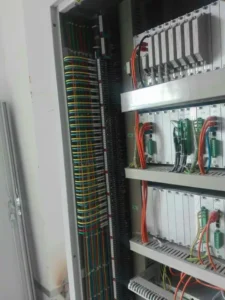
- The public monitoring and control panel was installed and secured to the base channel steel according to the design drawings. The cabinet was reliably grounded, the busbars were tin-plated for connections, and power and signal circuits were kept separate.
- Secondary cables were connected to the terminal blocks one by one with clear wire labeling. After wiring was completed, each connection was checked and insulation tested. Once everything was confirmed to be in order, power was applied for commissioning.
Views on Common Measurement and Control Panels
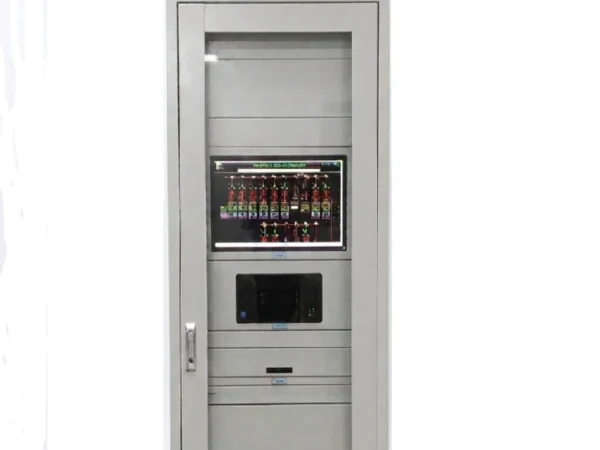
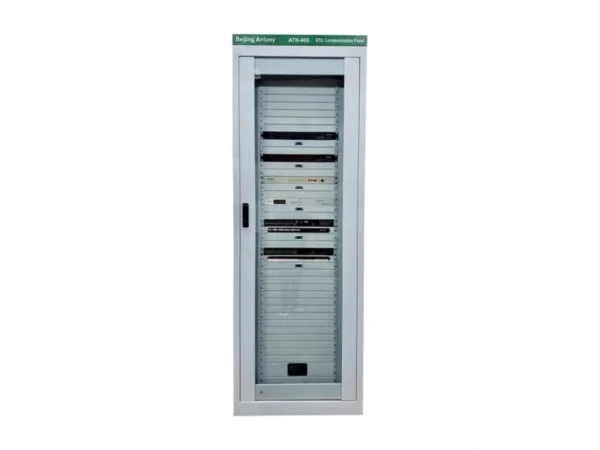
- The configuration of general measurement and control panels varies by project. Some only consist of a general measurement and control unit, while others are additionally equipped with communication managers, switches and other components.
- Therefore, general measurement and control panels are not standard regular products, nor are power protection cabinets standardized products. Their internal components and functions are determined by actual project technical requirements.
FAQ
Q What is a Measurement and Control Panel?
It is a standard substation secondary panel, used for real-time data sampling, remote measurement, remote control, signal collection and device interlocking for switchgear, busbar and power equipment.
Q Core functions
Real-time voltage/current/power measurement, breaker status monitoring, remote opening/closing control, SOE event recording, data uploading to SCADA, local/remote switching control.
Q How does the panel collect data?
It receives analog signals from CT/PT and digital signals from breaker auxiliary contacts, calculates electrical parameters, and uploads all data through communication.
Q What is local & remote control mode?
- Local: Operate breakers manually on-site through panel buttons.
- Remote: Receive control commands from central SCADA room for unmanned operation.
Q What signals are connected to the panel?
Analog quantity: three-phase current, three-phase voltage, power factor, active/reactive power. Digital quantity: breaker position, isolating switch position, device alarm, fault signal, interlock status.
Q What is SOE recording function?
Sequence of Event recording, accurately records the time sequence of switch action and fault events for accident analysis.
Q Communication protocols
Supports IEC104, IEC103, Modbus TCP/RTU for uploading data to substation monitoring system.
Q Difference between Measurement & Control Panel and Protection Panel
- Protection panel: Focus on fault judgment and tripping (fast action, safety isolation).
- Measurement & control panel: Focus on data monitoring, status collection and normal switching operation.
Q Why use local/remote lockout switch?
Prevent misoperation: forbid remote control during on-site maintenance, and forbid local operation during unattended running.
Q Can it coordinate with ABT and protection relays?
Yes. It collects protection trip signals, records fault events, and interlocks bus transfer logic.
Q No measured data display
PT/CT circuit abnormal, sampling module failure or communication disconnection.
Q Remote control failure
Remote permission not enabled, interlock condition not satisfied, or breaker loop abnormality.
Q Frequent fake alarm signals
Loose terminal wiring, poor auxiliary contact or interference on secondary cable.
Q Pre-energization commissioning items
Analog accuracy calibration, DI/DO signal test, local/remote control test, SOE verification, communication point table debugging.
Q Daily maintenance
Check data consistency, inspect signal wiring, clean cabinet dust, backup configuration regularly.
2 reviews for Premium Common Measurement and Control Panel-ANT 400
Related products
High Quality
Stable performance, reliable design, ensuring safe operation for power system protection and grid stability.
Fast Delivery
Timely delivery to support your urgent orders and project schedules efficiently and professionally at any time.
Best Warranty
Professional Warranty: Reliable after-sales support for stable relay protection and long-term customer satisfaction.
xiao zhang –
Premium Common Measurement and Control Panel integrates comprehensive data monitoring and remote control functions, ensuring stable and efficient operation of the power system.
Jack –
Good anti-interference capability, no offline during long-term operation