

-
Leon Zhang sales consultant
-
Email: zxl635973785@gmail.com
-
Phone/WhatsApp: +86 13655813266
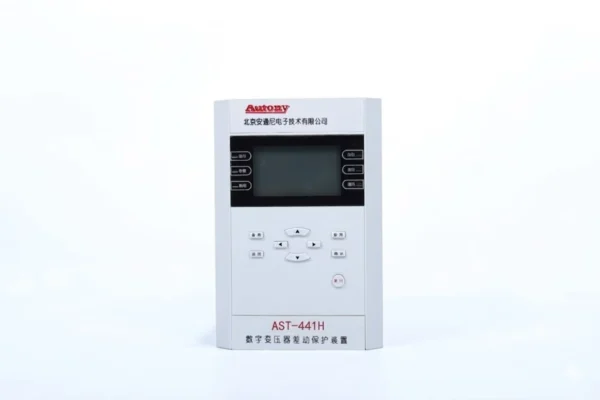
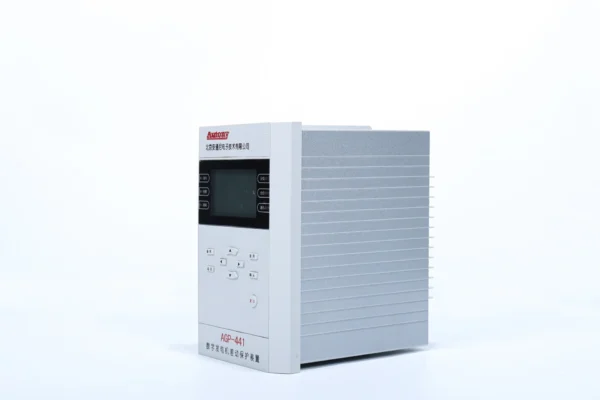
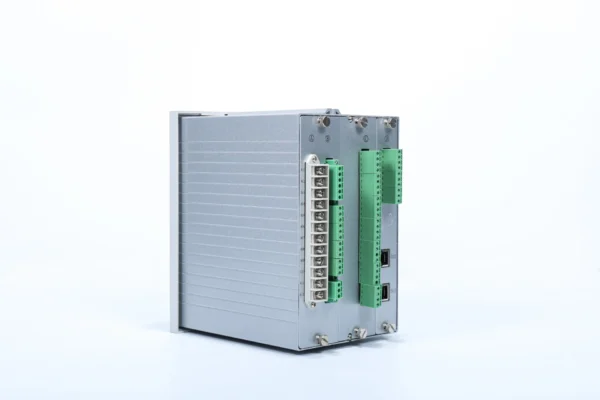
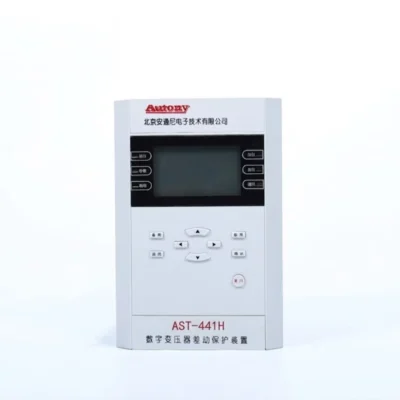
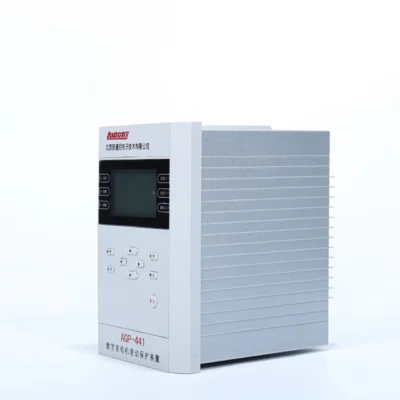
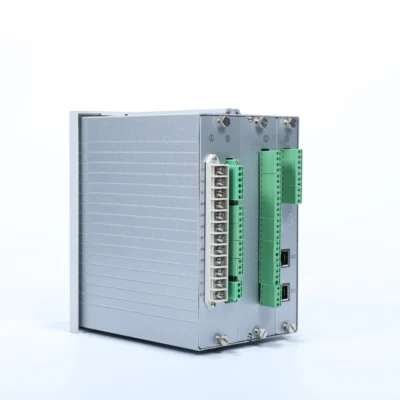
Transformer Differential Protection Relay | ANSI 87T
The 87T transformer differential protection relay and its associated control units are suitable for transformers in substations with voltage levels of 110 kV and below. Typically, they are mounted in a single panel together with transformer backup protection devices, non-electrical quantity protection devices, and transformer measurement and control units.
Send your requirements, we will quote for you within 12 hours
Description
Product Overview
The AST-441H Transformer Differential Protection Relay is a numerical ANSI 87T protection device designed for power transformer protection in substations and industrial power systems. It provides high-speed differential protection for internal transformer faults, with CT ratio and phase compensation, percentage-biased differential protection, harmonic restraint, event recording and fault recording functions.
The relay supports 1A or 5A CT inputs and can be integrated into transformer protection and control systems through standard communication interfaces. It is suitable for transformer protection applications up to 110 kV, subject to the project configuration and relay specification.
Key Features of the 87T Transformer Differential Protection Relay
1. ANSI 87T Differential Protection
High-speed differential protection for internal transformer faults within the protected zone.
2. Percentage-Biased Differential Protection
Bias/restraint characteristics improve stability during external faults and CT errors.
3. CT Ratio and Phase Compensation
Supports transformer-side current compensation according to CT configuration and transformer vector group.
4. Harmonic Restraint
Helps prevent unwanted differential operation during transformer energization and magnetizing inrush.
5. Fault and Event Recording
Records protection operations, events and fault information for commissioning and post-fault analysis.
6. Flexible CT Input
Supports 1 A and 5 A rated CT secondary inputs according to the selected configuration.
7. Communication Interfaces
Supports project-dependent interfaces and protocols such as RS-485, Ethernet and IEC 60870-5-103.
8. Protection and Control Integration
Can be integrated into transformer protection, measurement, control and substation automation systems.
Transformer Protection Functions and ANSI Codes
| Protection Function | ANSI Code | Purpose |
|---|---|---|
| Transformer Differential Protection | 87T | Main protection for internal transformer faults |
| High-Speed Differential Protection | 87T-HS | Fast operation for severe internal faults |
| CT Open-Circuit Detection | — | Detects abnormal CT secondary conditions |
| Differential Current Alarm | — | Warns of abnormal differential current |
| Harmonic Restraint | — | Prevents unwanted operation during inrush |
General Technical Data
| No. | Parameter Category | Core Technical Specification |
|---|---|---|
| 1 | Power Supply & Rated Electrical Parameters | 1. Rated control voltage: AC/DC 220 V
2. Power supply ripple coefficient: ≤ 5% 3. Voltage tolerance: -20% to +15% 4. Rated AC current In: 1 A/5 A (specify when ordering) 5. Rated AC voltage: 100 V 6. Rated frequency: 50 Hz (customizable per project requirements) |
| 2 | Power Consumption | 1. DC power circuit: ≤ 25 VA (normal operation), ≤ 30 VA (device activated)
2. AC voltage circuit: ≤ 1 VA/phase (at 100 V rated voltage) 3. AC current circuit: ≤ 0.5 VA/phase (1 A In), ≤ 1 VA/phase (5 A In) |
| 3 | Output Contact Performance | 1. DC circuit: 50 W breaking capacity (voltage ≤ 250 V, current ≤ 0.5 A, time constant 5 ± 0.75 ms); allowable make current ≤ 5 A
2. AC circuit: 50 W breaking capacity (voltage ≤ 250 V); maximum allowable make current 5 A |
| 4 | Insulation Performance | Meets IEC standard requirements for insulation resistance, dielectric strength, and impulse voltage |
What Is an 87T Relay?
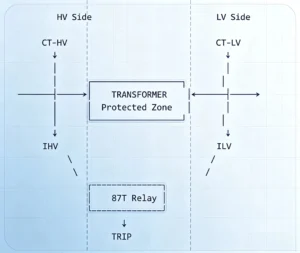
An 87T relay is a transformer differential protection relay that compares the currents entering and leaving the protected transformer zone to detect internal electrical faults.
- 87 = Differential Protection
- T = Transformer
- 87T = Transformer Differential Protection
How Does an 87T Relay Work?
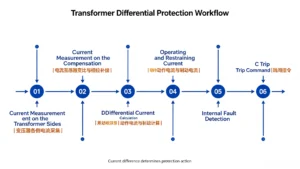
Normal Operation:I₁ ≈ I₂ → Low differential current → No trip
Internal Fault:I₁ ≠ I₂ → High differential current → 87T operates → Transformer breaker trips
87T Relay Settings
| No. | Display Name | Range | Step | Remark |
|---|---|---|---|---|
| 1 | High-speed Differential Setting | |||
| 1.1 | High-speed Differential Protection | 1/0 | — | Enable(1) / Disable(0) |
| 1.2 | High-speed Differential Setting Value | 0.40~99.99A | 0.01A | |
| 2 | Differential Protection Setting | |||
| 2.1 | Differential Protection Enable | 1/0 | — | Enable(1) / Disable(0) |
| 2.2 | CT Broken Circuit Blocking Differential | 1/0 | — | CT break blocking function: Enable(1) / Disable(0) |
| 2.3 | Differential Current Setting | 0.50~99.99A | 0.01A | |
| 2.4 | Restraint Current Setting | 0.50~99.99A | 0.01A | |
| 2.5 | Differential Bias Current Setting | 0.50~99.99A | 0.01A | |
| 2.6 | CT Broken Circuit Threshold | 0.50~99.99A | 0.01A | |
| 2.7 | Harmonic Restraint Coefficient | 0.10~0.70 | 0.01 | Second harmonic restraint ratio |
| 2.8 | Slope / Ratio Restraint Coefficient | 0.30~0.70 | 0.01 | |
| 2.9 | Balance Coefficient | 0.100~1.999 | 0.001 | |
| 3 | Overcurrent Fan Control | |||
| 3.1 | Overcurrent Fan Start | 1/0 | — | Enable(1) / Disable(0) |
| 3.2 | Ventilation Time Delay | 0.00~999.99s | 0.01s | |
| 3.3 | Fan Start Current Setting | 0.5~99.99A | 0.01A | |
| 4 | General Setting | |||
| 4.1 | Motor Differential Mode Selection | 1/0 | — | |
| 4.2 | HV Side Y/△-11 Connection | 1/0 | — | |
| 4.3 | HV Side Y/△-01 Connection | 1/0 | — | |
| 4.4 | Secondary Wiring Mode | 1/0 | — | Delta/Y(1) / Y/Y(0) |
| 4.5 | Control Circuit Break Alarm | 1/0 | — | Alarm enable(1) / disable(0) |
| 4.6 | Current Angle Display | 1/0 | — | |
| 4.7 | Secondary Current Rated | 1/0 | — | 1A input(1) / 5A input(0) |
| 4.8 | Inter-tripping C6C7 | 1/0 | — | High-speed & differential trip C06C07(1) |
| 4.9 | Rated Secondary Current | 0.50~99.99A | 0.01A | HV side CT secondary rated current |
87T Transformer Differential Protection Zone
87T vs 50/51 Transformer Protection
| Feature | 87T Relay | 50/51 Relay |
|---|---|---|
| Protection principle | Differential current | Overcurrent |
| Main protection area | Transformer internal zone | Backup / overcurrent |
| ANSI code | 87T | 50/51 |
| CT requirement | CTs on transformer sides | Current measurement CT |
| Internal winding faults | Highly sensitive | Depends on fault current |
| External fault stability | Bias/restraint | Time-current coordination |
| Typical role | Main transformer protection | Backup protection |
How to Test an 87T Relay?
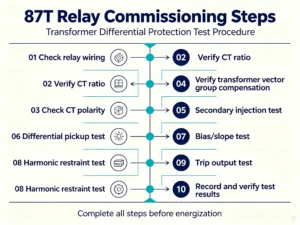
Before commissioning the transformer differential protection, technicians shall check the relay wiring, verify the CT ratio and CT polarity, and confirm the correctness of transformer vector group compensation; subsequently, perform a comprehensive secondary injection test, including differential pickup test, bias and slope characteristic test, harmonic restraint test, and trip output test, and finally record and verify all test results to ensure protection performance complies with design requirements.
Transformer Differential Protection Relay Applications
Power Substations
Transformer main protection for substation applications.
Industrial Power Systems
Protection for transformers supplying industrial plants and large electrical loads.
Power Plants
Transformer protection for generator step-up and auxiliary transformers where applicable.
Distribution Transformers
Suitable relay configurations for medium-voltage transformer protection.
EPC Substation Projects
Suitable for protection and control panel integration, commissioning and project-specific relay configuration.
How to Select a Transformer Differential Protection Relay
| Selection Factor | What to Check |
|---|---|
| Transformer Rating | MVA and voltage levels |
| Transformer Vector Group | YNd11, Dyn11, Yy, etc. |
| CT Ratio | HV/LV CT ratios |
| CT Secondary | 1 A or 5 A |
| Protection Functions | 87T, backup protection, alarms |
| Communication | Required substation protocol |
| Fault Recording | Number of channels and record capacity |
| Installation | Panel or rack mounting |
| Project Standard | IEC / utility / EPC specification |
Why Choose Our 87T Transformer Differential Protection Relay?
Project-Based Configuration
Relay parameters and functions can be configured according to transformer ratings and project protection requirements.
Technical Documentation
Provide technical specifications, wiring diagrams, configuration information and supporting documentation for project review.
Factory Testing / Pre-Shipment Verification
Provide functional verification and configuration checks before shipment according to the agreed project requirements.
EPC Support
Support technical communication during relay selection, panel integration and commissioning.
Replacement and Alternative Applications
Suitable for projects requiring an alternative transformer differential protection relay, subject to technical compatibility and project approval.
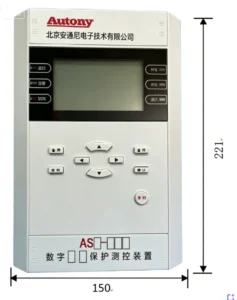
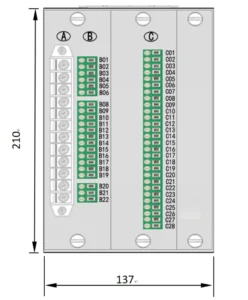
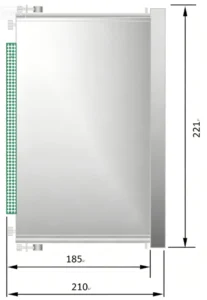
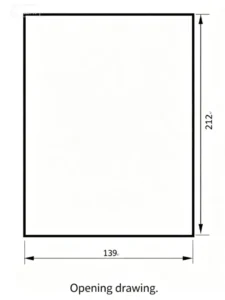
Outline and Installation Dimensions
Request a Quote for 87T Transformer Differential Protection Relay
Send us your transformer rating, voltage ratio, vector group, CT ratios, required protection functions and communication protocol. Our technical team can review the application and recommend a suitable relay configuration.
CTA:
Request 87T Relay Technical Information
FAQ
Q1. What is a transformer differential protection relay?
A primary protection device that detects internal transformer faults (e.g., turn-to-turn and phase-to-phase faults) by comparing currents on both sides, and trips to isolate the transformer upon fault detection.
Q2. What is ANSI 87T protection?
ANSI 87T is the standard function code for transformer differential protection. “87” denotes differential protection, and “T” stands for transformer.
Q3. What transformer faults does an 87T relay protect against?
Internal faults including:
-
Turn-to-turn faults
-
Phase-to-phase short circuits
-
Ground faults
-
Winding open circuits/breaks
-
Core faults (e.g., overheating from multiple ground points)
Q4. Does the relay support 1A and 5A CT inputs?
Yes. Both 1A and 5A CT secondary inputs are supported and configurable via relay settings.
Q5. How does the relay compensate for transformer vector group?
It applies software-based amplitude and phase correction to match different vector groups (e.g., Ynd11, Dyn1). Users only need to enter the vector group and connection type; the relay calculates the differential current automatically.
Q6. How does 87T protection prevent transformer inrush tripping?
It uses harmonic restraint (mainly second-harmonic braking). During inrush, the high second-harmonic content raises the operating threshold or blocks the protection, preventing false trips.
Q7. What communication interfaces are available?
Common options include:
-
RS485 (Modbus RTU)
-
Fiber optic Ethernet (IEC 61850, Modbus TCP)
-
Fiber optic serial ports
-
Optional: Profibus, DNP 3.0 (select models)
Q8. What information is required to select an 87T relay?
Key parameters needed:
-
Rated capacity (MVA/kVA)
-
Voltage ratio (e.g., 110kV/10kV)
-
Vector group (e.g., Ynd11)
-
CT ratios and connection types (both sides)
-
Required protection functions
-
Communication protocol
-
Power supply and installation environment
Q9. Can the relay be integrated into a transformer protection and control panel?
Yes. It is available in 19-inch chassis or drawout modules, supporting panel or DIN-rail mounting, and can be integrated with other protection and control devices in a cubicle.
Q10. How can I request the technical datasheet and quotation?
Contact us via:
-
Sales email (with project requirements and transformer parameters)
-
Technical support hotline
-
Online inquiry form on our website
Our team will recommend the right model and provide a quotation and datasheet accordingly.
Related Products:
2 reviews for Transformer Differential Protection Relay | ANSI 87T
Related products
High Quality
Stable performance, reliable design, ensuring safe operation for power system protection and grid stability.
Fast Delivery
Timely delivery to support your urgent orders and project schedules efficiently and professionally at any time.
Best Warranty
Professional Warranty: Reliable after-sales support for stable relay protection and long-term customer satisfaction.
xiao zhang –
Transformer differential relay (87T) adopts percentage restraint algorithm, strong anti-CT-saturation capability and CT break lockout. Instant trip for internal winding faults, flexible parameter setting and multi-communication options for all types of distribution & power transformers.
Jack –
Backed by good technical support and documentation — overall a solid choice.