Description
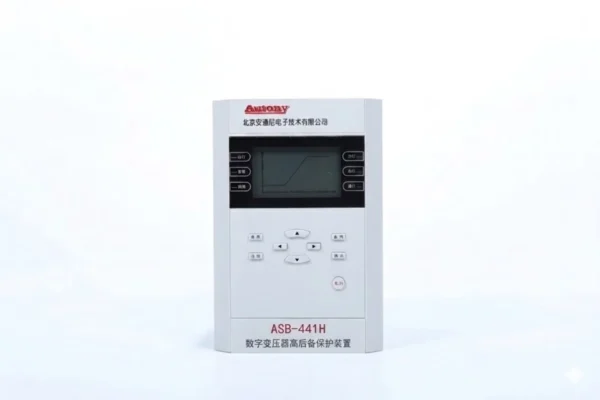
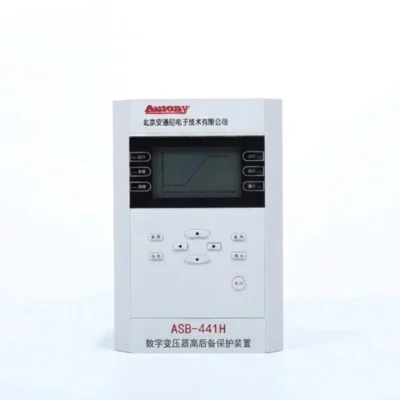
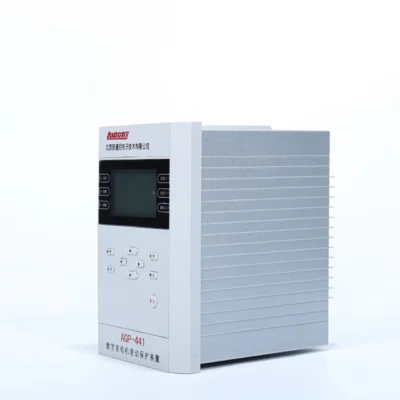
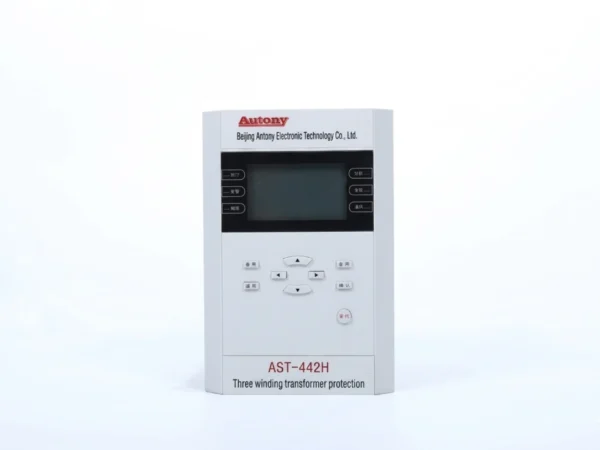
The Transformer Backup Protection Relay is a numerical protection device designed to provide secondary and backup protection for power transformers in substations up to 110 kV. It works alongside the main transformer differential protection system to provide backup protection against external short circuits, earth faults, overload and abnormal voltage or frequency conditions.
Key Features
- High-voltage transformer backup protection
- Voltage-restrained overcurrent protection
- Zero-sequence earth fault protection
- Negative-sequence protection
- Overload protection
- Undervoltage and overvoltage protection
- Underfrequency and overfrequency protection
- Fault recording
- SOE event recording
- Remote monitoring and communication
Fault Recording and Event Logging
| Feature |
Specification |
| SOE Records |
Up to 48 |
| Fault Reports |
Up to 16 |
| Pre-Fault Waveform |
2 cycles |
| Post-Fault Waveform |
4 cycles |
| SOE Resolution |
≤2 ms |
Fault records help protection engineers analyze transformer trips, external short circuits and backup protection operations.
Main Functional Specifications
| No. |
Parameter Category |
Parameter Name |
Technical Specification |
| 1 |
Protection Response Characteristics |
Protection Response Time (including output relay response time) |
Average error in response time: ≤ 35 ms |
| 2 |
Operating Range & Setting Accuracy |
Precision Operating Range – Current |
Minimum precision current: 0.08 In; Maximum precision current: 20 In |
| 3 |
Operating Range & Setting Accuracy |
Current Setting Error |
When current exceeds 1.00 A, error shall not exceed ±2.5% |
| 4 |
Operating Range & Setting Accuracy |
Voltage Setting Error |
Error shall not exceed ±3% |
| 5 |
Measurement Accuracy |
Current (I) / Voltage (U) Measurement Accuracy |
Class 0.2 |
| 6 |
Measurement Accuracy |
Active Power (P) / Reactive Power (Q) Measurement Accuracy |
Class 0.5 |
| 7 |
Other Performance Indicators |
Remote Signal (SOE) Resolution |
≤ 2 ms |
What Is Transformer Backup Protection?
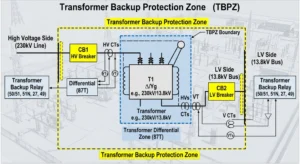
Transformer backup protection is a secondary protection scheme that operates when the main protection system fails to clear a fault or when faults occur outside the transformer differential protection zone. For power transformers, backup protection may respond to external short circuits, busbar faults, feeder faults, earth faults and prolonged abnormal operating conditions.
Unlike transformer differential protection, which primarily provides fast protection for internal transformer faults, backup protection operates with coordinated time delays to provide protection redundancy and support selective fault clearing.
Transformer Main Protection vs Backup Protection
| Item |
Main Differential Protection |
Backup Protection |
| Main Function |
Internal transformer fault protection |
Backup for main protection / external fault protection |
| Typical ANSI |
87T |
51V, 51N, 46, 49, 27, 59 |
| Operating Speed |
Fast |
Coordinated time delay |
| Protection Zone |
Transformer internal zone |
Transformer and adjacent system |
| Typical Faults |
Internal winding faults |
External short circuits, earth faults, overload |
| Purpose |
Primary fault clearing |
Protection redundancy |
| Example Relay |
Differential Protection Relay |
Transformer Backup Protection Relay |
Transformer Backup Protection Functions
| ANSI |
Function |
Purpose |
| 51V |
Voltage-Restrained Overcurrent |
Backup phase fault protection |
| 51N |
Residual / Zero-Sequence Overcurrent |
Earth fault backup |
| 51I |
Inverse-Time Overcurrent |
Coordinated overcurrent protection |
| 46 |
Current Unbalance / Negative Sequence |
Unbalanced fault protection |
| 49 |
Thermal Overload |
Transformer overload protection |
| 27 |
Undervoltage |
Abnormal voltage protection |
| 59 |
Overvoltage |
Abnormal voltage protection |
| 81U |
Underfrequency |
Frequency abnormality |
| 81O |
Overfrequency |
Frequency abnormality |
Voltage-Restrained Overcurrent Protection (51V)
Voltage-restrained overcurrent protection (ANSI 51V) adjusts the overcurrent pickup threshold based on system voltage. Under normal voltage, the pickup is set relatively high to avoid nuisance trips during load variations. When a fault causes voltage depression, the pickup threshold reduces, enabling more sensitive detection of faults that conventional overcurrent elements may miss.
The characteristic is typically linear or piecewise: at rated voltage, pickup is at maximum; as voltage drops, pickup reduces proportionally, reaching a minimum at around 70–80% of rated voltage.
Typical Applications:
-
Backup protection for transformers where fault current levels vary significantly
-
Weak source or long feeder applications where fault currents are limited
-
Coordination with downstream protection while maintaining sensitivity for close-in faults
Key Considerations:
-
Serves as complementary backup to 87T, not a replacement
-
Can be combined with conventional 51 elements in multi-stage schemes
-
Requires VT input from HV or LV side — confirm availability when specifying
-
Settings must be coordinated with upstream/downstream devices
Earth Fault Backup Protection (51N + 59N)
The relay provides earth fault backup protection through coordinated zero-sequence current (51N) and zero-sequence voltage (59N) elements, covering various system grounding configurations.
-
51N (Zero-Sequence Overcurrent): Measures residual current from phase CTs or dedicated neutral CT. Supports definite-time or inverse-time characteristics for coordination with downstream devices.
-
59N (Zero-Sequence Overvoltage): Detects earth faults via neutral voltage displacement. Essential for ungrounded, resonant grounded, and high-resistance grounded systems where fault current is limited or compensated.
The relay also supports zero-sequence voltage blocking for 51N and zero-sequence current blocking for 59N to prevent misoperation during PT open-circuit, system unbalance, or external faults.
Applications by Grounding Method:
Procurement Notes:
-
For higher sensitivity, specify a dedicated neutral CT rather than calculated residual current.
-
Confirm directional earth fault (67N) support if required for parallel transformer or ring network applications.
Transformer Backup Protection Zone
Applications by Voltage Level
The ASB-4401H is suitable for transformer backup protection applications up to 110 kV. Typical application examples include:
-
110 kV substation transformers
-
66 kV regional substation transformers
-
35 kV distribution substation transformers
-
33 kV utility and industrial networks
-
10 kV / 11 kV medium-voltage distribution transformers
Note: Actual suitability depends on CT/VT specifications, grounding method, and coordination requirements. Refer to the technical datasheet or contact our engineering team for project-specific guidance.
Setting Table of Transformer Backup Protection Relay
| No. |
Parameter Name |
Setting Range |
Step Multiplier |
| 5 |
Stage 1 Overcurrent Protection Time Delay (T1) |
0~120.00 s |
×100 |
| 6 |
Stage 2 Overcurrent Protection Time Delay (T2) |
0~120.00 s |
×100 |
| 7 |
Stage 3 Overcurrent Protection Time Delay (T3) |
0~120.00 s |
×100 |
| 8 |
Spare |
– |
– |
| 9 |
Stage 1 Zero-sequence Overcurrent Protection Time Delay (T01) |
0~120.00 s |
×100 |
| 10 |
Stage 2 Zero-sequence Overcurrent Protection Time Delay (T02) |
0~120.00 s |
×100 |
| 11 |
Zero-sequence Overvoltage Protection Time Delay (T0V) |
0~120.00 s |
×100 |
| 12 |
Overload Protection Time Delay (TOL) |
0~120.00 s |
×100 |
| 13 |
Undervoltage Protection Time Delay (TUV) |
0~120.00 s |
×100 |
| 14 |
Under-frequency / Phase Loss Protection Time Delay (TUF/PL) |
0~120.00 s |
×100 |
| 15 |
Stage 1 Overcurrent Protection Setting (Instantaneous Trip Current Setting) |
0.40~99.99 A / 0.10~20.00 A |
×100 |
| 16 |
Stage 2 Overcurrent Protection Setting (Time-limited Instantaneous Trip Current Setting) |
0.40~99.99 A / 0.10~20.00 A |
×100 |
| 17 |
Stage 3 Overcurrent Protection Setting (Overcurrent Protection Current Setting) |
0.40~99.99 A / 0.10~20.00 A |
×10 |
| 18 |
Overload Protection Setting (Overload Current Setting) |
0.40~99.99 A / 0.10~20.00 A |
×100 |
| 19 |
Stage 1 Inverse-time Overcurrent Protection Current Setting (Original Start-up Setting) |
1~99.99 A |
×100 |
| 20 |
Stage 1 Zero-sequence Overcurrent Protection Setting |
0.02~5.00 A / 0.40~99.99 A |
×100 |
| 21 |
Stage 2 Zero-sequence Overcurrent Protection Setting |
0.02~5.00 A / 0.40~99.99 A |
×100 |
| 22 |
Zero-sequence Current Blocking Setting (Zero-sequence Current for Zero-sequence Overvoltage Blocking) |
0.02~5.00 A / 0.40~99.99 A |
×100 |
| 23 |
Undervoltage Blocking Setting (Undervoltage for Overcurrent Protection Blocking) |
5~100.00 V |
×100 |
| 24 |
Negative-sequence Voltage Setting (Negative-sequence Voltage for Overcurrent Protection Blocking) |
5~100.00 V |
×100 |
| 25 |
Zero-sequence Overvoltage Protection Setting |
5~100.00 V |
×100 |
| 26 |
Zero-sequence Voltage Blocking Setting (Zero-sequence Voltage for Zero-sequence Overcurrent Blocking) |
0~100.00 V |
×100 |
| 27 |
Undervoltage Protection Setting (Undervoltage Trip Setting) |
0~100.00 V |
×100 |
| 28 |
Under-frequency Protection Setting |
0.2~10.00 Hz |
×100 |
| 29 |
Stage 1 Inverse-time Overcurrent Protection Time Delay |
0~120.00 s |
×100 |
| 30 |
Current Unbalance Protection Time Delay |
0~120.00 s |
×100 |
| 31 |
Current Blocking Setting (Low Current for Under-frequency Protection Blocking) |
– |
– |
| 32 |
Voltage Blocking Setting (Low Voltage for Under-frequency Protection Blocking) |
– |
– |
| 33 |
Frequency Slip Setting |
– |
– |
| 34 |
Stage 2 Inverse-time Overcurrent Protection Time Constant |
0~120.00 s |
×100 |
| 35 |
Stage 2 Inverse-time Overcurrent Protection Current Setting |
1~99.99 A |
×100 |
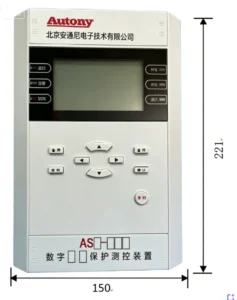
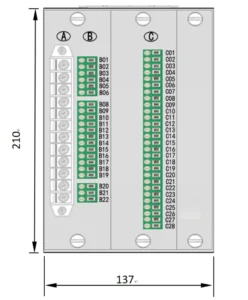
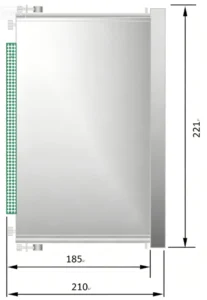
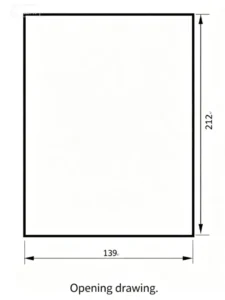
Outline and Installation Dimensions
FAQ
1. What is transformer backup protection?
A secondary protection layer that operates when primary protection (e.g., 87T) fails to clear a fault or when faults occur outside the transformer zone. Provides time-delayed clearing of phase and earth faults.
2. What is the difference between differential and backup protection?
3. What protection functions does this relay provide?
50/51 (overcurrent), 50N/51N (earth fault), 51V (voltage-restrained overcurrent), 59N (zero-sequence overvoltage), 49 (overload), 27/59 (under/overvoltage), plus event recording and SOE.
4. What faults can it detect?
Phase-to-phase faults, phase-to-earth faults, overloads, undervoltage/overvoltage, high-impedance earth faults, and downstream feeder faults (backup).
5. What is voltage-restrained overcurrent (51V)?
Pickup adjusts with voltage: high under normal conditions to avoid nuisance trips; reduced during voltage depression for sensitive fault detection.
6. Does it provide earth fault backup?
Yes. 51N (zero-sequence current) for grounded systems; 59N (zero-sequence voltage) for ungrounded/resonant grounded systems.
7. What voltage levels is it suitable for?
Up to 110 kV. Examples: 110 kV, 66 kV, 35 kV, 33 kV, 10 kV/11 kV. Suitability depends on CT/VT specs and grounding method.
8. Can settings be adjusted on site?
Yes — via front panel HMI or remotely via communication protocols. Password protection available.
9. Does it record faults and SOE?
Yes. Event recording (time-stamped SOE) and COMTRADE-format disturbance recording for post-fault analysis.
10. What communication protocols are supported?
Modbus RTU (RS-485), Modbus TCP (Ethernet), IEC 61850, and optional CANBUS.
11.Is transformer backup protection necessary if differential protection is installed?
Yes. Transformer differential protection and backup protection serve different purposes. Differential protection provides fast primary protection for internal transformer faults, while backup protection provides additional protection when the primary protection fails or when faults occur outside the differential protection zone. The two protection systems are normally coordinated to provide redundancy and selective fault clearing.
Related Products
Integrated Transformer Protection Device
IEC 61850 transformer protection relay


xiao zhang –
The relay monitors HV side voltage and current in real time. For system short-circuit or grounding faults that primary differential protection fails to cut off, it operates with preset delay to trip the breaker. Voltage restraint avoids misoperation under normal overload conditions.
Jack –
Sensitive and selective coordination — avoids unnecessary outages.