

-
Leon Zhang sales consultant
-
Email: zxl635973785@gmail.com
-
Phone/WhatsApp: +86 13655813266
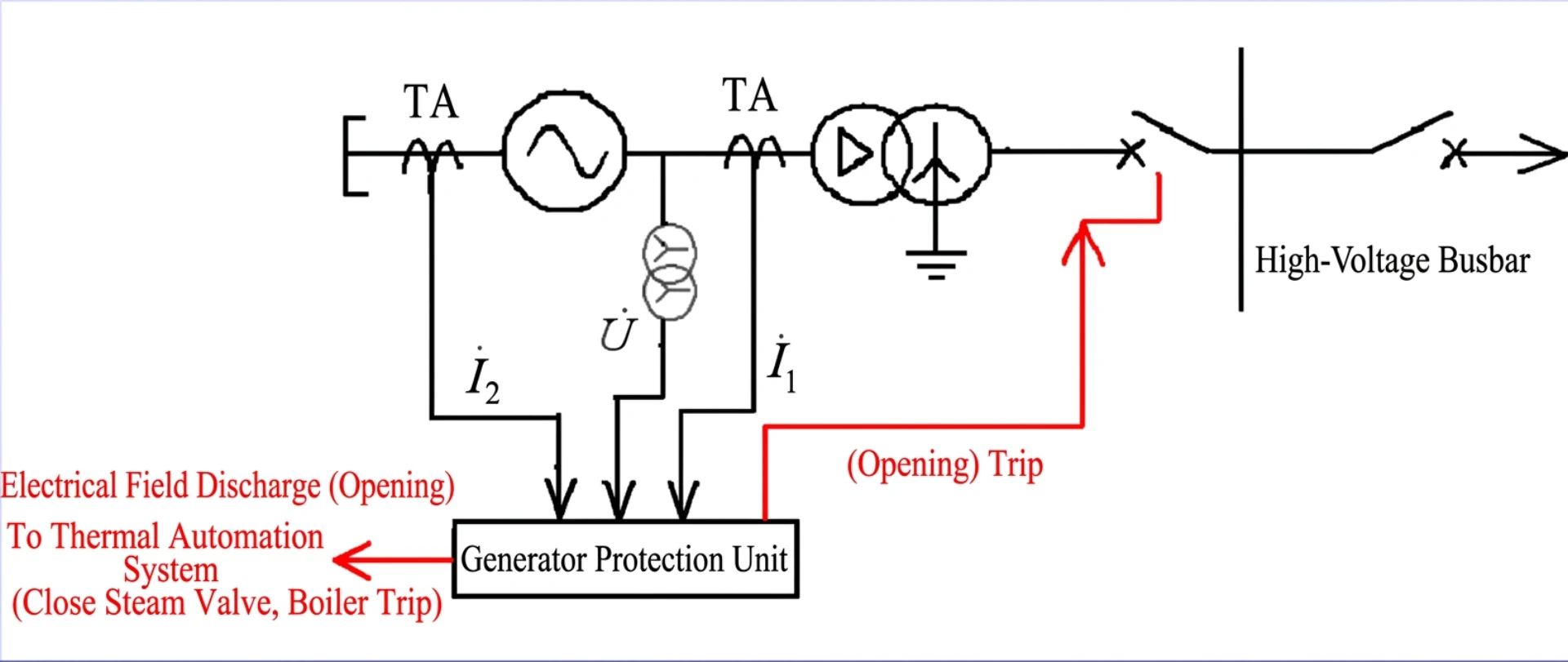
Generator Protection Relay for Hydro, Diesel and Industrial Generators
Generator protection relay is a critical protection device used to monitor, detect and isolate electrical faults in generator units.
Modern power plants require reliable protection solutions to prevent damage caused by stator faults, rotor insulation failures, reverse power, loss of excitation and abnormal operating conditions.
RelayProtect provides generator protection relay solutions for hydro generators, diesel generators, and industrial power generation systems, covering main protection, backup protection and generator-transformer unit protection applications.
What Is a Generator Protection Relay?
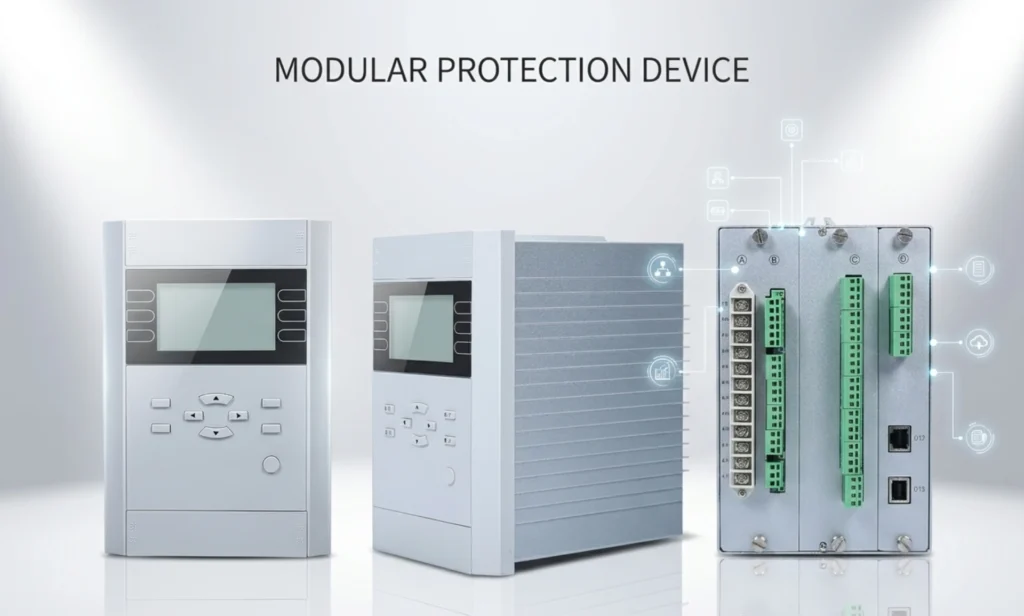
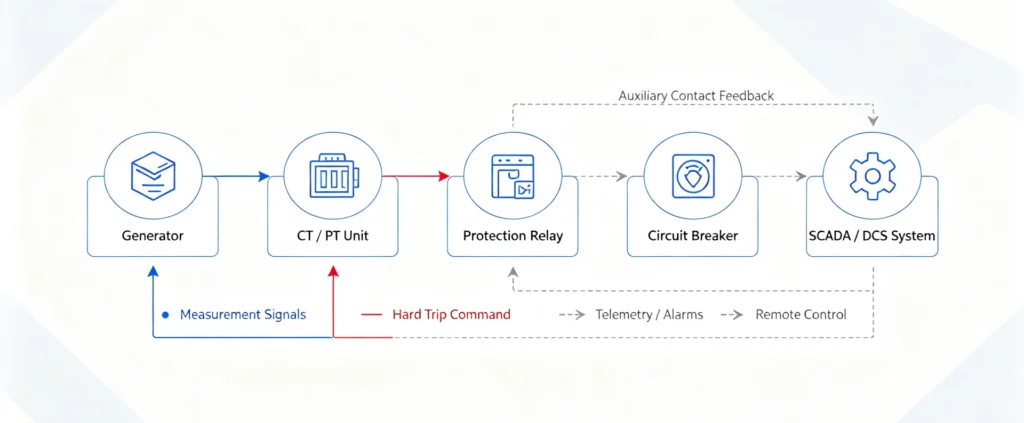
A generator protection relay is an intelligent device that continuously monitors a generator’s electrical and thermal parameters. When it detects a fault, it issues a trip command to isolate the generator from the grid, preventing serious damage.
How It Works
The relay relies on Current Transformers (CTs) and Potential Transformers (PTs) to measure currents and voltages in real time. Key protection functions include:
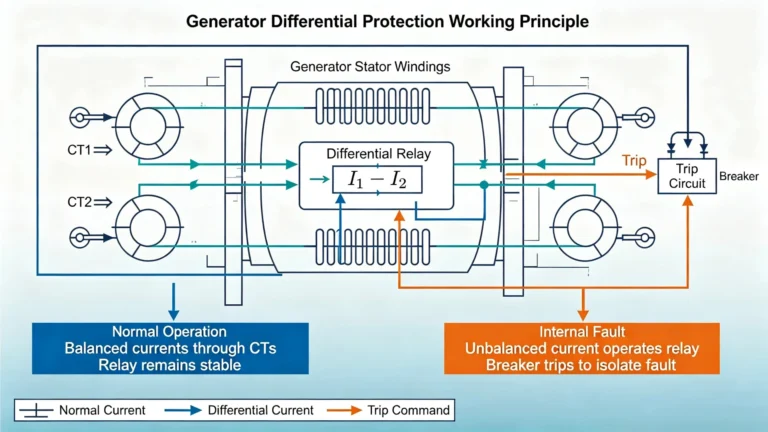
- Differential Protection (87G): Compares currents at both ends of the generator windings. A significant difference indicates an internal fault and triggers an immediate trip.
- Ground Fault Protection: Detects stator winding faults against ground, preventing severe damage.
- Abnormal Condition Protection: Monitors non-short-circuit issues such as loss of excitation, unbalanced loads, and over/under-frequency events.
Action and Communication
- Trip Command: Once a fault is confirmed, the relay opens the generator circuit breaker to isolate the fault.
- SCADA Communication: Modern relays support standard communication protocols, transmitting status, alarms, and fault records to a SCADA system for remote monitoring and event analysis.
In short, a generator protection relay ensures the safe operation of the generator through precise measurement, intelligent fault detection, fast tripping, and remote communication.
Generator Protection Relay Functions
87G – Generator Differential Protection
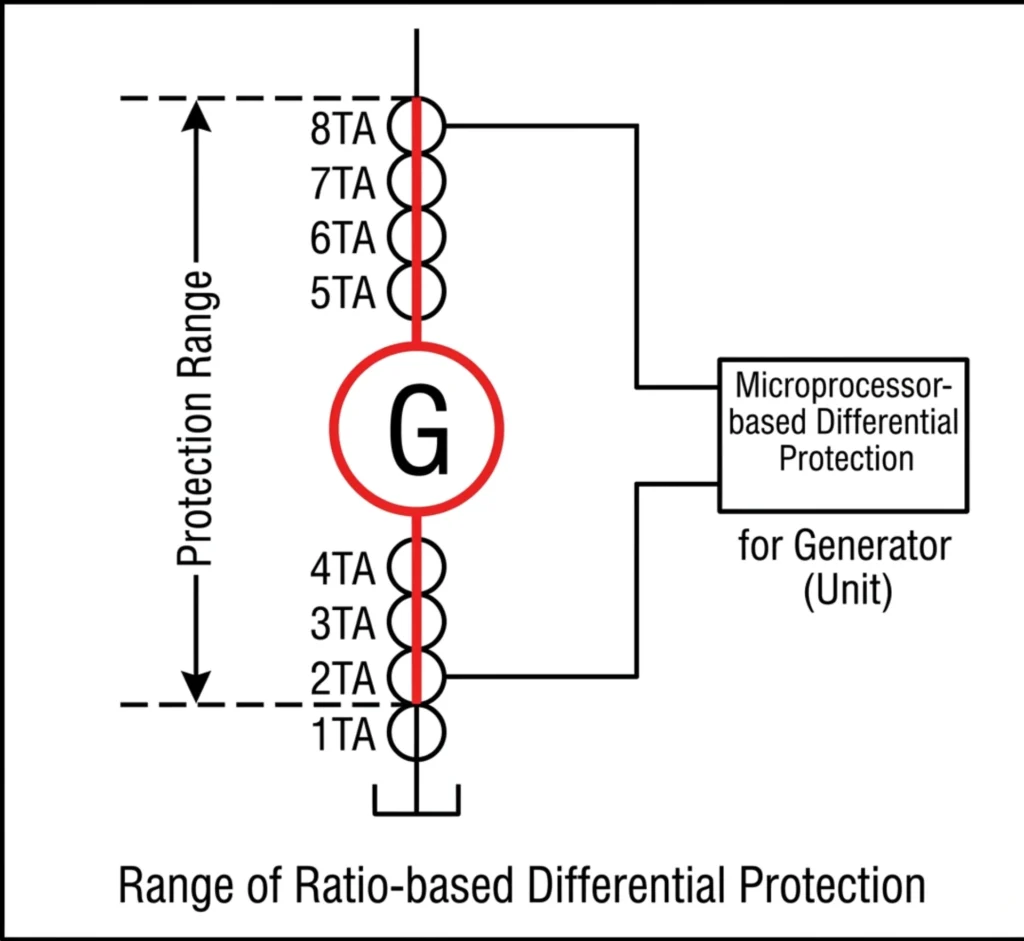
Purpose: Detects internal phase-to-phase faults within the generator stator windings.
Introduction: This protection compares currents measured at both ends of the stator windings (neutral side and line side). Under normal conditions, the currents are equal. When an internal fault occurs, the difference increases and triggers an instantaneous trip. This is the primary high-speed protection for the generator, critical for safeguarding expensive stator windings.
64R – Rotor Earth Fault Protection
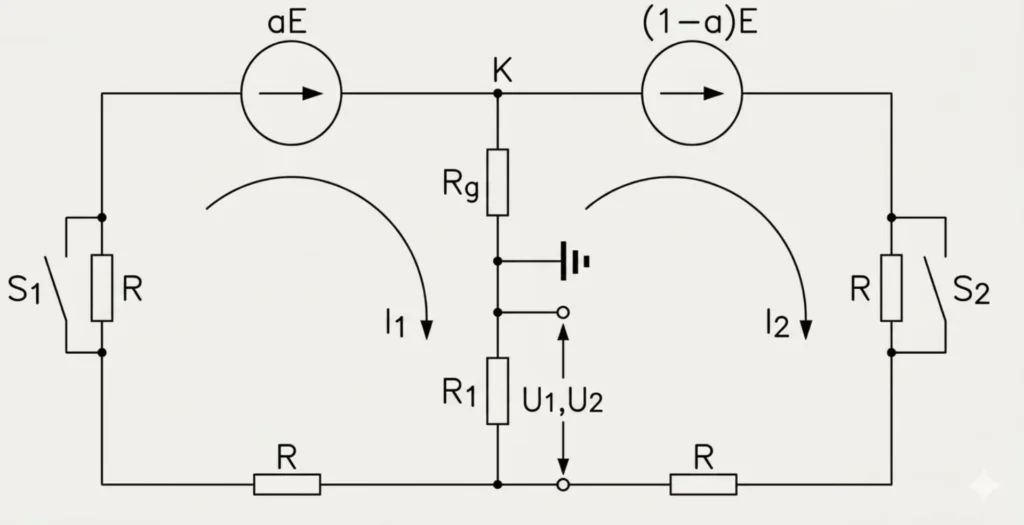
Purpose: Monitors the insulation condition of the rotor winding and detects ground faults.
Introduction: A single rotor earth fault typically does not require immediate shutdown. However, if a second ground fault occurs, it can lead to severe rotor vibration, overheating, or even complete rotor destruction. 64R protection provides early warning, allowing maintenance teams to schedule repairs before catastrophic failure occurs.
64S – Stator Ground Fault Protection
Purpose: Detects ground faults in the generator stator windings.
Introduction: Stator ground faults are among the most common generator faults. 64S protection utilizes neutral grounding systems or fundamental/third-harmonic voltage detection to achieve full stator winding coverage. Early detection prevents the fault from escalating into a phase-to-phase short circuit, avoiding major equipment damage.
50/51 – Overcurrent Protection
Purpose: Serves as primary or backup protection against overloads and external faults.
Introduction: This function includes two elements: 50 (instantaneous overcurrent) for fast clearing of severe short circuits, and 51 (time-delayed/inverse-time overcurrent) for overload conditions with time coordination with upstream/downstream protections. Typically acts as backup for differential protection, ensuring fault clearance even if the primary protection fails.
32 – Reverse Power Protection
Purpose: Prevents the generator from motoring when the prime mover (diesel engine, turbine, etc.) loses driving force.
Introduction: When the prime mover fails or steam/water flow is insufficient, the generator draws active power from the grid and operates as a motor. This “motoring effect” can damage turbine blades and gearboxes. 32 protection monitors active power direction and issues a trip command when reverse power is detected, protecting the prime mover.
40 – Loss of Excitation Protection
Purpose: Detects failure of the generator excitation system.
Introduction: Loss of excitation causes the generator to draw large amounts of reactive power from the grid, leading to voltage depression, generator overheating, and rotor eddy current losses. This protection monitors impedance trajectory or reactive power changes to detect excitation loss and promptly disconnect the generator, preventing system stability issues.
46 – Negative Sequence Protection (Unbalance Protection)
Purpose: Protects the generator from overheating caused by unbalanced loads.
Introduction: Unbalanced loads (e.g., system asymmetrical faults or single-phase loads) produce negative sequence currents, which induce eddy currents on the rotor surface. These cause localized overheating and can eventually damage the rotor. 46 protection detects negative sequence components and issues alarms or trips before dangerous thresholds are reached.
24 – Overexcitation Protection (V/Hz Protection)
Purpose: Prevents saturation of the generator or main transformer core due to excessive flux density, which can cause overheating and damage.
Introduction: This protection monitors the voltage-to-frequency ratio (V/Hz). When voltage is too high or frequency is too low, the V/Hz ratio increases, causing core saturation and severe heating. 24 protection uses time-delayed or inverse-time characteristics to issue alarms or trips before core damage occurs.
27/59 – Voltage Protection
Purpose: Monitors abnormal generator terminal voltage to prevent equipment damage or system instability.
Introduction: Includes 27 (undervoltage) and 59 (overvoltage) protection. Undervoltage protection detects voltage dips caused by system faults; overvoltage protection prevents excessive voltage due to voltage regulator failure or load rejection. Both can issue alarms or trips depending on severity.
81 – Frequency Protection
Purpose: Monitors power system frequency deviations to protect the generator and maintain system stability.
Introduction: Includes 81O (overfrequency) and 81U (underfrequency). Overfrequency typically occurs during sudden load shedding and can endanger turbine blade life. Underfrequency results from generation shortages and may cause generator overheating and system instability. This protection uses multiple frequency setpoints to selectively trip generators or initiate load shedding under abnormal conditions.
Summary Reference Table
| ANSI Code | Protection Function | Primary Purpose |
|---|---|---|
| 87G | Generator Differential Protection | Internal stator phase faults (primary protection) |
| 64R | Rotor Earth Fault Protection | Rotor insulation monitoring & early warning |
| 64S | Stator Ground Fault Protection | Stator winding ground faults |
| 50/51 | Overcurrent Protection | Overload & external fault backup protection |
| 32 | Reverse Power Protection | Prevents generator motoring |
| 40 | Loss of Excitation Protection | Excitation failure detection & disconnection |
| 46 | Negative Sequence Protection | Rotor overheating from unbalanced loads |
| 24 | Overexcitation Protection (V/Hz) | Prevents core saturation in generator/transformer |
| 27/59 | Voltage Protection | Undervoltage/overvoltage protection |
| 81 | Frequency Protection | Overfrequency/underfrequency protection |
Generator Protection Relay Products
400V Low Voltage Generator Protection Relay
Overview: A dedicated protection relay designed for low-voltage generators operating at 400V, typically used in small diesel generator sets, backup power systems, and industrial standby applications.
Key Features:
- Built-in overcurrent protection (50/51) for overload and short-circuit faults
- Compact design for easy integration into low-voltage switchgear
- Voltage and frequency monitoring for abnormal conditions
- Optional communication for remote status indication
Typical Application: Small diesel generators, emergency backup sets, commercial standby power systems.
400V Low Voltage Hydroelectric Generator Protection Relay
Overview: A specialized protection relay tailored for small hydroelectric generators operating at 400V, addressing the unique operational characteristics of low-speed hydro turbines.
Key Features:
- Overcurrent protection (50/51) for fault clearing
- Reverse power protection (32) to prevent motoring when water flow is insufficient
- Over/under frequency protection (81) for grid synchronization stability
- Voltage protection (27/59) for abnormal terminal voltage conditions
Typical Application: Small-scale hydroelectric plants, run-of-river hydro projects, pico-hydro systems.
441H Generator Backup Protection Relay
Overview: A comprehensive backup protection relay designed to provide secondary protection for generators when primary protection fails or is unavailable.
Key Features:
- Time-delayed overcurrent protection (51) for fault backup
- Negative sequence protection (46) for unbalanced load conditions
- Overexcitation protection (24) to prevent core saturation
- Loss of excitation detection (40) as supplementary protection
- Voltage and frequency monitoring
Typical Application: Medium to large generators requiring a dedicated backup protection layer for enhanced system reliability.
87G Generator Differential Protection Relay
Overview: The primary high-speed protection relay for detecting internal stator winding faults in generators, comparing currents at both ends of the windings.
Key Features:
- Dual-slope differential characteristic for stability during external faults
- High-speed tripping for internal phase-to-phase and phase-to-ground faults
- CT saturation detection to prevent false tripping
- Built-in self-diagnostic functions
- SCADA communication support (IEC 61850, Modbus, DNP3)
Typical Application: Medium to large generators in utility, industrial, and commercial power plants.
87G/50/51 Generator Protective Relay
Overview: A combined protection relay integrating generator differential protection (87G) with overcurrent protection (50/51) in a single device, offering a compact and cost-effective solution.
Key Features:
- Primary differential protection (87G) for internal stator faults
- Instantaneous (50) and time-delayed (51) overcurrent as backup
- Reduced panel space and wiring requirements
- Simplified coordination and maintenance
- Comprehensive fault recording and event logging
Typical Application: Small to medium generators where space and budget constraints require integrated protection.
87GT Generator Transformer Protection Relay
Overview: A specialized protection relay designed for generator-transformer units, providing coordinated protection for both the generator and its step-up transformer.
Key Features:
- Differential protection for the generator (87G)
- Differential protection for the transformer (87T) with harmonic restraint for inrush current
- Overcurrent backup protection (50/51)
- Overexcitation protection (24) for the transformer core
- Integrated fault recording and analysis tools
Typical Application: Generator step-up transformer units in hydro, diesel, and gas power plants.
Ping-Pong Type Rotor Earth Fault Protection Relay | 64R Relay for Generators
Overview: A dedicated rotor earth fault protection relay utilizing the “ping-pong” measurement principle to monitor rotor winding insulation resistance with high sensitivity and reliability.
Key Features:
- Ping-pong measurement technique for accurate rotor insulation monitoring
- Detects both single-point and developing rotor ground faults
- Immune to rotor field voltage variations
- Provides early warning alarms before fault escalation
- Suitable for both brushless and static excitation systems
Typical Application: Large generators requiring continuous rotor insulation monitoring, particularly in hydropower and utility-scale plants.
Voltage Injection Rotor Earth Fault Protection Relay | 64R
Overview: A rotor earth fault protection relay that injects a low-voltage signal into the rotor circuit to measure insulation resistance and detect ground faults with high precision.
Key Features:
- AC or DC voltage injection method for reliable ground fault detection
- High sensitivity to incipient insulation deterioration
- Continuous online monitoring without interrupting generator operation
- Alarm and trip outputs for automatic protection response
- Compatible with various generator excitation systems
Typical Application: Generators requiring precise, continuous rotor insulation monitoring, especially in critical or high-value installations.
Product Selection Quick Guide
| Product | Protection Functions | Best For |
|---|---|---|
| 400V Low Voltage Generator Relay | 50/51, 27/59, 81 | Small diesel/backup generators |
| 400V Low Voltage Hydro Relay | 50/51, 32, 81, 27/59 | Small hydroelectric units |
| 441H Backup Relay | 51, 46, 24, 40 | Backup protection for medium/large generators |
| 87G Differential Relay | 87G | Primary stator fault protection |
| 87G/50/51 Relay | 87G, 50/51 | Compact protection for small-medium generators |
| 87GT Relay | 87G, 87T, 50/51, 24 | Generator-transformer units |
| Ping-Pong 64R | 64R (ping-pong) | Rotor insulation monitoring |
| Voltage Injection 64R | 64R (voltage injection) | Precise rotor ground fault detection |
Applications of Generator Protection Relay
| Application | Protection Requirement |
|---|---|
| Hydropower Plant | 87G,64R,40 |
| Diesel Generator | 50/51,32,27/59 |
| Gas Generator | Comprehensive protection |
| Industrial Power Plant | Backup protection |
| Renewable Energy Plant | Grid connection protection |
Generator Protection Scheme
How to Select a Generator Protection Relay
Selecting the right generator protection relay depends on three key factors: generator type, voltage level, and protection requirements.
Generator Type
| Type | Key Focus |
|---|---|
| Hydro | Loss of excitation (40), over/under frequency, reverse power (32) |
| Diesel | Reverse power (32), unbalanced load (46), overcurrent (50/51) |
| Gas | Over-frequency, overcurrent, differential protection (87G) |
Voltage Level
| Voltage | Application | Relay Need |
|---|---|---|
| 400V | Small diesel/backup units | Basic relay with overcurrent protection |
| 6.6kV | Industrial generators | Standard relay with differential support |
| 11kV | Utility-scale plants | High-accuracy relay with advanced functions |
| 13.8kV | Large hydro/gas turbines | High-end relay with full protection suite + SCADA |
Higher voltage = more sophisticated relay required.
Protection Requirements (Three Tiers)
| Tier | Functions | Best For |
|---|---|---|
| Basic | 50/51 (Overcurrent) | Small, non-critical generators |
| Advanced | 50/51 + 87G (Differential) | Medium-sized industrial/commercial generators |
| Complete | 87G + 64R + 40 + 32 | Large, utility-critical generators |
ANSI Code Reference:
- 50/51 – Overcurrent
- 87G – Generator Differential
- 64R – Rotor Earth Fault
- 40 – Loss of Excitation
- 32 – Reverse Power
Quick Selection Guide
| Generator Type | Voltage | Recommended Tier |
|---|---|---|
| Small Diesel | 400V | Basic (50/51) |
| Medium Diesel/Gas | 6.6kV | Advanced (50/51 + 87G) |
| Large Diesel/Gas | 11kV | Complete (87G+64R+40+32) |
| Hydro | 11kV/13.8kV | Complete (87G+64R+40+32) |
| Gas Turbine | 13.8kV | Complete (87G+64R+40+32) |
Summary
| If your generator is… | Choose… |
|---|---|
| Small or non-critical | Basic (50/51) |
| Medium-sized | Advanced (50/51 + 87G) |
| Large or critical | Complete (87G + 64R + 40 + 32) |
Why Choose Autony Generator Protection Relay?
Complete Generator Protection Experience
We provide comprehensive generator protection solutions covering small hydro units, diesel generator sets, and medium voltage generator systems. From 400V backup diesels to 13.8kV utility-scale turbines, our relays are engineered to meet the specific demands of each application type.
Engineering Support
Our team delivers end-to-end engineering services to ensure your protection system is correctly designed, configured, and commissioned-3. We offer:
- Relay Setting Assistance – Accurate calculation of protection relay parameters, including differential slope characteristics, to ensure reliable fault detection without nuisance tripping-6
- Protection Scheme Design – Custom protection logic development for coordination with existing systems, whether for new installations or retrofit projects
- Communication Configuration – Integration with SCADA systems using standard protocols such as IEC 61850, DNP3, or Modbus for remote monitoring and event analysis
Project Application: Generator Protection Relay Retrofit – Vietnam Hydropower Plant
| Project Type | Retrofit of generator differential protection system at a hydropower plant |
|---|---|
| Generator Capacity | Medium-scale hydro turbine-generator unit |
| Protection Requirement | Reliable differential protection against internal stator faults; improved coordination with existing protection scheme |
| Solution | Advanced numerical protection relay with dual-slope differential characteristics, engineered through comprehensive relay setting calculations and performance validation across internal and external fault conditions-2 |
The protection scheme was carefully designed to ensure sensitive detection of internal winding faults while maintaining stability during external faults and normal operating conditions—eliminating the risk of false tripping and costly generator outages-6.
Why Partner with Autony?
| If you need… | We deliver… |
|---|---|
| Tailored protection for your specific generator type | Solutions for hydro, diesel, and gas generators |
| Expert engineering support | Relay setting, scheme design, and communication configuration |
| Proven field experience | Successful retrofits and new installations in power plants worldwide |
We ensure your critical generator assets remain protected—so you can focus on reliable power generation.
Generator Protection Relay – FAQ
Q1: What is a generator protection relay?
A: An intelligent device that monitors generator electrical parameters, detects faults, and issues a trip command to isolate the generator from the grid, preventing damage.
Q2: What protection functions does a generator need?
A: Depends on the generator’s size and criticality:
| Tier | Functions | Best For |
|---|---|---|
| Basic | 50/51 (Overcurrent) | Small, non-critical generators |
| Advanced | 50/51 + 87G (Differential) | Medium industrial generators |
| Complete | 87G + 64R + 40 + 32 | Large, utility-critical generators |
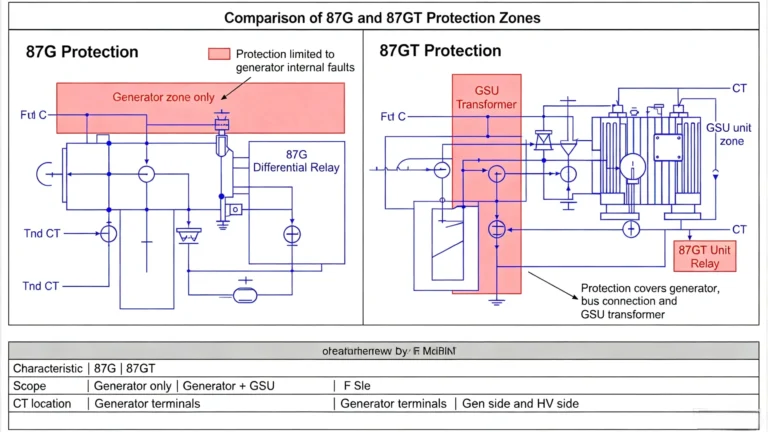
Q3: What is the difference between 87G and 87GT?
| 87G | 87GT | |
|---|---|---|
| Protects | Generator only | Generator + Step-up transformer |
| Best For | Standalone generators | Generator-transformer units |
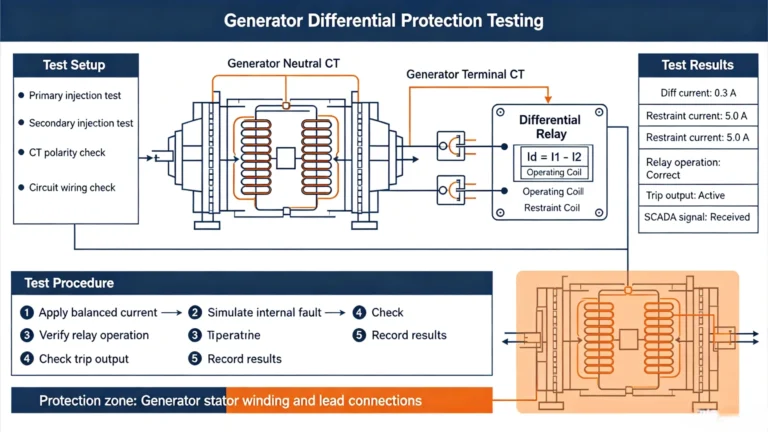
Q4: How does generator differential protection work?
A: Compares currents at both ends of stator windings (neutral side vs. line side). Normal = equal currents. Internal fault = unequal currents → differential current → instantaneous trip.
Q5: Which relay is used for rotor earth fault protection?
A: The 64R relay, available in two types:
| Type | Method |
|---|---|
| Ping-Pong 64R | Continuous insulation resistance monitoring |
| Voltage Injection 64R | Injects low voltage to detect ground faults |
Q6: How to select a generator protection relay?
A: Based on three factors:
| Factor | Considerations |
|---|---|
| Generator Type | Hydro, Diesel, or Gas |
| Voltage Level | 400V → Basic; 6.6kV+ → Advanced/Complete |
| Protection Tier | Basic (50/51), Advanced (+87G), or Complete (+64R+40+32) |
About Author

Hello, I'm Leno Zhang. I have 15 years of experience in the power relay protection industry with extensive pre-sales and after-sales project experience. Our company specializes in various complete sets of relay protection and automation equipment. I can assist customers in solving all practical on-site project challenges and provide optimal integrated solutions.
Tell Us Your Requirement
High Quality
Stable performance, reliable design, ensuring safe operation for power system protection and grid stability.
Fast Delivery
Timely delivery to support your urgent orders and project schedules efficiently and professionally at any time.
Best Warranty
Professional Warranty: Reliable after-sales support for stable relay protection and long-term customer satisfaction.