

-
Leon Zhang sales consultant
-
Email: zxl635973785@gmail.com
-
Phone/WhatsApp: +86 13655813266
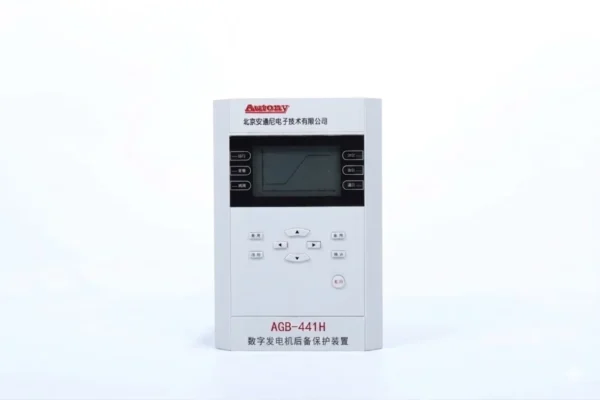
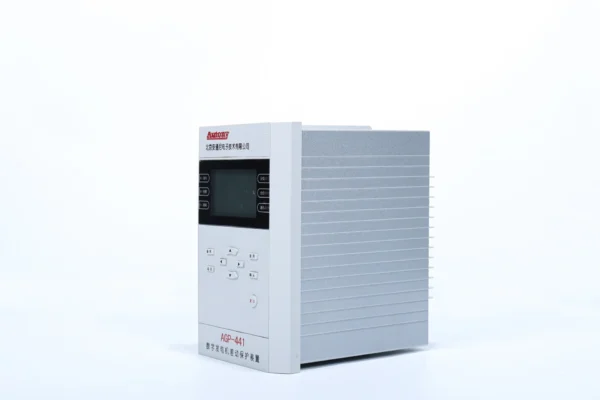
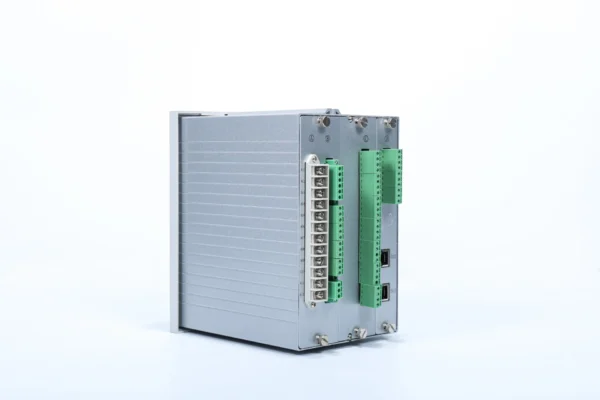
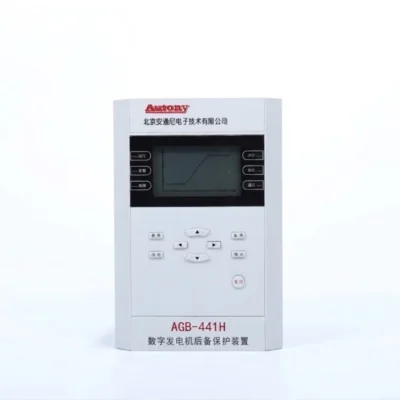
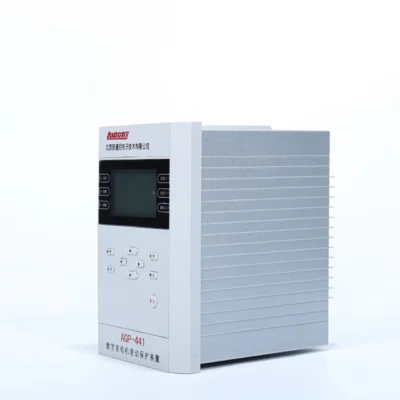
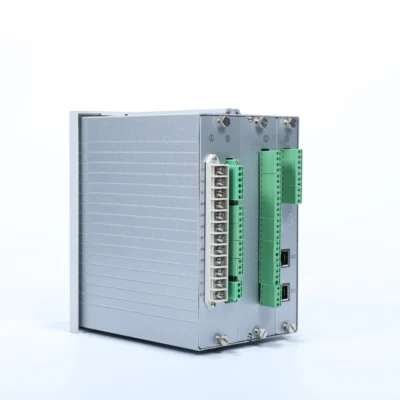
Generator Backup Protection Relay 441H
The generator backup protection relay is designed for the protection of thermal and hydroelectric generating units with a capacity of 10 MW or less, and works in conjunction with the AGP-441H differential protection device to provide protection. Its primary scope of protection covers the generator outlet and areas beyond it. It is typically installed in a panel or mounted directly on a switchgear cabinet.
Product Functions (ANSI):27/59/46/32/40/51V/49/87UD/81U/81O/64
Communication Mode:Optional: RS-485, CAN bus, Ethernet, IEC 60870-5-103 (IEC-103)
Send your requirements, we will quote for you within 12 hours
Description
Product Overview
- Generator backup protection relay is designed for the protection of thermal and hydroelectric units with a capacity of 10 MW or less, and works in conjunction with the AGP-441H differential protection device to provide protection.
- The generator backup protection device is generally installed in a centralized panel layout for unified monitoring, protection and logical configuration.
- The overall protection functions, technical performance and external interface specifications fully comply with international IEC and IEEE standards, ensuring standardized, reliable and consistent protection operation for generator sets under normal and fault conditions.
Product Functions (ANSI)
- generator composite voltage overcurrent protection|50V
- Generator transverse differential|87GT
- generator reverse power protection |32
- Loss of Field Protection |40
- Undervoltage Protection|27
- Underfrequency Protection|81U
- Overfrequency Protection|81O
- stator earth fault protection|64
- Thermal overload protection|49
- Overvoltage Protection|59
- Negative Sequence Overcurrent Protection|46
- VT Circuit Break / VT Failure|60
- Control Circuit Disconnection|74
Communication Mode
- Optional: RS-485, CAN bus, Ethernet, IEC 60870-5-103 (IEC-103)
What Is Generator Backup Protection?
Generator backup protection provides secondary protection when the primary generator protection fails to operate or when a fault occurs outside the main differential protection zone. It typically uses time-delayed and coordinated protection functions to isolate faults while maintaining selectivity with upstream and downstream protection.
| Protection | Role | Typical Function |
|---|---|---|
| 50/51 or 50V/51V | Backup | Phase faults and external faults |
| 46 | Backup | Negative-sequence current |
| 32 | System protection | Reverse power |
| 40 | Generator protection | Loss of excitation |
| 27/59 | Voltage protection | Under/overvoltage |
| 81U/81O | Frequency | Under/overfrequency |
| 64 | Earth fault | Generator/stator earth fault |
Generator Backup Protection Coordination
The core principle of generator backup protection coordination is selectivity—faults should be cleared by the nearest protection device, with upstream backup protection operating only when the primary protection fails. This is achieved through time grading, typically 0.3–0.5 seconds between successive protection stages.
Primary vs Backup Protection
| Protection Level | Device | Coverage | Operating Speed |
|---|---|---|---|
| Main Protection | 87G Differential | Generator stator internal | Instantaneous |
| Backup Protection | 441H | Generator and external system | Time-delayed (0.5–3s) |
| Upstream Protection | Transformer/Busbar Protection | Step-up transformer and busbar | Coordinated |
| Downstream Protection | Feeder Protection | Outgoing circuits | Fastest |
Backup Protection Functions
| Function | ANSI | Purpose |
|---|---|---|
| Time-Delayed Overcurrent | 51 | Backup for external phase faults |
| Negative Sequence | 46 | Detects unbalanced loads, prevents rotor overheating |
| Overexcitation | 24 | V/Hz protection, prevents core saturation |
| Loss of Excitation | 40 | Supplementary excitation failure detection |
Coordination Logic
Internal Fault: 87G operates instantaneously (20–40ms); backup protection remains inactive.
External Fault (feeder protection healthy): Feeder protection operates first (0.1–0.3s), clearing the fault; generator backup protection does not operate.
External Fault (feeder protection fails): 441H delay timer starts (0.5–1.5s) → delay expires → generator breaker trips.
Time Coordination Grading
| Protection Level | Typical Operating Time |
|---|---|
| Feeder Protection | 0.1–0.3 seconds |
| Busbar Protection | 0.3–0.6 seconds |
| Generator Backup (441H) | 0.5–1.5 seconds |
| Transformer Backup | 1.0–2.0 seconds |
Grading margin: 0.3–0.5 seconds between adjacent levels ensures downstream protection operates first.
Generator Backup Protection Functions
| ANSI | Protection Function | Role |
|---|---|---|
| 50V/51V | Voltage-Restrained/Controlled Overcurrent | Backup phase-fault protection |
| 46 | Negative Sequence Overcurrent | Unbalance protection |
| 32 | Reverse Power | Prevent generator motoring |
| 40 | Loss of Excitation | Excitation failure |
| 49 | Thermal Overload | Thermal protection |
| 27 | Undervoltage | Voltage abnormality |
| 59 | Overvoltage | Voltage abnormality |
| 81U | Underfrequency | Frequency protection |
| 81O | Overfrequency | Frequency protection |
| 64 | Stator/Earth Fault | Earth fault protection |
| 60 | VT Failure | Voltage transformer supervision |
| 74 | Control Circuit Supervision | Trip/control circuit monitoring |
Applications of the 441H Generator Backup Protection Relay
The 441H generator backup protection relay provides backup protection when the main 87G differential protection fails or for faults outside the differential zone.
| Application | Key Features |
|---|---|
| Thermal Power Generators | Three-stage overcurrent and negative sequence protection for steam turbine units |
| Hydroelectric Generators | Overload, voltage and frequency protection for small to medium hydro stations |
| Industrial Power Generation | Multiple backup functions in one compact device for captive power plants |
| Generator Protection Retrofit | Digital upgrade for obsolete relays with SCADA communication and event recording |
441H for Generator Protection Retrofit Projects
The 441H relay is an ideal solution for generator protection retrofit projects, offering a cost-effective path to modernize aging protection systems.
It replaces obsolete electromechanical or static relays—such as outdated overcurrent and ground fault devices—while retaining existing CTs and PTs where compatible, significantly reducing replacement costs and engineering effort.
The compact design allows straightforward integration into existing protection panels with minimal panel rework, and the relay’s flexible I/O configuration can be adapted to match existing wiring schemes.
Communication interfaces (RS-485, CAN, Ethernet, IEC 60870-5-103) enable seamless connection to modern SCADA systems, bringing remote monitoring and fault recording capabilities to previously isolated installations.
Beyond hardware upgrades, the 441H supports complete protection setting updates to coordinate with current system conditions and utility requirements. Technical documentation and commissioning support are available to ensure smooth project execution with minimal generator downtime.
Setting Table
| No. | Description | Setting Range | Conversion Factor for Upload & Download |
|---|---|---|---|
| 1 | Control Word 1 | 0000~FFFF | – |
| 2 | Control Word 2 | 0000~FFFF | – |
| 3 | Control Word 3 | 0000~FFFF | – |
| 4 | Overcurrent Stage 1 Delay | 0.00~120.00s | ×100 |
| 5 | Overcurrent Stage 2 Delay | 0.00~120.00s | ×100 |
| 6 | Overcurrent Stage 3 Delay | 0.00~120.00s | ×100 |
| 7 | Negative Sequence Stage 1 Delay | 0.00~120.00s | ×100 |
| 8 | Negative Sequence Stage 2 Delay | 0.00~120.00s | ×100 |
| 9 | Transverse Differential Protection Delay | 0.00~120.00s | ×100 |
| 10 | Stator Earth Fault Delay | 0.00~120.00s | ×100 |
| 11 | Overload Delay | 0.00~120.00s | ×100 |
| 12 | Under-voltage Delay | 0.00~120.00s | ×100 |
| 13 | Over-voltage Delay | 0.00~120.00s | ×100 |
| 14 | Under-frequency Delay | 0.00~120.00s | ×100 |
| 15 | Over-frequency Delay | 0.00~120.00s | ×100 |
| 16 | Reverse Power Delay | 0.00~120.00s | ×100 |
| 17 | Loss of Excitation Time Limit 1 | 0.00~120.00s | ×100 |
| 18 | Loss of Excitation Time Limit 2 | 0.00~120.00s | ×100 |
| 19 | Overcurrent Stage 1 Setting (Instantaneous Overcurrent Setting) | 1.00~99.99A | ×100 |
| 20 | Overcurrent Stage 2 Setting (Time-limit Instantaneous Overcurrent Setting) | 1.00~99.99A | ×100 |
| 21 | Overcurrent Stage 3 Setting (Overcurrent Protection Current Setting) | 1.00~99.99A | ×100 |
| 22 | Overload Setting (Overload Current Setting) | 1.00~99.99A | ×100 |
| 23 | Spare Setting (Original Start Setting) | 1.00~99.99A | ×100 |
| 24 | Transverse Differential Setting | 0.02~5.00A | ×100 |
| 25 | Negative Sequence Stage 1 Setting | 1.00~99.99A | ×100 |
| 26 | Negative Sequence Stage 2 Setting | 1.00~99.99A | ×100 |
| 27 | Under-voltage Blocking Setting (Low voltage setting for blocking overcurrent/frequency protection) | 5.00~100.00V | ×100 |
| 28 | Negative Sequence Voltage Setting (Negative sequence voltage setting for blocking overcurrent) | 5.00~100.00V | ×100 |
| 29 | Stator Earth Fault Setting | 5.00~100.00V | ×100 |
| 30 | Over-voltage Setting (Over-voltage Trip Setting) | 0.00~100.00V | ×100 |
| 31 | Under-voltage Setting (Under-voltage Trip Setting) | 0.00~100.00V | ×100 |
| 32 | Reverse Power Setting | 0.05~0.20 Pn | ×100 |
| 33 | Active Power Blocking Setting for Loss of Excitation | 0.05~0.20 Pn | ×100 |
| 34 | Reactive Power Setting for Loss of Excitation | 0.05~0.20 Pn | ×100 |
| 35 | Under-frequency Protection Setting | 0.20~10.00Hz | ×100 |
| 36 | Over-frequency Protection Setting | 0.20~10.00Hz | ×100 |
| 37~48 | Reserved | – | – |
Outline and Installation Dimensions
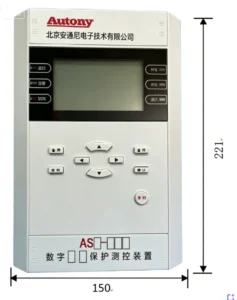
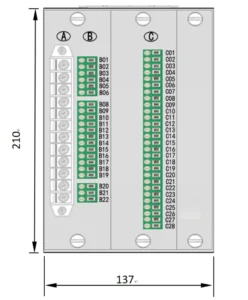
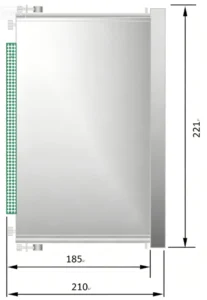
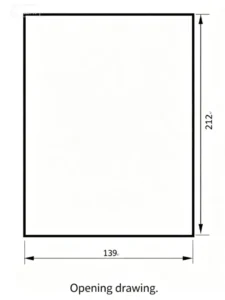
441H Generator Backup Protection Relay – FAQ
1. What is a generator backup protection relay?
A relay that provides secondary protection when the main protection (e.g., 87G) fails or when faults occur outside the main protection zone. It operates with time delay to ensure selectivity.
2. Difference between backup protection and 87G differential?
| Aspect | 87G (Main) | 441H (Backup) |
|---|---|---|
| Zone | Generator stator only | Generator + external system |
| Speed | Instantaneous | Time-delayed (0.5–3s) |
3. What generator capacity is the 441H designed for?
Suitable for generator units up to 10 MW per current specifications.
4. What functions are included in the 441H?
| Function | Description |
|---|---|
| 50/51 | Three-stage overcurrent (voltage-restrained) |
| 46 | Negative sequence / unbalance |
| 24 | Overexcitation (V/Hz) |
| 27/59 | Over/under voltage |
| 81U/81O | Under/over frequency |
| 40 | Loss of excitation |
| 32 | Reverse power |
| 49 | Thermal overload |
| Event Recording | Faults, alarms, SOE logging |
5. What is 50V/51V overcurrent protection?
Voltage-restrained overcurrent—when voltage drops during faults, the current pickup threshold is automatically reduced for higher sensitivity.
6. What faults can backup protection detect?
External phase faults, unbalanced loads, overloads, voltage/frequency abnormalities, reverse power, loss of excitation, and core saturation.
7. Can the 441H communicate with SCADA?
Yes. Supports RS-485, CAN, Ethernet, and IEC 60870-5-103.
8. Can it be used for retrofit projects?
Yes. Replaces obsolete relays, retains compatible CTs/PTs, integrates into existing panels with minimal rework.
9. What CT and PT signals are required?
| Signal | Purpose |
|---|---|
| Three-phase currents | Overcurrent, negative sequence, thermal |
| Three-phase voltages | Voltage, frequency, V/Hz |
| Neutral current (optional) | Earth fault |
10. Can settings be configured per project?
Yes. All functions are fully configurable based on generator parameters, CT/PT ratios, fault levels, and coordination requirements. Settings must be performed by qualified engineers—no universal settings apply.
Other Generator Protection Equipment
400V Low Voltage Hydroelectric Generator Protection Relay
87G/50/51 Generator Protective Relay
400V Low Voltage Generator Protection Relay
2 reviews for Generator Backup Protection Relay 441H
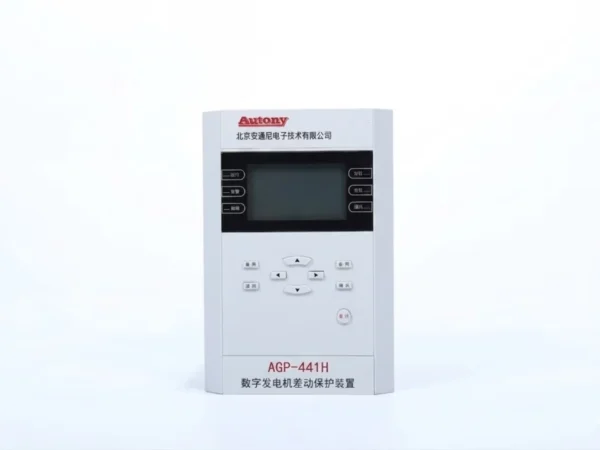
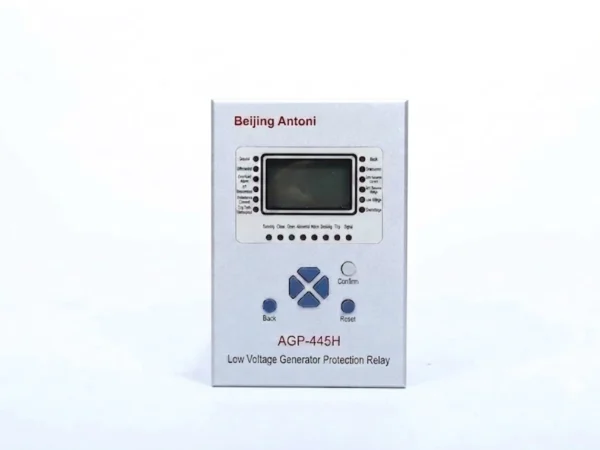
Related products
High Quality
Stable performance, reliable design, ensuring safe operation for power system protection and grid stability.
Fast Delivery
Timely delivery to support your urgent orders and project schedules efficiently and professionally at any time.
Best Warranty
Professional Warranty: Reliable after-sales support for stable relay protection and long-term customer satisfaction.
xiao zhang –
This generator backup protection relay(21G/46/51/32R/24) integrates overcurrent, negative-sequence, reverse power and overexcitation protections. Adopts voltage restraint logic to avoid maloperation, supports fault recording and multi-protocol communication, ideal for various synchronous generator units.
Jack –
Built-in self-diagnostic features make maintenance much easier.