

-
Leon Zhang sales consultant
-
Email: zxl635973785@gmail.com
-
Phone/WhatsApp: +86 13655813266
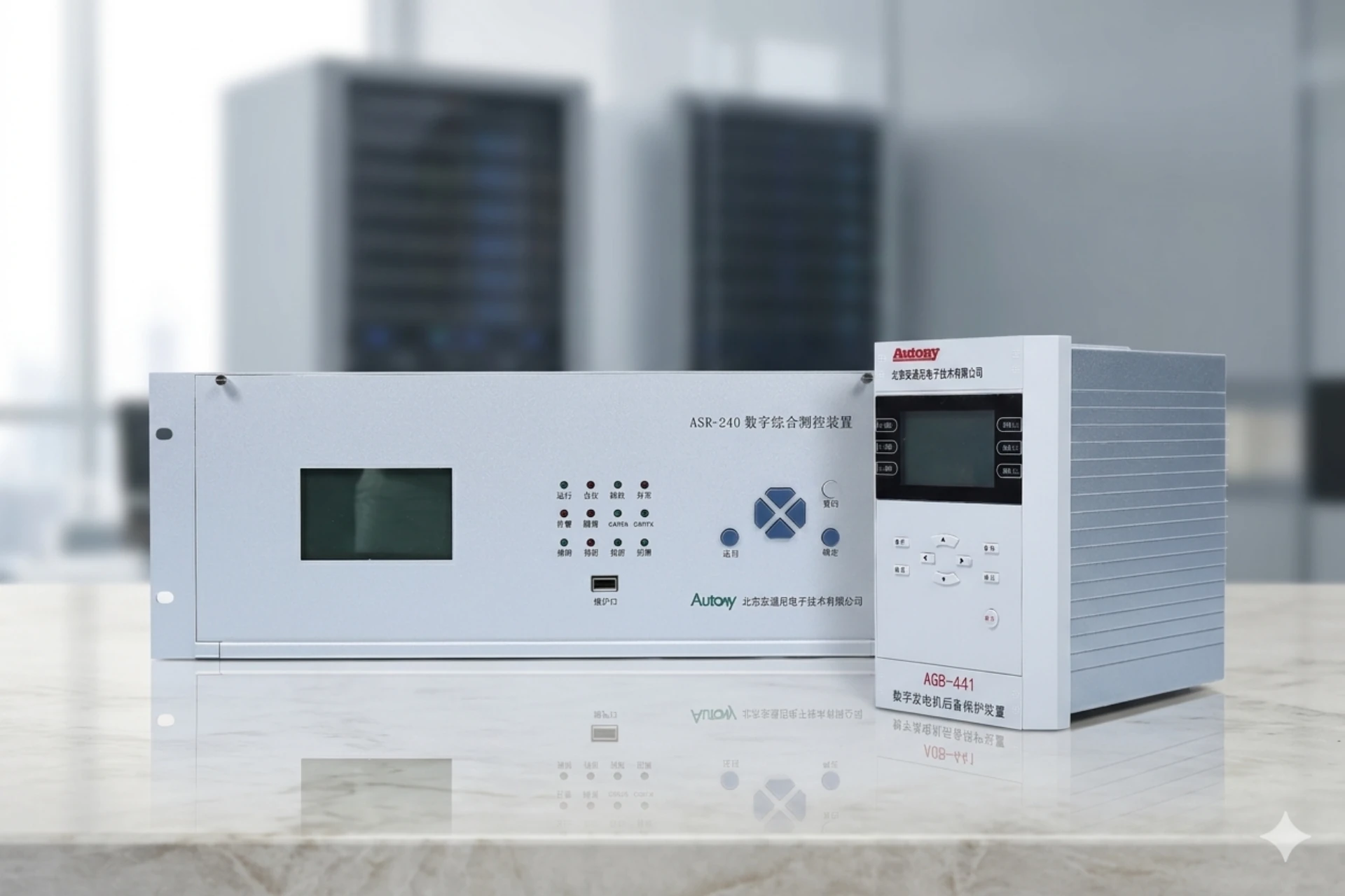
Relay Troubleshooting Guide: 10 Common Protection Relay Problems and How to Fix Them
We summarize the most frequent protection relay problems for global industrial users based on practical relay troubleshooting experience.
Supported by professional relay fault diagnosis and standardized protection relay maintenance, this article helps engineers quickly identify and fix various faults.
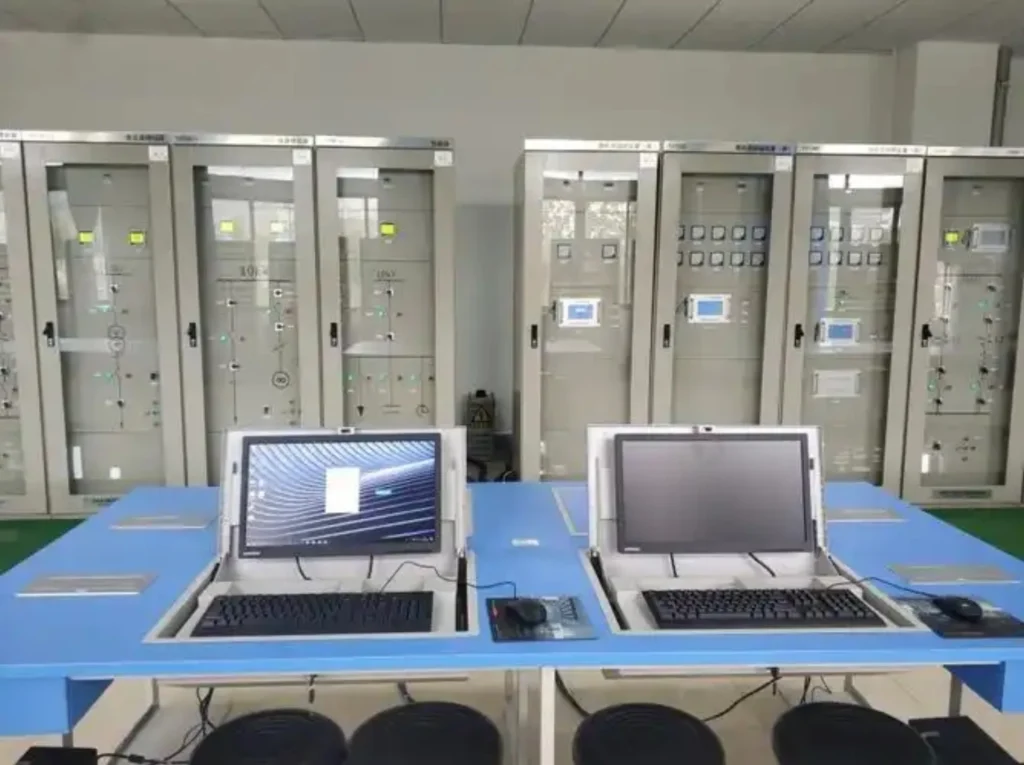
Why Protection Relay Problems Occur
| Electrical Issues | Configuration Errors | Environmental Factors | Hardware Aging |
|---|---|---|---|
| Incorrect CT/PT wiring | Incorrect parameter settings | High ambient temperature | Electronic component aging |
| Abnormal current input | Incorrect setting value calculation | High humidity | Power supply module failure |
| Loss of voltage | Wrong communication configuration | Electromagnetic Interference (EMI) | Poor contact |
Common Protection Relay Problems Summary
Problem #1 – Nuisance Tripping (Unexpected Relay Trips)
Symptoms
Relay nuisance tripping (false relay operation / relay trips without fault) manifests as breaker tripping with no actual fault, unwanted relay pickup during motor startup and unplanned random equipment shutdown.
Root Causes
This issue generally arises from four key factors: overly low pickup setting, CT saturation, harmonic interference and transformer inrush current.
Solutions
Common Protection Relay Problems Summary: To resolve faults, technicians shall verify protection parameters, properly set operating time delay, check CT transformation ratio and analyze disturbance event records.
Problem #2 – Relay Fails to Trip During Fault Conditions
Symptoms
Relay failure to trip occurs when protection remains inactive during real faults, eventually resulting in equipment damage.
Root Causes
The fault is mainly caused by incorrect protection settings, reversed CT polarity, open CT secondary circuit and wrong logic configuration.
Solutions
Carry out secondary injection testing, cross-check with wiring diagrams, and test trip circuit continuity.
Problem #3 – Overcurrent Relay Not Working Properly
such failures are usually caused by wrong pickup current, incorrect time curve and CT ratio mismatch, and troubleshooters can resolve these issues by recalculating settings, verifying load current and performing relay testing.
Another contributing factor is poor product quality.
For instance, some protection relays available on the market fail to meet industrial standards in production workmanship and technical specifications yet gain popularity due to their low price. Such products are prone to malfunctions during field operation.
Some units develop abnormal sampling within less than one month of commissioning: readings from the relay deviate drastically from actual CT values or show abnormally low measurements, resulting in either nuisance tripping or failure to trip of circuit breakers.
Problem #4 – Earth Fault Protection Not Operating
Symptoms
The relay fails to operate when an actual ground fault happens.
Root Causes
- Wrong residual current wiring
- Neutral grounding system faults
- Improper sensitive setting for earth fault protection
Solutions
- Recheck and adjust earth fault protection settings
- Inspect the whole grounding system
- Check zero-sequence CT installation
Such failures occur frequently. It is recommended to analyze the problem combined with the fault indication from the small-current earth fault feeder selection device.
Problem #5 – Communication Failure Between Relay and SCADA
Symptoms
SCADA data cannot be read normally and remote monitoring drops out, which are typical signs of relay communication faults.
Root Causes
- Root Causes
- Incorrect communication address and station number settings
- Mismatched baud rate, data bit, stop bit and parity check parameters
- Wrong IP address, subnet mask and gateway configuration
- Poor network cable contact, damaged line or switch port failure
- Communication module abnormality or program operation exception
Solutions
- Verify and correct the device Modbus address and communication station number to ensure consistency with the SCADA host settings.
- Unify communication parameters including baud rate, parity check and frame format between the protection device and the background system.
- Recheck IP address, subnet mask and gateway configuration to eliminate network parameter conflicts.
- Inspect and replace network cables, test network channel connectivity, and troubleshoot switch and network port faults.
- Restart the protection device, upgrade or restore the firmware, and replace faulty communication modules if necessary.
Apart from the above common faults, electromagnetic interference is another critical root cause requiring close attention.
Improper routing of field communication cables is highly susceptible to strong power interference, which triggers abnormal communication and may even burn out the device’s communication ports. Such faults have been encountered during on-site commissioning: intermittent communication dropout and garbled communication messages.
Problem #6 – Incorrect Relay Measurements
Symptoms
Abnormal measured values: incorrect current reading, wrong voltage indication and inaccurate power calculation.
Root Causes
- Mismatched CT / PT transformation ratio
- Incorrect primary or secondary wiring
- Out-of-calibration device parameters
Solutions
- Perform equipment calibration
- Confirm CT and PT rated ratios
- Inspect wiring and phase sequence
In summary, the elimination method is recommended for troubleshooting such faults by checking potential fault points one by one. After confirming the protection device itself works properly, proceed to inspect external faults. For projects that have been in normal operation for a period of time, most such measurement failures stem from quality defects of the relay protection equipment.
Problem #7 – Frequent Relay Alarm Messages
Symptoms
Common customer inquiries focus on protection relay alarms and self-diagnostic alerts, including device fault alarm, CT circuit supervision alarm, VT fuse failure alarm and communication failure alarm.
Root Causes
Internal hardware abnormality, secondary circuit faults and communication parameter errors.
Solutions
- Inspect related external secondary circuits
- Check historical event logs
- Review built-in self-diagnostic records
To sum up, relay alarms fall into two categories. The first is self-test abnormality alarms caused by internal device faults, which shall be reported to the manufacturer for repair. The second is fault-related alarms; troubles shall be located step by step by referring to the product manual, alarm logs and on-site construction drawings, and the elimination method is preferred for troubleshooting.
Problem #8 – Relay Display or HMI Not Responding
Symptoms
Common hardware faults: blank screen, frozen screen interface and unresponsive buttons.
Root Causes
- Unstable or faulty power supply
- Corrupted or abnormal firmware
- Internal hardware breakdown
Solutions
- Reach out to professional technical support
- Restart the device by power cycling
- Carry out official firmware upgrading
A simple method is available for fault judgment: If background SCADA data is normal, the fault lies with the display screen, and replacement of the display and associated accessories can resolve the issue. In case of a blank screen accompanied by missing background monitoring data, the CPU module or power supply module is likely damaged, and manufacturer on-site service is
How to Perform Effective Relay Troubleshooting
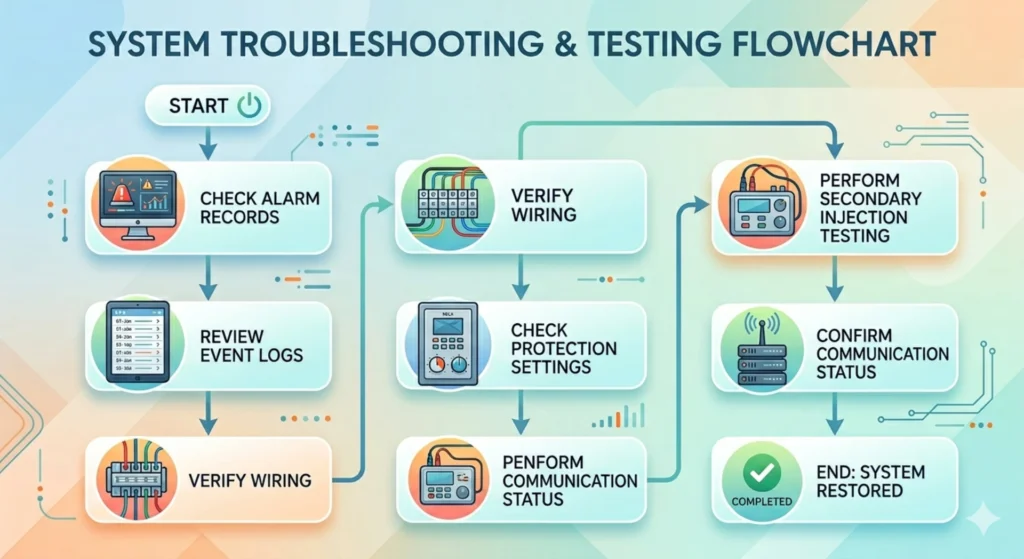
Preventive Maintenance Tips for Protection Relays
Regular relay maintenance covers multiple key items including routine testing and annual relay testing for full functional verification, timely firmware updates to keep software current, environmental control over working temperature and humidity, as well as regular event log analysis to realize early fault detection.
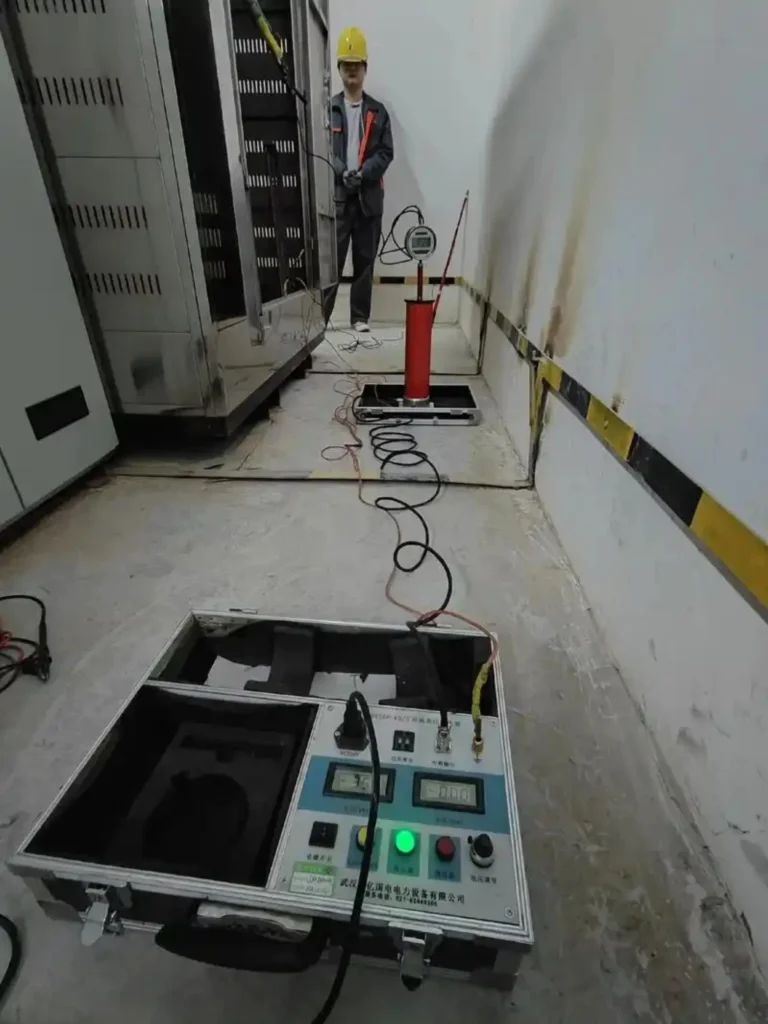
It should be noted that all abnormal phenomena occurring during regular equipment operation shall be sorted out and filed in advance. During power-outage maintenance, targeted tests shall be performed on relevant equipment to completely eliminate faults and hidden dangers.
When Should You Replace a Protection Relay?
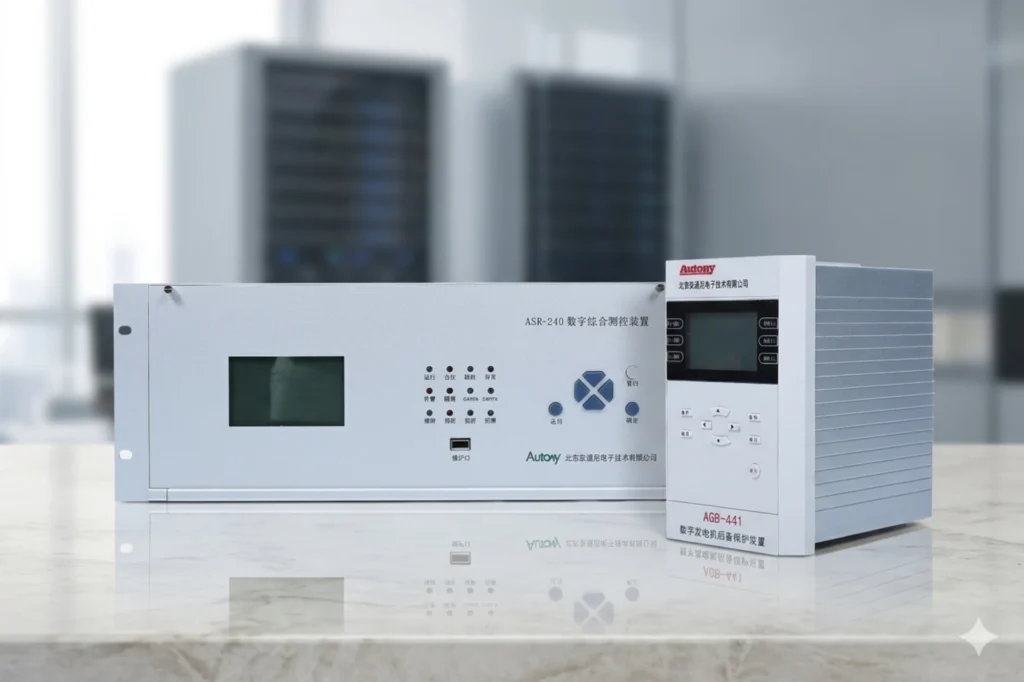
Frequent equipment failures, unsupported firmware, obsolete communication protocols and excessive maintenance costs are typical drawbacks of outdated relay devices, while modern digital protection relays come with outstanding advantages including IEC 61850, Modbus TCP, built-in self-diagnostics and advanced fault recording functions.
I would like to point out that higher-end specifications and richer functions do not always equate to better suitability.
Product compatibility with actual project requirements should be prioritized. Brand-new cutting-edge products lack sufficient field verification and tend to incur unexpected faults. Mature and field-proven products that have stood market tests shall be preferred.
Frequently Asked Questions (FAQ)
1. Why does my relay trip without a fault?
Nuisance tripping is mainly caused by low pickup settings, CT saturation, inrush current and harmonic interference. Adjust protection parameters and check CT ratio to solve the issue.
2. Why is my overcurrent relay not operating?
It usually results from mismatched CT ratio, wrong pickup current and improper time-current curve. Recalculate settings and carry out relay commissioning tests.
3. How often should protection relays be tested?
Routine inspection every year, and comprehensive secondary injection testing once every 2 to 3 years as per local power industry standards.
4. Can incorrect CT wiring affect relay performance?
Yes. Wrong polarity, open-circuited CT or reversed wiring leads to measurement deviation, protection refusal or unexpected tripping.
5. What causes relay communication failures?
Wrong Modbus address, mismatched baud rate, wrong Ethernet IP and poor network connectivity are the top common reasons.
Need Help Solving Relay Protection Problems?
We provide free technical consultation, professional relay setting support, on-site fault diagnosis assistance and customized OEM/ODM relay solutions alongside fast quotation service.
Contact our protection relay specialists today for troubleshooting assistance and product recommendations.
About Author

Hello, I'm Leno Zhang. I have 15 years of experience in the power relay protection industry with extensive pre-sales and after-sales project experience. Our company specializes in various complete sets of relay protection and automation equipment. I can assist customers in solving all practical on-site project challenges and provide optimal integrated solutions.
Tell Us Your Requirement
High Quality
Stable performance, reliable design, ensuring safe operation for power system protection and grid stability.
Fast Delivery
Timely delivery to support your urgent orders and project schedules efficiently and professionally at any time.
Best Warranty
Professional Warranty: Reliable after-sales support for stable relay protection and long-term customer satisfaction.