

-
Leon Zhang sales consultant
-
Email: zxl635973785@gmail.com
-
Phone/WhatsApp: +86 13655813266
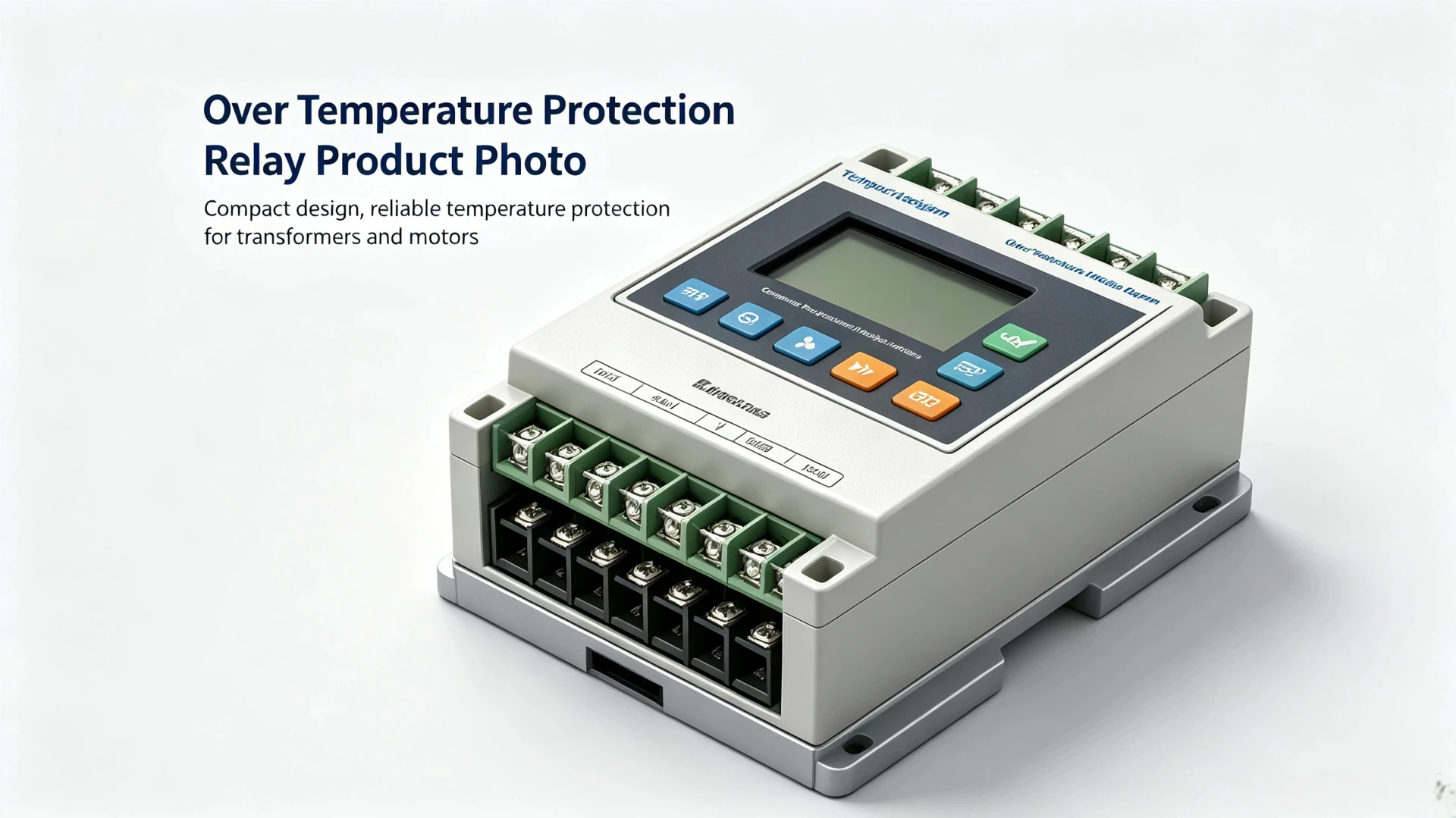
Over Temperature Protection Relay: RTD Inputs and Winding Temperature
An over temperature protection relay is a core electrical protection device dedicated to real-time temperature monitoring and overheat protection of key power equipment. It does not estimate heat from current the way an ANSI 49 thermal element does. It reads the winding or the oil with a sensor, so it reports what the metal is doing, and it removes a thermal fault at the first stage instead of after the current has been high for hours.
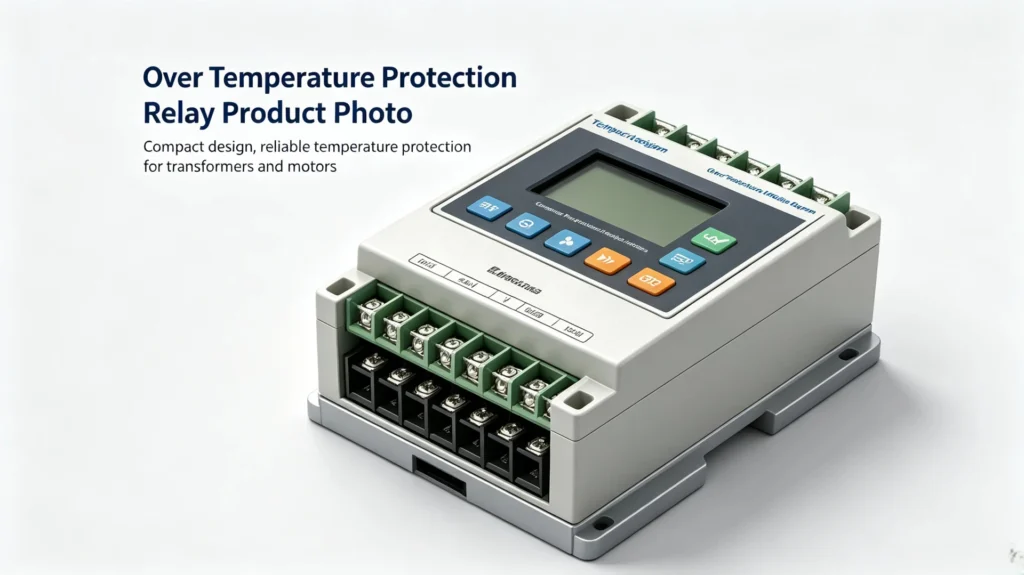
This page covers the same ground for the device that measures temperature rather than calculates it: sensor types, channel counts, alarm and trip thresholds, the commissioning procedure, the three faults that show up on site, and the boundary where it has to sit beside a thermal overload relay instead of replacing it.
What Is an Over Temperature Protection Relay?
Definition of Over Temperature Protection Relay
An over temperature protection relay is a professional numerical protection device that monitors the real-time temperature of electrical equipment through external sensors. It reads four to twelve channels, compares each of them with the thresholds entered in the relay, and raises an alarm or opens the trip circuit once the safe range is exceeded.
Different from ordinary electrical protection devices that monitor voltage and current, this relay focuses on thermal fault protection, covering equipment surface temperature, winding temperature, oil temperature and bearing temperature. It supports automatic cooling system activation and remote fault signal transmission, realizing full-cycle thermal protection for industrial electrical equipment.
Difference Between Temperature Relay and Over Temperature Protection Relay
Many project engineers confuse ordinary temperature relays with units that trip a breaker. The core differences in application scenarios and protection capabilities are listed below:
| Comparison Item | Temperature Relay | Over Temperature Relay |
|---|---|---|
| Main Purpose | Simple temperature data monitoring | Precise protection against equipment overheating damage |
| Output Mode | Only local alarm prompt | Hierarchical alarm + load trip + cooling linkage |
| Application Scenarios | Civil and simple low-power electrical systems | Industrial EPC, substations, large power equipment |
| Protection Level | Basic monitoring, no fault isolation | Advanced full protection, automatic fault isolation |
| Measurement Accuracy | Low, suitable for non-critical equipment | High, compliant with IEC industrial protection standards |
Why Is Over Temperature Protection Important in Electrical Systems?
Direct Measurement Next to the Calculated Thermal Model
Two things on the same motor panel measure temperature, and they are not the same measurement. The ANSI 49 thermal element takes the feeder current, integrates it over time and estimates what the winding would reach; it never sees the winding. The device on this page reads a sensor buried in the winding or dropped into the oil, so its number is a measurement rather than an estimate. An over temperature protection relay is the second type, and the two are normally bought together because each one blind spot the other: the calculated model is blind to a hot spot with no current excess, and the measured channel is blind to overload that never heats the metal above the sensor set point. The calculated model is worked out in the overload protection relay page, and the two have to be set so that one does not pre-empt the other.
On a utility transformer the device specified for the winding and the oil is a substation temperature relay rather than a plant unit, because the sensing leads run long and the electromagnetic environment is harsher than in a switchroom. The input side decides which machine the unit can serve: an RTD relay channel is built around a PT100 and expects a resistance that changes roughly with temperature, while a thermistor or PTC channel expects a semiconductor that changes fast near its own transition point. Matching the channel type to the sensor is the first check on the datasheet, and getting it wrong shows up as a reading that drifts with the ambient temperature instead of the winding.
Thermal accumulation is a hidden progressive fault. Unlike sudden short-circuit and phase loss faults, equipment overheating is difficult to detect manually, but long-term high temperature will permanently damage the insulation structure of electrical equipment and shorten the service life by 50% or more. A temperature trip on the right channel is a cheap way to keep a machine from becoming scrap, which is why the element is specified on most medium-voltage motor feeders and every utility transformer.
Prevent Transformer Thermal Damage
Power and distribution transformers are core equipment of power systems. Long-term overload, poor heat dissipation and ambient temperature rise will cause transformer oil temperature and winding temperature to exceed the standard.
Excessive temperature will accelerate insulation oil degradation and insulation paper aging, leading to insulation breakdown and transformer scrapping in severe cases. Equipped with a transformer temperature protection relay, the transformer can realize real-time temperature monitoring and early warning to prevent overheating failures.
Two channels cover most oil-immersed machines: one in the oil at the top of the tank and one in the winding. That pair is what catches a blocked radiator while the load current is still ordinary.
Protect Motors Against Thermal Overload
Industrial motors, pumps, compressors and fans are prone to thermal overload faults caused by phase loss, unbalanced voltage, frequent startup, long-term overload operation and blocked ventilation. Traditional current-type overload relays cannot accurately identify hidden overheating caused by mechanical jamming.
The motor temperature protection relay reads the winding directly, in practice a PT100 laid in the stator slot near the end winding. It catches the case the calculated model cannot: heat with no current excess, which is what a blocked ventilation path or a seized cooling fan produces.
Improve Equipment Reliability and Reduce Downtime
For mining, oil and gas, new energy power stations and industrial EPC projects, unplanned equipment shutdown will cause huge production losses. The relay eliminates potential thermal faults in advance, reduces manual maintenance frequency, extend equipment service life, and effectively reduce project operation and maintenance costs and downtime losses.
How Does the Unit Measure Temperature?
The unit is built in two stages: a sensor signal acquisition stage that conditions the resistance or voltage of the temperature element, and a microprocessor stage that turns the reading into an alarm or a trip. Both run by themselves once the thresholds are entered, and the whole chain is what gets verified on the bench before delivery.
Temperature Detection Methods
The channel type has to match the sensor it is wired to. An RTD channel expects a PT100, whose resistance moves slowly and almost linearly with temperature, so it suits a winding that is watched for months. A thermistor or PTC channel expects a semiconductor that moves fast near its transition point, which is why it appears on smaller machine windings and on bearing probes rather than on a 10 kV stator. Whichever it is, the channel inside the relay is an RTD relay or a thermistor relay input, and the unit cannot be swapped from one to the other by a setting alone.
The relay supports multiple mainstream high-precision temperature sensors to adapt to different equipment detection scenarios:
- RTD Sensors (PT100/PT1000): High stability, suitable for long-term temperature monitoring of transformer windings, motor stators and generator equipment, widely used in precision industrial scenarios
- Thermocouple Sensors (Type K/Type J): Wide temperature measurement range, suitable for high-temperature detection of mechanical bearings and large rotating equipment
- Special Transformer Temperature Sensors: Dedicated for transformer oil temperature and winding temperature monitoring, with strong anti-interference ability to adapt to substation complex electromagnetic environment
Working Principle Flow
The entire working process is closed-loop and automatic, with stable response and high accuracy:
Temperature Sensor Real-time Acquisition → Analog Signal Transmission → Relay Signal Filtering and Processing → Microprocessor Data Calculation → Comparison with Preset Temperature Threshold → Hierarchical Alarm/Trip/Cooling Linkage Output
Main Functions of Over Temperature Protection Relay
Real-time Multi-point Temperature Monitoring
The device supports multi-channel temperature synchronous monitoring, covering motor winding temperature, transformer oil temperature, bearing temperature and cabinet ambient temperature. It displays real-time temperature data locally and supports data scrolling query, realizing full coverage of equipment thermal state monitoring.
Two-stage Over Temperature Protection (Alarm + Trip)
It adopts industry-standard two-stage protection logic to avoid mis-operation and ensure safety:
- First-stage Warning Alarm: When the temperature reaches the early warning threshold, trigger local sound and light alarm and remote signal upload to remind engineers of hidden dangers
- Second-stage Trip Protection: When the temperature continues to rise to the dangerous threshold, immediately trip the control loop to cut off the load and prevent equipment burnout
Automatic Cooling System Linkage Control
The relay can be linked with external cooling fans, heat dissipation pumps and ventilation systems. When the equipment temperature rises abnormally, it automatically starts the cooling device to reduce the temperature, avoiding unnecessary shutdowns and improving project operation continuity.
Remote Communication and SCADA Integration
Modern digital units are equipped with standard communication interfaces, supporting Modbus RTU, RS485, Ethernet and IEC 61850 protocols. They can be seamlessly connected with substation SCADA systems to realize remote data viewing, parameter modification and fault record query, meeting the intelligent operation and maintenance requirements of overseas EPC and smart power projects.
Where These Relays Are Installed
Transformer Temperature Protection
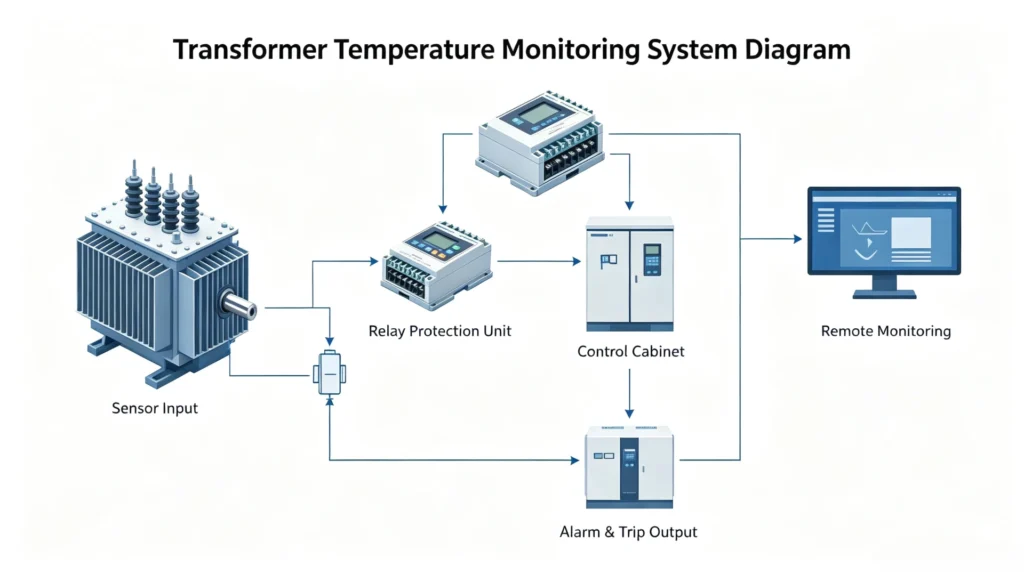
It is the standard matching protection device for substation and industrial transformers, suitable for oil-immersed transformers and dry-type transformers in power plants, industrial parks and distribution stations. The transformer side of the element list, including the gas and oil temperature device used with it, is set out on the transformer gas and temperature protection product page.
| Monitoring Parameter | Core Protection Function |
|---|---|
| Transformer Oil Temperature | Prevent oil aging and equipment overheating damage |
| Winding Temperature | Protect internal insulation structure of transformer |
| Cooling System Failure | Timely alarm for heat dissipation abnormality |
Motor Over Temperature Protection
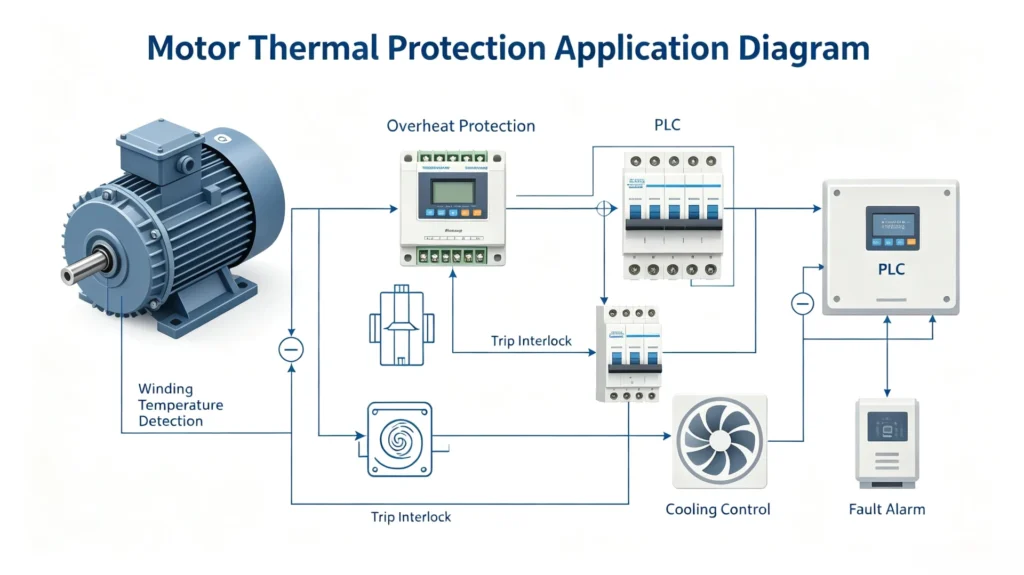
Equipped with reliable motor protection relay temperature monitoring function, this unit is widely used in industrial supporting motors, water pump units, air compressors, conveyor systems and HVAC equipment. It solves the inaccurate protection issue of traditional thermal overload relays resulting from current deviation and provides precise protection against stator winding overheating and bearing temperature rise.
Generator Temperature Protection
Suitable for diesel generators, hydroelectric generators and new energy generator sets. It monitors the temperature of generator windings and bearings in real time, avoiding thermal faults during long-term grid-connected operation and ensuring the stable power supply of power generation projects.
Direct Measurement vs the Calculated Thermal Model
Most purchasers and engineers easily mix up these two types of thermal protection relays. The core technical differences and application scenarios are compared as follows:
| Comparison Item | Over Temperature Relay | Thermal Overload Relay |
|---|---|---|
| Protection Principle | Direct temperature measurement via sensors | Indirect judgment through current thermal effect |
| Detection Component | PT100/PT1000/Thermocouple | Built-in thermal bimetallic element |
| Measurement Accuracy | High, real actual temperature data | Medium, easily affected by load fluctuation |
| Main Application | Large key power equipment (transformer/generator) | Ordinary small and medium-sized industrial motors |
| Standard Compliance | IEC 60255-149, IEC 60034-11 | IEC 60947-4-1 |
Key Parameters When Selecting One
Reasonable model selection is the premise to ensure protection accuracy. EPC engineers can select products according to the following core parameters combined with project requirements:
Temperature Input Sensor Type
Match the sensor type according to protected equipment: PT100/PT1000 for long-term monitoring of windings and oil temperature; K/J type thermocouples for high-temperature mechanical equipment detection.
Number of Detection Channels
Optional 3/6/12 channels to meet the synchronous monitoring requirements of multiple temperature points of transformers and generator sets, avoiding the need for multiple devices for combined installation.
Temperature Range and Measurement Accuracy
Conventional measurement range: -20℃ ~ 150℃; industrial high-precision model accuracy up to ±0.5℃, suitable for high-standard substation and new energy projects.
Communication Protocol Compatibility
For intelligent projects, prioritize devices with Modbus RTU and IEC 61850 protocols to support remote centralized monitoring of the project system.
Installation and Environmental Adaptability
Support standard DIN rail mounting and panel mounting; wide operating temperature range and high IP protection level, adapting to harsh industrial environments such as mining and petrochemicals.
How to Test and Commission One?
Standard testing and commissioning ensure the relay operates accurately and reliably, complying with international project delivery standards.
Factory Standard Testing
All products complete full-item testing before delivery, including sensor signal input verification, temperature threshold alarm test, trip action test and communication function test, to eliminate factory defective products.
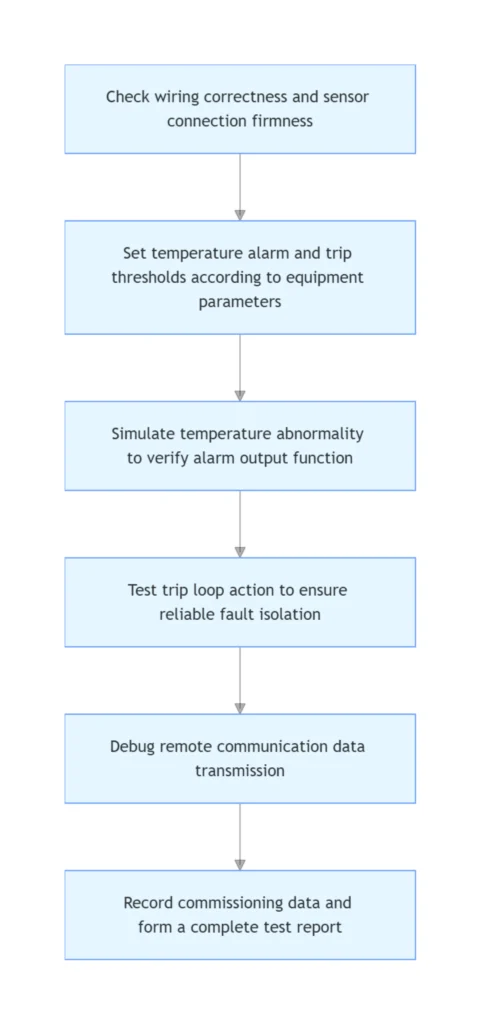
On-site Commissioning Procedure
- Check wiring correctness and sensor connection firmness
- Set temperature alarm and trip thresholds according to equipment parameters
- Simulate temperature abnormality to verify alarm output function
- Test trip loop action to ensure reliable fault isolation
- Debug remote communication data transmission
- Record commissioning data and form a complete test report
Common Problems and Troubleshooting
False Temperature Alarm
Main causes: sensor aging and failure, incorrect threshold parameter setting, loose wiring and signal interference. Solutions: replace faulty sensors, recalibrate protection parameters, fix wiring and shield interference sources.
Relay Fails to Trip Under Over Temperature
Main causes: trip threshold set too high, output contact damage, control loop disconnection. Solutions: reset reasonable parameters, detect and replace contacts, overhaul the control circuit.
Inaccurate Temperature Reading
Main causes: mismatched sensor type, uncalibrated device, ambient temperature interference. Solutions: match the correct sensor, perform regular device calibration, and eliminate environmental interference.
How to Choose a Reliable Supplier?
The stability of protection relays directly affects project operation safety. Excellent suppliers need to meet the following core capabilities to support overseas EPC and industrial projects: providing a wide protection relay operating temperature range to adapt to harsh industrial conditions.
Professional Technical Capabilities
Possess independent R&D and production capabilities, proficient in IEC international standards, provide targeted model selection solutions and parameter customization services according to different project scenarios.
Strict Quality Control System
Implement full-process quality management from customer demand confirmation, technical review, production processing, factory testing to packaging and shipment. All products pass standard industrial testing to ensure stable performance.
Overseas Project Service Support
Provide complete English technical manuals, test reports and customs clearance documents; support remote installation guidance, commissioning assistance and after-sales technical support to solve on-site project problems efficiently.
Why Buy These Units From Us
We are a professional China-based protective relay manufacturer with years of service experience in global EPC, new energy, petrochemical and power distribution projects. The units we ship for this duty have the following core advantages:
- Compliant with IEC 60255-149 and IEC 60034-11 international industrial standards, stable and reliable performance
- Support OEM/ODM customization of parameters, interfaces and logos to meet personalized project requirements
- Factory direct sales, no intermediate agents, cost-effective product solutions
- Provide one-stop services including model selection, technical guidance, on-site commissioning and after-sales guarantee
- Sufficient stock of standard models, support fast global delivery and bulk project orders
Frequently Asked Questions (FAQ)
Q1: What does an over temperature relay do?
A: An over temperature protection relay is an industrial intelligent protection device that monitors equipment temperature in real time via sensors. It triggers alarm or trip actions when overheating occurs, protecting transformers, motors and generators from thermal damage.
Q2: Where are these relays used?
A: It is widely used in substations, power plants, industrial EPC projects, mining, oil and gas, new energy stations, covering temperature protection of transformers, industrial motors, pumps, compressors and generator sets.
Q3: What is the difference between temperature relay and thermal overload relay?
A: The over temperature relay adopts direct temperature measurement and carries the alarm stage and the trip stage in one device. The thermal overload relay judges overload from the thermal effect of the current, which is an estimate of a temperature it never sees, so it stays a fair protection for ordinary small motors only.
Q4: Can it protect transformers?
A: Yes. It is the standard protection device for transformers, which can monitor oil temperature and winding temperature in real time, effectively preventing insulation aging and burnout faults caused by transformer overheating.
Q5: How do I select the right one?
A: Select according to protected equipment type, required sensor type, temperature measurement channels, accuracy requirements and communication protocols. For project customized demands, you can consult our professional engineering team for targeted solutions.
Q6: What do high-reliability protection relay temperature ratings refer to?
High-reliability protection relay temperature ratings define the allowable temperature scope for normal operation and reliable tripping of protection relays. These parameters ensure stable performance under fluctuating ambient temperature and prevent malfunction or failure in harsh industrial and substation environments.
Q7: What is a winding over temperature relay?
A winding over temperature relay reads the stator slot or the winding straight away and keeps a running record of the hottest point in the machine. It triggers protection actions once the winding temperature exceeds the set threshold to prevent insulation deterioration and winding burnout caused by overheating.
Technical Reference & Data Source
| Source | What it covers | Type | Edition |
|---|---|---|---|
| IEC 60255-187-1:2021 | Thermal protection of motors, including the thermal models that sit beside a measured temperature | IEC Standard | 2021 |
| IEC 60076-11:2018 | Dry-type transformers, including the thermal withstand and temperature limits applied to the winding | IEC Standard | 2018 |
| IEC 60255-1:2022 | Generic requirements and testing for measuring and protection relays | IEC Standard | 2022 |
| IEC 61869-2:2012 | Current transformers and other instrument transformers used on the same panel | IEC Standard | 2012 |
About Author

Hello, I'm Leno Zhang. I have 15 years of experience in the power relay protection industry with extensive pre-sales and after-sales project experience. Our company specializes in various complete sets of relay protection and automation equipment. I can assist customers in solving all practical on-site project challenges and provide optimal integrated solutions.
Tell Us Your Requirement
High Quality
Stable performance, reliable design, ensuring safe operation for power system protection and grid stability.
Fast Delivery
Timely delivery to support your urgent orders and project schedules efficiently and professionally at any time.
Best Warranty
Professional Warranty: Reliable after-sales support for stable relay protection and long-term customer satisfaction.