

-
Leon Zhang sales consultant
-
Email: zxl635973785@gmail.com
-
Phone/WhatsApp: +86 13655813266
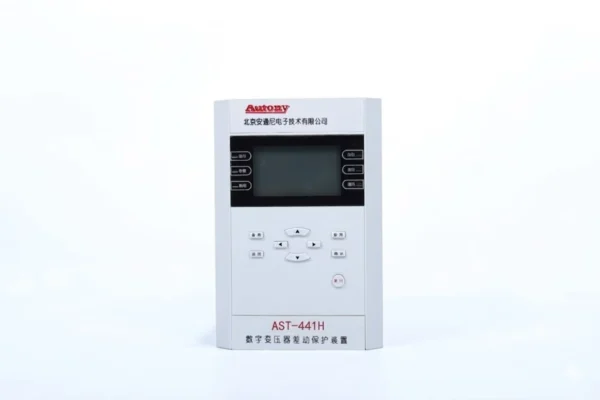
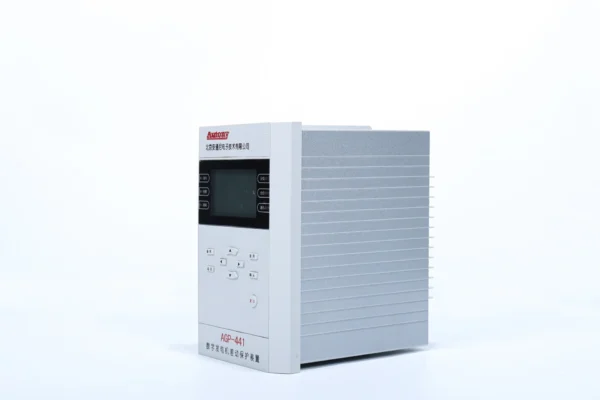
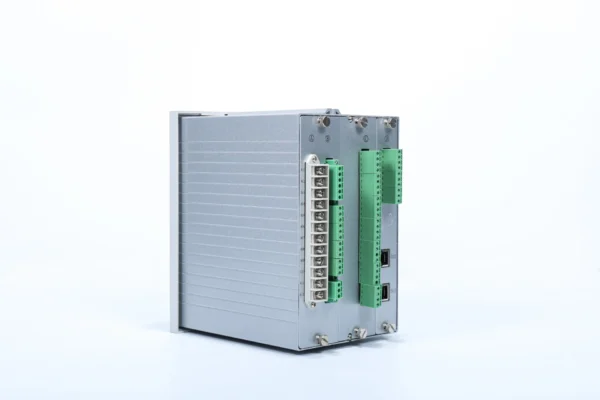
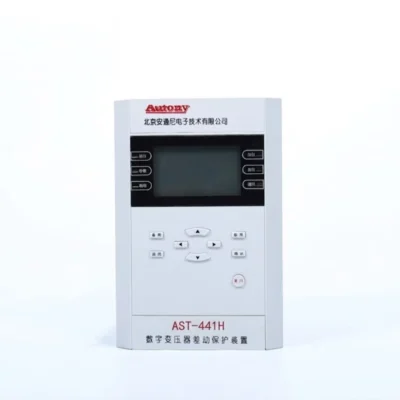
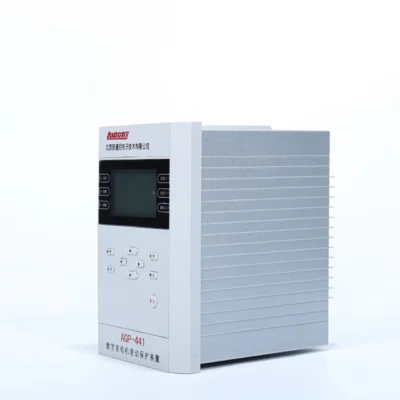
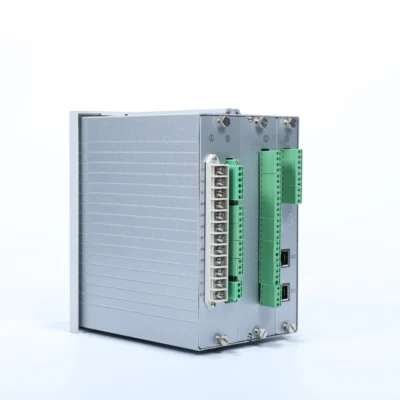
Transformer Differential Protection|87T
Transformer-differential-protection|87t and control units are suitable for substations operating at voltage levels of 110 kV and below. Typically, they are installed in a single panel alongside transformer backup protection devices, non-electrical quantity protection devices, and transformer measurement and control units.
Send your requirements, we will quote for you within 12 hours
Description
Product Overview
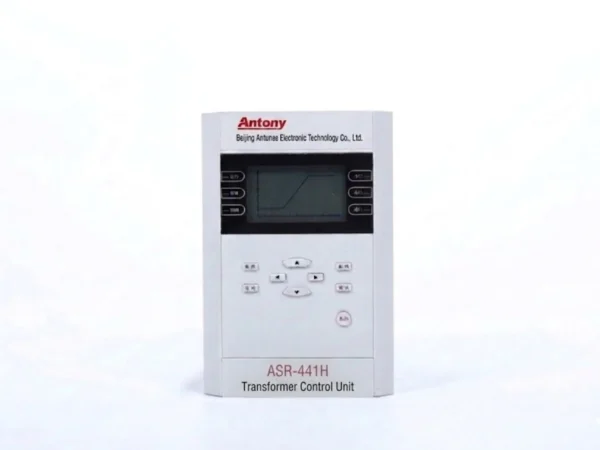
- The AST-441H Digital Transformer Differential Protection|87T and Control Unit is suitable for transformer protection in substations with voltage levels of 110kV and below.
What Is an 87T Relay?
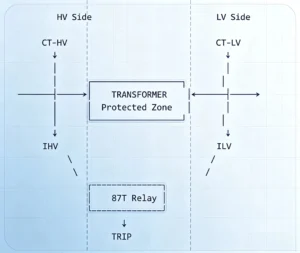
An 87T relay is a transformer differential protection relay that compares the currents entering and leaving the protected transformer zone to detect internal electrical faults.
- 87 = Differential Protection
- T = Transformer
- 87T = Transformer Differential Protection
Product Functions (ANSI)
- Transformer High-Speed Differential Protection 87T-HI / 87HS
- Transformer Differential Protection Relay 87T
- CT Open-Circuit Detection and Excessive Differential Current Alarm
- Overcurrent-start fan
Communication Features
- Communication interfaces (optional): RS-485, CAN bus, Ethernet, IEC 60870-5-103.
- This transformer differential protection device uploads real-time data such as measurements, waveforms, fault and alarm messages, together with all protection parameters and configurations. It supports remote online setting modification and protection function switching.
- The device also accepts commands from the master station, including remote control, time synchronization, parameter adjustment and data access.
Event Logging, Fault Recording
- Event logs cover protection trips and device self-diagnostic faults. They record event type, occurrence time and operating parameters for protection trips, as well as fault type and time for self-test anomalies.
- Fault records include protection operation time, type and RMS values pre- and post-triggering.
- Each channel captures 2 pre-fault cycles and 4 post-fault cycles, with 192 sampling points per channel.
- The SOE stores up to 48 records and fault reports store up to 16 records after power loss.
General Technical Data
| No. | Parameter Category | Core Technical Specification |
|---|---|---|
| 1 | Power Supply & Rated Electrical Parameters | 1. Rated control voltage: AC/DC 220 V
2. Power supply ripple coefficient: ≤ 5% 3. Voltage tolerance: -20% to +15% 4. Rated AC current In: 1 A/5 A (specify when ordering) 5. Rated AC voltage: 100 V 6. Rated frequency: 50 Hz (customizable per project requirements) |
| 2 | Power Consumption | 1. DC power circuit: ≤ 25 VA (normal operation), ≤ 30 VA (device activated)
2. AC voltage circuit: ≤ 1 VA/phase (at 100 V rated voltage) 3. AC current circuit: ≤ 0.5 VA/phase (1 A In), ≤ 1 VA/phase (5 A In) |
| 3 | Output Contact Performance | 1. DC circuit: 50 W breaking capacity (voltage ≤ 250 V, current ≤ 0.5 A, time constant 5 ± 0.75 ms); allowable make current ≤ 5 A
2. AC circuit: 50 W breaking capacity (voltage ≤ 250 V); maximum allowable make current 5 A |
| 4 | Insulation Performance | Meets IEC standard requirements for insulation resistance, dielectric strength, and impulse voltage |
How Does an 87T Relay Work?
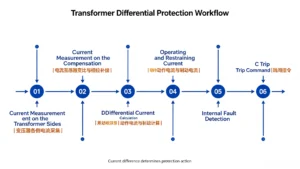
Normal Operation:I₁ ≈ I₂ → Low differential current → No trip
Internal Fault:I₁ ≠ I₂ → High differential current → 87T operates → Transformer breaker trips
87T Relay Settings
| No. | Display Name | Range | Step | Remark |
|---|---|---|---|---|
| 1 | High-speed Differential Setting | |||
| 1.1 | High-speed Differential Protection | 1/0 | — | Enable(1) / Disable(0) |
| 1.2 | High-speed Differential Setting Value | 0.40~99.99A | 0.01A | |
| 2 | Differential Protection Setting | |||
| 2.1 | Differential Protection Enable | 1/0 | — | Enable(1) / Disable(0) |
| 2.2 | CT Broken Circuit Blocking Differential | 1/0 | — | CT break blocking function: Enable(1) / Disable(0) |
| 2.3 | Differential Current Setting | 0.50~99.99A | 0.01A | |
| 2.4 | Restraint Current Setting | 0.50~99.99A | 0.01A | |
| 2.5 | Differential Bias Current Setting | 0.50~99.99A | 0.01A | |
| 2.6 | CT Broken Circuit Threshold | 0.50~99.99A | 0.01A | |
| 2.7 | Harmonic Restraint Coefficient | 0.10~0.70 | 0.01 | Second harmonic restraint ratio |
| 2.8 | Slope / Ratio Restraint Coefficient | 0.30~0.70 | 0.01 | |
| 2.9 | Balance Coefficient | 0.100~1.999 | 0.001 | |
| 3 | Overcurrent Fan Control | |||
| 3.1 | Overcurrent Fan Start | 1/0 | — | Enable(1) / Disable(0) |
| 3.2 | Ventilation Time Delay | 0.00~999.99s | 0.01s | |
| 3.3 | Fan Start Current Setting | 0.5~99.99A | 0.01A | |
| 4 | General Setting | |||
| 4.1 | Motor Differential Mode Selection | 1/0 | — | |
| 4.2 | HV Side Y/△-11 Connection | 1/0 | — | |
| 4.3 | HV Side Y/△-01 Connection | 1/0 | — | |
| 4.4 | Secondary Wiring Mode | 1/0 | — | Delta/Y(1) / Y/Y(0) |
| 4.5 | Control Circuit Break Alarm | 1/0 | — | Alarm enable(1) / disable(0) |
| 4.6 | Current Angle Display | 1/0 | — | |
| 4.7 | Secondary Current Rated | 1/0 | — | 1A input(1) / 5A input(0) |
| 4.8 | Inter-tripping C6C7 | 1/0 | — | High-speed & differential trip C06C07(1) |
| 4.9 | Rated Secondary Current | 0.50~99.99A | 0.01A | HV side CT secondary rated current |
How Does an 87T Relay Prevent Transformer Inrush False Tripping?
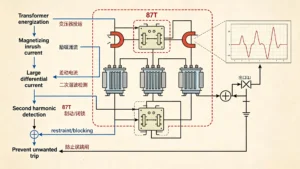
During transformer energization, magnetizing inrush current is generated, creating a large differential current that risks false operation of the transformer differential protection 87T; the relay detects the prominent second harmonic component contained within the inrush current and activates harmonic restraint or blocking logic, which suppresses the differential trip command and prevents unwanted tripping.
87T Transformer Differential Protection Zone
87T vs 50/51 Transformer Protection
| Feature | 87T Relay | 50/51 Relay |
|---|---|---|
| Protection principle | Differential current | Overcurrent |
| Main protection area | Transformer internal zone | Backup / overcurrent |
| ANSI code | 87T | 50/51 |
| CT requirement | CTs on transformer sides | Current measurement CT |
| Internal winding faults | Highly sensitive | Depends on fault current |
| External fault stability | Bias/restraint | Time-current coordination |
| Typical role | Main transformer protection | Backup protection |
87T vs 87G vs 87L vs 87B
| Relay | Protected Equipment | ANSI Function |
|---|---|---|
| 87T | Transformer | Transformer differential |
| 87G | Generator | Generator differential |
| 87L | Transmission line | Line differential |
| 87B | Busbar | Bus differential |
How to Test an 87T Relay?
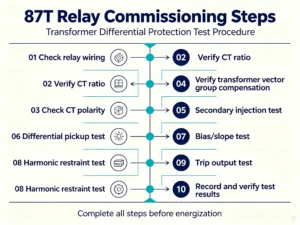
Before commissioning the transformer differential protection, technicians shall check the relay wiring, verify the CT ratio and CT polarity, and confirm the correctness of transformer vector group compensation; subsequently, perform a comprehensive secondary injection test, including differential pickup test, bias and slope characteristic test, harmonic restraint test, and trip output test, and finally record and verify all test results to ensure protection performance complies with design requirements.
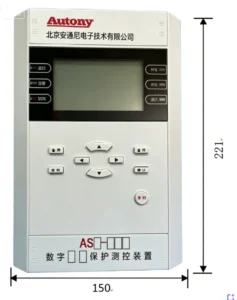
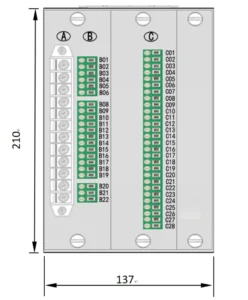
Outline and Installation Dimensions
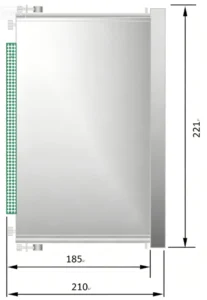
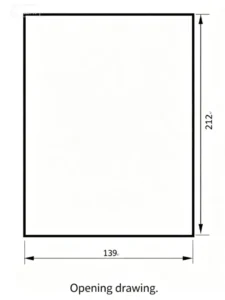
FAQ
Q:What is the scope of protection provided by a transformer differential protection device?
A:Transformer differential protection primarily protects the internal components of the transformer. When a turn-to-turn short circuit or a phase-to-phase short circuit occurs inside the transformer, the corresponding protection function in the transformer differential protection device will trigger an alarm and trip the circuit.
Q:How to Select a Transformer Differential Protection Device?
A:When selecting a transformer differential protection device for differential protection of transformer and differential protection for transformer applications, three key points should be noted: first, consider the transformer’s capacity, as larger capacity requires more advanced device functions; second, identify whether the transformer is two-winding or three-winding, since the suitable protection device differs by transformer type; third, refer to relevant industry standards and verify compliance with international norms such as IEC and IEEE.
Q: What is 87T protection?
A: ANSI 87T is the main differential protection for power transformers. It compares primary and secondary side currents to detect internal faults and trip quickly.
Q: What faults does 87T protect against?
A: Transformer internal faults: winding short circuit, turn-to-turn fault, bushing failure and internal arcing faults.
Q: Why does transformer differential need phase compensation?
A: Delta/Y transformers cause a 30° phase shift. Correct CT cross-wiring eliminates false differential current and prevents mal-operation.
Q: What is magnetizing inrush current?
A: A large transient current during transformer energization. It can falsely trigger differential protection.
Q: How does 87T avoid inrush tripping?
A: By 2nd harmonic restraint. High 2nd harmonic content blocks differential trips during inrush conditions.
Q: Does OLTC tap change affect 87T?
A: Yes. Tap ratio changes create steady-state unbalanced current. Relays use tap margin settings to avoid false trips.
Q: Can CT saturation cause 87T mal-operation?
A: Yes during severe external faults. Modern relays adopt CT saturation restraint to improve stability.
Q: What are the limitations of 87T?
A: It cannot detect minor turn faults, core overfluxing or loose CT wiring. These require backup protection.
Q: How to distinguish inrush vs real fault trip?
A: Inrush has obvious 2nd harmonic and decays slowly; real internal fault has low harmonic and stable high current.
2 reviews for Transformer Differential Protection|87T
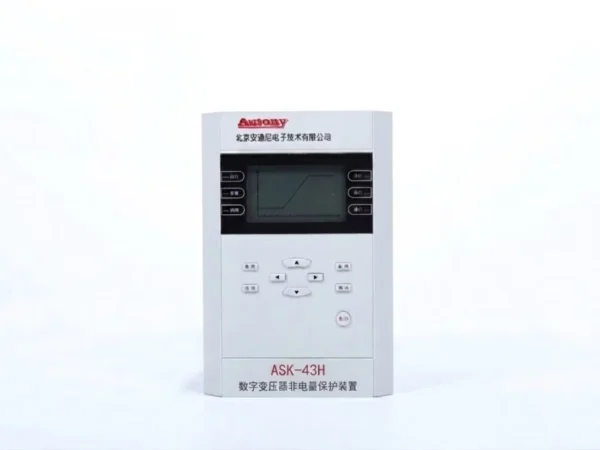
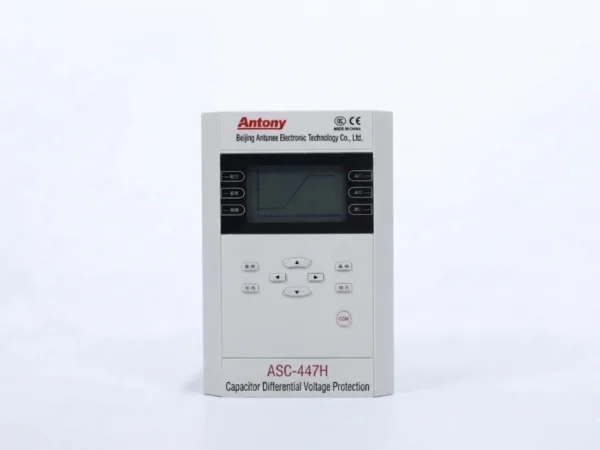
Related products
High Quality
Stable performance, reliable design, ensuring safe operation for power system protection and grid stability.
Fast Delivery
Timely delivery to support your urgent orders and project schedules efficiently and professionally at any time.
Best Warranty
Professional Warranty: Reliable after-sales support for stable relay protection and long-term customer satisfaction.
xiao zhang –
Transformer differential relay (87T) adopts percentage restraint algorithm, strong anti-CT-saturation capability and CT break lockout. Instant trip for internal winding faults, flexible parameter setting and multi-communication options for all types of distribution & power transformers.
Jack –
Backed by good technical support and documentation — overall a solid choice.