

-
Leon Zhang sales consultant
-
Email: zxl635973785@gmail.com
-
Phone/WhatsApp: +86 13655813266
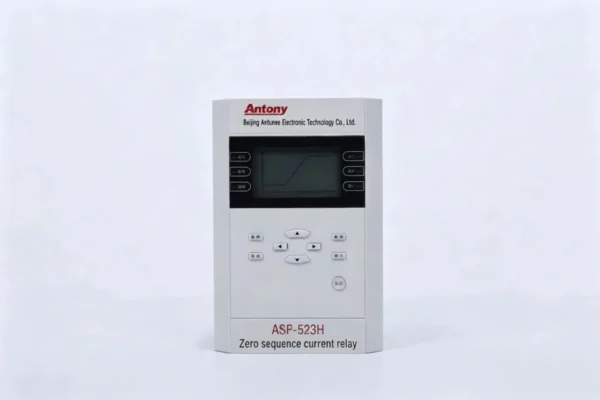
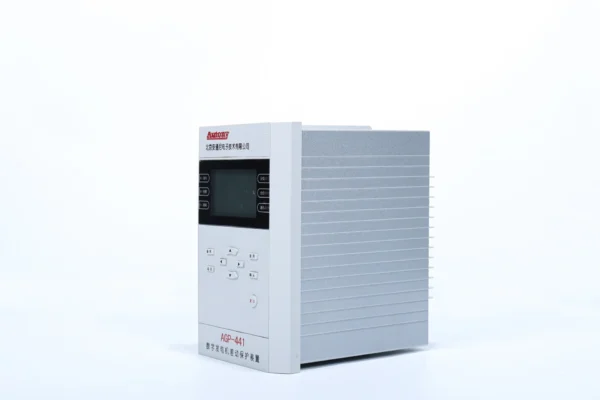
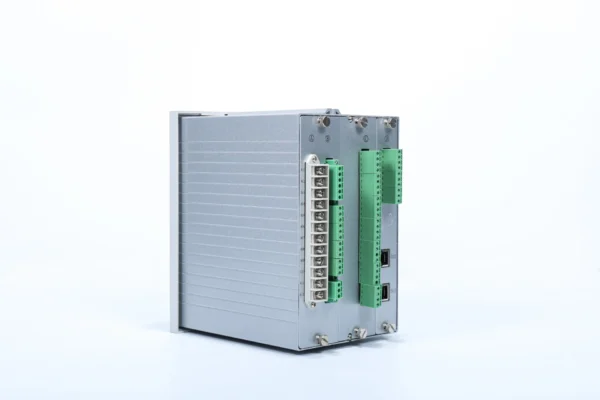
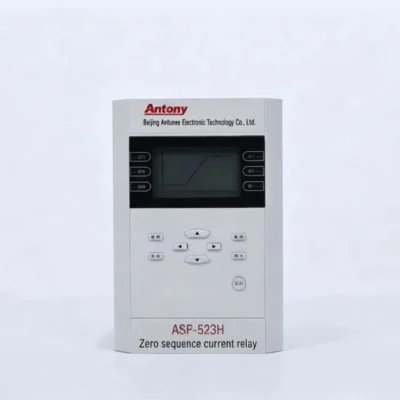
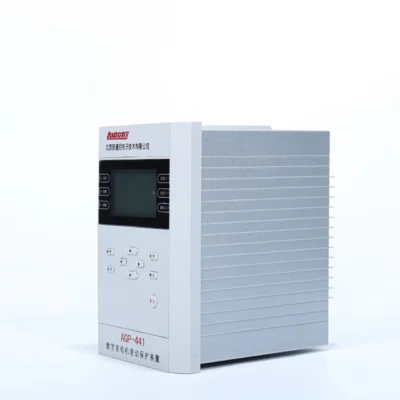
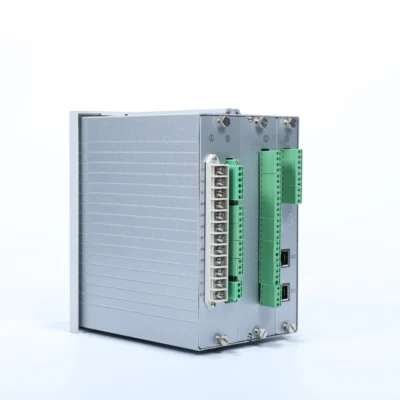
51N Zero sequence current protection relay
ASP-523H Phase-to-Ground Short Circuit Intelligent Protection Device, also known as zero sequence current protection relay, is applicable to 400V TN power systems in power plants, coal mines, iron & steel plants, textile factories and other industrial sites.
ANSI:51N
Communication Mode
Optional: RS-485, CAN bus, Ethernet, IEC 60870-5-103 (IEC-103), IEC 61850
Send your requirements, we will quote for you within 12 hours
Description
Overview of Zero sequence current protection relay
- ASP-523H Phase-to-Ground Short Circuit Intelligent Protection Device, also known as zero sequence current protection relay, is applicable to 400V TN power systems in power plants, coal mines, iron & steel plants, textile factories and other industrial sites.
- It effectively solves common faults such as transition resistance earth faults on MCC circuits, failure operation of molded case circuit breakers and thermal relays, which cause damaged equipment insulation, PC cascading tripping and large-scale power outages.
- By real-time monitoring zero-sequence CT current of each circuit, this device realizes early alarm prior to tripping and cuts off faulty power lines timely. It protects electrical equipment reliably and prevents cascading tripping and wide-range power blackouts to avoid severe economic losses.
Features of the System
- The ASP-523H phase-to-ground short circuit protection device monitors zero sequence currents and zero sequence fault currents. It realizes phase-to-ground short circuit (zero sequence) protection function when matched with open-type high-precision residual current transformer and circuit breaker shunt trip coil. Featuring compact structure and easy installation, the device supports communication networking through RS485 interface with stable and reliable operation performance
- It adopts zero phase sequence current sampling to accurately judge system insulation status, and trips rapidly to isolate faulty lines or motors. It prevents large-scale power outages caused by cascading tripping and helps on-site maintenance staff work out reasonable maintenance plans efficiently.
Technical Specifications
- Working Power Supply: AC/DC 85V—265V
- Alarm & Tripping Contact Capacity: 2500VA/300W
- Panel Display: Large-screen LCD, user-friendly interface, simple and intuitive operation
- Rated Voltage Level: 0.4kV, 0.69kV
- Phase-to-Ground Short Circuit Protection Setting: Primary current 0~1500A, matched with dedicated current transformer
- Zero-sequence Tripping Current: 0.05A~10A (adjustable)
- RMS Measuring Error: ±2%
- Tripping Time Delay: 0-99s
- Tripping Delay Error: ±25ms
- Data Transmission: RS485 bus, MODBUS-RTU communication protocol
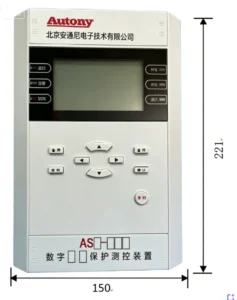
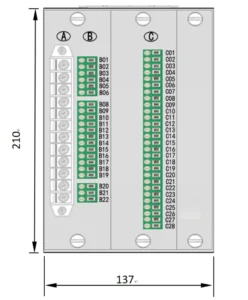
- Installation Type: Embedded mounting
Main Functions
Protection Function
- Supports 4-level alarm setting values; tripping output can be enabled or disabled.
Communication Function
- Two communication modes available: Dual RS485 communication (please specify when placing orders).
-
Upload real-time data including measured values, fault signals, alarm signals, all protection settings, configurations and coefficients. Remote online setting modification and protection function switching are supported.
-
Receive control commands from upper system, including system time synchronization, parameter setting, data reading and writing commands.
Operation Cabinet Function
- The closing and opening current inside the device features self-adaptation.
Self-check Function
- Automatically detect faults of RAM, ROM, A/D module and power loss.
-
Automatically verify parameters such as setting values, configurations and coefficients.
Event Recording & Fault Wave Recording
- Record protection operation events and device self-check faults.
-
Record type, occurrence time and operating parameters during protection actions; record type and occurrence time of device self-check faults.
Monitoring Function
- Remote measurement function for analog quantities such as current and frequency.
-
Remote control function for circuit breaker closing, opening and energy storage.
Display Function
- Equipped with Chinese LCD display, status indicators and operation keys on the panel. It realizes real-time monitoring, online setting adjustment and protection function switching. Fault indicators can be reset via local reset key or remote control.
Outline and Installation Dimensions
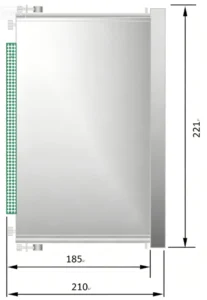
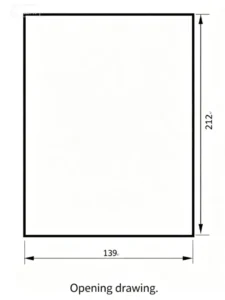
FAQ
Q:what is positive negative and zero sequence current?
A:As core parameters for ground fault zero sequence current and zero sequence current relay, positive-sequence current is the symmetrical three-phase operating component with phase sequence A→B→C under normal working conditions. Negative-sequence current refers to symmetrical three-phase unbalanced component with reverse phase sequence A→C→B. Zero-sequence current means three-phase currents with identical phase and magnitude, which can only flow through grounding paths and represents earth fault signals. They respectively reflect normal system operation, asymmetric faults and earth faults of power systems.
Q:what is a zero sequence current transformer?
A:It is a special current transformer used to detect zero-sequence current for earth fault protection.
Q:In which relay protection products is zero-sequence current protection applied?
A:Zero-sequence current protection is a common relay protection function, widely adopted in line protection, transformer protection, motor protection and other related devices.
Q: What is zero sequence current protection used for?
A: It detects ground faults by monitoring residual zero-sequence current and trips circuits promptly to safeguard cables and distribution equipment.
Q: What is a zero sequence current protection relay?
A: It is a protective relay that detects zero-sequence current (I₀ = Iₐ+Iᵦ+Iᶜ) from three-phase unbalance, mainly used to identify single-phase earth/ground faults in power systems. Under normal balanced load, the vector sum of 3-phase currents equals zero with no zero-sequence component. Once a ground fault occurs, unbalanced current generates measurable zero-sequence current to trigger trip or alarm actions.
Q: What are the two mainstream wiring modes to collect zero-sequence current?
A:
- ZSCT / Core Balance CT Mode: Install a dedicated zero-sequence current transformer enclosing all 3 phases (plus neutral if applicable), directly inducing zero-sequence secondary current to the relay. High sensitivity, ideal for high-resistance grounding systems and motor sensitive earth fault protection.
- Residual Connection Mode: Sum secondary outputs of three independent phase CTs externally to form residual current I₀. Lower sensitivity, widely used in solidly grounded distribution feeders and transformer REF protection.
Q: Where is zero sequence current relay commonly applied?
A: Distribution feeders, transformer neutral protection, motor & generator earth fault protection, cable line fault detection, busbar ground fault supervision, wind farm & photovoltaic collection lines, and high-impedance grounded industrial power networks.
Q: How to determine the pickup current setting value?
A:
- Pickup I₀ must be greater than normal system unbalance zero-sequence current + 3rd harmonic residual current to avoid nuisance tripping.
- Must be less than minimum ground fault current to guarantee fault sensitivity; typical sensitivity margin 1.5~2 times minimum fault current.
- For IDMT characteristic relays, set Time Multiplier Setting (TMS) for selectivity coordination with upstream & downstream protection devices.
Q: How to select ZSCT transformation ratio?
A: ZSCT ratio = Minimum detectable earth fault primary current / Relay minimum operating secondary current. For sensitive leakage scenarios, use ultra-high-sensitivity ratios such as 100/0.01A; for heavy-current feeders adopt standard ratios like 600/1A, 1000/1A.
Q: What’s the difference between definite-time and inverse-time (IDMT) zero-sequence protection?
A:
- Definite Time: Fixed delay after exceeding pickup value, simple setting, used for feeder sectioned protection.
- IDMT Inverse Time: Trip time shortens as fault current rises, perfect for hierarchical coordination in radial distribution networks to achieve selective tripping without upstream misoperation.
Q: Key installation rules for ZSCT zero-sequence CT?
A:
- All live conductors (3 phases + neutral wire) must pass through the ZSCT window together; PE protective earth wire cannot go through the CT aperture.
- Only one single earthing point on ZSCT secondary circuit; multiple grounding creates circulating current and causes false zero-sequence signal.
- Avoid cable flat laying; use trefoil cable formation to reduce external electromagnetic interference.
- No equipment earthing point located inside the CT window, otherwise fault current bypasses CT and leads to protection failure to operate.
Q: Can residual connection mode be used for delta-connected transformer secondary side?
A: Not recommended. Delta winding blocks zero-sequence current, residual CT summation cannot reflect actual ground fault; install independent ZSCT on outgoing cables for reliable fault detection.
Q: Relay trips randomly during normal no-fault operation, why?
A: Main root causes & fixes:
- Multiple grounding on ZSCT secondary → reserve only one ground terminal.
- PE wire passes through ZSCT window → re-route PE cable outside CT.
- Loose secondary wiring or CT polarity reversal → check wiring sequence and polarity mark.
- Severe 3rd harmonic from nonlinear loads (VFD, UPS) → raise pickup threshold or enable harmonic blocking function.
- CT partial saturation during motor starting transient → add short time delay or inrush restraint logic.
Q: Protection fails to trip when obvious single-phase ground fault happens?
A:
- ZSCT primary wire missing through window → rethread all phase cables.
- Secondary circuit open circuit or broken wire → inspect continuity of CT secondary loop.
- Pickup current set too high above actual fault current → lower setting value after calculating minimum fault current.
- CT core saturated under heavy fault → upgrade CT with higher saturation factor class.
- Neutral grounding mode limits fault current below relay sensitivity → switch to high-sensitivity ZSCT type.
Q: Why does zero-sequence protection act during breaker non-full-phase operation?
A: Single-pole disconnection produces system asymmetry and generates zero-sequence component. Solution: enable directional zero-sequence element or add delay to distinguish permanent ground faults from transient non-full-phase conditions.
Q: What is directional zero-sequence current relay and when to use it?
A: It adds zero-sequence voltage directional judgment to distinguish fault direction (incoming vs outgoing line). Mandatory for double-source power supply lines, ring main networks, multi-bus substations, preventing adjacent line faults from triggering wrong tripping of healthy feeders.
Q: How do triple-frequency harmonics affect zero-sequence relay?
A: 3rd, 9th, 15th harmonics belong to zero-sequence harmonics, superpose on fundamental zero-sequence signal and trigger false trips. Mitigation: activate built-in harmonic filter, increase pickup setting, or adopt digital relays with harmonic restraint algorithm.
Q: How to perform a simple field test to verify relay functionality?
A: Inject a small single-phase test current through only one phase passing ZSCT to create artificial zero-sequence current. Confirm relay picks up and issues trip/alarm once injected value exceeds setting. Never open CT secondary circuit during live commissioning to avoid overvoltage damage.
Q: Regular maintenance items for zero sequence protection system?
A:
- Tighten all secondary terminal connections to eliminate loose contact.
- Inspect ZSCT for mechanical damage, moisture ingress and insulation aging.
- Calibrate relay pickup value & time delay annually.
- Check secondary grounding point to ensure no duplicate earthing.
Q: Is zero-sequence protection applicable for ungrounded neutral systems?
A: Yes. Ungrounded networks have tiny capacitive earth fault current; high-sensitivity ZSCT zero-sequence relay is the mainstream detection method, often paired with zero-sequence voltage relay for double confirmation of insulation faults.
Q: Can zero sequence protection replace phase overcurrent protection?
A: No. Zero-sequence relay only responds to earth faults; it cannot detect phase-to-phase short circuits without ground connection. It must work with phase overcurrent/short-circuit protection as a complementary earth fault protection element.
Q: Brief checklist for abnormal relay status
- Random trip → Check CT grounding, wiring polarity, PE wire routing, harmonic loads.
- No trip on fault → Check CT threading, secondary open circuit, over-high pickup setting.
- Directional protection maloperate → Verify zero-sequence voltage wiring and voltage transformer polarity.
- Intermittent action → Find loose terminals, damaged CT insulation or electromagnetic interference.
3 reviews for 51N Zero sequence current protection relay
Related products
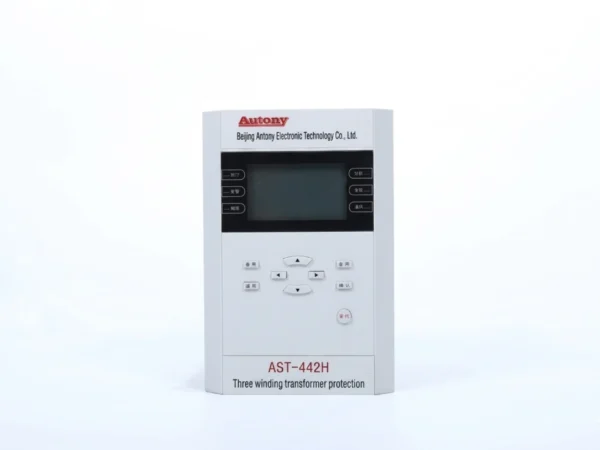
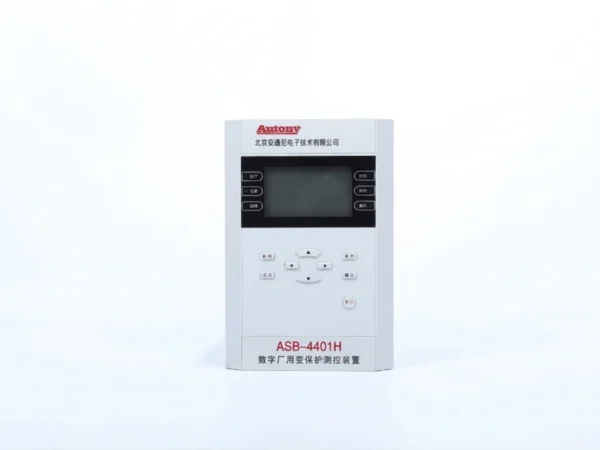
High Quality
Stable performance, reliable design, ensuring safe operation for power system protection and grid stability.
Fast Delivery
Timely delivery to support your urgent orders and project schedules efficiently and professionally at any time.
Best Warranty
Professional Warranty: Reliable after-sales support for stable relay protection and long-term customer satisfaction.
xiao zhang –
This relay reliably detects earth faults via residual current, delivers fast tripping to avoid equipment damage. Compact design with stable performance fits power distribution, PV and substation systems perfectly.
Jack –
The product is of good quality and worth trusting.
Jack –
Stable performance, reliable operation, and trustworthy.