

-
Leon Zhang sales consultant
-
Email: zxl635973785@gmail.com
-
Phone/WhatsApp: +86 13655813266
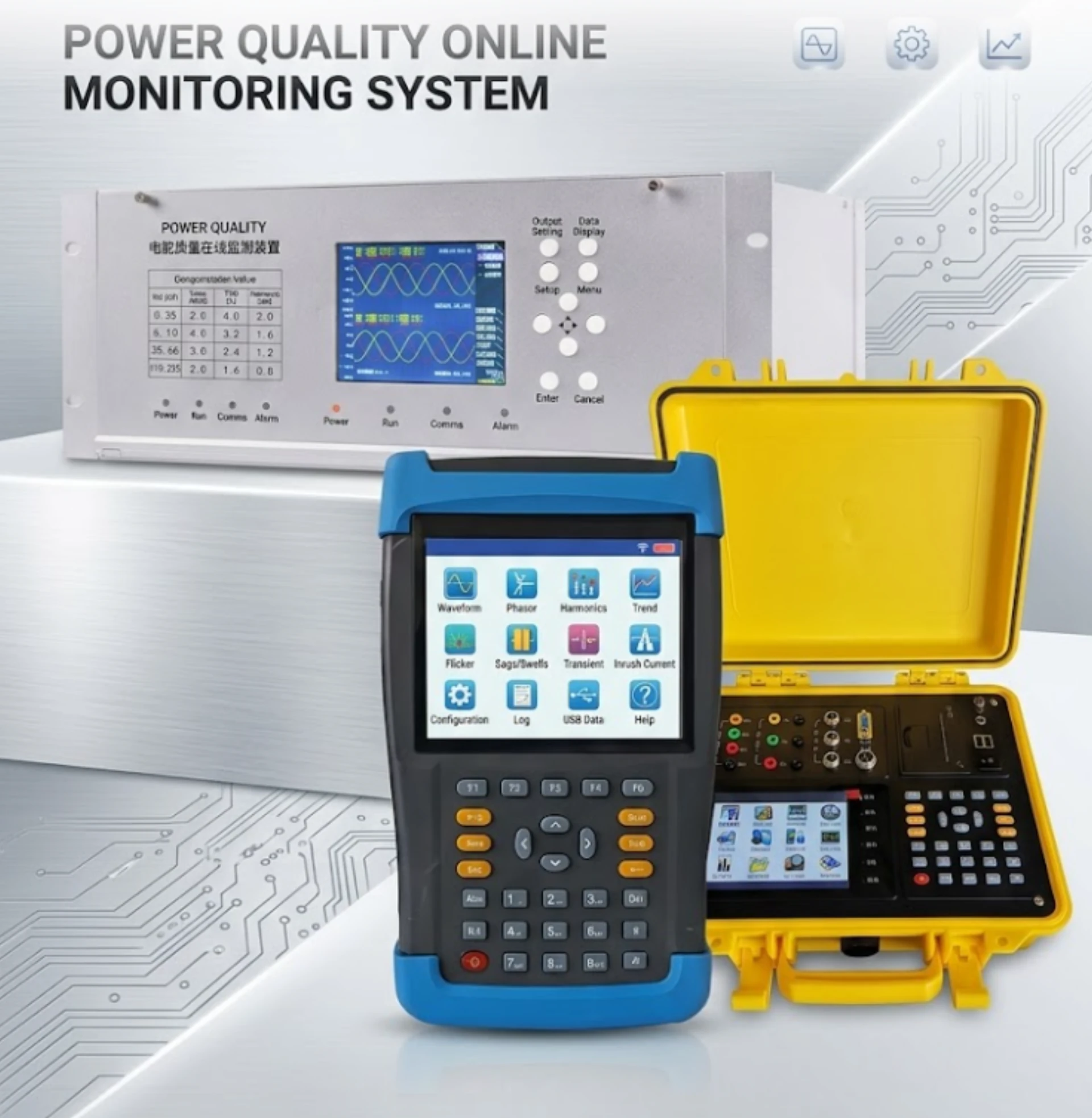
Online Power Quality Monitoring vs Portable Power Quality Analyzer: Complete Buying Guide
What is power quality
Power quality refers to the compliance of supply voltage, current and frequency with standard rated values. Power quality analyzers are applied to monitor parameters for stable power quality.
It covers voltage fluctuation, harmonics, flicker, transient surges, unbalanced three-phase voltage and power factor conditions. Good power quality ensures stable and safe operation of all connected electrical loads.
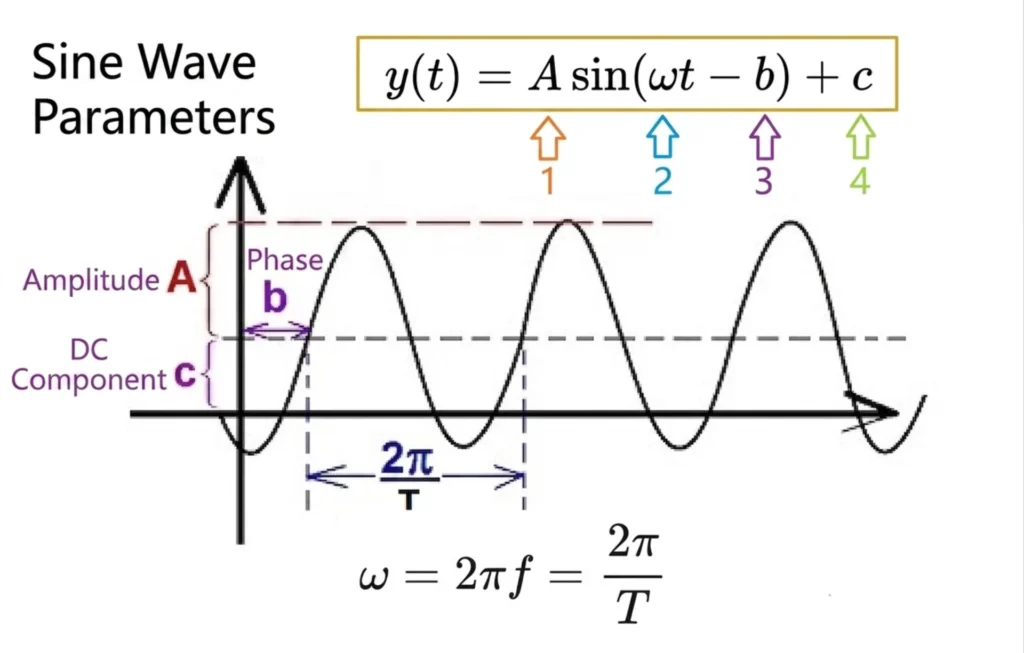
Why is power quality measurement equipment important
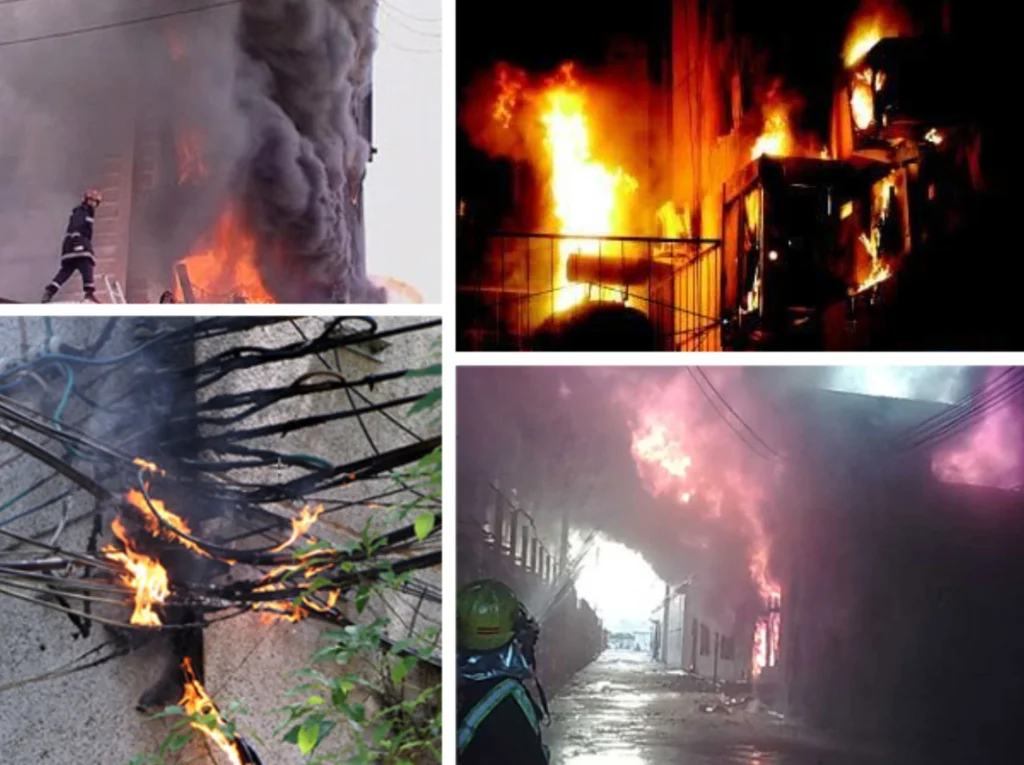
Good power quality ensures stable equipment operation. Harmonics, voltage deviations and flicker lead to equipment damage, unplanned downtime and higher energy costs.
They also interfere with precision devices like inverters and data center hardware. Power quality monitoring cuts losses for both utilities and industrial users.
Power Quality Monitoring Parameters & International Standards
Table 1 Main Power Quality Monitoring Parameters
| English Term | Description |
|---|---|
| Voltage | Monitor deviation and fluctuation of system rated voltage |
| Current | Monitor amplitude, distortion and unbalance of load current |
| Frequency | Monitor deviation and stability of grid rated frequency |
| Harmonics | Monitor harmonic distortion rate and content of each harmonic for voltage and current |
| Flicker | Track voltage fluctuation causing lighting flicker and load disturbance |
| Voltage sag | Detect drop depth and duration of short-term under-rated voltage |
| Voltage swell | Detect rise magnitude and duration of short-term over-rated voltage |
| Power factor | Check proportion of active and reactive power in power system |
| Unbalance | Measure unbalance degree of three-phase voltage and current |
Table 2 Relevant International Standards
| Standard Code | Full Name | Application Scope |
|---|---|---|
| IEC 61000 | EMC (Electromagnetic Compatibility) International Standard Series | Global baseline for EMC limit values and test methods of power quality |
| EN 50160 | Voltage Characteristics of Public Distribution Systems | EU specification for limits of voltage, frequency, harmonics in European public grids |
| IEEE 519 | Recommended Practices and Requirements for Harmonic Control in Electrical Power Systems | North American standard for harmonic suppression and power quality management |
To accurately monitor full-range power quality parameters, two mainstream devices are commonly applied in field projects: online power quality monitoring units and portable power quality analyzers.
Online Power Quality Monitoring vs Portable Power Quality Analyzer
What is Online Power Quality Monitoring ?
Online power quality monitoring continuously captures real-time voltage, current, harmonics, flicker and other parameters 24/7 via fixed installed devices. It automatically records abnormal power events for later analysis, fault tracing and power quality improvement.
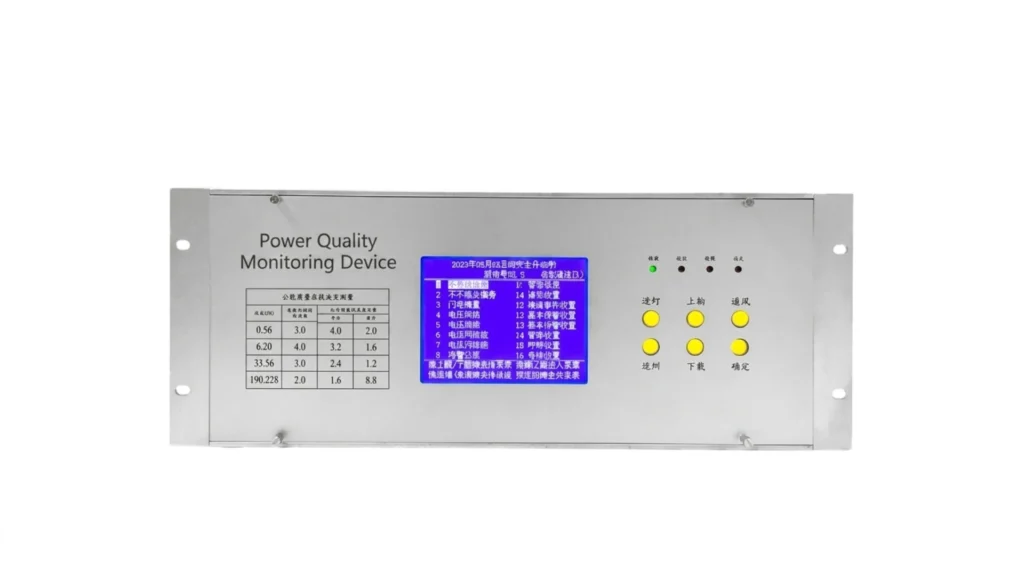
Benefits of Online Power Quality Monitoring Systems
Real-time continuous tracking of voltage, harmonics, flicker and other PQ indicators for early fault warning.
Automatic recording of voltage sag, swell and abnormal events to shorten troubleshooting time.
Reduce unexpected equipment breakdown and unplanned production downtime, cutting maintenance and production loss costs.
Provide reliable test data to optimize reactive power compensation and improve power factor.
Help users comply with IEC61000, EN50160 and IEEE519 international power quality standards.
What is Power Quality Analyzer ?
A portable power quality analyzer is a portable testing instrument for spot field inspection. It measures voltage, current, harmonics, sag, swell, flicker and power factor temporarily to diagnose on-site power quality faults.
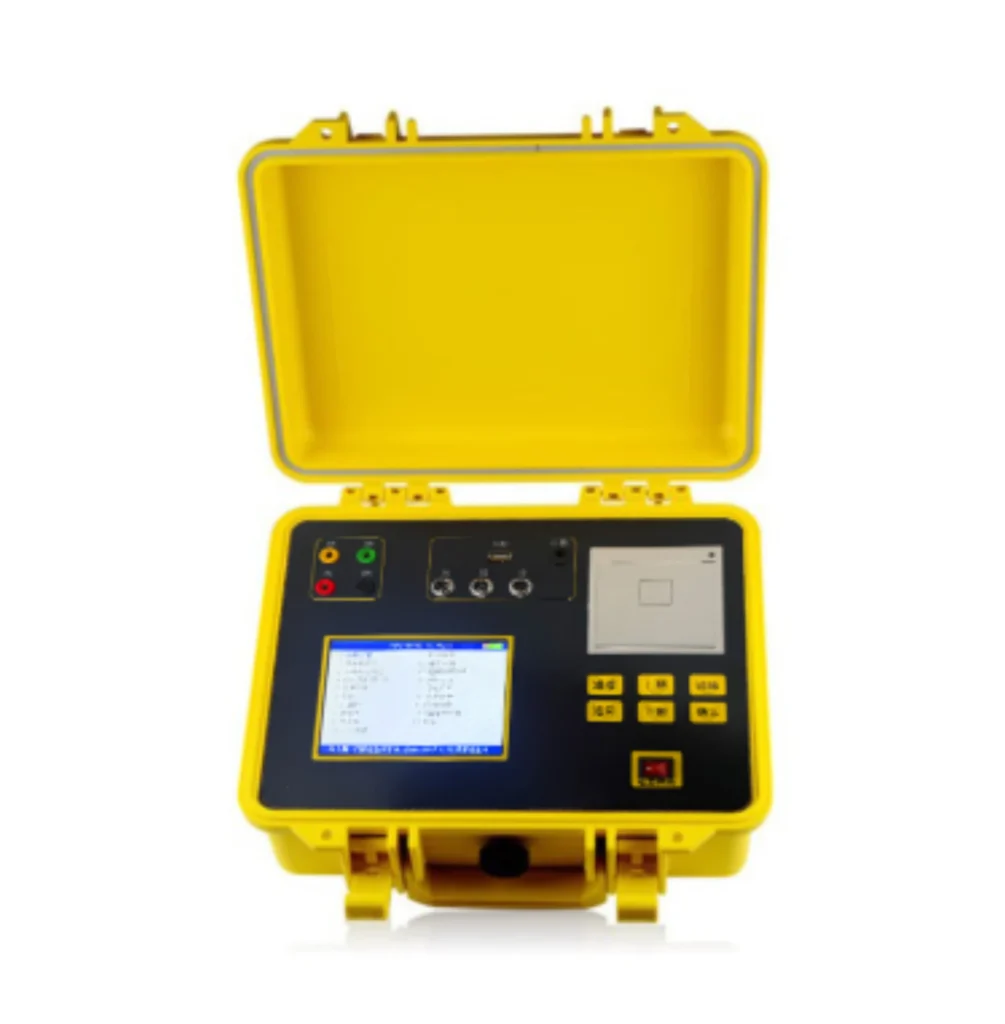
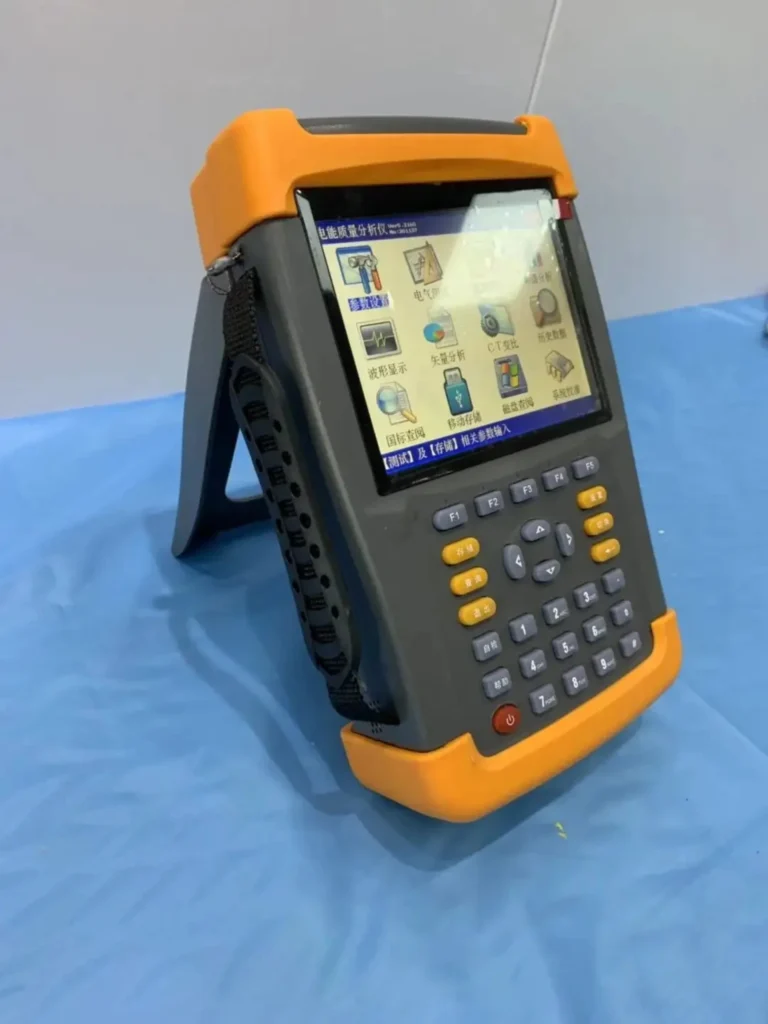
Benefits of Power Quality Analyzer
Compact and portable for on-site spot testing at any distribution point.
Instantly measure harmonics, sag, swell, flicker and unbalance to locate hidden power faults quickly.
Suitable for periodic inspection, commissioning and troubleshooting without fixed installation.
Help verify on-site power quality against IEC61000, EN50160 and IEEE519 standards.
Cost-effective for short-term detection instead of investing in permanent monitoring equipment.
Power Quality Analysisr price
Professional Power Quality Analyzer Manufacturer with Flexible Prices | Detailed Technical Discussion Required Before Purchase
| Product Grade | Specification | Price(CNY) | FOB USD Price |
|---|---|---|---|
| Economy Basic Model | Measures harmonics, voltage, current & unbalance, no flicker function | ¥8,500~¥15,000 | $1,100~$1,900/unit |
| Mid-range Full-function Model | IEC Class S, up to 50th harmonic, Pst/Plt flicker, waveform recording, WiFi + PC analysis software; best export seller | ¥16,000~¥30,000 | $2,100~$3,900/unit |
| High-end Class A Precision Model | Complies with IEC61000-4-30 Class A, for grid acceptance & power station projects | ¥35,000~¥75,000 | $4,600~$9,800/unit |
Online Monitoring System vs Portable Power Quality Analyzer
| Feature | Online Monitoring System | Portable Analyzer |
|---|---|---|
| Installation | Permanent | Temporary |
| Monitoring | Continuous | Short-Term |
| Remote Access | Yes | Limited |
| Alarm Function | Yes | Limited |
| Historical Data | Long-Term | Short-Term |
| Multi-Site Management | Yes | No |
Selection mainly relies on practical application scenarios and monitoring purposes.
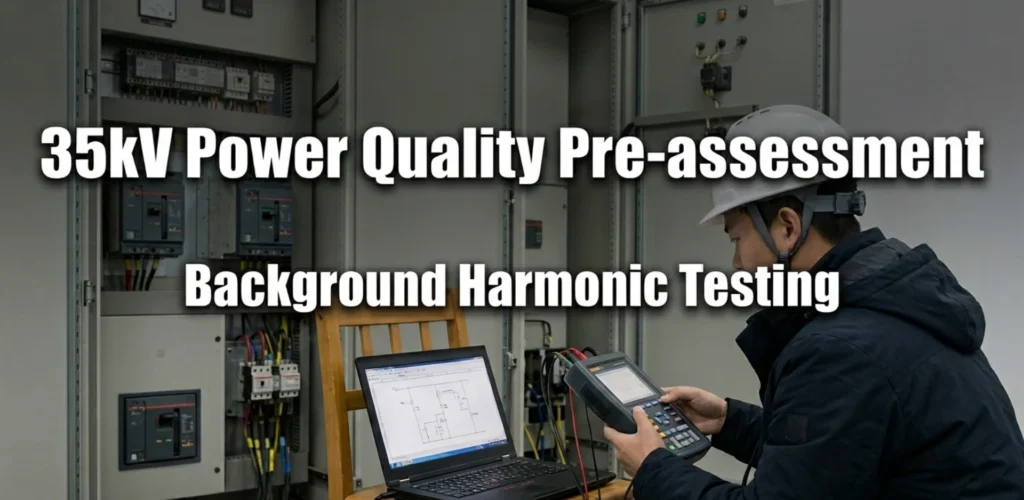
Which Solution Is Right for Your Application?
| User Type | Recommended Solution | Reason |
|---|---|---|
| Utility Companies | Power Quality Monitoring System | Utilities require continuous visibility into grid performance and power quality compliance. |
| Power Quality Service Providers | Portable Power Quality Analyzer | Testing companies need flexible instruments that can be used across multiple client sites. |
| Industrial Facilities | Combination of Both | Permanent monitoring identifies ongoing issues; portable analyzers deliver detailed on-site diagnostics during faults. |
| Renewable Energy Projects | Online Monitoring System | Continuous monitoring ensures compliance with grid codes and operational performance standards. |
Key Features to Look for When Buying a handheld power quality meter
| Category | Details |
|---|---|
| Compliance Standards | Certified to IEC 61000-4-30 Class A, IEEE 519, EN 50160.Class A certification is mandatory for utility-level accurate measurement. |
| Measurement Capabilities | Harmonics, THD, Flicker, Voltage sag, Voltage swell, Power factor, Three-phase unbalance |
| Communication Options | Ethernet, Wi-Fi, 4G/5G, Modbus, IEC 61850 |
| Data Storage | Large storage capacity for long-time recording to capture intermittent abnormal events |
| Software and Reporting | Comes with professional power quality software to process data and generate standardized test reports |
Key Features to Look for When Buying an Online Power Quality Monitoring System
| Category | Specifications |
|---|---|
| Compliance Standards | Conform to IEC 61000-4-30 Class A, EN50160, IEEE 519 for legal grid compliance |
| Measuring Functions | Harmonics, THD, flicker, voltage sag/swell, power factor, three-phase unbalance, frequency deviation |
| Communication Interface | Ethernet, Wi-Fi, 4G/5G, Modbus-RTU/TCP, IEC 61850 |
| Data Storage & Record | Large-capacity local storage, long-term continuous data recording and fault event snapshot |
| Remote Management | Real-time remote access, online parameter configuration, remote alarm push |
| Alarm Output | Over-limit alarm via SMS/APP/relay output for abnormal power quality |
| Supporting Software | Cloud or PC analysis platform, automatic data statistics and standard compliance report generation |
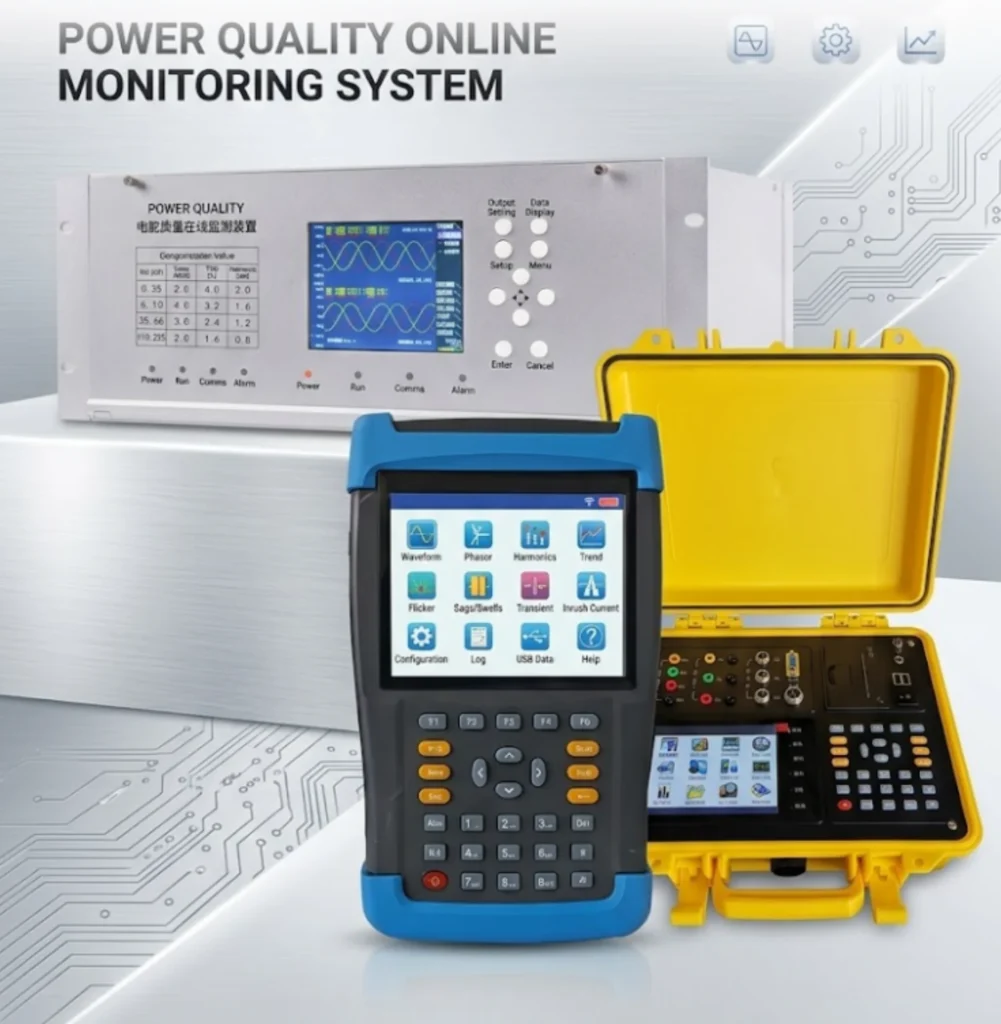
Common Power Quality Problems and How to Detect Them
| Issue | Typical Symptoms | Detection Method |
|---|---|---|
| Harmonic Distortion | Transformer overheating, premature capacitor damage, unexpected breaker tripping | PQ analyzer with harmonic testing function |
| Voltage Sag | PLC rebooting, unexpected equipment stop, production downtime | Event logging & waveform capturing |
| Voltage Unbalance | Motor overheating, shortened motor service life | Three-phase voltage imbalance analysis |
| Low Power Factor | Increased electricity cost, grid penalty charges | Continuous power factor monitoring |
Why More Utilities Are Deploying Online Power Quality Monitoring Systems
The transition toward smart grids is driving demand for online monitoring solutions.
Major trends include:
- Smart grid modernization
- Renewable energy integration
- Digital substations
- Predictive maintenance
- Remote asset management
Utilities increasingly require real-time visibility into network performance to improve reliability and customer satisfaction.
As a result, demand for advanced power quality monitoring systems continues to grow worldwide.
FAQ
How to improve power quality?
| Issue | Improvement Solutions |
|---|---|
| Harmonic distortion | Install passive/active harmonic filters, series APF, shunt APF |
| Voltage sag & swell | Configure voltage regulators, UPS, dynamic voltage restorers(DVR) |
| Three-phase unbalance | Balance single-phase loads reasonably, add unbalance correction devices |
| Low power factor | Install reactive power compensation capacitors or SVG |
Auxiliary measures:
Deploy online PQ monitoring system for long-term data tracking; use portable analyzers for regular field testing to locate hidden defects timely.
How to Measure Power Quality?
Power quality is measured with a compliant power quality analyzer by wiring voltage probes and current clamps at target points, recording voltage, harmonic, flicker and frequency data against IEC/IEEE standards.
Who conducts power quality analysis in commercial facilities?
Power quality specialists, power quality engineers, electrical engineers, certified electrical technicians, third-party electrical consulting firms, facility management electrical staff and grid utility technicians conduct power quality analysis in commercial facilities.
How do transformers support power quality in industrial plants?
Transformers stabilize supply voltage, isolate harmonic disturbances between grid and loads, match voltage levels for industrial equipment, limit fault current and mitigate voltage fluctuations to maintain good power quality in industrial plants.
How to use power quality analyzer?
Connect voltage test leads to circuit terminals and clamp current sensors on load cables.
Set measurement parameters including voltage, current, harmonic, flicker and power factor on the device.
Start recording data for scheduled monitoring periods.
Export stored test data for later analysis and power quality troubleshooting.
What are power quality issues?
Common power quality issues include voltage sag/swell, harmonic distortion, power flicker, unbalanced three-phase voltage, transient surge and power interruption.
What is harmonics in power quality?
Harmonics are sinusoidal waveforms whose frequencies are integer multiples of the fundamental power frequency, generated by nonlinear electrical loads. They distort voltage and current waveforms and cause extra energy loss and equipment malfunction.
What is meant by power quality?
Power quality refers to the characteristics of supplied voltage and current that enable electrical equipment to operate safely, efficiently and reliably without abnormal damage or malfunction.
What is voltage sag in power quality?
Voltage sag is a brief drop of supply voltage, mainly caused by short circuit or large motor startup, which may lead to abnormal shutdown of electrical equipment.
Conclusion
Power quality issues can significantly impact reliability, efficiency, and operational costs. Choosing the right monitoring solution is essential for identifying and resolving these problems.
A Power Quality Monitoring System provides continuous, real-time visibility into electrical networks, making it ideal for utilities, substations, and industrial facilities.
A Portable Power Quality Analyzer offers flexibility and detailed diagnostics, making it the preferred tool for testing companies, commissioning engineers, and maintenance teams.
For organizations seeking comprehensive power quality management, combining both solutions often delivers the best results—continuous monitoring for early detection and portable analysis for in-depth troubleshooting.
About Author

Hello, I'm Leno Zhang. I have 15 years of experience in the power relay protection industry with extensive pre-sales and after-sales project experience. Our company specializes in various complete sets of relay protection and automation equipment. I can assist customers in solving all practical on-site project challenges and provide optimal integrated solutions.
Tell Us Your Requirement
High Quality
Stable performance, reliable design, ensuring safe operation for power system protection and grid stability.
Fast Delivery
Timely delivery to support your urgent orders and project schedules efficiently and professionally at any time.
Best Warranty
Professional Warranty: Reliable after-sales support for stable relay protection and long-term customer satisfaction.