

-
Leon Zhang sales consultant
-
Email: zxl635973785@gmail.com
-
Phone/WhatsApp: +86 13655813266
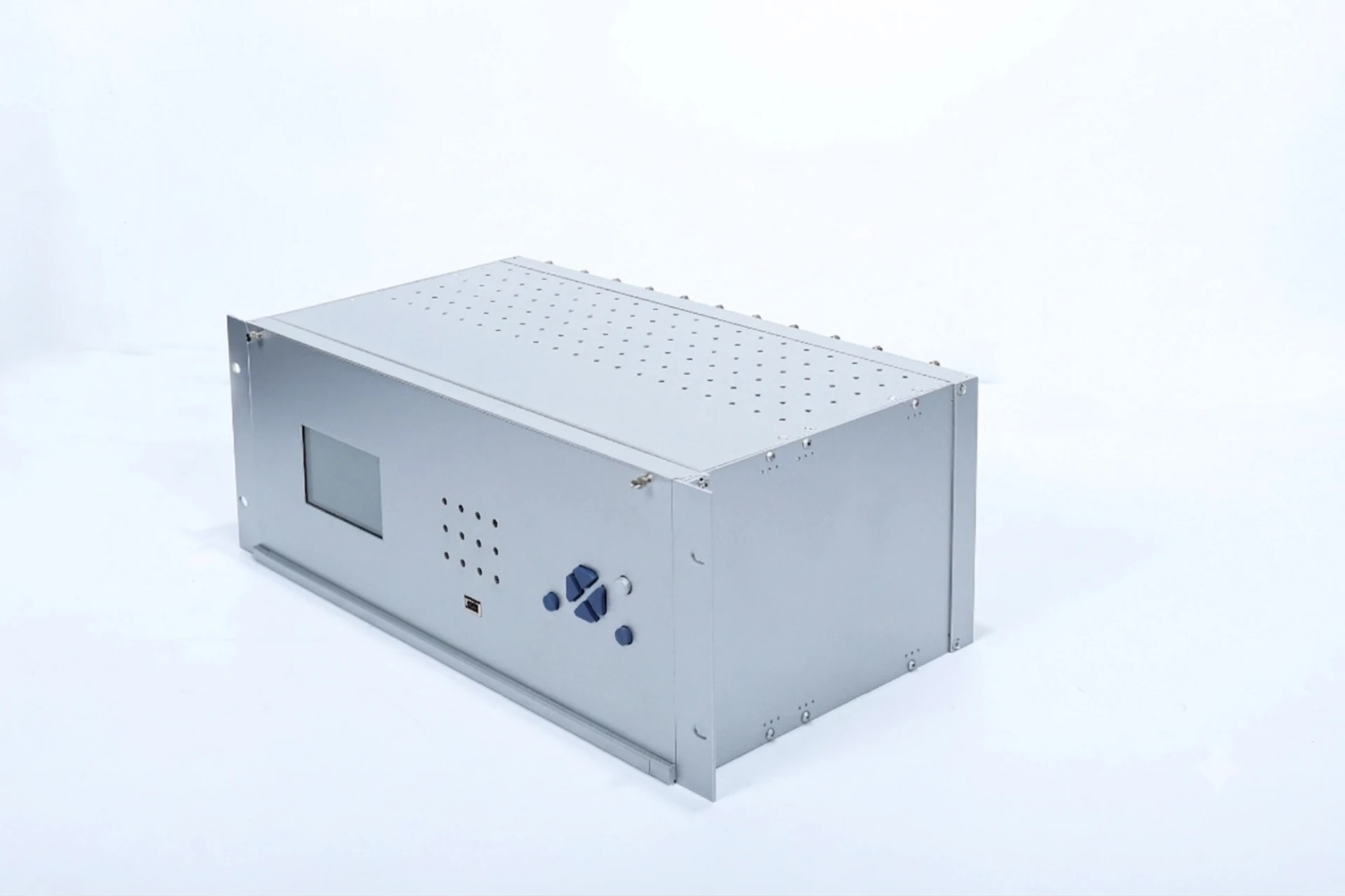
Measurement and Control Devices in Protection Relays: Functions, Types, Applications & Selection Guide
What Are Measurement and Control Devices in Power Systems?
Substation Measurement and Control Devices are intelligent electronic devices (IEDs) at the bay level of substation automation systems. Their core functions include collecting, processing and transmitting information from primary and secondary equipment, as well as receiving control commands to implement operation management of controlled targets.
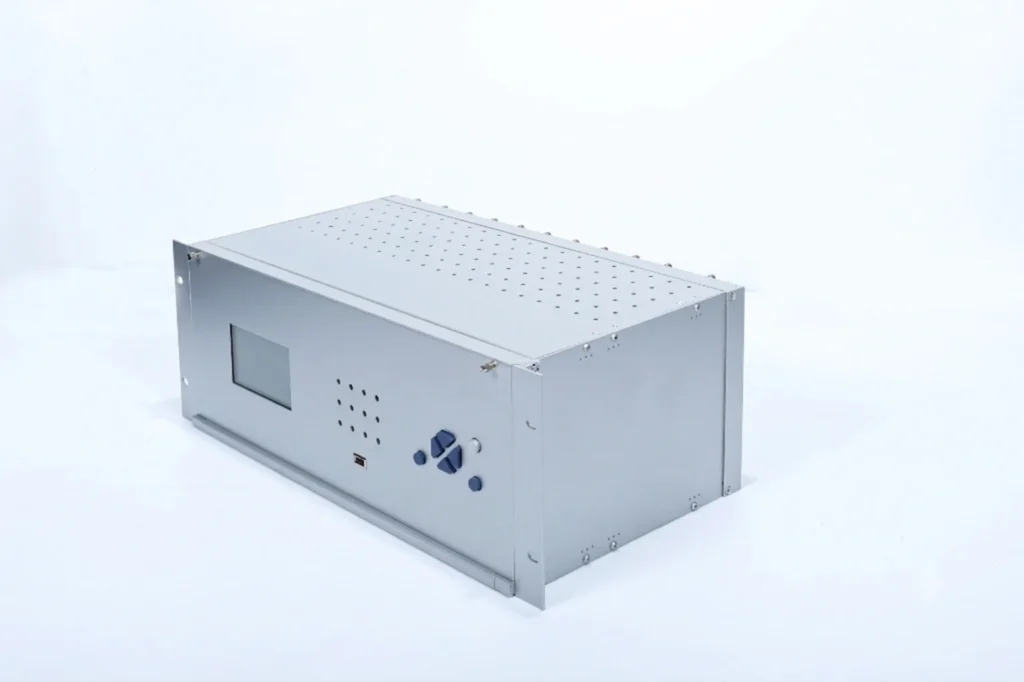
As the core carrier of measurement and control functions in substations, such devices are categorized into line measuring and control units, main transformer measuring and control units, common measuring and control units based on application scenarios. They serve as critical basic equipment supporting unattended operation and intelligent maintenance of substations.
Definition of Measurement and Control Devices in Protection Relays
A protection relay measurement & control unit is the embedded hardware and software module within numerical IEDs that performs real-time electrical data sampling, parameter calculation, local logic control, bidirectional data communication and unified control of monitoring and measuring devices; unlike old analog relays that only execute fault tripping, digital protection relays integrate full measurement and control devices into one compact unit, eliminating separate meters, transducers and local control panels.
Core Role Inside Intelligent Protection Relays
- Capture raw analog signals from CTs and VTs for protection fault judgment
- Output accurate metering data for energy statistics and load monitoring
- Execute circuit breaker opening/closing, interlock and bay-level logic
- Transmit real-time data, fault logs and event records to upper SCADA/EMS
- Support remote parameter setting, status feedback and automatic substation operation
Integration with SCADA & Digital Substation Automation
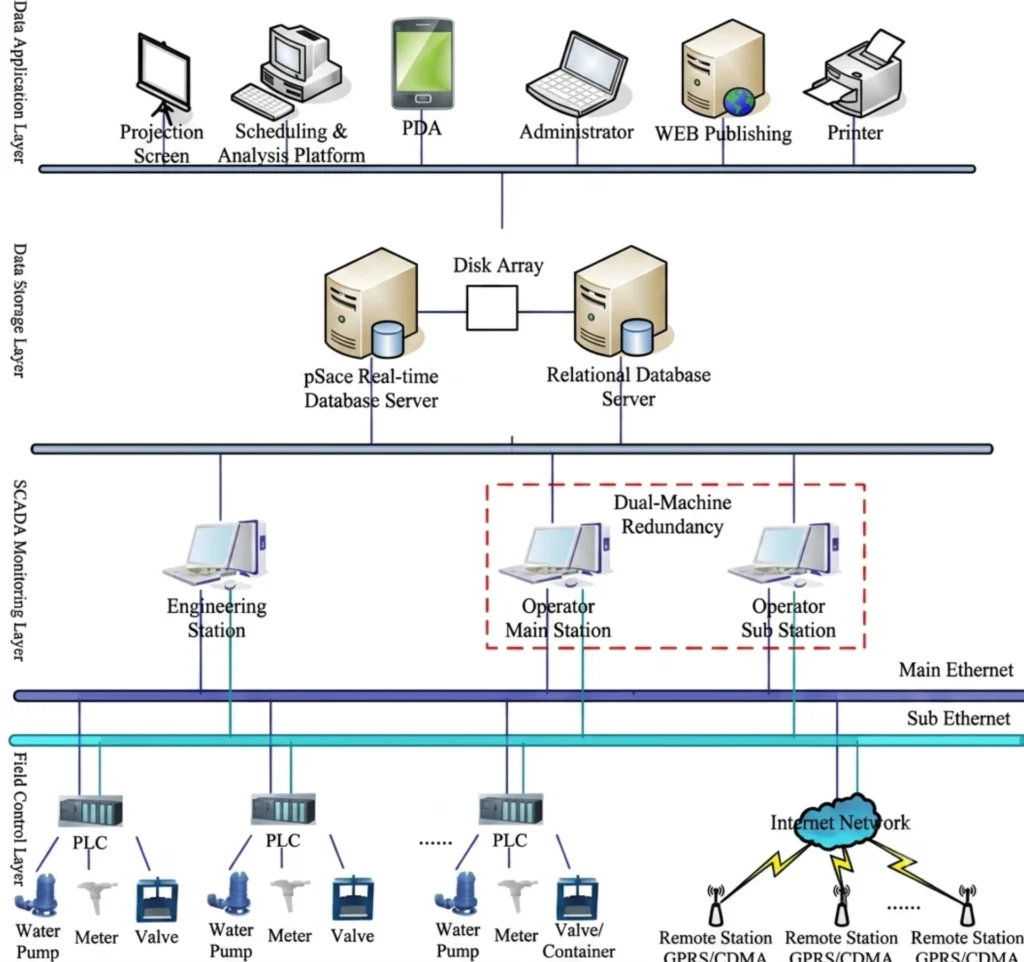
All measuring and control devices follow unified communication standards to connect with substation-level control systems.
In IEC 61850 digital substations, relay measurement units exchange sampled values (SV), GOOSE trip signals and MMS metering data with merging units, bay control units and remote terminal units without hard-wired copper circuits.
For traditional substations, Modbus TCP/RTU, DNP3 and IEC 60870-5-104 are mainstream communication protocols supported by multifunction measurement relays.
Why They Are Indispensable for Smart Grids
Smart grid construction requires full digitalization, unattended substation operation and predictive asset management of equipment assets.
Discrete analog meters and independent control switches fail to satisfy real-time monitoring demands. The all-in-one measuring and controlling devices in digital substations can minimize cabinet wiring, lower project engineering costs, and achieve closed-loop monitoring and control for power generation, transmission and distribution systems.
Working Principle of Measurement and Control Units
The whole workflow of protection relay measurement and control devices can be divided into signal acquisition, digital processing, logic execution and data transmission four stages.
Electrical Signal Sampling (Current, Voltage, Frequency, Power)
CT secondary current and VT secondary voltage analog signals enter the measurement unit’s isolation sampling circuit. High-precision AD converters digitize analog signals at microsecond intervals.
The embedded DFT algorithm computes fundamental electrical values, filters harmonic noise and delivers IEC 60688-compliant 0.2S/0.5S precision. It measures three-phase current, phase/line voltage, active/reactive power, power factor, frequency, harmonics and total energy.
Internal Signal Processing of Digital Protection Relays
After sampling, the CPU of the measurement and control module runs two parallel calculation threads:
- Measurement thread: Compute steady-state electrical quantities for daily monitoring and metering
- Protection auxiliary thread: Output instantaneous phasor data for differential, overcurrent, earth fault protection algorithms
All sampled data is stored in high-speed buffer memory for fault waveform recording and SOE event timestamping with 1ms precision.
Control Logic & Circuit Breaker Trip/Close Execution
The control logic module receives local manual commands or remote SCADA control instructions.
After interlock condition verification (busbar voltage status, switch position, fault blocking signals), the unit outputs dry contact or GOOSE digital signals to drive circuit breakers, disconnectors and earthing switches. Interlocking logic (anti-tripping, parallel switch blocking, transformer inter-bay coordination) is fully configurable inside the measurement and control devices without additional auxiliary relays.
Communication Interconnection with IEDs & Substation Control Systems
All measurement and control hardware embeds multi-protocol Ethernet serial communication interfaces:
- IEC 61850: GOOSE for fast inter-device control, MMS for metering report, SV for digital transformer signals
- Legacy protocols: Modbus TCP/RTU, DNP3, IEC 60870-5-103/104 for old SCADA system compatibility Time synchronization via IRIG-B or PTP ensures unified timestamp for all measurement data and fault events across the entire substation bay.
Main Functions of Measurement and Control Devices
Electrical Measurement Functions (Core of Protection Relay Measurement Unit)
- 3-phase full electrical quantity measurement: Ia/Ib/Ic, Ua/Ub/Uc, line voltage
- Power calculation: Active power P, reactive power Q, apparent power S, power factor cosφ
- Grid quality monitoring: System frequency, 2–31 order harmonic voltage/current, unbalance degree
- Energy metering: Forward/reverse active/reactive energy cumulative statistics for settlement
- Load curve recording: Hourly/daily load storage for power demand analysis
Local & Remote Control Functions
- Circuit breaker control: Remote/local trip, close, lockout operation
- Switchgear auxiliary control: Disconnector, earthing switch remote switching
- Multi-layer interlock logic: User-configurable logic via relay configuration software
- Status feedback: Real-time upload of switch position, device fault, operation alarm signals
- Automatic sequence control: Bay-level auto reclosing, transformer load tap adjustment linkage
Communication & Full Data Management
- Real-time measurement data periodic reporting to SCADA/EMS
- SOE sequence of event recording: All switching actions, protection start/trip events with high-precision timestamps
Why Global EPC Contractors Prefer Integrated Measurement & Control Protection Relays
For EPC companies undertaking cross-border grid, power plant and industrial energy projects, all-in-one protection relays with built-in measurement and control devices bring 4 irreplaceable commercial benefits:
- Reduce engineering drawing workload: One device drawing replaces separate meter, relay and control schematic diagrams
- Simplify secondary cabinet layout: Less component layout design, smaller cabinet dimensions cut transportation costs
- Shorten site construction period: Less wiring work reduces on-site labor and commissioning cycle
- Realize cross-project standardization: Unified relay model for all feeder, transformer and generator bays, simplify spare parts inventory and global after-sales service
FAQ
Q1: What is a measurement and control device in a protection relay?
It refers to the integrated hardware and software module inside numerical protection IEDs that completes real-time electrical quantity measurement, bay-level circuit breaker control, interlock logic execution and data communication with SCADA systems, combining the functions of independent power meters, transducers and local control panels into a single protection relay.
Q2: What is the difference between RTU and protection relay built-in measurement units?
RTU is a centralized multi-bay data collection device without complete power protection algorithms, mainly used for distribution station signal aggregation. The measurement and control devices inside protection relays are bay-dedicated, paired with matching protection logic to realize synchronous measurement and fault tripping for one primary equipment bay, with faster response speed and higher data coordination.
Q3: Can one integrated protection relay replace separate meters and control units?
Yes. Modern multifunction digital protection relays embed high-precision measurement modules and full control logic, fully replacing standalone multi-function power meters, current/voltage transducers and local control switches, which has become the standard secondary equipment solution for new EPC power projects worldwide.
Q4: Which communication protocols do measurement and control devices commonly support?
Main standards include IEC 61850 (digital substations), Modbus TCP/RTU, DNP3, IEC 60870-5-104, and time synchronization protocols IRIG-B/PTP for unified timestamp of all measurement and fault data.
Q5: How to select measurement and control devices for medium voltage switchgear applications?
Select compact multifunction measurement relays with Class 0.5S measurement accuracy, support for 1A/5A CT secondary signals, Modbus + IEC 61850 dual communication, and complete feeder protection elements (overcurrent, earth fault, reclosing logic) matching local grid voltage standards and EPC project automation requirements.
Conclusion
Measurement and control devices are no longer auxiliary accessories of protection relays, but core functional modules that determine the automation level, operation accuracy and overall project cost of power systems.
Digital integrated multifunction measurement relays have completely replaced discrete analog secondary equipment, becoming the standard configuration of smart grids, digital substations, power plants and renewable energy projects.
For EPC contractors, power station operators and procurement managers, selecting reliable, multi-protocol compatible, high-precision protection relays with integrated measurement and control devices can effectively reduce engineering, construction and maintenance costs while improving the safety and automation performance of the entire power system.
CTA
We are a professional OEM/ODM manufacturer of digital protection and control relays with full IEC certification, providing customized measurement and control IED solutions for global EPC grid, hydropower, wind and solar projects.
Our technical team supports one-stop scheme design, parameter configuration and after-sales commissioning services. Contact us now to get technical datasheets and project quotation.
About Author

Hello, I'm Leno Zhang. I have 15 years of experience in the power relay protection industry with extensive pre-sales and after-sales project experience. Our company specializes in various complete sets of relay protection and automation equipment. I can assist customers in solving all practical on-site project challenges and provide optimal integrated solutions.
Tell Us Your Requirement
High Quality
Stable performance, reliable design, ensuring safe operation for power system protection and grid stability.
Fast Delivery
Timely delivery to support your urgent orders and project schedules efficiently and professionally at any time.
Best Warranty
Professional Warranty: Reliable after-sales support for stable relay protection and long-term customer satisfaction.