

-
Leon Zhang sales consultant
-
Email: zxl635973785@gmail.com
-
Phone/WhatsApp: +86 13655813266
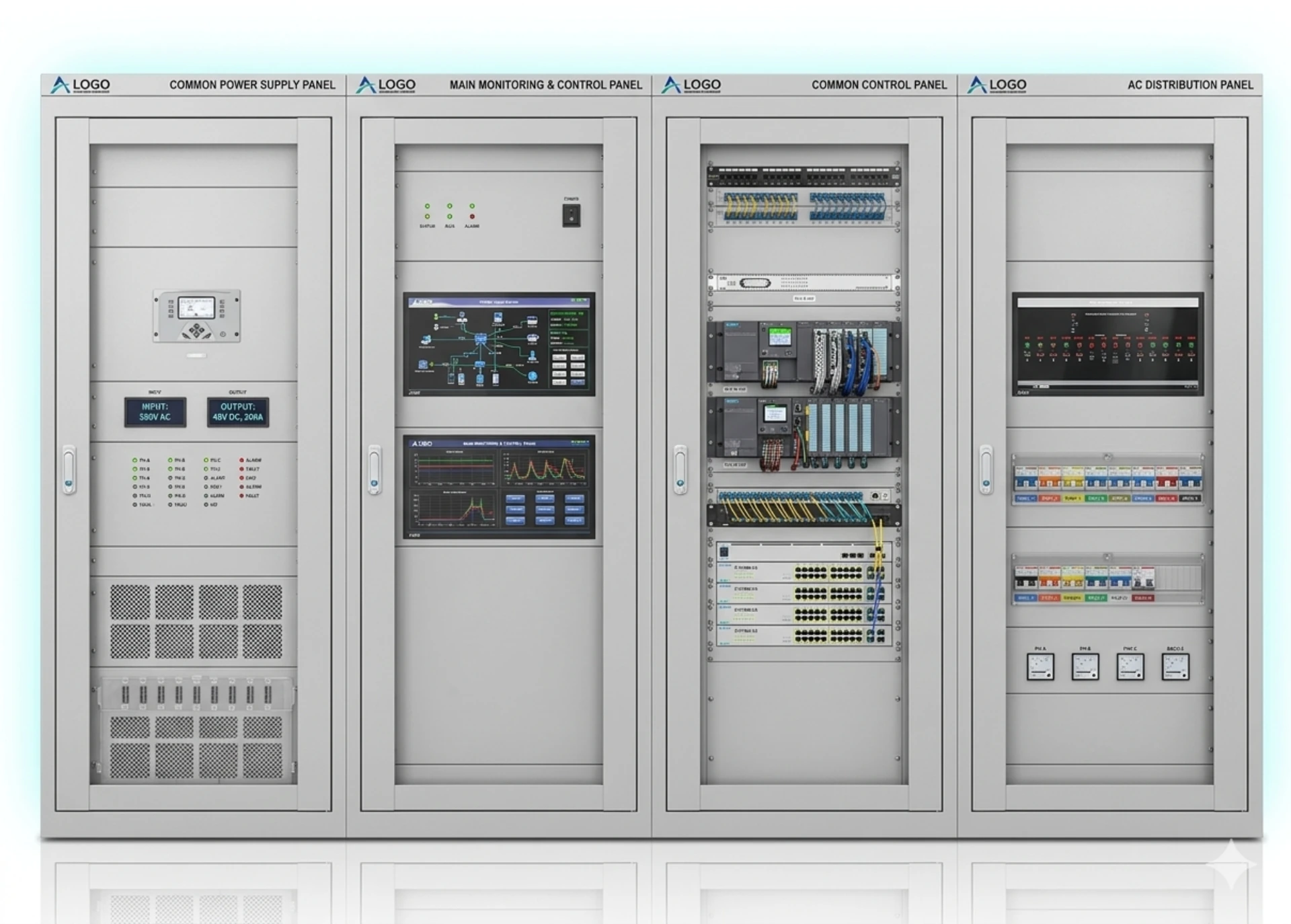
SCADA, Protection, and Communication: Exploring 5 Types of Secondary Equipment in PV Power Generation
Secondary Equipment in PV Power Generation refers to auxiliary devices of the photovoltaic power generation system. Responsible for monitoring, control, protection, measurement, regulation and communication management, Secondary Equipment in PV Power Generation serves primary equipment including photovoltaic modules, inverters, step-up transformers and switchgears.
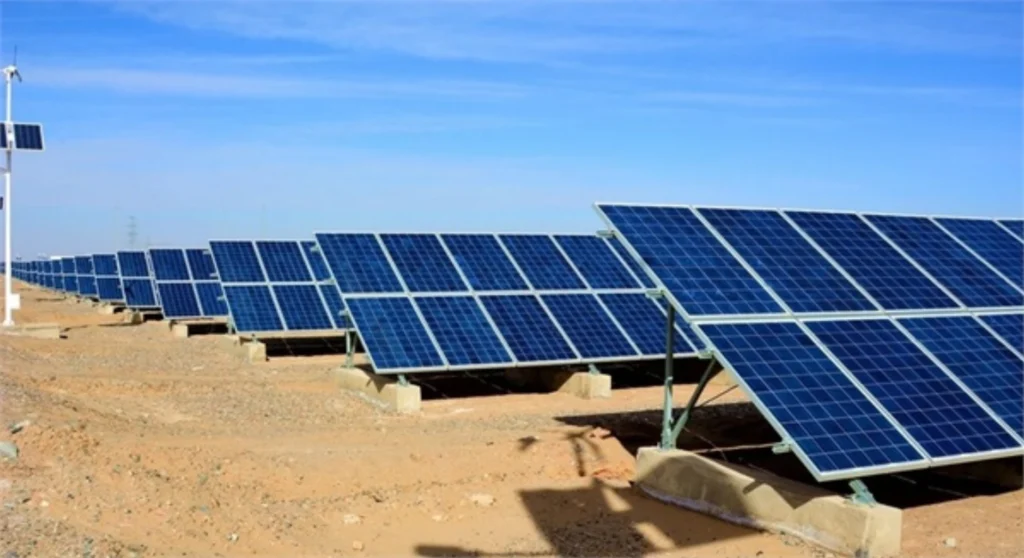
They do not directly engage in power generation and power transmission, but are decisive for the safe, stable and economical operation of the power station.
Relay Protection Products for PV Power Stations are key components of photovoltaic power systems.
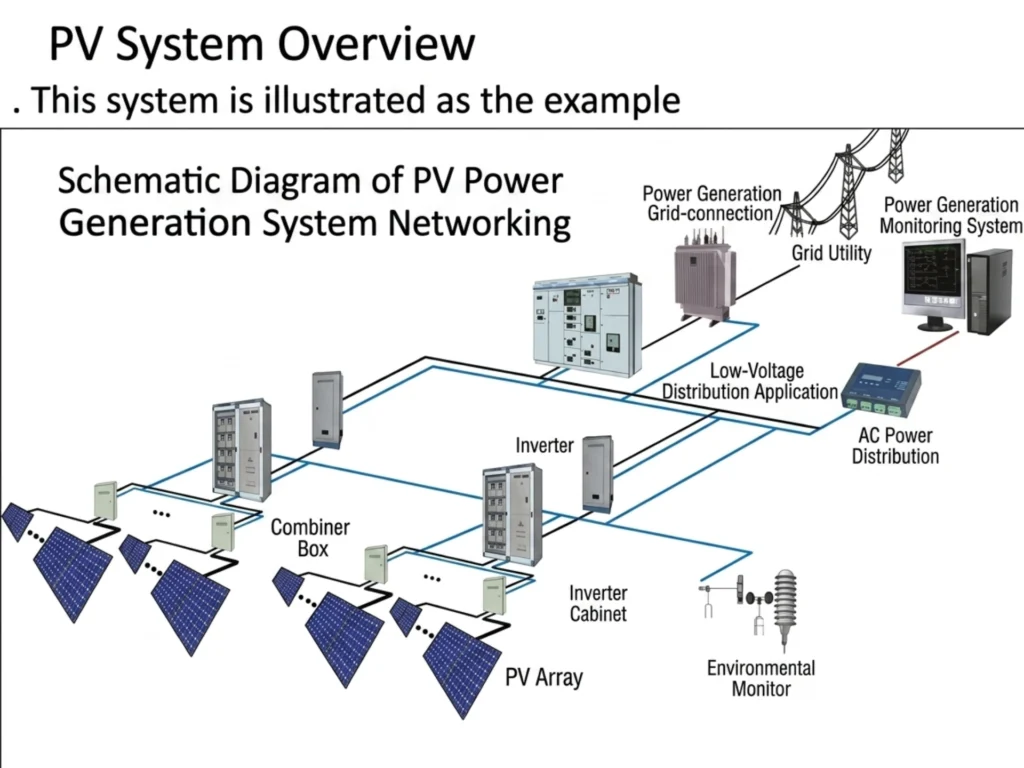
Transmission line protection relay
Designed for incoming and outgoing lines of solar photovoltaic power systems, it detects short-circuit faults and trips the grid-connection circuit breaker, and is commonly mounted on PV line switchgears.
87B Protection Relay
In accordance with power industry technical specifications, this device applies the differential scheme for busbar protection. It rapidly clears busbar faults to prevent large-scale power outages, and is generally configured as a busbar protection panel on site.
Transformer Protection Device
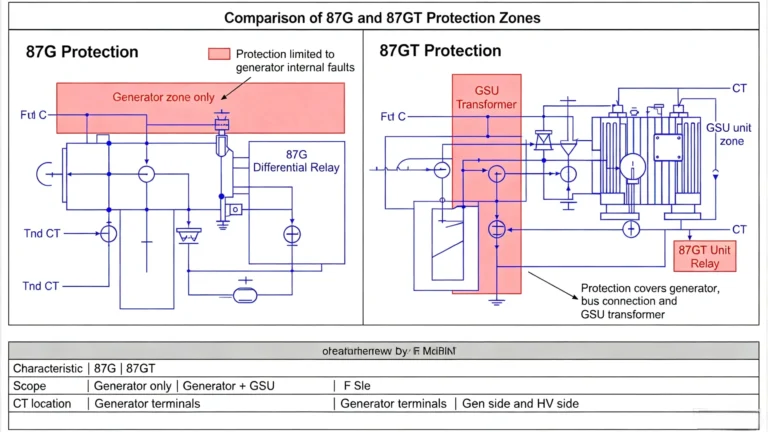
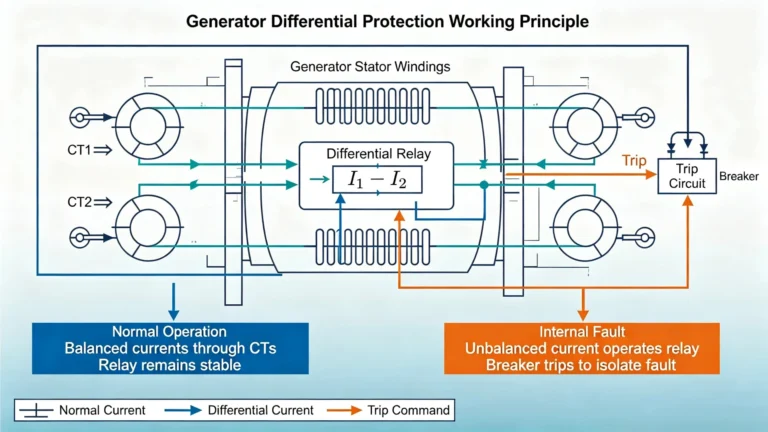
For main transformers, the 87T differential protection Relay, together with transformer backup protection and non-electrical protection, is assembled into transformer protection control relay panels.
For station service transformers, distribution transformer protection is applied, which is mostly installed on high-voltage switchgears.
Fault Recording System
It collects waveforms and stores fault records to analyze fault causes, and is commonly deployed as a fault recorder panel on site.
Anti Islanding Protection Solar Inverter
Dedicated for photovoltaic applications. When the main grid loses power, it detects the islanding condition that the PV system keeps supplying power to the local grid, and trips immediately.
This avoids risks to maintenance personnel and equipment damage. It is generally assembled into panels for on-site installation.
SCADA Systems (Monitoring and Automation Systems)
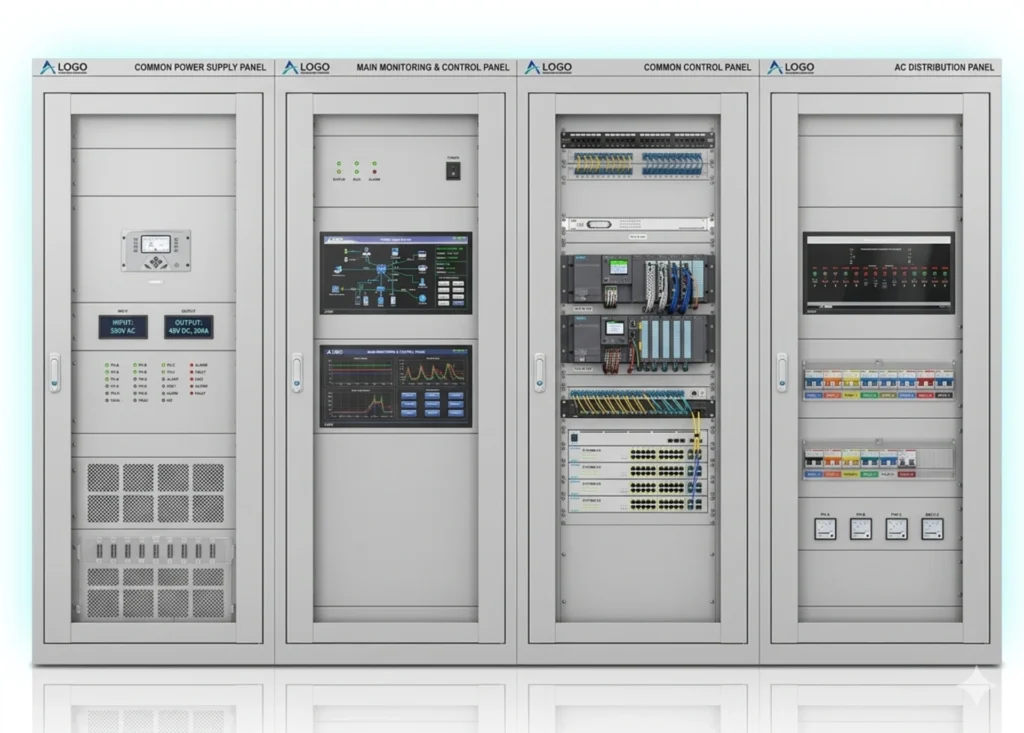
Background Monitoring Host (Industrial PC / Server)
Installed with SCADA software, it displays the real-time operating status of all devices, including voltage, current, power and power generation.
Data Collector
It transmits data from PV inverters, combiner boxes and weather stations via RS485, Ethernet and other buses to the PV SCADA System.
Remote Communication Unit
It transmits power station data (active power, reactive power, switch status, etc.) to the grid dispatching center in compliance with grid protocols like IEC 104 and IEC 61850, and receives dispatching commands simultaneously.
AGC/AVC System (Automatic Generation Control / Automatic Voltage Control)
It receives dispatching commands and automatically adjusts the active power (power limiting control) and reactive power (voltage regulation) of PV inverters to meet grid connection requirements.
Power Quality and Metering Equipment
Power Quality Monitor
It real-timely monitors harmonic, flicker, voltage deviation, three-phase unbalance and other parameters at the point of common coupling (PCC). Alarms will be triggered or governance devices such as SVG will be activated once parameters exceed limits.
Energy Meter (Gateway Meter)
Installed at the property boundary point. It supports bidirectional metering to record PV power generation and grid feed-in power for self-consumption with surplus export mode, or total grid feed-in power. It requires high accuracy of Class 0.2S or higher, and is generally mounted in metering panels on site.
Multi-functional Power Meter
Deployed in various distribution circuits for internal cost accounting and equipment monitoring.
Communication & Time Synchronization Equipment
Responsible for data transmission and time synchronization.
Industrial Ethernet Switch
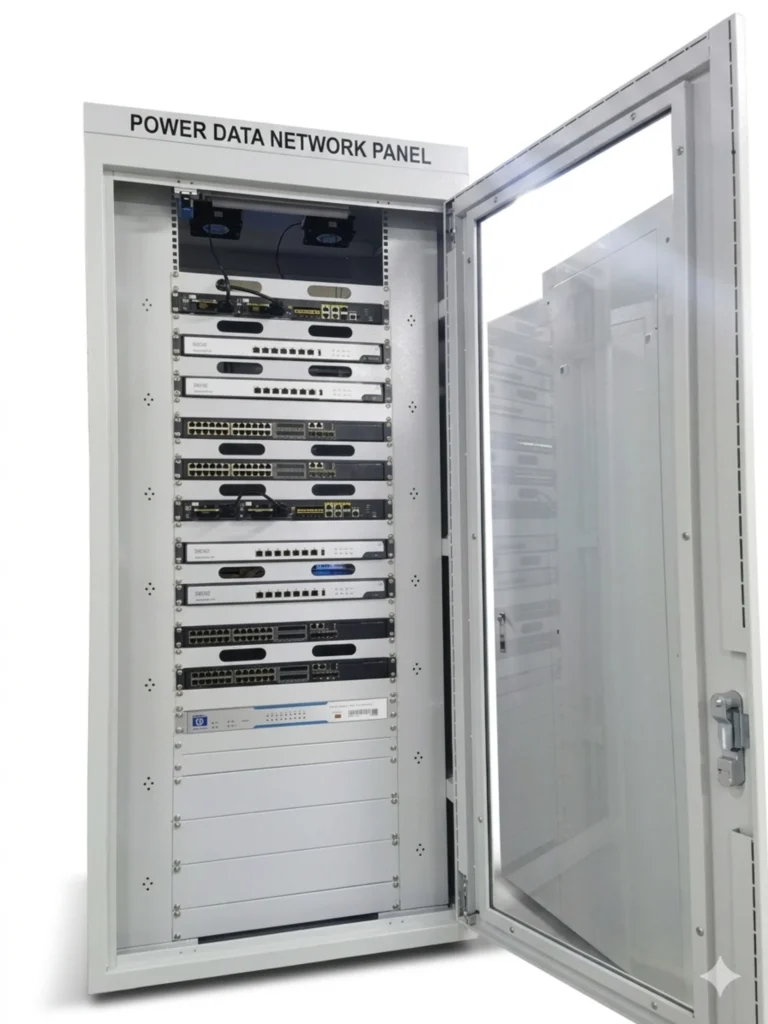
Builds optical fiber ring networks or star networks for the power station to transmit protection signals, control commands and monitoring data.
Communication Management Unit
Serves as a protocol converter. It converts protocols of devices from different manufacturers, such as Modbus for inverters and IEC 103 for protection relays, into standard protocols including IEC 104 and IEC 61850.
GPS/Beidou Time Synchronization Device
Provides a unified time reference for all secondary equipment like protection, measurement and fault recording devices across the station, with accuracy ≤ 1 ms, facilitating fault sequence analysis.
AC & DC Power Supply System
It acts as the power source for secondary equipment and ensures continuous system operation during AC power failure.
DC Panel (DC Power Supply System)
Supplies 220V or 110V DC power for circuit breaker switching, protection devices and emergency lighting. Equipped with battery packs to maintain power supply for several hours.
UPS (Uninterruptible Power Supply)
Provides 220V AC power for monitoring hosts, communication devices and dispatching network routers. It is also fitted with batteries for power outage protection.
Communication Power Supply
Delivers stable -48V DC power exclusively for communication equipment such as optical transceivers and routers.
Dispatching Automation & Security Equipment
Comply with mandatory grid requirements for large-scale PV power stations (generally above 10MW).
Dispatching Data Network Access Equipment
Routers, switches and longitudinal encryption devices form a dedicated network for communication with the grid dispatching center.
Network Security Monitoring Device
Real-time monitors vulnerabilities and illegal intrusions of on-site hosts, network devices and security equipment.
PMU (Phasor Measurement Unit)
For large PV stations connected to the grid at 110kV and above, PMU is required to rapidly collect dynamic data such as power angle and frequency for grid stability analysis.
Secondary Equipment in PV Power Generation
Secondary Equipment in PV Power Generation never takes part in energy conversion directly, but functions as the “nervous system” and “protective barrier” of a PV power station. Delivering capabilities including precise anti-islanding protection, real-time AGC/AVC regulation, high-accuracy gateway metering and station-wide unified Beidou time synchronization, Secondary Equipment in PV Power Generation guarantees safe grid connection, stable operation and accurate metering over the 25-year service life of the power station.
Under the requirements that new energy resources shall be observable, measurable, adjustable and controllable in the new power system, Secondary Equipment in PV Power Generation holds the same strategic importance as primary equipment.
It underpins power station automation and provides core technical support for photovoltaic power to grow from a supplementary energy source into a major power supply.
FAQ
Q1: What is secondary equipment in PV power generation?
A1: PV secondary equipment refers to auxiliary monitoring, protection, control and communication devices. Matching PV primary equipment, it ensures safe, intelligent and grid-compliant operation of PV stations, including protection panels, data acquisition units, communication devices, lightning monitors and secondary prefabricated cabins.
Q2: What are the core functions of PV secondary equipment?
A2: It has four core functions:
Protection: Guards against overvoltage, overcurrent, islanding and lightning damage;
Monitoring: Collects real-time power station and equipment operating data;
Control: Enables automatic grid connection, disconnection and power regulation;
Communication: Transmits operational data and faults to cloud or grid systems for remote management.
Q3: What is the difference between primary and secondary equipment in PV power stations?
A3: Primary equipment undertakes core power conversion and transmission, including modules, inverters and transformers. Secondary equipment focuses on signal monitoring, safety protection and intelligent control without bearing main power load, acting as the control and safety core of PV systems.
Q4: What are the common types of PV secondary equipment?
A4: Common PV Secondary Equipment in PV Power Generation is categorized by function:
1) Protection devices: Anti-islanding, overcurrent/overvoltage and lightning protection units;
2) Monitoring devices: Data terminals, string monitors and environmental sensors;
3) Communication devices: Industrial switches and grid communication modules;
4) Integrated equipment: Secondary prefabricated cabins, integrated control panels;
5) Auxiliary equipment: Secondary power supplies and alarm terminals.
Q5: What is the role of PV secondary prefabricated cabins?
A5: Secondary Equipment in PV Power Generation includes secondary prefabricated cabins, which are modular integrated solutions for large and medium PV stations. With factory pre-assembled protection, monitoring and communication equipment, they support fast on-site installation, feature compact layout and strong environmental adaptability, greatly shortening project construction cycles.
Q6: Is secondary equipment required for small rooftop PV systems?
A6: Yes. Small rooftop PV systems need simplified secondary equipment like SPDs, string monitors and grid protection units to prevent islanding faults, lightning damage and grid risks, ensuring operational safety and grid connection compliance.
Q7: What key factors should be considered for PV secondary equipment selection?
A7: Key selection factors:
1) Station scale: Simplified devices for distributed PV, complete systems and cabins for large stations;
2) Grid compliance: Meet IEEE 1547-2018, UL 1741 and local grid standards;
3) Environment: Adapt to outdoor high temperature, humidity and lightning-prone scenarios;
4) Expandability: Modular design for future upgrading.
Q8: What grid certification standards do PV secondary devices need to meet?
A8: Grid-connected secondary equipment must comply with mandatory standards. Global applications requireUL 1741 SA/SB certification and IEEE 1547-2018 compliance for grid ride-through and power regulation functions, while meeting local grid acceptance requirements.
Q9: Why is anti-islanding protection a mandatory configuration for PV secondary equipment?
A9: Anti-islanding protection is mandatory for all grid-connected PV systems. It detects grid faults in real time and cuts off PV grid connection instantly, avoiding electric shock accidents and grid equipment damage caused by islanding power supply.
About Author

Hello, I'm Leno Zhang. I have 15 years of experience in the power relay protection industry with extensive pre-sales and after-sales project experience. Our company specializes in various complete sets of relay protection and automation equipment. I can assist customers in solving all practical on-site project challenges and provide optimal integrated solutions.
Tell Us Your Requirement
High Quality
Stable performance, reliable design, ensuring safe operation for power system protection and grid stability.
Fast Delivery
Timely delivery to support your urgent orders and project schedules efficiently and professionally at any time.
Best Warranty
Professional Warranty: Reliable after-sales support for stable relay protection and long-term customer satisfaction.