

-
Leon Zhang sales consultant
-
Email: zxl635973785@gmail.com
-
Phone/WhatsApp: +86 13655813266
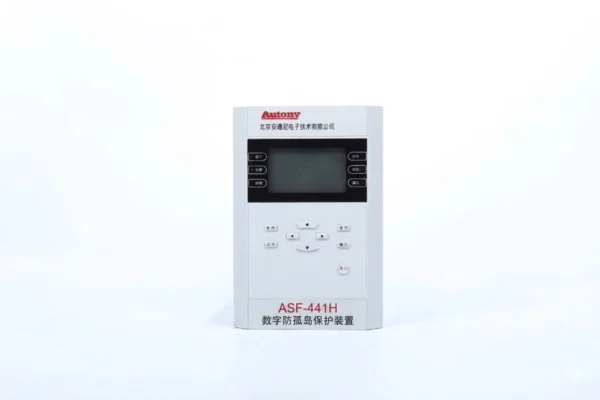
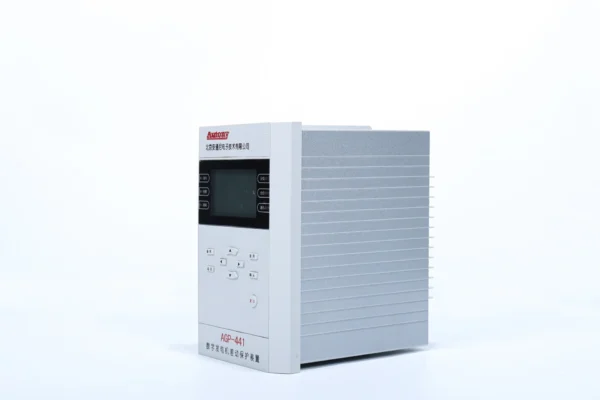
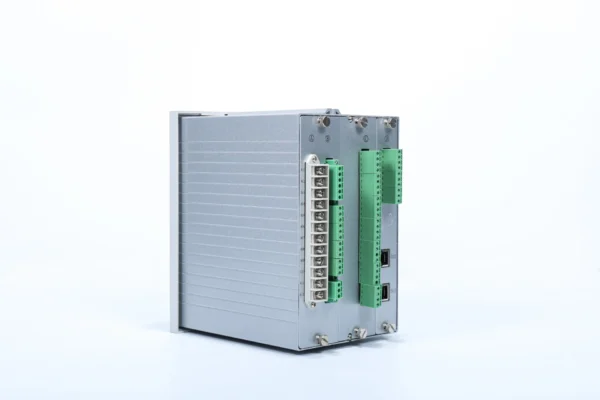
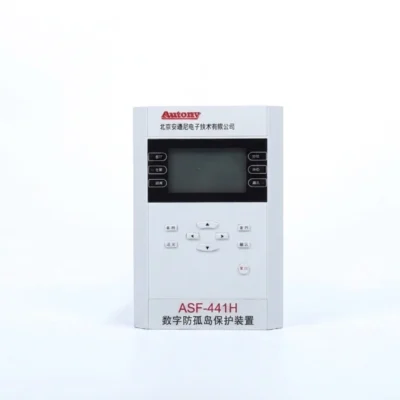
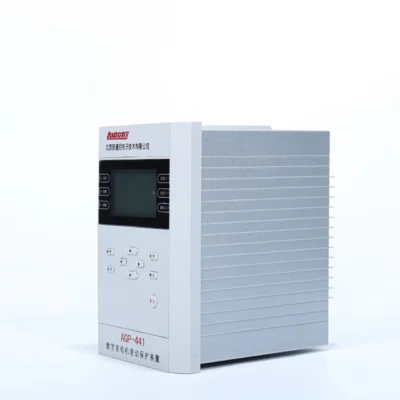
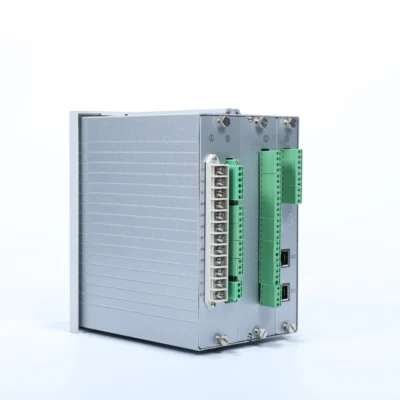
ASF-441H Anti-Islanding Protection Device | Grid Protection Relay
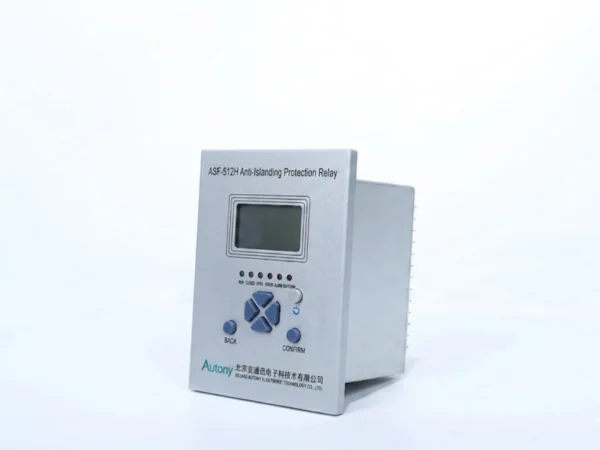
Our self-developed ASF-441H Anti-Islanding Protection Device trips equipment under abnormal frequency/voltage, with multi-detection functions and standby unit startup to ensure grid stability.
Protection Functions (with ANSI Code)
51V/67, 81U, 27, 81O, 59, 32R, 78, 27
Send your requirements, we will quote for you within 12 hours
Description
Overview of Anti-islanding protection
The ASF-441H is a microprocessor-based anti-islanding protection device designed for grid-connected distributed generation systems. It monitors grid voltage, frequency, phase-related conditions and reverse power to detect abnormal grid conditions and initiate disconnection when islanding or other defined protection conditions occur. The device is suitable for photovoltaic, distributed generation and other grid-connected power applications.
Manufactured by Beijing Autony Power for industrial and renewable-energy protection applications.
Key Features of ASF-441H
-
Anti-islanding protection for grid-connected generation
-
Underfrequency and overfrequency protection
-
Undervoltage and overvoltage protection
-
Rate-of-change of frequency (ROCOF) protection
-
Directional overcurrent protection
-
Configurable protection thresholds and time delays
-
Multiple protection stages (definite-time and inverse-time)
-
Protection event recording with time-stamped logs
-
RS-485 communication (Modbus RTU) with optional IEC 61850 support
-
Suitable for photovoltaic (PV) and distributed generation applications
Protection Functions and ANSI Codes
51V/67 — Voltage-Restrained / Directional Overcurrent (Backup Fault Protection)
Provides backup overcurrent protection that restrains or enables operation based on system voltage level or fault current direction.
81U — Underfrequency (Detect Abnormal Low-Frequency Conditions)
Trips when grid frequency falls below set threshold to prevent system instability or generator damage.
27 — Undervoltage (Detect Voltage Collapse / Abnormal Undervoltage)
Trips when voltage drops below set threshold to protect equipment from undervoltage stress or instability.
81O — Overfrequency (Detect Abnormal Frequency Rise)
Trips when grid frequency exceeds set threshold to prevent overspeed or overfluxing conditions.
59 — Overvoltage (Detect Excessive Voltage)
Trips when voltage rises above set threshold to protect insulation and connected equipment from overvoltage damage.
32R — Reverse Power (Detect Reverse Power Flow)
Trips when power flows from generator to grid in reverse direction, indicating abnormal operation or loss of grid.
78 — Out-of-Step / Loss-of-Synchronism Protection (Detect Unstable Grid Conditions)
Detects loss of synchronism between generator and grid during severe system disturbances, initiating disconnection to prevent mechanical damage.
Applications of ASF-441H Anti-Islanding Protection Device
The ASF-441H is suitable for grid-connected generation systems where anti-islanding protection is required, depending on the grid protection scheme and local interconnection standards.
Solar PV Grid-Connected Systems – Applicable to rooftop and utility-scale PV systems requiring islanding detection per IEEE 1547 and IEC 62116.
Distributed Generation – Can be applied to diesel, gas, and CHP systems where anti-islanding is specified.
Wind Power Grid Connection – Suitable for onshore and offshore wind applications where grid code requires frequency and voltage protection.
Distributed Energy Resources – Applicable to BESS, microturbines, and fuel cells requiring active islanding detection.
Industrial Grid-Connected Generators – Can be used in facilities with on-site generation where utility interconnection requirements apply.
Generator Grid-Connection Points – May be installed at PCC to monitor voltage, frequency, and power flow, enabling safe disconnection when required.
Typical Protection Scheme
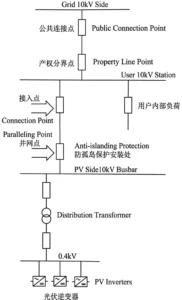
The ASF-441H monitors grid-side electrical conditions and can issue a trip command to the associated circuit breaker when configured protection conditions are detected.
Setting Table
The following table summarizes the configurable protection parameters of the ASF-441H. Actual settings should be determined according to the project protection coordination study, grid code and system operating conditions.
| No. | Description | Setting Range | Conversion Factor for Upload & Download |
|---|---|---|---|
| 1 | Control Word 1 | 0000~FFFF | ×1 |
| 2 | Control Word 2 | 0000~FFFF | ×1 |
| 3 | Control Word 3 | 0000~FFFF | ×1 |
| 4 | Low Frequency Start Delay | 0.1~120.00s | ×100 |
| 5 | Low Frequency Stage 1 Protection Delay | 0.1~120.00s | ×100 |
| 6 | Low Frequency Stage 2 Protection Delay | 0.1~120.00s | ×100 |
| 7 | Low Frequency Stage 3 Protection Delay | 0.1~120.00s | ×100 |
| 8 | Low Frequency Acceleration Delay | 0.1~120.00s | ×100 |
| 9 | Under-voltage Start Delay | 0.1~120.00s | ×100 |
| 10 | Under-voltage Stage 1 Protection Delay | 0.1~120.00s | ×100 |
| 11 | Under-voltage Stage 2 Protection Delay | 0.1~120.00s | ×100 |
| 12 | Under-voltage Stage 3 Protection Delay | 0.1~120.00s | ×100 |
| 13 | Under-voltage Acceleration Delay | 0.1~120.00s | ×100 |
| 14 | Overcurrent Stage 1 Delay | 0~120.00s | ×100 |
| 15 | Overcurrent Stage 2 Delay | 0~120.00s | ×100 |
| 16 | Overcurrent Stage 3 Delay | 0~120.00s | ×100 |
| 17 | Over-voltage Delay | 0.1~120.00s | ×100 |
| 18 | Over-frequency Delay (Stage 1) | 0.1~120.00s | ×100 |
| 19 | Reverse Power Delay | 0.1~120.00s | ×100 |
| 20 | Over-frequency Delay (Stage 2) | – | ×100 |
| 21 | Low Frequency Start Setting | 45.00~50.00Hz | ×100 |
| 22 | Low Frequency Stage 1 Protection Setting | 45.00~50.00Hz | ×100 |
| 23 | Low Frequency Stage 2 Protection Setting | 45.00~50.00Hz | ×100 |
| 24 | Low Frequency Stage 3 Protection Setting | 45.00~50.00Hz | ×100 |
| 25 | Frequency Change Rate 1 (Acceleration Setting) df/dt1 | 0.00Hz/s~20.00Hz/s | ×100 |
| 26 | Frequency Change Rate 2 (Blocking Setting) df/dt2 | 0.00Hz/s~20.00Hz/s | ×100 |
| 27 | Under-voltage Start Setting | 0.4~120.00V | ×100 |
| 28 | Under-voltage Stage 1 Protection Setting | 0.4~120.00V | ×100 |
| 29 | Under-voltage Stage 2 Protection Setting | 0.4~120.00V | ×100 |
| 30 | Under-voltage Stage 3 Protection Setting | 0.4~120.00V | ×100 |
| 31 | Under-voltage Blocking Setting | 0.4~120.00V | ×100 |
| 32 | Voltage Difference Abnormality Setting | 0.4~120.00V | ×100 |
| 33 | Loss-of-synchronism Voltage Setting | 0.4~120.00V | ×100 |
| 34 | Voltage Change Rate 1 (Acceleration Setting) dv/dt1 | 0.00V/s~200.00V/s | ×100 |
| 35 | Voltage Change Rate 2 (Blocking Setting) dv/dt2 | 0.00V/s~200.00V/s | ×100 |
| 36 | Overcurrent Stage 1 Setting | – | ×100 |
| 37 | Overcurrent Stage 2 Setting | – | ×100 |
| 38 | Overcurrent Stage 3 Setting | – | ×100 |
| 39 | Over-voltage Setting | – | ×100 |
| 40 | Over-frequency Setting (Stage 1) | – | ×100 |
| 41 | Reverse Power Setting | – | ×100 |
| 42 | Rated Current | – | ×100 |
| 43 | Negative Sequence Voltage Setting | – | ×100 |
| 44 | Under-voltage Setting | – | ×100 |
| 45 | Reverse Power Reset Setting | – | ×100 |
| 46 | Reverse Power Reset Time | – | ×100 |
| 47 | Over-frequency Setting (Stage 2) | – | ×100 |
| 48 | Oscillation Count | 0-20 | ×100 |
| 49~54 | Reserved | – | – |
| 55 | Voltage Loss Setting | 0.4~120.00V | – |
| 56 | Voltage Loss Delay | 0.1~120.00s | – |
| 57~64 | Reserved | – | – |
| 65 | CRC Check | – | – |
Technical Specifications
| Item | ASF-441H |
|---|---|
| Device Type | Anti-Islanding Protection Device |
| Protection Functions | Over/under voltage (27/59), over/under frequency (81O/81U), rate of change of frequency (81R), reverse power (32R), directional overcurrent (51V/67), out-of-step (78) |
| Rated Frequency | 50Hz / 60Hz (selectable) |
| Auxiliary Supply | 110V DC / 220V DC / 220V AC (selectable) |
| Voltage Input | 100V / 220V / 400V AC (selectable, phase-to-phase or phase-to-neutral) |
| Current Input | 1A or 5A (selectable) |
| Communication | RS-485 (Modbus RTU); optional Ethernet (Modbus TCP / IEC 61850) |
| Digital Inputs | 8 (user-configurable) |
| Relay Outputs | 6 (trip, alarm, and general-purpose) |
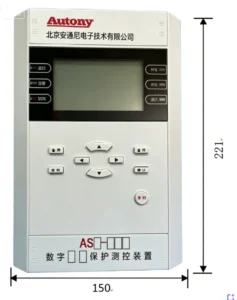
| Installation | Panel-mounted (144×144mm cutout) |
| Protection Standard | IEC 62116, IEEE 1547, IEC 60255, CE, UL, CCC |
Outline and Installation Dimensions
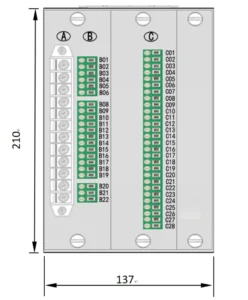
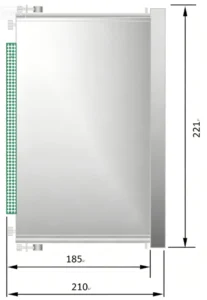
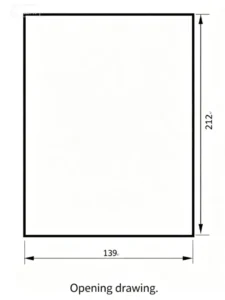
ASF-441H Manufacturer
The ASF-441H is manufactured by Beijing Autony Power at our facility in Baoding, China’s Electric Valley. As a professional manufacturer of protection relays, we design, develop, produce, and test every unit under one roof.
Product Development – From concept to production, our engineering team defines system architecture, protection requirements, and functional specifications for each model.
Hardware Design – In-house design of precision analog input circuits, digital signal processing paths, isolated power supplies, and EMC-compliant PCB layout.
Firmware – Real-time control firmware developed and maintained in-house, with secure programming and version control for each production batch.
Protection Algorithm – Proprietary algorithms for anti-islanding detection, including frequency, voltage, ROCOF, and reverse power logic — validated against grid code requirements.
Assembly – ESD-safe workstations with controlled assembly processes, including SMT placement, through-hole soldering, and terminal connection.
Functional Testing – 100% automated testing of power supply, I/O, communication, and display functions before calibration.
Calibration – Precision calibration using traceable reference sources to ensure voltage, frequency, and power measurement accuracy.
FAT – Factory Acceptance Testing with customer witness (on-site or remote), including protection function verification and communication handshake testing.
Technical Support – Pre-sales consultation, setting calculation support, and commissioning assistance provided by our application engineering team.
FAQ
Q1. What is the ASF-441H Anti-Islanding Protection Device?
A:The ASF-441H is a microprocessor-based anti-islanding protection device designed for grid-connected distributed generation systems. It monitors grid voltage, frequency, phase angle, and power flow to detect abnormal conditions and initiate disconnection when islanding or other defined protection conditions occur.
Q2. What protection functions does the ASF-441H provide?
A:The ASF-441H provides over/under voltage (27/59), over/under frequency (81O/81U), rate of change of frequency (81R), reverse power (32R), directional overcurrent (51V/67), and out-of-step (78) protection functions.
Q3. Where is the ASF-441H typically installed?
A:The ASF-441H is typically installed at the point of common coupling (PCC) between the distributed generation system and the utility grid — in the AC collection panel or grid interconnection switchgear.
Q4. Can the ASF-441H be used for grid-connected PV systems?
A:Yes. The ASF-441H is suitable for grid-connected photovoltaic systems — from rooftop installations to utility-scale solar farms — where islanding protection is required per IEEE 1547 and IEC 62116.
Q5. Can protection thresholds and time delays be configured?
A:Yes. All protection thresholds and time delays are user-configurable via the front panel interface or PC software, allowing adaptation to specific project requirements and grid codes.
Q6. Does the ASF-441H provide reverse power protection?
A:Yes. Reverse power protection (ANSI 32R) is included to detect reverse power flow from the generator to the grid, which may indicate abnormal operation or loss of grid connection.
Q7. Can the ASF-441H be integrated into an existing protection scheme?
A:Yes. The ASF-441H supports standard communication protocols (Modbus RTU/TCP, optional IEC 61850) and provides configurable digital inputs and relay outputs for seamless integration with existing switchgear and SCADA systems.
Q8. Can you provide technical documents and setting support?
A:Yes. We provide complete technical documentation including datasheets, user manuals, wiring diagrams, setting guides, and compliance certificates. Our engineering team also offers setting calculation support for project-specific applications.
Q9. Is FAT available before shipment?
A:Yes. Factory Acceptance Testing (FAT) is available for project-based orders, with on-site or remote witness testing. A formal signed FAT report is issued upon successful completion.
For further questions or technical support, please contact Beijing Autony Power.
2 reviews for ASF-441H Anti-Islanding Protection Device | Grid Protection Relay
Related products
High Quality
Stable performance, reliable design, ensuring safe operation for power system protection and grid stability.
Fast Delivery
Timely delivery to support your urgent orders and project schedules efficiently and professionally at any time.
Best Warranty
Professional Warranty: Reliable after-sales support for stable relay protection and long-term customer satisfaction.
xiao zhang –
This anti-islanding protection adopts combined passive & active detection algorithm to rapidly identify island operation of distributed generation. Fast response speed, flexible threshold configuration and multiple communication interfaces make it widely applied for photovoltaic and wind power grid-connected projects globally.
Jack –
Password protection prevents unauthorized setting changes — very secure.