
-
Leon Zhang sales consultant
-
Email: zxl635973785@gmail.com
-
Phone/WhatsApp: +86 13655813266
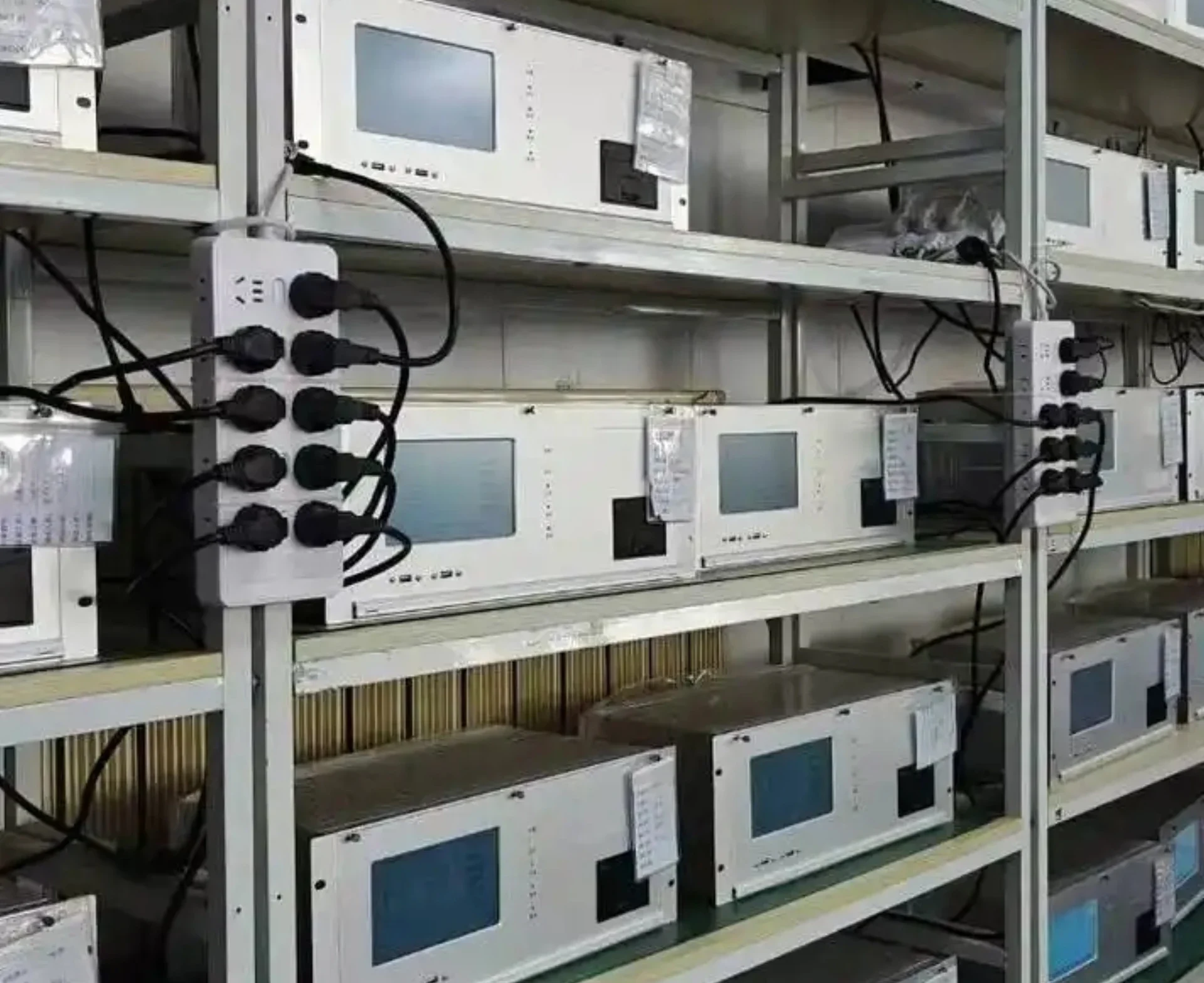
Low-Current Ground Fault Line Selection Device for MV Networks
A low-current ground fault line selection device is the substation unit that identifies which outgoing feeder carries the earth fault in a 6–35 kV network where the fault current is only tens to hundreds of amperes. It watches every feeder at the same time and points the maintenance crew to the right bay.
This guide covers the detection signals behind it, the selection methods used in practice, and how to choose a low-current ground fault line selection device for a substation project.
At a Glance: Ground Fault Line Selection
- Networks: 6–35 kV, neutral ungrounded or arc-suppression-coil (Petersen coil) compensated.
- Fault current: only tens to hundreds of amperes, below the reach of ordinary overcurrent relays.
- Start signal: residual voltage 3U0 crosses threshold and raises a global ground fault alarm.
- Steady-state check: zero-sequence current I0 amplitude on every outgoing feeder.
- Transient check: high-frequency pulse captured at the fault moment, still measurable under coil compensation.
- Selection rule: the faulty feeder shows reversed zero-sequence phase and a larger transient component.
- Default action: alarm plus feeder location to SCADA, no direct breaker trip.
- Coordination: works with segment earth fault protection relays for layered fault positioning.
What Is a Low-Current Ground Fault Line Selection Device?
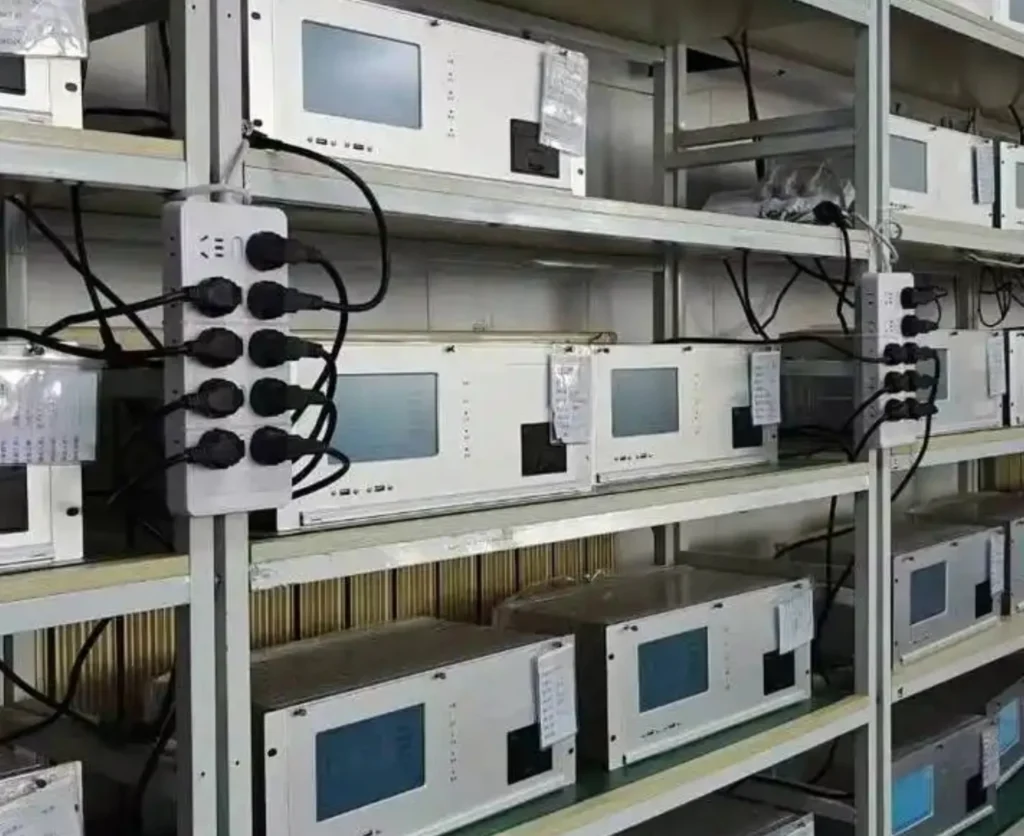
Definition of a Low-Current Ground Fault System
Medium voltage (6–35kV) power grids adopt neutral ungrounded or resonant grounded (arc suppression coil) modes. When single-phase ground faults occur, only tiny capacitive fault current flows through the fault point, which is defined as a low-current ground fault system. Utility catalogs in China list the same hardware class as a small current grounding device.
Why single-phase ground faults are difficult to detect
In low-current grounding grids, the fault current is merely dozens to hundreds of amperes, with weak signal characteristics. Traditional overcurrent relays cannot distinguish fault signals from normal capacitive current, leading to failed fault judgment.
Role of line selection device in modern power systems
The device collects zero-sequence voltage and current signals of all feeders, identifies the faulty feeder through multi-dimensional algorithm comparison, outputs alarm or positioning signals, and matches sectional protection equipment to realize rapid fault isolation.
Importance in MV distribution networks
Single-phase ground faults may trigger insulation breakdown, interphase short circuits and equipment burnout. The line selection device quickly locks faulty branches, avoids full-network power cuts, and ensures safe and stable operation of distribution networks.
MV Ground Fault Line Selection: How the Device Works
MV ground fault line selection follows one rule: the faulty feeder behaves differently from every healthy feeder at the same instant, so the device compares all outgoing feeders against each other instead of judging one feeder alone.
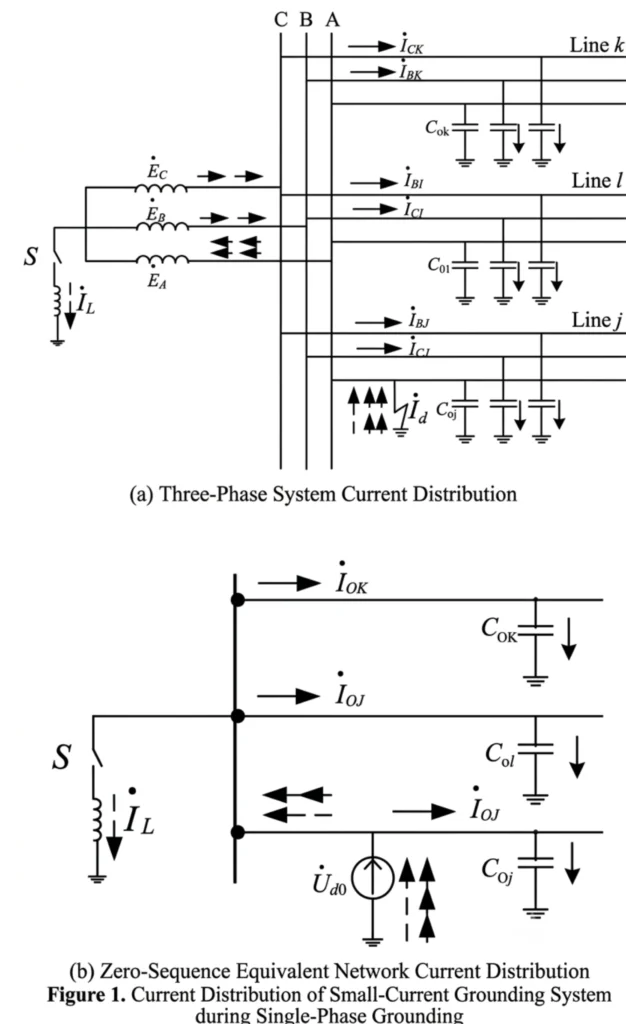
Neutral Point Ungrounded or Resonant Grounded Systems
Arc suppression coil (Petersen coil) systems
An arc suppression coil is connected to the neutral point to compensate capacitive ground fault current and suppress arc overvoltage. After compensation, residual fault current becomes smaller, raising higher requirements for signal acquisition accuracy of line selection devices.
Capacitive current characteristics in faults
Under normal operation, each feeder has balanced distributed capacitive current. Once a single-phase ground fault appears, the zero-sequence capacitive current of the faulty feeder reverses in phase and differs greatly in amplitude from healthy lines, serving as the core basis for line judgment.
Fault Current Detection Mechanism
| Detection Signal | Function | Application Scenario |
|---|---|---|
| Zero-sequence current (I0) | Reflect unbalanced capacitive current of each feeder | Steady-state fault judgment |
| Residual voltage (3U0) | Trigger fault start signal when exceeding threshold | Global ground fault alarm |
| Harmonic and transient analysis | Capture high-frequency pulse signals at fault moment | Anti-interference for weak current faults |
Line Selection Logic
- Earth fault feeder identification: compare amplitude, phase and transient waveform of zero-sequence signals of all outgoing feeders;
- Comparison between healthy and faulty lines: The faulty feeder features reversed zero-sequence current phase and larger transient component;
- Alarm and trip logic output: Send fault location signals to SCADA or segment earth fault protection relays, without directly tripping breakers by default.
Why Low-Current Ground Fault Protection Is Important
- Prevents system downtime: Avoid full-feeder blackouts caused by unidentified ground faults;
- Improves power supply reliability: Shortens manual fault searching time for maintenance crews;
- Reduces equipment damage risk: Early warning avoids insulation aging and transformer burnout;
- Helps utilities maintain continuous operation: Suitable for industrial and urban critical power loads;
- Avoids unnecessary tripping of healthy feeders: Accurate algorithm eliminates misoperation.
Applications of Ground Fault Line Selection Devices
Medium Voltage Distribution Systems (6kV–33kV)
- Urban distribution networks
- Industrial 11kV/33kV dedicated substations
Power Plants

Hydropower stations, thermal power plants, wind farm booster stations, solar PV substations
Industrial Facilities

Mining power supply systems, steel plants, petrochemical chemical park substations
Utility Substations
Ring main units (RMU), GIS compact substations, AIS conventional distribution substations
Key Functions of the Line Selection Device
- Fault line detection: Automatic identification of single-phase ground faulty feeder;
- Zero-sequence current monitoring: Real-time sampling and display of I0 and 3U0 data;
- Real-time system monitoring: Online tracking of grid neutral point operation status;
- Event recording and fault logging: Store fault time, faulty feeder and waveform data;
- SCADA communication: Standard Modbus RTU/TCP, optional IEC 61850 digital communication;
- Alarm and signaling output: Pass location signals to segment earth fault protection relays.
Types of Ground Fault Line Selection Methods
| Line Selection Method | Core Principle | Advantage | Limitation |
|---|---|---|---|
| Steady-State Current Method | Judge by zero-sequence current amplitude | Simple algorithm, low cost | Poor performance under arc suppression coil compensation |
| Transient Signal Method | Use high-frequency transient fault components | High sensitivity for weak current faults | Susceptible to electromagnetic interference |
| Waveform Analysis Method | DSP digital waveform comparison | High precision, strong anti-interference | Higher equipment cost |
| Multi-Criteria Selection Method | Combine voltage, current and harmonic signals | Highest accuracy, wide applicability | Complex algorithm, higher hardware requirements |
How to Select a Low-Current Ground Fault Line Selection Device
System Voltage Level
Match rated voltage: 6kV / 11kV / 22kV / 33kV medium voltage distribution systems.
Grounding Method
- Isolated neutral system: Ordinary steady-state or transient line selection devices are available;
- Arc suppression coil system: Must adopt multi-criteria or transient waveform analysis type.
Communication Requirements
Basic: Modbus RTU/TCP for conventional monitoring systems;
Digital substation: Select IEC 61850 compatible model.
Number of Feeders
Customize channel quantity according to actual outgoing feeder number of the substation.
Accuracy and Sensitivity
Check minimum detectable fault current threshold and electromagnetic anti-interference index for industrial complex working conditions.
Advantages for EPC Contractors and Utilities
- Fast fault localization: Cooperates with segment earth fault protection relays to realize hierarchical positioning;
- Reduced outage time: Maintenance staff directly target faulty lines without line-by-line inspection;
- Improved system stability: Prevent secondary faults such as interphase short circuits;
- Easy integration into protection panels: Standard cabinet installation, compatible with existing relay equipment;
- Scalable for large substations: Support multi-feeder expansion and centralized monitoring.
Difference Between Traditional Earth Fault Protection Relay and Line Selection Device
| Comparison Item | Traditional Earth Fault Protection Relay | Low-Current Line Selection Device |
|---|---|---|
| Core Function | Direct protection breaker tripping | System-wide faulty feeder identification & positioning |
| Output Action | Trip command to circuit breaker | Alarm signal + fault location transmission to seg protection relay |
| Application Scope | Single equipment local protection | Whole substation multi-feeder diagnosis |
| Fault Judging Logic | Single current threshold comparison | Multi-signal combined algorithm analysis |
Ground fault protection functions are integrated into many intelligent relay protection products. Before fixing values, study the relay working principle and the product manual, then verify every fixed value against actual site operating requirements.
FAQ
1. What is a low-current ground fault?
In 6–35kV neutral ungrounded or arc suppression coil compensated grids, single-phase ground faults only generate small capacitive current below hundreds of amperes, which belongs to low-current ground fault.
2. Why is line selection needed in ungrounded systems?
Fault current is too weak for traditional relays to identify faulty feeders. The dedicated line selection device uses zero-sequence signal comparison to lock fault branches accurately.
3. Does it trip the breaker directly?
Normally no. It outputs positioning alarm signals, then coordinates with segment earth fault protection relays to isolate fault sections selectively.
4. What is the difference between earth fault and ground fault selection?
The two terms are identical in power industry. Ground fault line selection specially targets low-current neutral grounding grid single-phase earth fault positioning.
5. What is a residual current protection relay?
Residual current protection relay applies zero-sequence overcurrent criterion to detect line earth faults.
6. How to reset the protective relay?
After eliminating grid faults, you may reset a protective relay via local front-panel reset button, remote SCADA communication command, automatic delay reset or temporary power cycle.
7. What is earth fault protection relay?
An earth fault protection relay monitors zero-sequence current, trips circuits once current exceeds the value from earth fault protection relay setting calculation based on its earth fault protection relay working principle to avoid grounding hazards.
Conclusion
A low-current ground fault line selection device is the monitoring unit that tells operators which MV feeder carries the earth fault while the fault current itself stays weak. It works with segment earth fault protection relays to build layered fault positioning. The device selects the feeder. The relay trips the section.
The equipment cuts outage ranges and equipment failure risk, and it is a standard recommended configuration for new-built and reconstructed MV distribution automation substations. Match the grounding method first, because that choice decides which selection principle works.
EPC contractors engaged in power distribution across all industries are welcome to make inquiries! We provide one-stop services including relay protection procurement, scheme setting and full on-site technical support, with earth fault relays and line selection devices available in stock.
Related Reading
- Earth fault relay: protection, applications and settings
- 610H small current grounding line selection device
Technical References and Sources
| Source | What it covers | Type | Edition |
|---|---|---|---|
| ANSI/IEEE C37.2 | Device function numbers (50N/51N, 67N) used for feeder earth fault indication | Standard | 2022 |
| IEC 60255-1 | Common requirements for measuring relays and protection equipment | Standard | 2022 |
| IEC 60255-151 | Functional requirements for over/under current protection (the 50N/51N element side) | Standard | 2009 |
| IEC 61869-2 | Additional requirements for the current transformers behind zero-sequence detection | Standard | 2012 |
| IEC 61850 (series) | Substation communication and SCADA integration of line selection devices | Standard series | Part 7-4 |
.
About Author

Hello, I'm Leno Zhang. I have 15 years of experience in the power relay protection industry with extensive pre-sales and after-sales project experience. Our company specializes in various complete sets of relay protection and automation equipment. I can assist customers in solving all practical on-site project challenges and provide optimal integrated solutions.
Tell Us Your Requirement
High Quality
Stable performance, reliable design, ensuring safe operation for power system protection and grid stability.
Fast Delivery
Timely delivery to support your urgent orders and project schedules efficiently and professionally at any time.
Best Warranty
Professional Warranty: Reliable after-sales support for stable relay protection and long-term customer satisfaction.