
-
Leon Zhang Sales Manager
-
Email: sale@relayprotect.com
-
Phone/WhatsApp: +86 13655813266
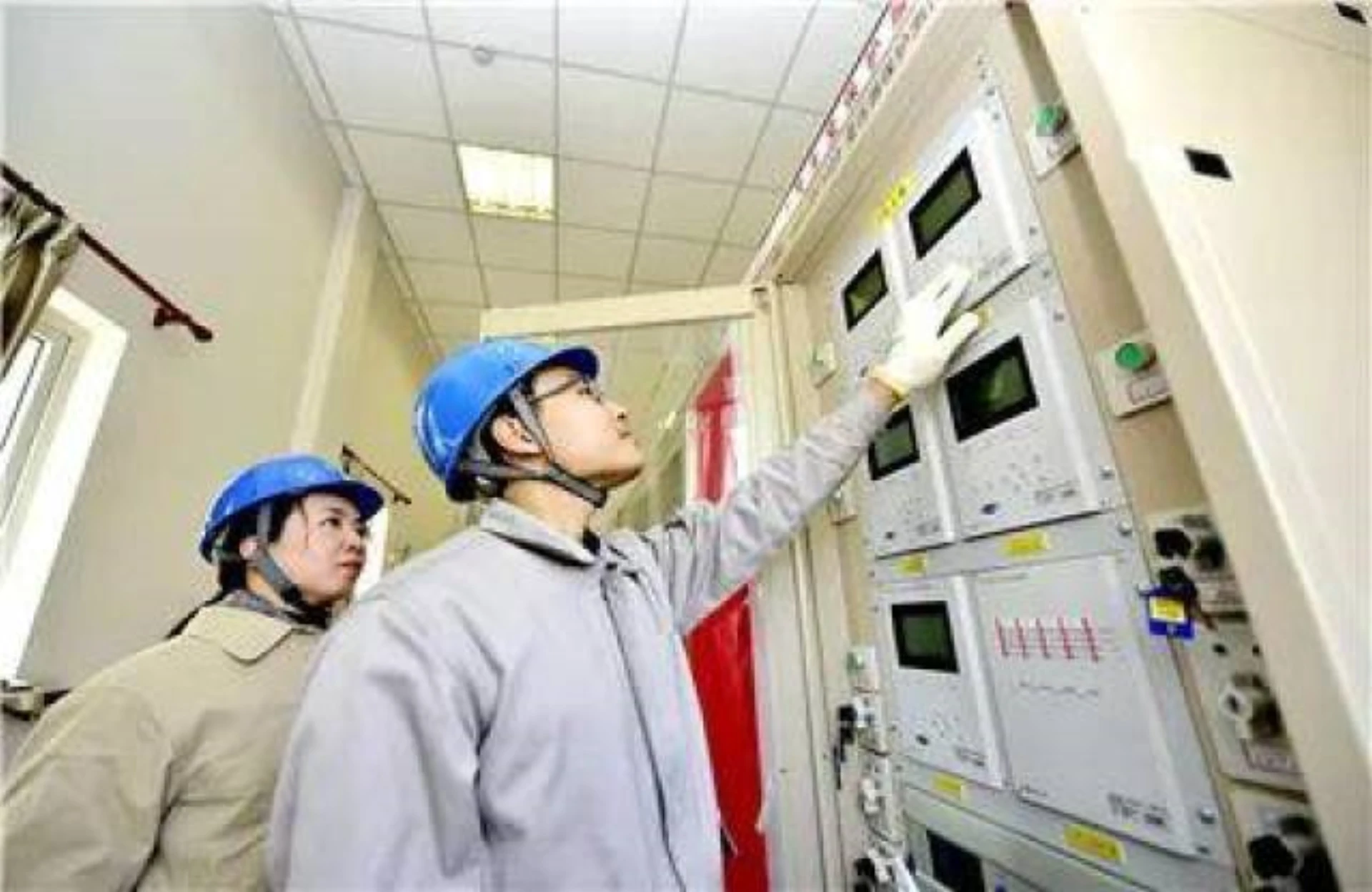
Protection Relays in a Power System: Chinese vs Imported Comparison
What should you compare when sourcing protection relays for a power system?
Protection relays in power system projects decide which breaker opens, how fast, and how much of the network goes dark. Choosing between a Chinese and an imported relay rarely turns on protection logic, because both ship numerical relays covering the same ANSI functions. It turns on five checks: function coverage, protocol conformance, lead time, spare-part cost and support reach. The choice is locked in early – the panel is wired around the relay, the CT is sized for its burden, and the SCADA point list is written against its protocol stack. Swapping brands after factory acceptance means re-testing the bay, not re-ordering a device. All five checks are answerable with documents. ANSI/IEEE C37.2-2022 fixes what each function number means, IEC 60255-1:2022 sets the performance baseline, IEC 61850-8-1:2011 defines the station-bus mapping and IEC 61000-6-5:2015 covers switchgear-room immunity. Setting review and quotation within 12 hours, MOQ 1, 7-15 working days.
Protection relays in power system projects decide which breaker opens, how fast, and how much of the network goes dark. Choosing between a Chinese and an imported relay rarely turns on protection logic: both sides ship numerical relays covering the same ANSI functions. It turns on five checks: function coverage, protocol conformance, lead time, spare-part cost and support reach.
Five checks. Two shortlists.
That choice is locked in early. The panel is wired around the relay, the CT is sized for its burden, and the SCADA point list is written against its protocol stack. Swapping brands after factory acceptance means re-testing the bay, not just re-ordering a device.
ABB, Siemens and Schneider led this market for decades and still hold it at transmission voltages and on grid projects with a mandated vendor list. Chinese manufacturers now compete across medium-voltage distribution, industrial plants and renewable projects, and are exported to Central Asia, Southeast Asia, Africa and the Middle East.
The five checks are answerable with documents. ANSI/IEEE C37.2-2022 fixes what each function number means, IEC 60255-1:2022 sets the performance and test baseline, IEC 61850-8-1:2011+AMD1:2020 defines the station-bus mapping, and IEC 61000-6-5:2015 covers immunity inside a switchgear room. A supplier who cannot name the edition is not quoting to that edition.
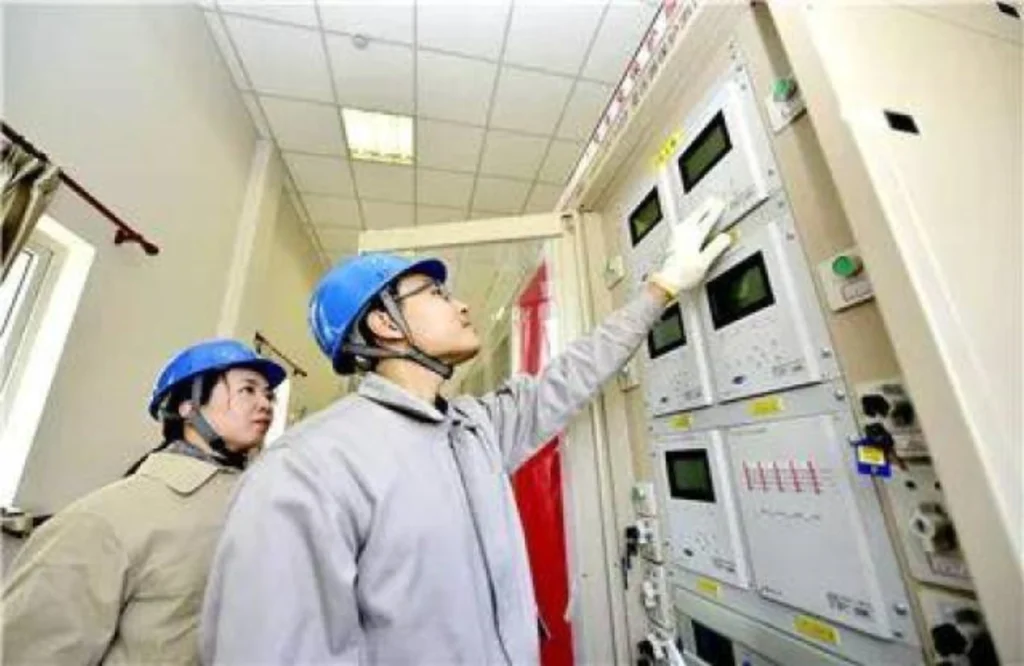
Protection Relays in Power System: At a Glance
- Function coverage: both sides ship 50/51, 50N/51N, 67/67N, 87, 21, 27/59, 81 and 50BF. Ask for the function list, not the datasheet headline.
- Purchase price: Chinese quotes come in below international brands on comparable function lists. Get three quotes on the same list before you compare.
- Lead time: plan on weeks, not days, from either side. Insist on a written delivery date tied to the contract.
- Spare parts: price the second device before you buy the first. A cheap relay with expensive spares costs more over ten years.
- Protocols: IEC 61850, Modbus RTU/TCP and IEC 60870-5-103/104 are standard on both. DNP3 is often optional on Chinese models, so confirm it before tender.
- Support: international brands work through local agents; Chinese suppliers usually work factory-direct. Ask who attends site, and in how many days.
- Documents: type-test report, protocol conformance certificate, ISO 9001 and CE. No certificate, no comparison.
- Where each side wins: international brands on UHV, nuclear and mandated-vendor utility projects; Chinese relays on 11 kV to 110 kV distribution, industrial and renewable projects.
That is the comparison in eight lines. This page works through a Chinese vs imported protection relay decision on medium-voltage and distribution projects, then hands the power system relay selection detail to the object pages: how to select a protection relay, industrial protection relay suppliers and Chinese relay manufacturer quality and delivery. What follows is a relay sourcing comparison you can run with documents rather than opinions.
Chinese Protection Relays vs International Brands: Detailed Comparison
Selecting a relay for a live project?
Send the system voltage, CT ratio and tripping scheme. Our engineers confirm the model and reply within 12 hours.
Purchase Cost and Lifecycle Cost
Project cost control is the core pain point for most EPC and industrial power projects. International brand relays have high brand premium and import costs, while Chinese protection relays have obvious advantages in full-lifecycle cost control.
| Item | International Brands | Chinese Brands |
|---|---|---|
| Purchase Cost | Very High | 30%-70% Lower |
| Spare Parts Cost | High | Low |
| Expansion Cost | High | Lower |
| Lifecycle Cost | High | Cost Effective |
Total relay cost decides competitiveness more often than relay performance does: the panel, the CTs and the commissioning are the same either way. Compare like with like. Put the same function list, the same quantity and the same Incoterms to three suppliers, then add freight, duties and a ten-year spares allowance before you read the bottom line.
Price is easy to compare. Cost is not.
Delivery Time Comparison
Global supply chain bottlenecks and long import clearance periods are what push international brand deliveries out. Shorter domestic supply chains and flexible production scheduling are what pull Chinese deliveries in. Both claims are worth testing against a written date.
| Item | International Brands | Chinese Brands |
|---|---|---|
| Typical Lead Time | 8-24 Weeks | 2-8 Weeks |
| Emergency Orders | Difficult | Flexible |
Those bands move with the order book, the option list and the shipping route, so treat them as a starting point for negotiation rather than a promise. What protects the schedule is a written delivery date in the contract, a named contact for factory acceptance, and a spares shipment that travels with the panels instead of after them.
Weeks matter more than percentages.
Protection Function Coverage
Protection relays in power system schemes are specified by function number, and the catalogue answer is close to identical on both sides. What differs is how each function is implemented, how much of it you can configure, and whether the supplier will put that in writing.
Numbers first. Brands second.
The function set is named in ANSI/IEEE C37.2-2022 on both sides, so the numbers mean the same thing whoever supplies the relay. Core functions to expect on a medium-voltage numerical relay: overcurrent protection (50/51), earth fault protection (50N/51N), directional protection (67/67N), Differential Protection (87), Distance Protection (21), under/over voltage protection (27/59), Frequency Protection (81), Breaker Failure Protection (50BF), as well as professional motor, transformer and generator targeted protection functions.
Protection relays used in substation: For all 11kV , 22kV, 33kV to 110kV distribution and substation projects, Chinese protection relays deliver almost identical protection accuracy, response speed and functional integrity compared with international brands.
Communication Protocol Comparison
Communication compatibility with SCADA and substation automation systems is the first thing overseas buyers ask about. Modern Chinese protection relays support the mainstream global power communication protocols; what varies is which parts of each one a given model implements.
| Protocol | ABB | Siemens | Schneider | Chinese Brands |
|---|---|---|---|---|
| IEC 61850 | ✔ | ✔ | ✔ | ✔ |
| Modbus RTU | ✔ | ✔ | ✔ | ✔ |
| Modbus TCP | ✔ | ✔ | ✔ | ✔ |
| IEC 60870-5-103 | ✔ | ✔ | ✔ | ✔ |
| IEC 60870-5-104 | ✔ | ✔ | ✔ | ✔ |
| DNP3 | ✔ | ✔ | ✔ | Optional |
Compatibility is a document question, not a marketing one. Ask which parts of IEC 61850 the relay implements, which conformance certificate covers it, and whether the SCADA point list has been mapped on a project like yours before.
Ask for the certificate, not the claim.
Technical Support Comparison
International brands have mature global systems, but their service costs are high and regional response speeds are slow. Most after-sales services rely on local agents, resulting in delayed problem solving.
Chinese suppliers usually work factory-direct, which brings setting calculation, single-line diagram design, panel debugging and SCADA integration into one contract. Service quality varies between manufacturers, so ask for a named engineer and a written response time.
Local agent or factory engineer. Pick one.
Which Projects Are Better Suited for ABB, Siemens, and Schneider?
Protection relays in power system projects from ABB, Schneider Electric and Siemens stay the default where the specification names a vendor, where the site already runs that fleet, or where an outage carries consequences beyond the plant fence. Chemical plants and hospitals inside China are the usual examples: continuous process and life-safety loads, with spares and service already contracted around the installed base.
The other half is the mandate. Where the grid operator or the client names a vendor, the comparison stops there and the useful work moves to scope, spares and service terms rather than to the relay itself.
Which Projects Are Better Suited for Chinese Protection Relays?
On medium-voltage distribution, industrial and new energy projects, the balance of function coverage, price and delivery tends to favour Chinese relays. The five project types below are where that balance shows up most clearly.
Cost is only one of the five.
Distribution Substations
Ideal for EPC contractors, private utility operators and industrial end-users. It ensures reliable protection performance while greatly reducing project investment costs, with fast delivery and flexible after-sales services.
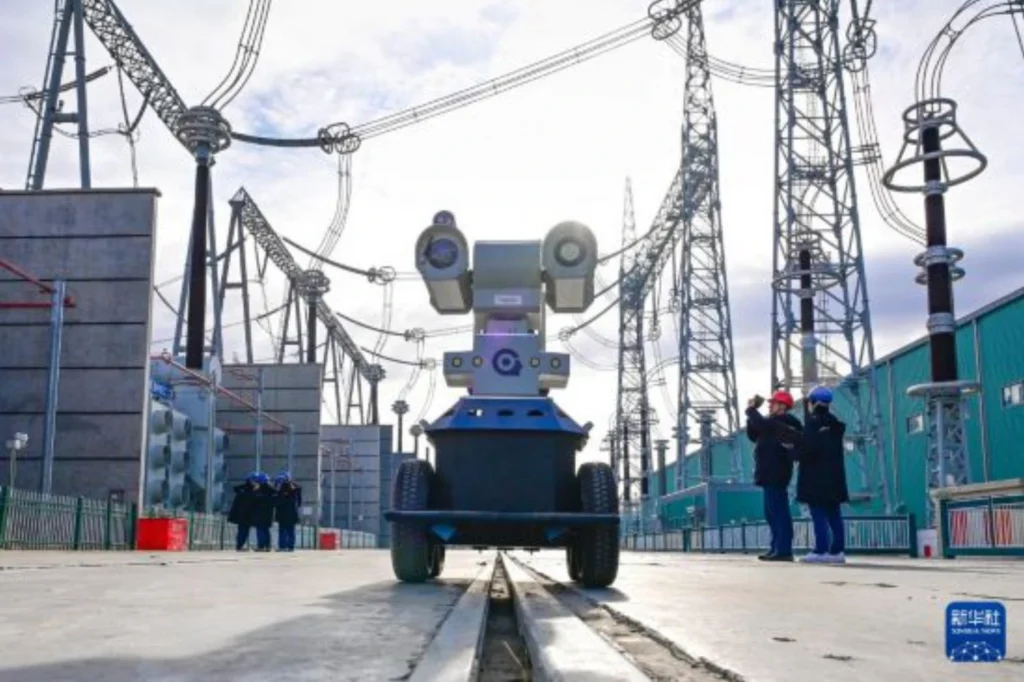
Substations in China span 6 kV to 1000 kV, covering urban and rural distribution, industrial and mining loads and long-distance transmission. The Zhangbei-Shengli 1000 kV UHV link is the reference usually quoted for the top of that range. For an overseas EPC buyer the relevant band is 6 kV to 110 kV, and that is where the comparison below is drawn.

Solar Power Plants
Solar power stations require feeder protection, transformer protection, busbar protection and metering integration. Chinese relays have strong multi-protocol communication compatibility and cost advantages, which are very suitable for large-scale centralized photovoltaic power projects. For the scheme-level view, see electrical protection for solar power substations.
Scale of the domestic PV market is the reason Chinese relay makers carry solar references:
Scale Advantages: In 2025, China accounted for 55% of the world’s newly installed PV capacity (380GW out of a global total of 690GW) and 45% of cumulative installed capacity (950GW out of a global total of 2,100GW), ranking first worldwide for ten consecutive years (CPIA, 2025).
Wind Farms
Wind farm projects compress the schedule and still have to meet grid code. That puts the weight on commissioning speed and on grid-connection compatibility rather than on the relay itself.
Chinese relays implement IEC 61850 for the station bus and can be adapted to the grid code of the receiving network. Confirm which grid code the reference project was connected under, because that is where commissioning time is won or lost.
Mining Projects
Mining power systems run hot, dusty and far from a service centre, and they depend on motor and generator protection staying stable. Ask for the operating temperature range and the EMC immunity class, then check them against IEC 61000-6-5:2015.
Manufacturing Plants
Cement, steel, chemical, paper and oil and gas plants judge a relay on downtime avoided and on operating cost. The useful comparison is not brand against brand but mean time to restore: how fast a spare arrives, and how fast someone can recommission the bay.
Power System Relay Selection: Five Checks That Decide It
Power system relay selection comes down to five checks that you can run on any supplier, Chinese or imported. None of them needs a laboratory: each one ends with a document.
| Check | What to compare | What proves it |
|---|---|---|
| Function coverage | The ANSI device numbers the scheme needs, not the headline count | Function list with edition reference to ANSI/IEEE C37.2-2022 |
| Protocol conformance | Which parts of IEC 61850 are implemented, and whether DNP3 is included | Conformance certificate, tested to IEC 61850-10 |
| Lead time | Weeks to delivery, and who carries the risk if it slips | Written delivery date in the contract |
| Spare parts and lifecycle | Price and availability of a second device, and of a replacement in year ten | Spare-part price list with validity period |
| Support reach | Who attends site, in how many days, and in which language | Named engineer, response time in the contract |
Two of those five are decided before you ever see a quote: the function list comes from your single-line diagram, and the protocol comes from the SCADA you already run. That is why the comparison starts with documents you already hold rather than with a brand name.
Check the edition, not the logo.
Common Mistakes Buyers Make When Selecting Protection Relays
Four mistakes. All four cost more than the relay.
Mistake 1: Choosing Only by Brand
Famous international brands do not mean the most suitable solution. For medium and low voltage distribution projects, blindly pursuing international brands will lead to excessive cost waste without bringing additional performance improvement.
Mistake 2: Ignoring Communication Requirements
Many buyers only pay attention to protection functions but ignore protocol compatibility. It is necessary to confirm the IEC 61850 version, SCADA system matching degree and existing on-site communication protocols in advance to avoid docking failures.
Mistake 3: Ignoring Spare Parts Costs
A low purchase price does not make a low ten-year cost. Expensive spare parts and a long delivery cycle for them push up maintenance spend and stretch every fault repair.
Mistake 4: Not Evaluating Technical Support
Complete technical support is the key to project smooth implementation. Before purchasing, confirm whether the supplier can provide protection setting calculation, FAT/SAT testing support, on-site commissioning guidance and standard design documents such as single-line diagrams.
How to Evaluate a Chinese Protection Relay Supplier
Run the evaluation as a relay sourcing comparison rather than as a brand impression: same function list, same quantity, same Incoterms, same document set, then compare. Four checks do most of the work.
References you can call beat references you can read.
Certifications You Can Check
Formal manufacturers must have CE certification, IEC international standard compliance certification and ISO9001 quality system certification to meet global project access requirements.
Professional Engineering Capability
Confirm whether the supplier has independent engineering capabilities, including protection setting calculation, SLD design, protection panel integration design and SCADA system docking debugging.
Verifiable Project References
Request supplier’s overseas project cases, including solar power plants, wind farms, distribution substations and industrial power projects, to verify practical application performance.
Technical Support Across the Lifecycle
Ensure the supplier can provide full-cycle services: factory acceptance test (FAT), site acceptance test (SAT), online remote commissioning, professional operation training and complete technical documents.
Conclusion
Protection relays in power system projects are chosen on the five checks above, not on a badge. International brands such as ABB, Siemens and Schneider keep the advantage where the grid code or the client names a vendor, at transmission voltages, and on nuclear work. Below that, at 11 kV to 110 kV, the function lists converge and the difference moves to delivery, spares and service.
Same function list. Same documents.
Chinese relays are worth a serious look on distribution, industrial and renewable projects, and they are worth verifying like any other supplier. Send us the single-line diagram, the CT and VT data, the short-circuit level and the protocol list. We will return a function list with device numbers, a setting sheet, an I/O list and a quotation with a written delivery date, so you can put it next to the imported option and compare line by line.
Related Reading
Protection relays in power system projects are specified one object at a time. These pages take the same five checks into each object and each project stage.
- How to select a protection relay: the seven system inputs, in the order an EPC engineer needs them.
- Industrial protection relay suppliers: what to ask before you shortlist a vendor.
- Chinese relay manufacturer quality and delivery: factory audit and lead-time questions.
- Medium voltage protection relay selection: the substation-level view, including CT classes.
- Feeder protection relay selection: grading and earth fault on distribution feeders.
- Protection relay testing and commissioning: what has to be proved after the relay lands on site.
- ASL-591H multifunction protective relay: one device covering the function list above.
- Protection relays for transformers: differential, inrush restraint and the non-electrical alarms.
Technical Reference & Data Sources
Every check a buyer runs on protection relays in power system tenders ends with a document, and every document names a standard. Editions change: confirm against the publisher catalogue before you write a specification.
| Source | What it covers | Type | Edition |
|---|---|---|---|
| ANSI/IEEE C37.2 | Device numbers for every function listed above | Standard | 2022 |
| IEC 60255-1 | General requirements for measuring relays and protection equipment: performance, test methods and environmental limits | International standard | 2022 |
| IEC 61850-8-1 | Station bus communication and the MMS mapping relays are specified against | International standard | 2011+AMD1:2020 |
| IEC 61850-10 | Conformance testing for IEC 61850 devices | International standard | 2012+AMD1:2025 |
| IEC 60870-5-103 | Serial telecontrol interface for protection equipment | International standard | 1997 |
| IEC 60870-5-104 | Telecontrol over TCP/IP for utility SCADA links | International standard | 2006+AMD1:2016 |
| IEC 61000-6-5 | EMC immunity for equipment installed in power stations and substations | International standard | 2015 |
| ISO 9001 | Quality management system certification | International standard | 2015 |
| CPIA | PV installation statistics quoted in the solar section | Industry association | 2025 |
FAQ
Do Chinese and imported relays use the same ANSI function numbers?
Yes. Both are numbered to ANSI/IEEE C37.2-2022, so 50/51 is overcurrent and 87 is differential whoever supplies the device. That shared numbering is what lets protection relays in power system tenders be compared like for like. What differs between suppliers is which functions sit in the base model and which are licensed options, so compare the function list rather than the device name.
Are Chinese protection relays reliable?
Yes, for medium-voltage and distribution work, provided you verify the specific supplier. Ask for a type-test report against IEC 60255-1:2022, an ISO 9001 certificate and three overseas references you can call. Reliability is a property of a factory and a model, not of a country, so the documents matter more than the brand story.
Can Chinese relays replace ABB or Siemens relays?
On 11 kV to 110 kV distribution, industrial and new energy projects, the function coverage is equivalent, so replacement is an engineering question rather than a technical one: match the device numbers, re-check the CT burden and rewrite the SCADA point list. At transmission voltages, on nuclear work, and wherever the grid operator names a vendor, the local access specification decides and no substitution is possible.
Do Chinese protection relays support IEC 61850?
Most current Chinese numerical relays support IEC 61850, IEC 60870-5-103, IEC 60870-5-104 and Modbus RTU/TCP. Two things still need checking: which parts of IEC 61850 the specific model implements, and whether DNP3 is standard or an option, because it is often the latter.
When should I choose ABB, Siemens, or Schneider?
Choose ABB, Siemens or Schneider where the grid operator publishes a mandated vendor list, where the site already runs that fleet and the spares contract depends on it, and on transmission or nuclear projects. The reason is rarely the relay itself: it is the approvals, the spares and the service contract wrapped around it.
When should I choose Chinese protection relays?
Chinese relays suit budget-sensitive EPC projects, industrial manufacturing plants, solar and wind renewable energy projects, mining power systems and medium-voltage distribution substations. The common thread is that the function list is standard, the schedule is tight and the client does not mandate a vendor. Where a vendor is mandated, this question answers itself.
If the selection has to be checked against your switchboard, send the single-line and the ratings.
About Author

Hello, I'm Leon Zhang. I have 15 years of experience in the power relay protection industry with extensive pre-sales and after-sales project experience. Our company specializes in various complete sets of relay protection and automation equipment. I can assist customers in solving all practical on-site project challenges and provide optimal integrated solutions.
Tell Us Your Requirement
High Quality
Stable performance, reliable design, ensuring safe operation for power system protection and grid stability.
Fast Delivery
Timely delivery to support your urgent orders and project schedules efficiently and professionally at any time.
Best Warranty
Professional Warranty: Reliable after-sales support for stable relay protection and long-term customer satisfaction.