

-
Leon Zhang sales consultant
-
Email: zxl635973785@gmail.com
-
Phone/WhatsApp: +86 13655813266
Which Motors Need Differential Protection? 87M Application Guide
Introduction: Which Motors Need Differential Protection?
Not every industrial motor requires 87M differential protection. Unlike universal overcurrent protection, motor differential protection is a targeted protection solution designed for high-risk, high-value, and process-critical industrial motors.
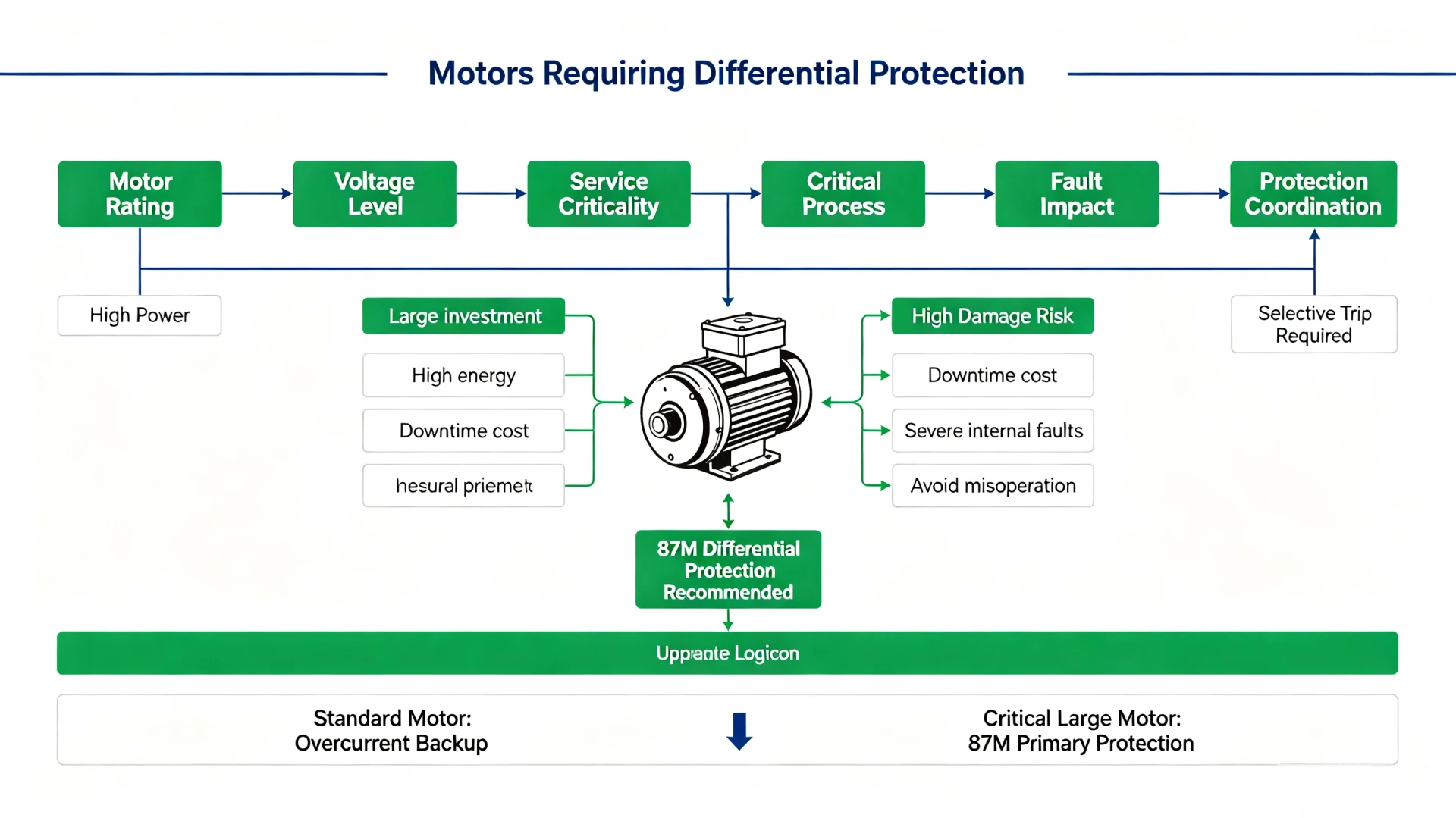
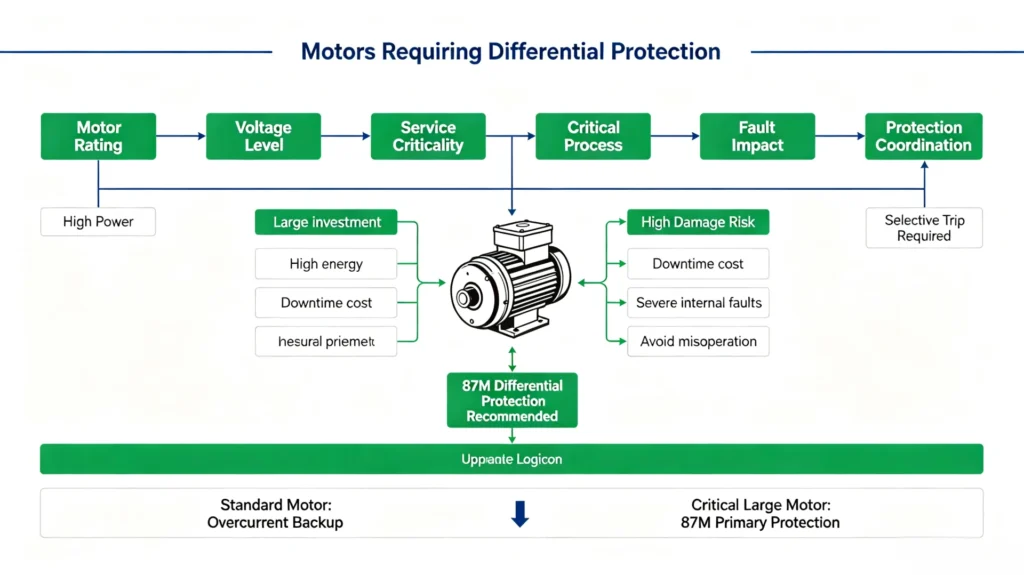
For Motors Requiring Differential Protection, 87M differential protection is primarily justified in scenarios where fast, selective internal fault isolation is mandatory to avoid severe equipment damage, production shutdowns, or safety hazards. The necessity of 87M protection depends on five core engineering factors: motor rated power, operating voltage, operational criticality, internal fault consequences, and system protection coordination logic.
A practical industry rule of thumb applies: The larger, higher-voltage, and more process-critical the motor, the stronger the engineering justification for 87M differential protection. No universal mandatory power threshold exists for 87M deployment, and all configurations are determined by on-site system conditions and project specifications.
What Is Motor Differential Protection (87M)?
This section covers only application-oriented core definitions to avoid content overlap with dedicated 87M working principle articles. 87M motor differential protection is a primary protection scheme dedicated to motor internal fault detection, featuring high sensitivity and tripping speed.
What Does 87M Protect?
87M differential protection focuses exclusively on motor internal faults that standard 50/51 overcurrent protection may fail to detect promptly:
- Stator winding inter-turn short circuits
- Phase-to-phase faults inside the motor protection zone
- Phase-to-ground faults within stator windings
- Low-magnitude internal short-circuit faults
It serves as the most reliable motor internal fault protection for medium and high-voltage industrial motors.
87M Motor Protection Zone Definition
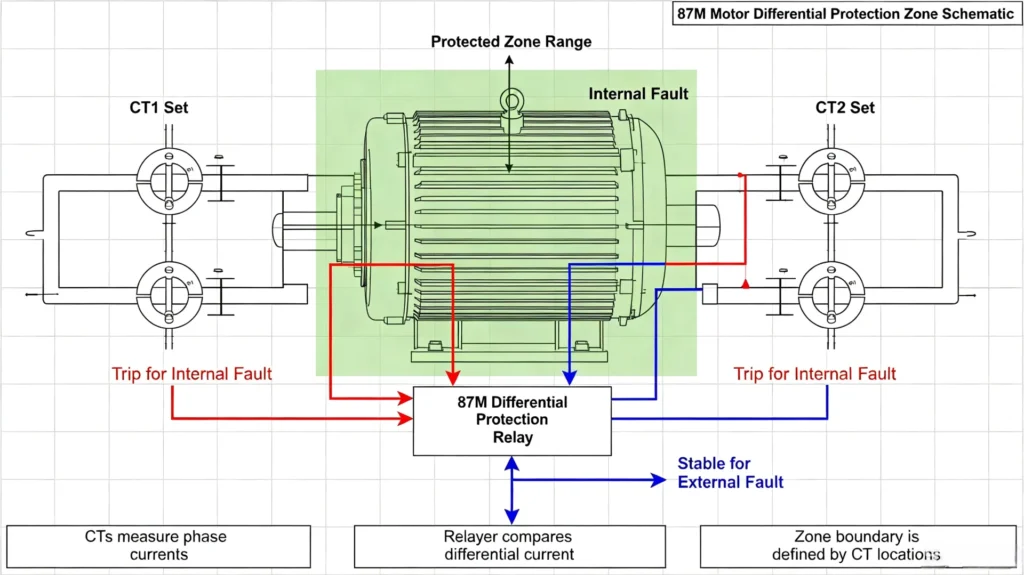
The 87M protection zone is defined by dual-terminal CT (current transformer) installation at the motor line side and neutral side. The relay continuously compares real-time current values collected from two sets of CTs. Consistent current values indicate normal motor operation or external faults; a measurable current difference confirms an internal motor fault and triggers an immediate trip.
Core Factors Determining 87M Protection Deployment
Professional EPC and plant maintenance engineers evaluate 87M applicability based on five practical engineering dimensions, rather than fixed numerical standards.
Motor Rated Power
Motor fault damage and economic losses rise proportionally with rated power. Small low-power motors only require basic overload and short-circuit protection. Large and ultra-large industrial motors face irreversible winding burnout and structural damage once internal faults occur, making 87M protection highly necessary.
Motor Voltage Level
Voltage level is a key basis for 87M configuration:
- LV motors (≤1kV): Low fault energy and equipment value, 87M is generally unnecessary
- MV motors (3kV–35kV): High fault energy and operational impact, 87M is strongly recommended
- HV motors (>35kV): Mandatory evaluation for 87M as standard primary protection
MV and HV motors are core application scenarios for MV motor protection and high voltage motor protection.
Motor Operational Criticality
Criticality is the decisive factor for 87M configuration for medium and small-power motors. Motors serving core production processes cannot tolerate unexpected tripping or fault deterioration. Even with moderate power ratings, these motors require 87M protection to ensure operational stability.
Typical critical motor loads include main process pumps, large compressors, boiler auxiliary equipment, and mining crushing mills.
Consequences of Internal Motor Faults
Internal stator faults develop rapidly. Without fast 87M tripping, faults will cause winding burnout, motor casing damage, on-site fire risks, long-term equipment outage, and high replacement and maintenance costs. For continuous production plants, unplanned motor shutdowns will lead to full-line production stagnation and huge economic losses.
Protection configuration decisions must prioritize fault consequences, not merely motor size.
System Protection Coordination Requirements
Industrial power systems require hierarchical and selective protection coordination. Standard 50/51 overcurrent protection features fixed delay and low sensitivity, which cannot meet the fast clearing requirements of internal motor faults. 87M differential protection provides instantaneous, selective tripping for internal faults, avoiding upstream protection misoperation and optimizing overall system protection coordination.
Typical Motors Requiring 87M Differential Protection
Based on industrial project experience, four categories of motors are the mainstream application objects of motor differential relay application.
Large Medium-Voltage Industrial Motors
Large MV induction and synchronous motors are the most common scenarios for 87M deployment. These motors have high equipment value, high fault discharge energy, and long downtime recovery cycles. Fast differential tripping can effectively minimize equipment loss.
Core Process Critical Motors
In oil & gas, water treatment, and chemical industries, core process equipment including large process compressors, pipeline pumps, cooling water pumps, and industrial fans rely on continuous operation. 87M protection ensures precise fault isolation without affecting other normal operating equipment.
Power Plant Auxiliary Motors
Boiler feedwater pumps, ID/FD fans, circulating water pumps, and coal mills are key auxiliary equipment for power generation units. Faults in these motors will directly affect unit load and power generation stability. 87M is the standard primary protection for power plant auxiliary large motors.
High-Power Synchronous Motors
Large synchronous motors used for constant-speed industrial drives have complex winding structures and high maintenance costs. Matching 87M differential protection forms a complete protection scheme with thermal protection and negative sequence protection to improve overall operational safety.
Scenarios Where 87M Differential Protection Is Unnecessary
Blind configuration of 87M will increase project cost and system complexity. The following scenarios do not require differential protection in conventional engineering designs.
Small Low-Voltage Non-Critical Motors
Small LV motors for auxiliary ventilation, ordinary conveying, and auxiliary lighting loads only need 50/51 overcurrent protection, thermal overload protection, and locked-rotor protection. The fault impact is limited, and 87M brings no obvious engineering benefit.
For small‑size motors, low‑voltage motor protection relays are generally adopted for protection.
Easily Replaceable Non-Critical Loads
Motors with low equipment value, convenient replacement, and no impact on core production can rely on basic overcurrent backup protection. The cost of 87M CT transformation and relay configuration exceeds the risk loss of motor faults.
Cost-Sensitive Conventional Projects
87M protection requires dual-terminal CT matching, dedicated wiring, and professional protection debugging. For conventional low-risk projects with strict cost control, basic protection schemes can meet operational safety requirements without differential protection configuration.
87M Differential Protection vs 50/51 Overcurrent Protection
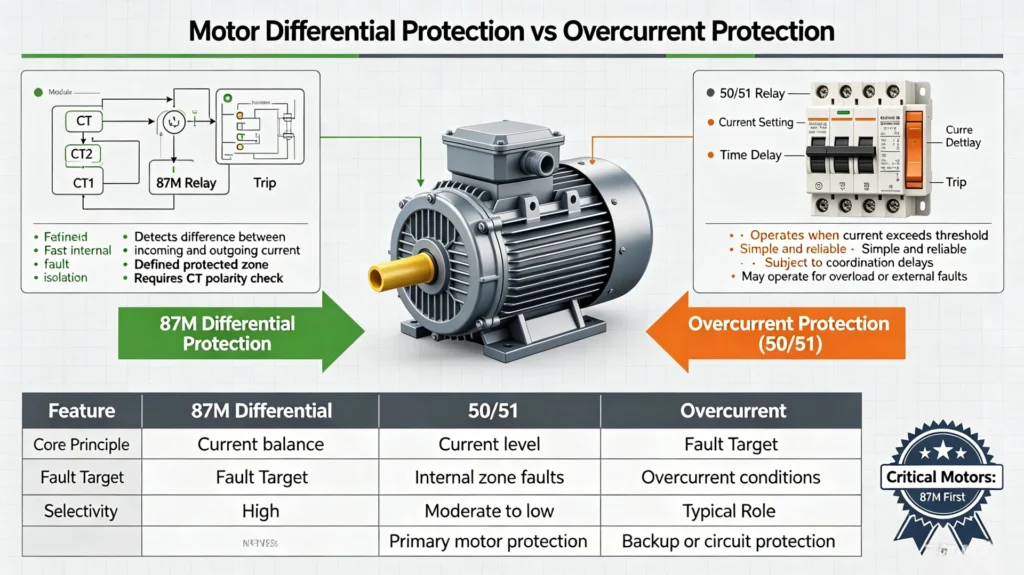
87M and 50/51 protections are complementary rather than alternative solutions for industrial motors, forming a complete motor protection system.
Core Functions of 50/51 Overcurrent Protection
50/51 protection serves as the universal backup protection for motors, providing non-selective protection for external short circuits, overload faults, and system surge faults. It features wide coverage but low sensitivity to low-magnitude internal winding faults and cannot achieve fast selective tripping.
Unique Advantages of 87M Differential Protection
87M fills the technical gap of overcurrent protection, providing high-sensitivity, high-speed selective protection for motor internal faults. It defines an independent motor protection zone, effectively avoiding fault expansion and misoperation.
Core Conclusion: For most large and critical MV/HV motors, 87M primary differential protection + 50/51 backup overcurrent protection is the standard industrial protection configuration.
Motor 87M Protection Engineering Decision Table
The following practical decision table helps engineers quickly judge whether 87M protection is required for on-site motors, complying with industrial EPC engineering standards.
| Motor Operating Condition | 87M Protection Configuration Recommendation |
|---|---|
| Small low-voltage non-critical motor | Usually not necessary |
| Large low-voltage process motor | Determined by on-site application scenario |
| Medium-voltage industrial motor | Strongly recommended for deployment |
| High-voltage heavy-duty motor | Mandatory configuration evaluation |
| Critical compressor/pump motor | Justified and recommended |
| Power plant auxiliary motor | Recommended based on unit criticality |
| Motor with high fault loss risk | Strong case for 87M differential protection |
Key Engineering Checks Before 87M Relay Selection
When deploying motor differential relay, engineers need to verify the following key parameters to ensure protection matching and reliable operation.
CT Matching and Arrangement
Verify dual-terminal CT installation position, consistent CT ratio, 0.2S/0.5S accuracy level, and anti-saturation performance. CT mismatch and saturation are the main causes of 87M protection misoperation.
Motor Electrical Parameters
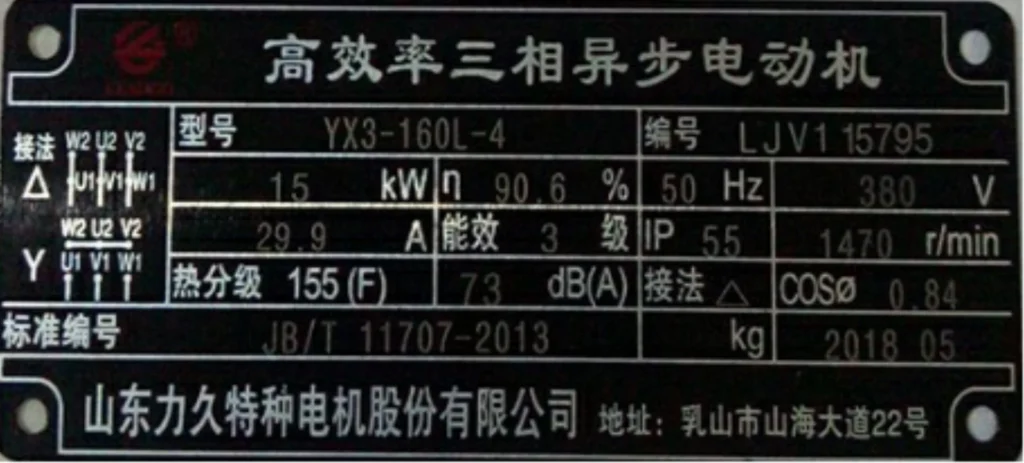
Confirm motor rated voltage, rated current, starting current, system frequency, and grounding mode to complete accurate relay parameter setting.
Complete Protection Function Matching
A qualified motor protection relay should integrate 87M differential protection, 50/51 overcurrent protection, earth fault protection, thermal overload protection, negative sequence protection, and locked-rotor protection to form a full-dimensional protection scheme.
Existing System Protection Coordination
Check upstream breaker protection logic, backup protection setting values, and switchgear configuration to avoid protection dead zones and mis-coordination.
Industrial 87M Protection Typical Application Scenarios
87M differential protection is widely applied in high-standard industrial projects, covering multiple core industries:
Power Generation Industry
Generator auxiliary motors, boiler feed pumps, cooling system motors, large induced draft fans, and coal mill drive motors
Oil & Gas Industry
Large process compressors, pipeline delivery pumps, and offshore platform critical drive motors
Water & Wastewater Industry
High-power water supply and drainage pumps, large pumping station main drive motors
Mining & Heavy Industry
Ore crushers, industrial mills, large conveyor and ventilation fan motors
Precision Manufacturing Industry
Core production line high-power constant-speed drive motors
Practical 87M Protection Engineering Application Case
Project Background: A 10kV medium-voltage large cooling water pump motor for a thermal power plant, serving as a core auxiliary equipment for unit cooling circulation. Motor failure will directly cause unit load reduction and unplanned outage risks.
Protection Challenges: The motor operates continuously for a long time; low-magnitude internal winding faults cannot be identified by traditional 50/51 overcurrent protection, easily leading to winding burnout and equipment scrapping.
Deployed Solution: 87M motor differential protection (primary protection) + 50/51 overcurrent backup protection + earth fault protection + thermal overload protection
Application Effect: Realizes high-sensitivity identification and instantaneous tripping of motor internal faults, completely avoids fault expansion, ensures selective protection action, and eliminates unit operation safety hazards caused by motor faults.
Is There a Fixed MW Threshold for 87M Deployment?
There is no universal fixed power threshold for 87M motor differential protection deployment in international electrical standards and industrial specifications.
Engineering judgment comprehensively considers motor power rating, voltage level, operational criticality, on-site fault level, equipment replacement cost, production shutdown loss, and project unified protection standards. It is inappropriate and inaccurate to simply define 87M deployment based on a single power parameter.
FAQ: Motors Requiring Differential Protection
Q1. Which motors require differential protection?
A: Large MV/HV motors, process-critical motors, high-value industrial motors, and power plant auxiliary motors are the main applicable objects for 87M differential protection.
Q2. Do all MV motors need 87M protection?
A: No. Non-critical medium-power MV motors can adopt simplified protection schemes according to project cost and risk assessment.
Q3. At what motor size is differential protection required?
A: No unified global MW standard exists. Configuration depends on comprehensive on-site engineering conditions.
Q4. Is 87M necessary for all large motors?
A: Large motors are key evaluation objects for 87M, but final configuration depends on operational criticality and fault consequences.
Q5. What is 87M used for in motor protection?
A: 87M is dedicated to high-sensitivity, fast selective protection of motor internal stator winding faults.
Q6. Can 50/51 overcurrent protection replace 87M differential protection?
A: No. Overcurrent protection cannot detect low-magnitude internal faults and lacks selective tripping capability, which cannot replace 87M primary protection.
Q7. What CT requirements apply to 87M differential protection?
A: Dual-terminal matching CTs with consistent ratio, high accuracy, and anti-saturation performance are mandatory for 87M reliable operation.
Q8. Is 87M widely used for medium-voltage motors?
A: Yes. 87M has become the standard primary protection scheme for core medium voltage motor protection in high-standard industrial projects.
Conclusion
87M motor differential protection delivers the greatest engineering value for motors requiring fast and selective internal fault isolation. It is not a universal mandatory protection scheme, but a targeted solution for large capacity, medium/high voltage, and process-critical industrial motors.
When selecting motor protection schemes, electrical engineers should abandon single power-based judgment and comprehensively evaluate motor voltage level, operational criticality, fault loss risk, and system protection coordination. Matching 87M differential protection with 50/51 overcurrent backup protection can build a safe, stable, and efficient full-coverage motor protection system for industrial power systems.
For medium and high-voltage large motor protection design and relay selection, please refer to our professional 87M motor differential relay product solutions for standardized and reliable engineering configuration support.
Reference & Technical Sources
- IEEE C37.20.2-2015: Standard for Medium-Voltage Switchgear and Motor Protection Systems
- IEEE C37.110-2020: Guide for the Application of Current Transformers for Protective Relaying
- IEC 60289: Industrial Motor Protection and Control System Design Specifications
- NFPA 70E: Standard for Electrical Safety in the Workplace (Motor Protection Requirements)
- International Electrical Engineering Consultancy (EPC) Industrial Motor Protection Engineering Manual
About Author

Hello, I'm Leno Zhang. I have 15 years of experience in the power relay protection industry with extensive pre-sales and after-sales project experience. Our company specializes in various complete sets of relay protection and automation equipment. I can assist customers in solving all practical on-site project challenges and provide optimal integrated solutions.
Tell Us Your Requirement
High Quality
Stable performance, reliable design, ensuring safe operation for power system protection and grid stability.
Fast Delivery
Timely delivery to support your urgent orders and project schedules efficiently and professionally at any time.
Best Warranty
Professional Warranty: Reliable after-sales support for stable relay protection and long-term customer satisfaction.