
-
Leon Zhang Sales Manager
-
Email: sale@relayprotect.com
-
Phone/WhatsApp: +86 13655813266

SCADA Security: Zones, Conduits and the Purdue Model
SCADA security keeps controllers, networks and operators safe from intrusion. This guide covers IEC 62443, segmentation, hardening and a 90-day plan.
What is SCADA security and which standards govern it?
SCADA security keeps supervisory control and data acquisition systems available, trustworthy and recoverable while the networks around them are hostile. It is not office IT security transplanted to a plant: the payload is a breaker, pump or turbine, so availability outranks confidentiality. It protects four assets: process availability, command integrity, data integrity and engineering intellectual property. IEC 62443 splits responsibility between asset owners, integrators and suppliers: IEC 62443-2-1:2024 for the asset owner, IEC 62443-2-4:2023 for integrators, IEC 62443-3-2:2020 for zoning, IEC 62443-3-3:2013 for security levels and IEC 62443-4-2:2019 for components. NIST SP 800-82r3 (September 2023) does the same job for operators answering to NERC CIP. A control network obeys physics before policy: relays answer in milliseconds, a PLC scan cannot wait for an antivirus sweep, and Modbus carries no authentication. Ask a vendor which part, edition and security level it meets. Setting review and quotation within 12 hours, MOQ 1, 7-15 working days.
SCADA security keeps supervisory control and data acquisition systems available, trustworthy and recoverable while the networks around them are hostile. It is not office IT security transplanted to a plant: the payload is a breaker, a pump or a turbine, so availability outranks confidentiality. This guide covers what the discipline protects, which standards apply, and the sequence that works in the field.
Two families of standards anchor the discipline. IEC 62443 splits responsibility between asset owners, integrators and product suppliers, and its asset-owner part, IEC 62443-2-1:2024, was rewritten in 2024. NIST SP 800-82r3, published in September 2023, does the same job for North American operators who answer to NERC CIP instead. Plants that treat these documents as paperwork fail audits; plants that treat them as an engineering sequence pass.
Written by Leon Zhang, protection application engineer. Reviewed by the relayprotect.com engineering team. Updated October 26, 2026.
At a glance
- SCADA security protects availability first: a controller that trips safely on tamper is doing its job.
- The governing standards are IEC 62443, whose asset-owner part is at edition 2 (2024), and NIST SP 800-82r3 (2023).
- Segmentation into zones and conduits, drawn from the Purdue model, is the single highest-value control.
- Remote access and web-published screens cause more plant breaches than controllers do.
- Inventory comes first: you cannot harden SCADA devices you have not counted.
- Open platforms such as Rapid SCADA need the same zone discipline as branded control packages.
- A 90-day sequence works: inventory, segment, lock remote access, back up, then monitor.
- Security work that ignores operators gets bypassed, so train the shift team inside the project.
What SCADA Security Actually Protects
Four assets sit behind the phrase. The first is process availability: the SCADA applications that keep water flowing, power synchronized and conveyors moving must keep doing so even while under attack. The second is command integrity, the guarantee that a start, stop or setpoint command arrives exactly as an operator issued it. The third is data integrity, because the SCADA database that historians, alarm managers and planners read has to reflect what the plant actually did. The fourth is engineering intellectual property: logic files, network diagrams and setpoint libraries that took years to tune. SCADA security that defends only the perimeter defends none of these.
Availability outranks confidentiality. Always.
When these assets fail, the failure is public. A ransomware crew that encrypts an office server makes the news for a day; a crew that forces a water pump out of range makes the regulator’s report and sometimes the evening news. Regulators on both sides of the Atlantic now treat control-system security as a licence condition, which moves it from the IT budget conversation to the operations one.
A useful test for any proposed control is to ask which of the four assets it protects and how it fails. A firewall fails closed and blocks traffic. A backup fails silently and is discovered only during a restore. A procedure fails whenever a new hire skips it. Controls with different failure modes belong together, which is the whole logic of stacking them.
Selecting a relay for a live project?
Send the system voltage, CT ratio and tripping scheme. Our engineers confirm the model and reply within 12 hours.
Why Plant Networks Break Ordinary IT Security Rules
A control network obeys physics before it obeys policy. Protection relays must answer in milliseconds, a PLC scan cycle cannot wait for an antivirus sweep, and a substation RTU installed in 2004 may stay in service until 2034. Protocols tell the same story: Modbus carries no authentication at all, and even IEC 61850, designed decades later, assumes an engineering island that is physically separate. Our comparison of substation communication protocols shows how much trust the fieldbus layer silently extends.
IT security tools misfire when carried across unchanged. A vulnerability scanner can hang an older RTU, an agent-based antivirus is not signed for a real-time operating system, and a password rotation policy written for laptops is meaningless for a device whose interface is four buttons. This is why the discipline borrows the vocabulary of IT and then rewrites the sequence around shutdown windows, spare parts and operator procedure.
The shutdown window rules everything.
Patching shows the gap best. In an office, patching is a weekly background task. In a plant, a controller patch can require a shutdown, a spare on the shelf, a rollback plan and a sign-off, so the honest question is never whether to patch but what to patch first. Standards answer that with risk ranking, and inventories make the ranking possible.
The Standards That Anchor the Programme
Two families carry most of the weight. IEC 62443, developed jointly by ISA and the IEC, assigns requirements to asset owners, integrators and product suppliers, which is how a plant is actually run. NIST SP 800-82r3, the September 2023 revision that replaced the 2015 industrial control system guide, addresses the same audience in North American terms and cross-references the NERC CIP standards that grid operators answer to. A serious SCADA security programme cites both, then maps each clause to a named owner and a date.
The parts that matter day to day are the seven in Table 1. Note the dates: IEC 62443-2-1 was rewritten in 2024 and is now roughly half the length of its 2010 predecessor, so if your copy is older, the requirement list has changed under you. The parts teams cite most are IEC 62443-2-1:2024 for the asset owner, IEC 62443-2-4:2023 for integrators, IEC 62443-3-2:2020 for zoning, IEC 62443-3-3:2013 for security levels, and IEC 62443-4-2:2019 for components.
Table 1. The standards that structure the programme.
| Document | Current edition | Who it binds |
|---|---|---|
| IEC 62443-2-1 | Edition 2, 2024 | Asset owner: the security programme |
| IEC 62443-2-4 | Edition 2, 2023 | Service providers and integrators |
| IEC 62443-3-2 | 2020 | Risk assessment, zones and conduits |
| IEC 62443-3-3 | 2013 | System security requirements, levels 1 to 4 |
| IEC 62443-4-1 | 2018 | Supplier secure development lifecycle |
| IEC 62443-4-2 | 2019 | Component-level technical requirements |
| NIST SP 800-82r3 | Revision 3, 2023 | OT security guidance, US-aligned operators |
Treat the table as a procurement filter. When a vendor claims compliance, ask which part, which edition and which security level. Vague answers at this step predict vague answers during commissioning.
Audit teams read the same documents differently, so reconcile the mapping once and store it. One spreadsheet, one row per clause, one owner, one evidence link. The spreadsheet is dull, and it is also the artefact that turns a two-week audit into a two-day one, because every answer already exists with a name beside it.
Segment First: Zones, Conduits and the Purdue Model
The Purdue reference model divides an industrial site into levels, from field instruments at the bottom to the corporate network at the top, and Figure 1 shows the shape most plants converge on. Each level becomes a security zone, every path between zones becomes a conduit, and every conduit gets an explicit rule. The industrial DMZ at level 3.5 is the pivotal idea: historians, OPC gateways and vendor jump hosts live there, so the corporate network and the control network never touch directly.
A distributed control system and a SCADA installation segment the same way even though their topologies differ, which is why the model survives every argument about distributed control system versus SCADA architecture. What changes per site is how strictly conduits are enforced. A greenfield substation can enforce them in hardware; a brownfield plant usually phases them in around shutdowns, one firewall pair at a time. Our SCADA systems guide shows the four-layer architecture that sits inside these zones.
Segmentation helps every other control.
Conduits deserve the same rigour as zones. A conduit is a named path with a purpose, a direction and an owner, and the rule set on the firewall should read like the conduit list, not like a history of exceptions granted under pressure. When somebody needs a new path, the answer is a new documented conduit, not a port opened quietly on Friday afternoon.
Rapid SCADA
Rapid SCADA is an open-source supervisory platform popular where budgets are tight and engineers want full visibility of the code. Its security model differs from a branded package in one practical respect: the vendor will not phone you about a patch. The platform ships sensible defaults, but the operating system beneath it, the database it logs to and the network around it are yours to harden.
Treat a Rapid SCADA deployment exactly as the standards treat any other supervisory asset: give the server its own zone, reach it through a jump host, pin and verify updates, and keep an offline copy of every project file. Audited source code is a genuine advantage, yet it helps only teams that actually read release notes and diffs. Open source lowers the licence cost, not the engineering cost.
Two habits separate successful open-source deployments from abandoned ones. The first is a pinned version policy: the team decides deliberately when to move, tests the migration on a bench server and keeps the previous image. The second is community hygiene, meaning someone subscribes to the release feed and reads the changelog before anyone asks for a new feature. Neither costs money. Both cost calendar discipline.
SCADA Devices
The devices are where policy becomes physical. A modern plant runs a mixed fleet of SCADA devices: PLCs and RTUs doing control, HMIs giving operators a face for the process, protection relays and other IEDs clearing faults, and gateways translating between protocols. Each of them ships with a catalogue of defaults that must be burned down at commissioning: default passwords, enabled web servers, open diagnostic ports and firmware that predates the panel.
IEC 62443-4-2:2019 gives component suppliers a testable requirement list, and it doubles as a hardening checklist for installers. Disable every service the device does not need, put consoles behind authentication, verify firmware against a signed hash before update, and record what you changed. Devices inside a switchgear line-up deserve the same discipline as any server, because a modern protection relay is a small computer with a trip coil attached.
Field voltages are a short, predictable list: 24 V DC for logic, 110 V or 220 V AC for trip and close coils, and 48 V where legacy relay panels survive. Distribution feeders step down from 10 kV or 35 kV, a protection relay samples the current transformer at 50 Hz or 60 Hz and issues its trip within 40 ms, and a modern IEC 61850 IED moves a GOOSE message in under 4 ms. None of those timings survive a generic IT patch, which is the whole reason OT earns its own rules.
Inventory first. You cannot harden what you have not counted.
Commissioning is the cheapest moment to do all of this, and the easiest one to skip. A panel that leaves the factory with credentials changed, services disabled and firmware pinned costs minutes per device on the bench. The same work performed five years later costs a shutdown, a contractor and a risk assessment. Teams that connect PLC programming standards to their handover paperwork close this gap without thinking about it.
Remote diagnostics deserve a separate mention. Vendors ask for remote access to read fault logs, and refusing it outright usually delays repairs. Grant it through the DMZ jump host, time-box the account before the session starts, record the session, and switch the account off when the engineer signs off. The pattern is temporary, supervised and documented, which is exactly what an auditor will ask for.
Web SCADA
Browser-based dashboards have quietly become the largest attack surface in many plants. A web SCADA screen, a cloud historian view or a vendor monitoring portal all publish process data over HTTPS, which means a single misconfigured port forward can hand a control screen to the entire internet. Search engines index exposed HMIs, and attackers collect the lists.

The fix is architectural rather than exotic. Web SCADA belongs behind the industrial DMZ shown in Figure 2, reached from the corporate side by an authenticated and recorded session, never published directly. Enforce multi-factor authentication on every remote path, keep TLS certificates current, and log sessions well enough to answer who watched and who clicked later. SCADA remote monitoring gains reach exactly as fast as it gains risk, so budget for both.
Vendor portals need the same treatment, with one addition: you are trusting a third party’s patching discipline. Ask them for their security posture in writing, including how sessions are isolated and how quickly critical flaws are fixed, and put renewal of that answer into the contract review. A portal is a supply-chain decision wearing a browser window.
Defense in Depth on a Plant Budget
No single product delivers SCADA security, so mature programmes stack controls so that one failure does not become an outage. Figure 3 shows the five layers that matter and Table 2 maps each to something a two-person team can actually buy or configure. The stack starts at the perimeter with firewalls and a multi-factor VPN, then narrows to individual hosts, the applications on them, and the data itself.

Table 2. Five layers, with examples a small team can implement.
| Layer | Control | Field example |
|---|---|---|
| Perimeter | Deny-by-default firewall, VPN with MFA | Vendor access only via the DMZ jump host |
| Network | Zones, conduits, intrusion detection | Purdue zones, a mirror port feeding one sensor |
| Host | Hardening, patching, removable-media control | Shutdown-window patch plan, kiosk for USB media |
| Application | Least privilege, audit trails | Operator and engineer roles separated on the HMI |
| Data | Backups, integrity monitoring | Offline logic backups, restore drill every shutdown |
Budget follows risk, not fashion. Segmentation and remote-access discipline return more risk reduction per unit of spend than any appliance, and both are mostly labour. Monitoring comes last, once there is a defined normal to deviate from.
Complexity is itself a threat. Every appliance, agent and dashboard adds an upgrade path, a login and a failure mode, so each addition should retire at least as much risk as it introduces. The discipline of writing one sentence per control, describing what it protects and how it fails, keeps the stack honest and gives the next engineer a map instead of a mystery.
Monitoring, Logs and the First Incident
Detection closes the gap between prevention and response. Central logging from firewalls, jump hosts, historians and domain controllers turns scattered events into a story, and the story is what incident response actually runs on. A plant does not need a security operations centre on day one; it needs a place where logs land, a retention period of at least 365 days, and one person who reads them on a schedule to reach 95% session capture.
Watch for the events that matter in operational technology: a new device appearing on a control VLAN, a successful VPN login at three in the morning, a logic file that changed outside a maintenance window, a historian recording more communication failures than usual. Each is normal occasionally. Together they are a pattern. Alerting rules should be few and loud rather than many and muted.
Rehearse the first incident before it happens. Decide now who declares an emergency, how the control room is informed, which spare controllers hold known-good logic, and at what point a manual operation replaces the automated one. During a real event nobody designs process; they execute whatever exists.
A tabletop exercise twice a year keeps the plan alive. One hour, one scenario, one scribe. The output is never a report; it is the list of answers nobody had.
Common SCADA Vulnerabilities and How They Get Exploited
Incident reports read alike across sectors because the same handful of weaknesses recur. Figure 4 traces a typical path from a phishing mail in the office to a changed logic file in the field, and Table 3 lists the vectors that dominate together with their entry points. SCADA vulnerabilities are rarely exotic; they are inventory gaps, flat networks and forgotten services wearing new names.
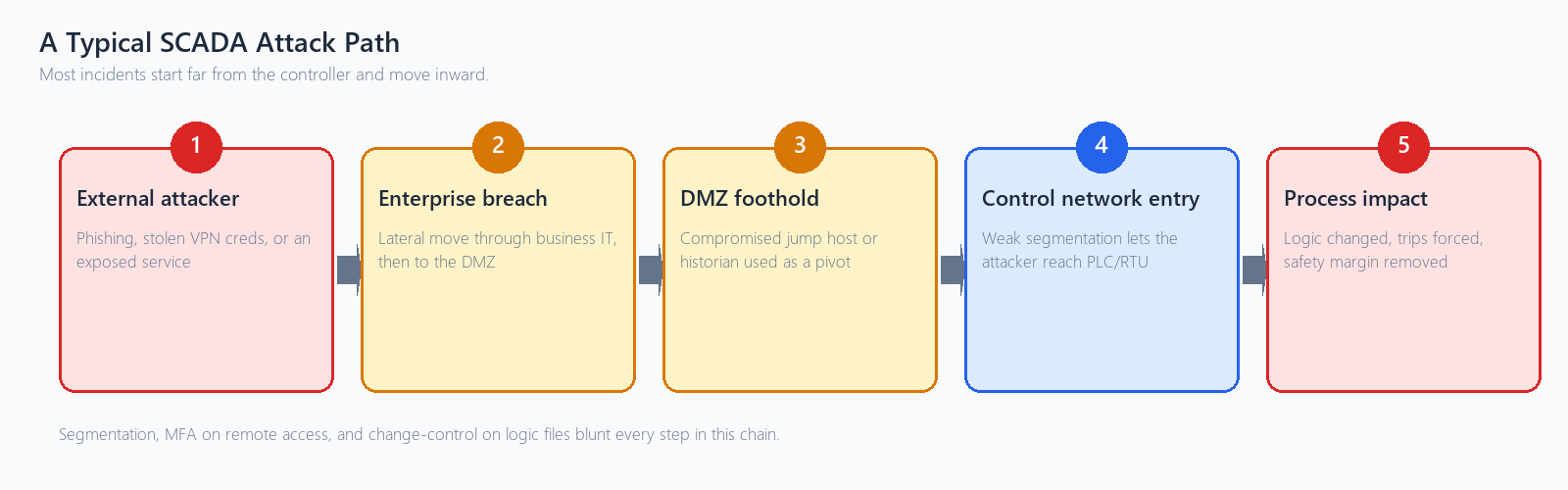
Table 3. The vectors behind most plant incidents.
| Vector | Entry point | Typical consequence |
|---|---|---|
| Phishing | Corporate email | Credential theft, then a pivot toward OT |
| Exposed remote access | Internet-facing VPN or RDP | A direct foothold on the control network |
| Flat networks | A compromised office laptop | Lateral movement all the way to controllers |
| Unpatched firmware | Known flaws in PLCs and RTUs | Public exploits with no rehearsed recovery |
| Supply chain | Vendor laptop or update package | Malicious code inside the fence |
Notice what the table does not contain: zero-days. Most plant incidents ride in on credentials, connectivity or configuration, all of which sit within a maintenance team’s control. That is the encouraging part of an otherwise grim genre.
Selecting a model for this scheme? Send the voltage level, CT/VT ratios and your relay list. An engineer returns a model mapping and quotation within 12 hours →
A 90-Day SCADA Security Checklist
Momentum matters more than completeness. The sequence in Table 4 fits a plant that has to keep producing while it hardens, and it front-loads the two actions that make every later step cheaper: knowing what exists, and knowing where the network ends. Run it as a standing agenda item rather than as a project with an end date.
Table 4. A 90-day sequence for a working plant.
| Days | Action | Output |
|---|---|---|
| 1 to 15 | Asset inventory | A complete device list with firmware versions |
| 16 to 30 | Network map | A zone and conduit diagram checked against Purdue |
| 31 to 45 | Remote-access lockdown | MFA, a jump host and session recording |
| 46 to 60 | Backup and restore | Offline logic backups and one tested restore |
| 61 to 75 | Hardening pass | Default credentials removed, unused services disabled |
| 76 to 90 | Monitoring | Central logs and an alarm on any new device |
A checklist that ends is a checklist that rots. Re-run the inventory quarterly, re-test the restore after every controller firmware change, and keep the document where the shift team can actually find it.
When SCADA Security Is the Wrong Answer
Honest engineering includes declining work. Five situations argue against launching a full programme until something else has been fixed.
- Greenfield sites: buy the zones during design, do not retrofit them. Security is a one-page spec, not a remediation project.
- Genuinely isolated controllers: a standalone device with no network path, no modem and no USB routine needs a locked cabinet, not a 62443 programme.
- Safety-first failures: misconfigured trips or unproven shutdown logic is IEC 61511 functional-safety work, and no firewall fixes it.
- Reliability fires: a plant with weekly nuisance trips gains more from maintenance discipline than from dashboards, so stabilize first.
- Fiction inventories: any assessment run before the asset count is complete yields findings nobody can apply. Count first, assess second.
The wrong programme, implemented well, still wastes the budget.
Conclusion: Where to Start on Monday
SCADA security succeeds when it is scheduled like maintenance, not announced like a campaign. Pick the plant’s most valuable process, draw its zones and conduits on one page, count the devices inside them, and lock the remote-access paths first, because that is where the internet actually touches you. Run IEC 62443-2-1:2024 as the structure and NIST SP 800-82r3 as the vocabulary, put every exception in writing with an owner and a date, and rehearse the restore before you need it. Teams that follow this order discover that most of the remaining risk lives on a short list they can name, budget and retire.
Frequently Asked Questions
What is SCADA security?
SCADA security is the engineering discipline that keeps supervisory control and data acquisition systems available, trustworthy and recoverable. It covers the controllers, the networks they sit on, the engineering tools that program them, and the procedures people follow. The objective is not secrecy but control: nobody changes a setpoint, a logic file or a trip setting without leaving evidence.
Is SCADA cybersecurity the same as office IT security?
The tools overlap, the priorities do not. Office security protects data confidentiality first; OT security protects process availability and safety first. A plant can tolerate a week of encrypted historian data, but not a controller that stops responding during a storm. Patching windows, 20-year device lifecycles and protocols such as Modbus, which was never designed with authentication, force different trade-offs.
Which standard should a small utility start with?
Start with IEC 62443-2-1:2024 to structure the security programme, then IEC 62443-3-2:2020 for the zone and conduit design. Small teams usually need only those two documents plus NIST SP 800-82r3 as a plain-language reference. Formal security level certification under IEC 62443-3-3 makes sense later, when a procurement specification has to state testable requirements.
How does the Purdue model help protect a control system?
The Purdue model splits the plant into levels, from field devices up to the enterprise network, and treats each level as a security zone. Firewalls between zones become policy points instead of suggestions. When a laptop in the office is compromised, the attacker still has to defeat a separate boundary before reaching a controller, which buys the operators time and evidence.
Can open-source platforms such as Rapid SCADA be secured properly?
Yes, with one caveat. Open source means you can audit the code, but you also own the hardening that a commercial vendor would bundle: operating system lockdown, update procedures, account management and backups. A Rapid SCADA server placed in its own zone, patched on a schedule and accessed only through a jump host is no weaker than a branded alternative.
How often should the assessment be repeated?
Formally, once a year, or after any significant change such as a new historian, a new vendor link or a control-system upgrade. Informally, walk the network map every quarter: new devices appear constantly, and an undocumented connection is the most common audit finding. After a real incident, repeat the whole assessment, because assumptions about the attacker will have changed.
Sources
Table 5. Standards and references cited in this guide.
| Standard | Edition | Coverage |
|---|---|---|
| IEC 62443-2-1 | 2024 (ed. 2) | Security programme requirements for asset owners |
| IEC 62443-2-4 | 2023 (ed. 2) | Requirements for service providers and integrators |
| IEC 62443-3-2 | 2020 | Security risk assessment, zones and conduits |
| IEC 62443-3-3 | 2013 | System security requirements, security levels 1 to 4 |
| IEC 62443-4-2 | 2019 | Technical security requirements for IACS components |
| NIST SP 800-82r3 | 2023 (rev. 3) | OT security guidance for US-aligned operators |
| NERC CIP | current | Critical Infrastructure Protection standards for the grid |
Related Reading
- Our circuit breaker guide covers the switching equipment these networks command.
- Our protective relaying principles explain the protection layer underneath the network.
- Our SCADA systems guide shows the four-layer architecture inside these zones.
For a model recommendation, send the system voltage and the load details to our engineering team.
Working on a similar scheme? Send the single-line diagram, relay list and CT/VT data. Quote in 12 hours →
About Author

Hello, I'm Leon Zhang. I have 15 years of experience in the power relay protection industry with extensive pre-sales and after-sales project experience. Our company specializes in various complete sets of relay protection and automation equipment. I can assist customers in solving all practical on-site project challenges and provide optimal integrated solutions.
Tell Us Your Requirement
High Quality
Stable performance, reliable design, ensuring safe operation for power system protection and grid stability.
Fast Delivery
Timely delivery to support your urgent orders and project schedules efficiently and professionally at any time.
Best Warranty
Professional Warranty: Reliable after-sales support for stable relay protection and long-term customer satisfaction.