

-
Leon Zhang sales consultant
-
Email: zxl635973785@gmail.com
-
Phone/WhatsApp: +86 13655813266
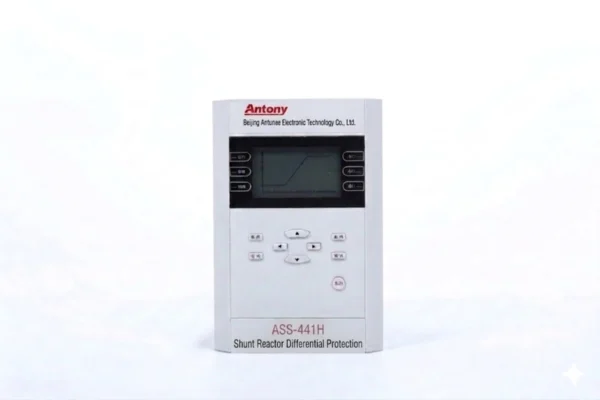
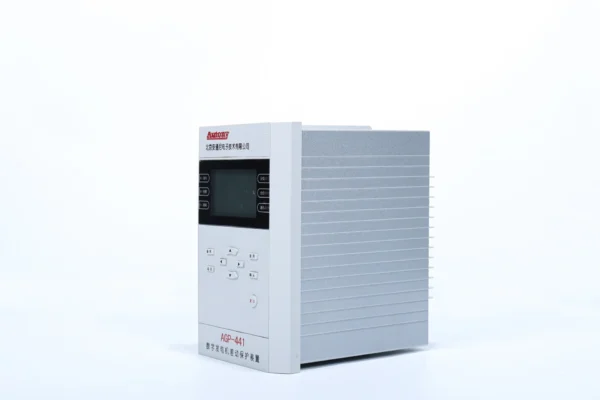
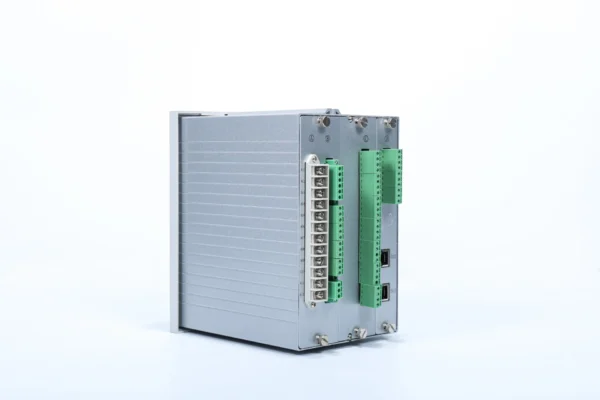
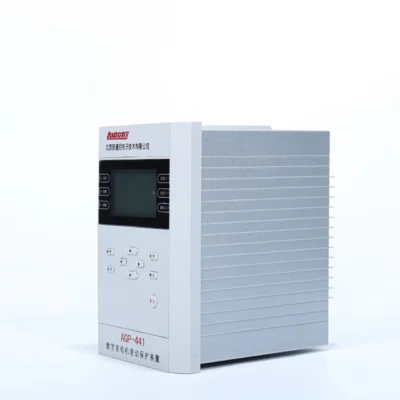
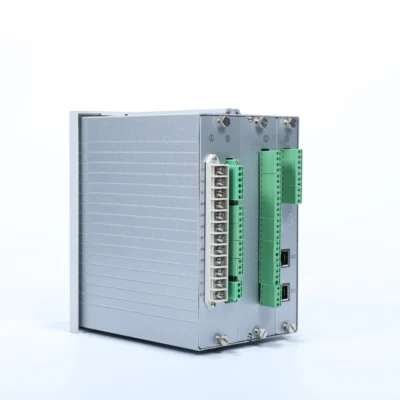
Shunt Reactor Differential Protection Relay | 87R Relay
32-bit CPU powered shunt reactor differential protection for 110kV and below, integrating protection, measurement, control and communication for power and new energy automation.
Ansi relay protection codes
87R/51V/51N
Communication Mode:Optional: RS-485, CAN bus, IEC 61850 , IEC 60870-5-103
Send your requirements, we will quote for you within 12 hours
Description
Overview of Shunt Reactor Differential Protection
- Combined with shunt reactor differential protection, applicable to industrial, mining and power industries with voltage levels of 110kV and below. Built with high-performance 32-bit CPU, it integrates protection, measurement, control and communication functions, ideal for supporting substation comprehensive automation systems and electrical automation systems of new energy power plants.
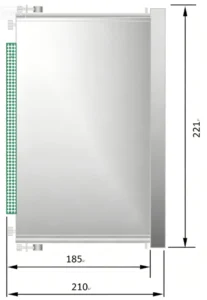
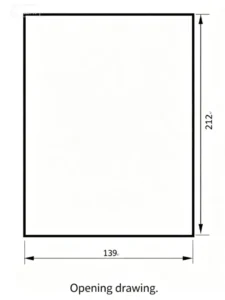
- The device can be installed centrally in panel cabinets or mounted directly on switch cabinets for distributed control.
Technical Specifications and Performance Metrics
Rated Electrical Parameters
- Power Supply-Operating Voltage: AC/DC 86V~264V;Ripple Factor: ≤5%
- Rated Current & Voltage-AC Current: 5A or 1A (specify upon order);AC Voltage: 100V
Main Technical Specifications
- Accurate Operating Range
Current: 0.04In~20In (In=5A or 1A)Voltage: 1V~150VFrequency: 45Hz~60Hz
- Measurement Accuracy
Voltage & Current: Class 0.2 (including harmonics)Active Power, Reactive Power & Power Factor: Class 0.5 (including harmonics)Frequency: ≤±0.01Hz4-20mA Output: Class 0.5 (specify upon order)
- Setting Error
Current Element: ≤±2.5% setting value or ±0.01InVoltage Element: ≤±2.5% setting value or ±0.005UnOperating Time Error: Definite time protection ≤(±1% setting value+40)ms; frequency protection ≤(±1% setting value+60)ms
- Under-frequency Protection
Setting Range: 45~50Hz, Accuracy: ≤±0.2Hz
- Over-frequency Protection
Setting Range: 50~60Hz, Accuracy: ≤±0.2Hz
-
Under-voltage Slip Accuracy: ≤±0.5V/S
- Under-frequency Slip Accuracy
1~3Hz/S: Error ≤±0.1Hz/S3~10Hz/S: Error ≤±0.2Hz/S
-
Remote Signal Resolution: Less than 2ms
- GPS Time Synchronization
IRIG-B: DC time code, RS485 portNTP Synchronization: Ethernet port
- Contact Capacity
Trip & Close current of operating circuit: 0.5A~5A adaptive, AC/DC trip circuit adaptiveTrip vacant contact: 5A (DC220V closing capacity)Signal vacant contact: 5A (DC220V closing capacity)
Reactor Protection Functions
| English Name | ANSI Code |
|---|---|
| Differential Protection | 87 |
| Instantaneous Differential Protection | 87 |
| Three-stage Compound Voltage Overcurrent Protection | 51V |
| Zero-sequence Overcurrent Protection | 51N |
| Overload Protection | 49 |
| Measurement | — |
Core Functional Features of Shunt reactor differential relay
Complete 87R Differential Protection System
- It integrates ratio restrained differential protection and differential quick-break protection. The differential quick-break function responds to severe short-circuit faults instantly with ultra-fast action time (≤20ms). The ratio differential protection features adaptive variable characteristics, which is highly sensitive to minor internal faults and perfectly adapts to various reactor fault conditions.
Rich Auxiliary Protection Functions
- Equipped with three-stage overcurrent protection, overload protection, zero-sequence overvoltage/overcurrent protection, overvoltage and undervoltage protection, and unbalance protection. It realizes full-coverage fault monitoring of reactors, matching the comprehensive protection requirements of industrial and power grid reactor equipment.
Powerful Self-diagnosis & Recording Function
- The device automatically detects abnormal states such as CT break, control circuit break, device RAM/ROM/AD module faults and power failure. It supports multi-group SOE event recording and fault waveform recording, which can retain data after power failure, providing accurate data support for subsequent fault analysis and equipment maintenance.
Standard Intelligent Communication Interface
- Supports multiple communication modes including RS485, CANBUS and Ethernet, and is compatible with IEC61850 and common power communication protocols. It can upload real-time measurement data, fault alarm signals, protection setting values and device operating status remotely, and supports remote online setting modification, protection switching and system time synchronization, realizing unattended intelligent monitoring.
High Adaptability & Reliability
- The device features strong anti-interference performance and wide temperature adaptation, suitable for harsh industrial and substation environments. It supports two installation methods: switchgear local installation and centralized panel assembly, flexibly matching different project design requirements.
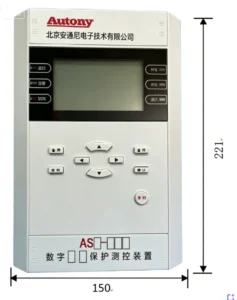
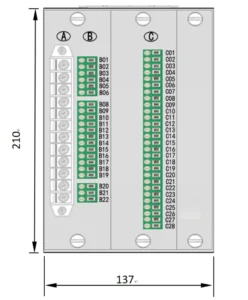
Outline and Installation Dimensions
FAQ
Q:What is the difference between reactor differential protection device and capacitor protection device
A:
| Category | Reactor Differential Protection Device | Capacitor Protection Device |
|---|---|---|
| Protected Object | Protect winding inter-turn and inter-phase faults | Protect capacitor breakdown, inter-phase and earth faults |
| Protection Principle | Judge current difference via percentage differential | Adopt overcurrent, zero-sequence and voltage differential protection |
| Fault Characteristic | Internal winding damage, requiring rapid action | Prone to burst and mass damage, prevent cascading failure |
| Setting Logic | Set by excitation characteristics and CT parameters | Configure based on capacitance and grouping structure |
| Application Scenario | High voltage voltage stabilization and compensation | Reactive power compensation and harmonic suppression |
Q: What is 87R differential protection?
A: 87R is an IEEE-standard dedicated main protection for substation shunt reactors (oil-immersed/dry-type). It compares current between reactor bus-side and neutral-side CTs to detect internal faults and trigger fast tripping, optimized for the low-loss, high-inductance characteristics of reactors (different from transformer 87 differential protection).
Q: What faults can 87R detect?
A: It detects in-zone reactor internal faults: phase-phase short circuit, single-phase grounding, turn-to-turn short circuit, winding insulation damage and minor winding overheating. It does not respond to external system faults, which are covered by backup overcurrent and earth fault protection.
Q: What are the core advantages of 87R protection?
A: 1) Fast speed: operates within 1–2 power cycles for instantaneous fault isolation; 2) High selectivity: only trips for internal faults, no external fault misoperation; 3) High sensitivity: identifies minor turn-to-turn faults undetectable by overcurrent protection; 4) Strong anti-interference: equipped with bias restraint and harmonic blocking logic.
Q: What is the working principle of 87R?
A: The relay calculates differential current (Id) and restraining current (Ir) from dual-side CT sampling. Under normal operation or external faults, current balance keeps Id near zero (protection blocked). For internal faults, current balance collapses, Id exceeds the threshold, and the protection trips instantly.
Q: What is the function of bias restraint?
A: It is the core anti-misoperation mechanism. External faults cause CT saturation and false differential current. The percentage bias slope (15%–50%) raises the operation threshold with increasing restraining current, effectively preventing misoperation from CT saturation and load fluctuations.
Q: What is the purpose of second harmonic blocking?
A: Reactor energization produces harmonic-rich inrush current that generates false differential current. Second harmonic blocking locks 87R protection during switching-on, eliminating inrush-caused mis-tripping and improving operational security.
Q: What are the key 87R setting parameters?
A: 1) Minimum differential pickup current (basic action threshold); 2) Percentage bias slope (anti-CT saturation); 3) Second harmonic blocking threshold (anti-inrush misoperation); 4) Protection delay (0s instantaneous trip for main protection); 5) CT ratio and polarity calibration.
Q: How to set the bias slope coefficient?
A: Standard range: 15%–30%. 15%–20% for small-capacity, stable-load reactors (ensure sensitivity); 25%–30% for large-capacity, high-fluctuation reactors (ensure security against CT saturation).
Q: Why is CT polarity check mandatory?
A: Incorrect CT polarity causes vector superposition of dual-side currents instead of cancellation during normal operation, producing persistent false differential current and leading to protection mis-tripping or blocking.
Q: What are the key commissioning test items?
A: Dual-side current sampling accuracy test, differential pickup/dropout calibration, bias characteristic test, harmonic blocking function test, trip loop & signal test, CT current direction verification.
Q: What are the qualified commissioning criteria?
A: 1) Near-zero differential current under rated load (no alarm/trip); 2) Instant trip for simulated internal faults; 3) Reliable blocking for external faults; 4) No misoperation during energization inrush simulation; 5) All three-phase test data meet design requirements.
Q: What causes 87R mis-tripping in normal operation?
A: CT circuit faults (open/short circuit, loose wiring, polarity error), unreasonable parameters (too low pickup current/slope), sampling module failure, severe three-phase load unbalance, relay logic abnormality.
Q: Why does 87R refuse to trip for internal faults?
A: Overly conservative parameters (insufficient sensitivity), false harmonic blocking locking, severe fault-time CT saturation (current distortion), trip loop disconnection or relay outlet failure.
Q: What does continuous small differential current indicate?
A: Slight steady differential current (below trip threshold) is normal (from CT manufacturing errors or minor load unbalance). Gradual current rise indicates potential risks: winding insulation aging, CT performance degradation or poor wiring contact, requiring timely inspection.
2 reviews for Shunt Reactor Differential Protection Relay | 87R Relay
Related products
High Quality
Stable performance, reliable design, ensuring safe operation for power system protection and grid stability.
Fast Delivery
Timely delivery to support your urgent orders and project schedules efficiently and professionally at any time.
Best Warranty
Professional Warranty: Reliable after-sales support for stable relay protection and long-term customer satisfaction.
xiao zhang –
This shunt reactor differential protection features high measuring precision and reliable restraint logic to avoid maloperation caused by inrush current or CT mismatch. It rapidly identifies internal faults of shunt reactors and trips in time to secure grid operation, widely used in high-voltage substation reactive power compensation projects.
Jack –
Stable performance, reliable operation, and trustworthy.