

-
Leon Zhang sales consultant
-
Email: zxl635973785@gmail.com
-
Phone/WhatsApp: +86 13655813266
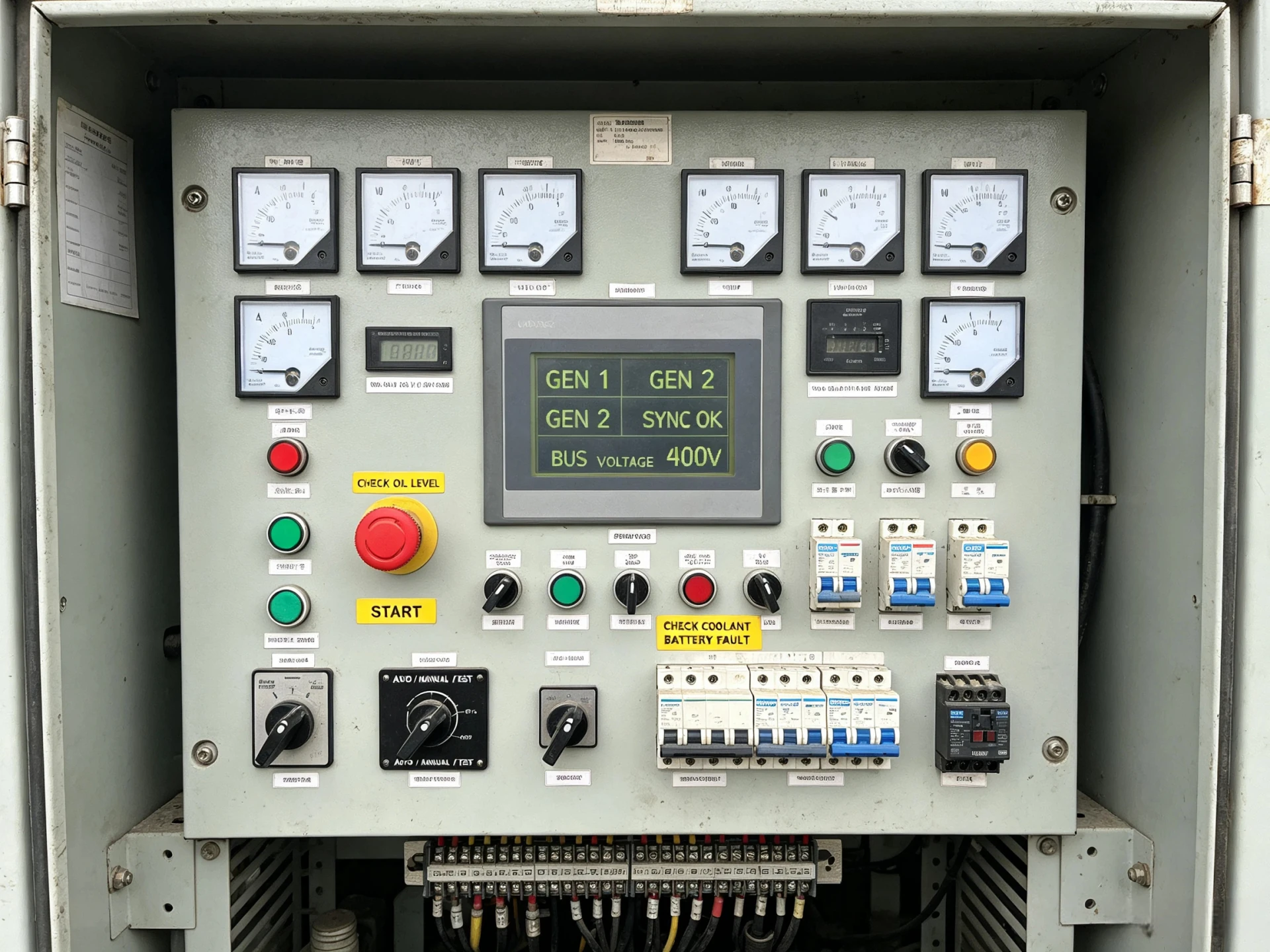
Emergency Generator Panel: Components, Functions and Protection
Introduction
When the utility supply fails, an emergency generator system must start instantly, transfer critical loads stably, and maintain continuous power while being fully protected against electrical faults. The emergency generator panel serves as the core control and protection hub of the entire standby power system. However, industry practitioners often confuse this general term with dedicated generator protection equipment, leading to improper system configuration and hidden operational risks.
In practical EPC and power system design, emergency generator panel is an umbrella definition covering multiple panel types, including control panels, transfer panels, and distribution panels. Its configuration varies significantly based on generator capacity, application scenarios, and power system coordination requirements.
This article systematically explains the definition, core functions, system composition, selection criteria, and commissioning standards of emergency generator panels. It also clarifies the critical differences between emergency generator panels and generator protection relay panels, helping power system engineers and contractors complete accurate system design and equipment selection.
What Is an Emergency Generator Panel?
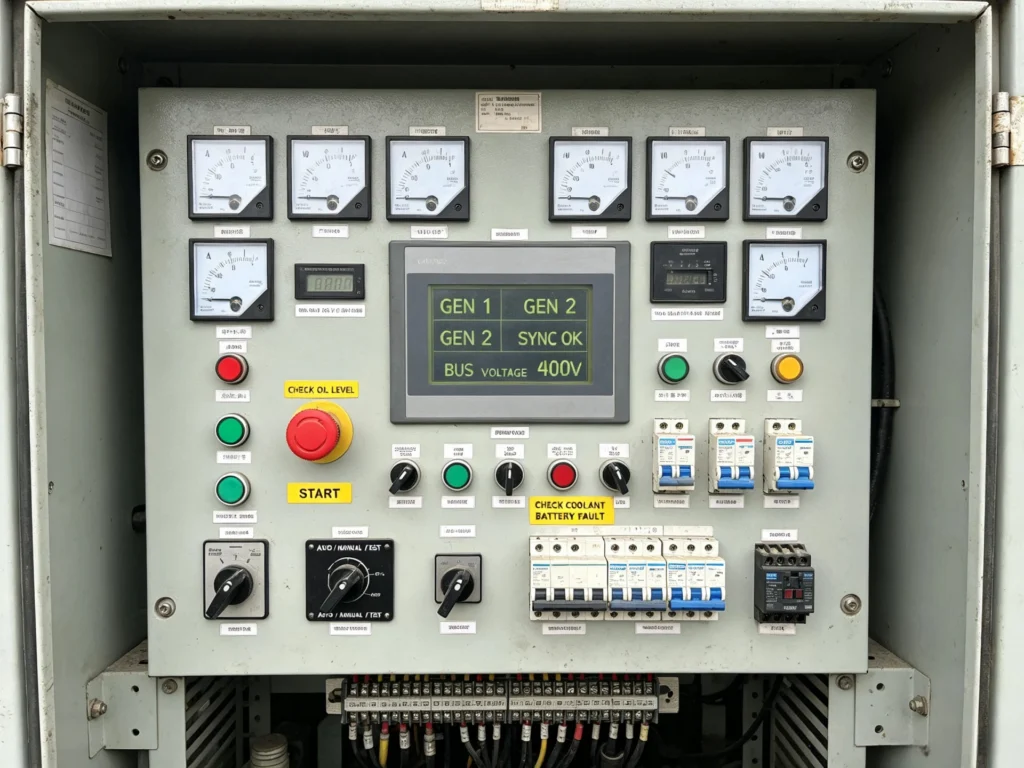
Emergency Generator Panel Definition
An emergency generator panel is a dedicated electrical control and distribution assembly integrated into the emergency power supply system. It coordinates the automatic startup, utility-to-generator load transfer, real-time status monitoring, fault alarm, and basic electrical protection of standby/emergency generators. It is an indispensable core component for ensuring the safe and stable operation of emergency power systems in industrial, commercial, and infrastructure projects.
In power system architecture, it bridges the utility grid, emergency generator set, and end critical loads, solving the core demand of seamless switching and safe power supply during grid outages.
- Automatic and manual start/stop control of emergency generators
- Automatic transfer of critical loads between utility power and generator power
- Real-time monitoring of generator voltage, current, frequency, and operating status
- Abnormal condition alarm and basic fault isolation
- System interlocking protection to prevent reverse power and misoperation
- Data communication and remote monitoring linkage with SCADA/BMS systems
Note: Not all emergency generator panels integrate full functions. Equipment configurations are classified into control type, transfer type, distribution type, and protection type according to project voltage levels, generator ratings, and load importance.
Core Functions of an Emergency Generator Panel
The emergency generator panel undertakes the full-cycle operation management of the emergency power system from startup, power supply to shutdown. The table below summarizes its standardized core functions and system values, complying with IEEE power system design specifications:
| Core Function | System Purpose |
|---|---|
| Generator Start/Stop Control | Triggers automatic generator startup upon utility power failure and safe shutdown after grid power restoration; supports local and remote manual control |
| Real-Time Monitoring | Continuously tracks key parameters including three-phase voltage, operating current, frequency, engine temperature, and running status |
| Load Transfer | Cooperates with ATS to complete seamless switching between utility power and emergency generator power to ensure uninterrupted power supply for critical loads |
| Fault Alarm & Prompt | Issues audible and visual alarms for abnormal parameters (overvoltage, undervoltage, frequency deviation, overload) and equipment faults |
| Basic Electrical Protection | Realizes primary protection such as overload and short-circuit isolation to avoid generator damage caused by sudden faults |
| System Interlocking Control | Prevents parallel connection of utility power and generator power to eliminate reverse power risks and operational misoperation |
| Data Communication | Uploads operating data and alarm records to SCADA/BMS systems via Modbus or IEC 61850 protocols for remote centralized management |
It is critical to note that not every emergency generator panel supports all functions. The final configuration depends on generator kVA rating, system voltage level, load transfer scheme, and project-specific power protection coordination requirements.
Main Components of a Complete Emergency Generator System
The emergency generator panel cannot operate independently. It works with multiple core equipment to form a closed-loop emergency power supply system. The standard system operation logic is: Utility Supply → ATS Switch → Emergency Distribution Panel → Critical Loads, with the generator and protection system serving as the backup power core. The core components are detailed below:
Emergency Generator Set
As the only power source of the emergency system, generator sets are classified by fuel type (diesel, gas) and operating mode (standby, prime power). Standby generators are the most widely used in commercial and industrial emergency scenarios, designed for intermittent operation during grid outages. Prime power generators apply to long-term off-grid power supply scenarios. All generator sets need matching control and protection panels to ensure safe operation.
Automatic Transfer Switch (ATS) / Generator Transfer Panel
The ATS or dedicated generator transfer panel is the core switching device of the emergency system. It automatically detects utility power failure signals, triggers generator startup, and completes load transfer within a specified time. After the utility grid recovers, it automatically switches loads back and shuts down the generator. Its core value is to realize uninterrupted power switching, but it does not undertake professional generator electrical protection functions.
Emergency Distribution Panel
This panel is responsible for secondary power distribution of generator emergency power, distributing electric energy to core terminal loads such as medical equipment, data center servers, industrial control systems, and fire-fighting facilities. Equipped with standardized circuit breakers and branch protection devices, it is widely used in hospitals, data centers, industrial plants, and urban infrastructure projects.
Generator Control Panel
Focuses on generator operation control and status monitoring, covering start-stop logic, engine parameter display, running state indication, and local/remote switching. It mainly solves operational control demands and only integrates simple overload and overcurrent protection, without professional relay protection functions for complex electrical faults.
Generator Protection Relay Panel
Different from conventional control and transfer panels, the generator protection relay panel is a dedicated protection device for generator electrical faults. It integrates high-precision protection relays, CT/PT sampling modules, trip circuits, and communication modules. It targets internal and external electrical faults of generators to realize fast fault isolation and equipment protection.
For medium and large-capacity emergency generator projects requiring high power supply safety and system stability, a dedicated generator protection relay panel must be integrated into the emergency power system to meet IEEE C37.102 standard protection requirements.
Generator Protection Panel in Emergency Generator Systems
An eligible emergency generator system needs not only stable startup and load transfer capabilities but also comprehensive electrical fault protection. Without dedicated protection configuration, generators are prone to permanent damage due to short circuits, unbalanced currents, reverse power, and other faults during emergency operation.
Why Emergency Generators Require Dedicated Protection
Emergency generators operate in variable load and switching working conditions, facing multiple electrical risks that conventional panel configurations cannot cover. Common hazards include:
- Short-circuit faults and overcurrent overload during load switching
- Earth faults and grounding system abnormalities
- Voltage/frequency deviation caused by load fluctuation
- Reverse power motoring fault when paralleling with the grid
- Unbalanced three-phase current and negative sequence faults
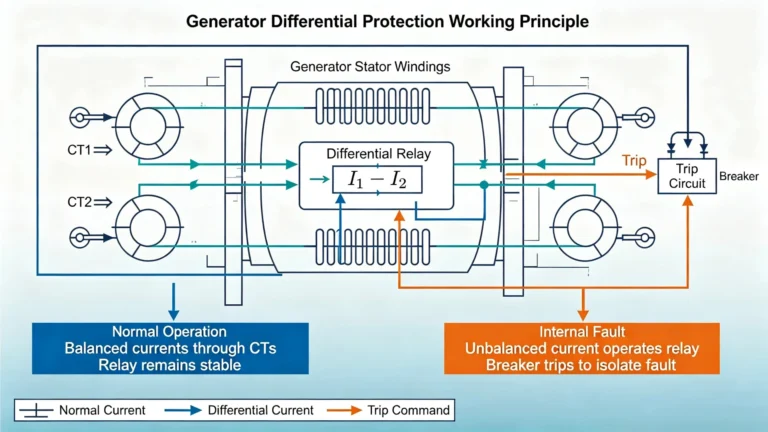
- Internal differential faults and excitation loss faults of generators
Typical ANSI Generator Protection Functions
Complying with IEEE C37.102 AC generator protection standards, mainstream emergency generator protection functions and applicable scenarios are standardized as follows:
| ANSI Code | Protection Function | Typical Application Scenarios |
|---|---|---|
| 50/51 | Phase Overcurrent Protection | Phase short-circuit faults and generator overload conditions |
| 50N/51N | Earth Fault Protection | System grounding faults and leakage current abnormalities |
| 27 | Undervoltage Protection | Abnormal low voltage caused by load surge or system failure |
| 59 | Overvoltage Protection | Excessive generator terminal voltage during no-load or light-load operation |
| 81U/81O | Under/Overfrequency Protection | Frequency deviation exceeding allowable range due to power mismatch |
| 32 | Reverse Power Protection | Prevents generator motoring fault in grid-parallel operation |
| 46 | Negative Sequence Protection | Generator damage caused by unbalanced three-phase loads |
| 87G | Generator Differential Protection | High-precision protection for generator internal short-circuit faults |
| 40 | Loss of Excitation Protection | Generator excitation system failure and abnormal operation |
Professional Suggestion: Protection functions must be selected according to generator capacity, grounding mode, operating mode, and system protection coordination requirements. Blindly configuring full protection functions will increase project costs, while insufficient configuration will lead to operational risks.
Emergency Generator Panel vs Generator Protection Panel
These two types of equipment are closely related in emergency power systems but serve completely different core purposes. Distinguishing them accurately is the key to correct system design and equipment procurement for EPC projects.
| Comparison Item | Emergency Generator Panel | Generator Protection Relay Panel |
|---|---|---|
| Main Purpose | Emergency power control, load transfer and power distribution | Professional electrical fault protection for generators |
| Utility-Generator Transfer | Often integrated, depends on design scheme | Not the primary function, no conventional transfer logic |
| Generator Control Logic | Complete start-stop and monitoring control | No operational control function |
| Protection Relay Configuration | Simple basic protection, no professional relays | High-precision dedicated protection relays (core configuration) |
| Overcurrent/Earth Fault Protection | Basic protection only, low precision | Full-range high-sensitivity protection |
| Differential/Reverse Power Protection | Generally not configured for basic systems | Customizable for applicable generator scenarios |
| SCADA Communication | Optional configuration based on project needs | Standard configuration for remote monitoring and data upload |
How to Select the Right Emergency Generator Panel
Panel selection must be based on project electrical parameters and operational demands, not blind specification matching. The core selection dimensions for engineers and contractors are as follows:
Generator Rating Parameters
Confirm core parameters including generator kVA/kW rating, rated voltage, rated current, operating frequency, and the number of parallel generators. Small-capacity standby generators only need basic control and distribution panels, while medium and large-capacity units must be equipped with dedicated protection panels.
Generator Operating Mode
Different operating modes determine protection configuration standards: standby emergency generators focus on fault protection during switching; prime power generators require long-term stable operation protection; parallel grid-connected generators must be equipped with reverse power and synchronization protection.
Load Transfer Scheme
Select matching panel types according to transfer modes: automatic ATS transfer for unattended key scenarios, manual transfer for small industrial scenarios, and breaker-based switching for high-power system interlocking scenarios.
Protection Coordination Requirements
Determine protection functions based on system grounding mode, load importance, and grid connection requirements. Key projects (hospitals, data centers) need full ANSI standard protection, while ordinary commercial scenarios can retain simplified protection configurations.
System Communication & Integration
Reserve Modbus, IEC 61850 and other communication interfaces according to project intelligent management demands, to support docking with SCADA, BMS and remote monitoring systems, realizing centralized operation and maintenance management.
Pre-RFQ Preparation Checklist
Before submitting technical inquiries and quotation requests, prepare the following materials to ensure accurate equipment configuration: generator rating parameters, system voltage, CT/PT ratio, grounding scheme, single-line diagram, customized protection requirements, and communication protocol demands.
Application Scenarios of Emergency Generator Panels
Industrial Facilities
Manufacturing plants, chemical enterprises, and mining sites rely on emergency generator panels to maintain operation of production control systems and safety equipment during grid outages, avoiding production shutdown losses and safety accidents. High-power industrial generators require dedicated relay protection panels to resist industrial complex electrical interference.
Hospitals & Healthcare Facilities
Medical equipment, emergency rescue systems, and ward power supply belong to first-class critical loads. Emergency generator panels need ultra-fast load transfer and reliable fault protection to ensure uninterrupted power supply during treatment and rescue work.
Data Centers
Data center server clusters and cooling systems require zero power interruption. The emergency power system composed of high-stability generator panels and dedicated protection panels effectively avoids data loss and equipment damage caused by power failure and electrical faults.
Commercial Buildings & Public Infrastructure
Office buildings, shopping malls, and urban traffic infrastructure use emergency generator panels to guarantee fire-fighting equipment, emergency lighting, and basic public service power supply, meeting building electrical safety specifications.
Power Plants & Substations
As auxiliary power equipment for power systems, emergency generators need high-standard relay protection configurations to adapt to high-voltage system operation environments and ensure the safe and stable operation of power station auxiliary systems.
Emergency Generator Panel Installation & System Integration
Reasonable installation and system integration are the basis for giving full play to panel functions. Core engineering specifications comply with IEEE power system installation standards:
- Generator Connection: Standardize cable wiring specifications, match wire diameters according to rated current, and ensure stable connection of main circuits and control circuits
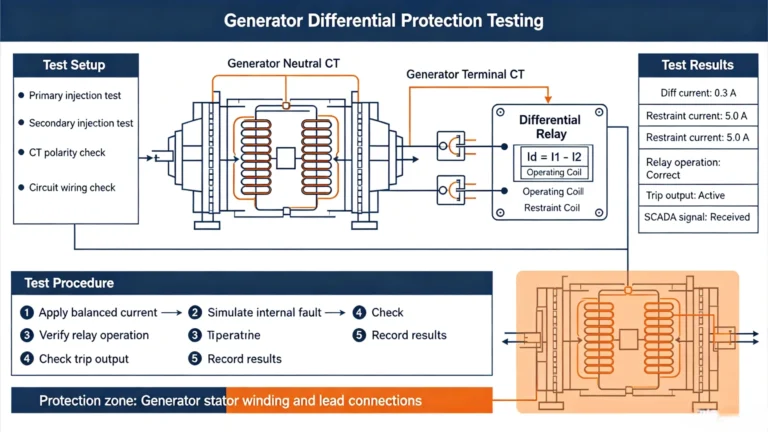
- CT/PT & Relay Wiring: Strictly verify CT polarity and PT sampling accuracy to avoid protection misoperation or refusal caused by sampling errors
- Breaker Trip Circuit: Ensure the trip circuit is independent and reliable, with dual protection against loose wiring and signal failure
- ATS System Integration: Debug transfer logic coordination to ensure no dead zone or parallel connection risk during power switching
- SCADA Communication Debugging: Complete protocol docking and data calibration to ensure real-time and accurate remote data upload
- Protection Coordination: Optimize protection setting values to form coordinated protection with upstream and downstream power distribution equipment, avoiding cascading tripping
Testing & Commissioning Standards
All emergency generator panels and supporting protection equipment must pass strict factory and on-site testing to meet project delivery standards:
Factory Acceptance Test (FAT)
Complete functional simulation tests in the factory, including generator start-stop logic verification, load transfer simulation, alarm function test, relay protection action verification, and communication function debugging.
Site Acceptance Test (SAT)
Complete on-site system joint debugging after installation, including actual load switching test, CT/PT on-site calibration, breaker trip test, ATS linkage test, and protection setting verification.
Daily Functional Testing
Regularly verify alarm sensitivity, circuit stability, and communication fluency to ensure the system can respond normally when utility power fails.
Common Faults & Troubleshooting
Summarize common on-site operation faults and professional troubleshooting schemes for engineer reference:
| Common Problem | Possible Causes | Troubleshooting Method |
|---|---|---|
| Generator starts but fails to transfer load | ATS logic failure, interlocking protection lock, line loose connection | Check ATS control program, reset interlocking protection, inspect main circuit wiring |
| Unit trips during load connection | Overload threshold too low, unbalanced three-phase load, short-circuit fault | Recalibrate protection setting values, balance load distribution, check line insulation |
| Abnormal voltage/frequency alarm | Generator speed instability, load sudden change, sampling module error | Debug generator speed control system, stabilize load, calibrate CT/PT sampling data |
| Protection relay trips without obvious fault | Incorrect protection setting, CT polarity error, system interference | Verify protection parameter settings, correct CT wiring, eliminate electromagnetic interference |
| ATS and control panel communication failure | Communication line damage, protocol mismatch, module failure | Inspect communication wiring, unify communication protocols, replace faulty modules |
FAQ
1. What is an emergency generator panel?
It is a core integrated panel for emergency power systems, undertaking generator control, load transfer, power distribution and basic monitoring protection, ensuring safe power supply for critical loads during utility outages.
2. What is the difference between an emergency generator panel and a generator protection panel?
The former focuses on power control and transfer, with only basic protection functions; the latter is dedicated to high-precision electrical fault protection of generators, which is a professional supporting device for high-standard emergency power systems.
3. Does an emergency generator need a protection relay?
Small low-power standby generators can use basic panel protection; medium and large-capacity generators, grid-connected generators and key project generators must be equipped with dedicated protection relays and protection panels.
4. What protection functions are essential for emergency generators?
Basic essential functions include overcurrent, earth fault, undervoltage and overfrequency/underfrequency protection; key scenarios require additional reverse power, negative sequence and differential protection.
5. Does an emergency generator panel include ATS?
Part of integrated emergency generator panels have built-in ATS functions, while most medium and large systems adopt independent ATS transfer panels for higher stability.
6. Can generator protection relay panels be used for standby generators?
Yes. Dedicated generator protection relay panels can be customized and configured according to standby generator parameters, fully adapting to the fault protection demands of standby and emergency generator systems.
Custom Generator Protection Panel Configuration & Inquiry
If your emergency or standby generator project requires standardized, IEEE-compliant dedicated electrical protection solutions, we provide one-stop customized configuration services for generator protection relay panels.
We can complete targeted panel configuration according to your generator rating, CT/PT parameters, single-line diagram, protection coordination requirements and communication demands, helping your EPC projects and facility power systems meet international safety and operation standards.
Send Your Generator Protection Requirements | Request Custom Panel Configuration & Technical Quotation
Technical Reference Sources
- IEEE C37.102-2023, IEEE Guide for AC Generator Protection
- IEEE C37.101-1993, IEEE Guide for Generator Ground Protection
- IEEE C37.103-2004, IEEE Guide for Differential and Polarizing Relay Circuit Testing
- IEEE 1547-2018, Standard for Interconnection and Interoperability of Distributed Energy Resources with Associated Electric Power Systems Interfaces
- IEC 61850, Communication Networks and Systems for Power Utility Automation
About Author

Hello, I'm Leno Zhang. I have 15 years of experience in the power relay protection industry with extensive pre-sales and after-sales project experience. Our company specializes in various complete sets of relay protection and automation equipment. I can assist customers in solving all practical on-site project challenges and provide optimal integrated solutions.
Tell Us Your Requirement
High Quality
Stable performance, reliable design, ensuring safe operation for power system protection and grid stability.
Fast Delivery
Timely delivery to support your urgent orders and project schedules efficiently and professionally at any time.
Best Warranty
Professional Warranty: Reliable after-sales support for stable relay protection and long-term customer satisfaction.