

-
Leon Zhang sales consultant
-
Email: zxl635973785@gmail.com
-
Phone/WhatsApp: +86 13655813266
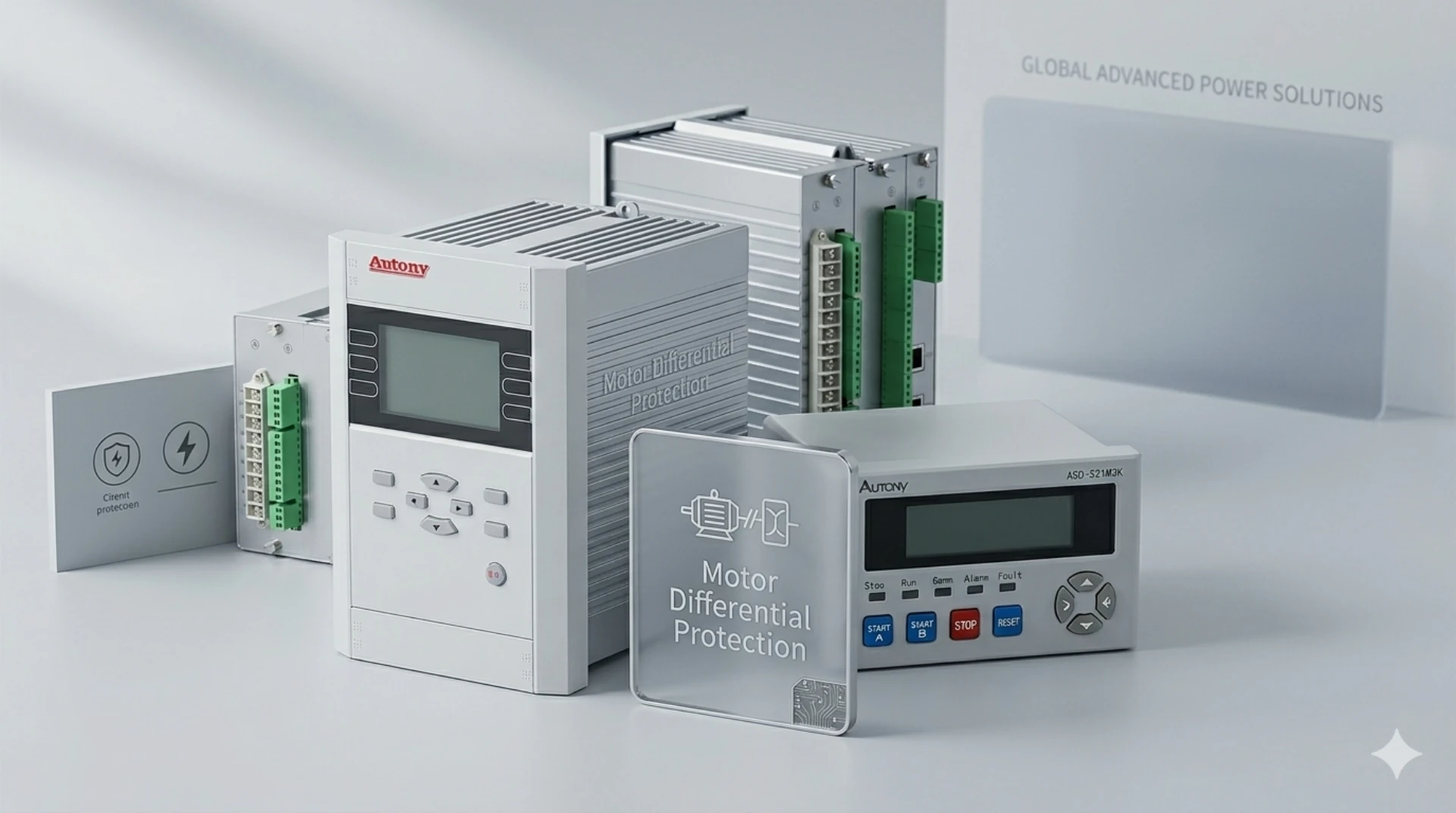
Electronic Motor Protection Relay for Industrial Motors
Introduction
Electronic motor protection relays are designed to continuously monitor motor operating conditions and provide fast, reliable protection against overload, phase loss, current unbalance, locked rotor, earth fault and other abnormal conditions.
Compared with conventional thermal overload protection, an electronic motor protection relay provides more precise current monitoring, flexible protection settings and additional diagnostic functions for industrial motor applications.
Key Features
| Feature | Description |
|---|---|
| Overload Protection | Protects motors from sustained overcurrent |
| Phase Loss Protection | Detects single-phasing conditions |
| Current Unbalance | Detects abnormal three-phase current imbalance |
| Locked Rotor | Protects motors during stalled or locked-rotor conditions |
| Earth Fault | Detects motor ground/earth faults where supported |
| Underload | Detects pump dry-run or loss-of-load conditions |
| Adjustable Settings | Allows protection parameters to be matched to motor ratings |
| Fault Indication | Helps identify the cause of motor trips |
What Is an Electronic Motor Protection Relay?
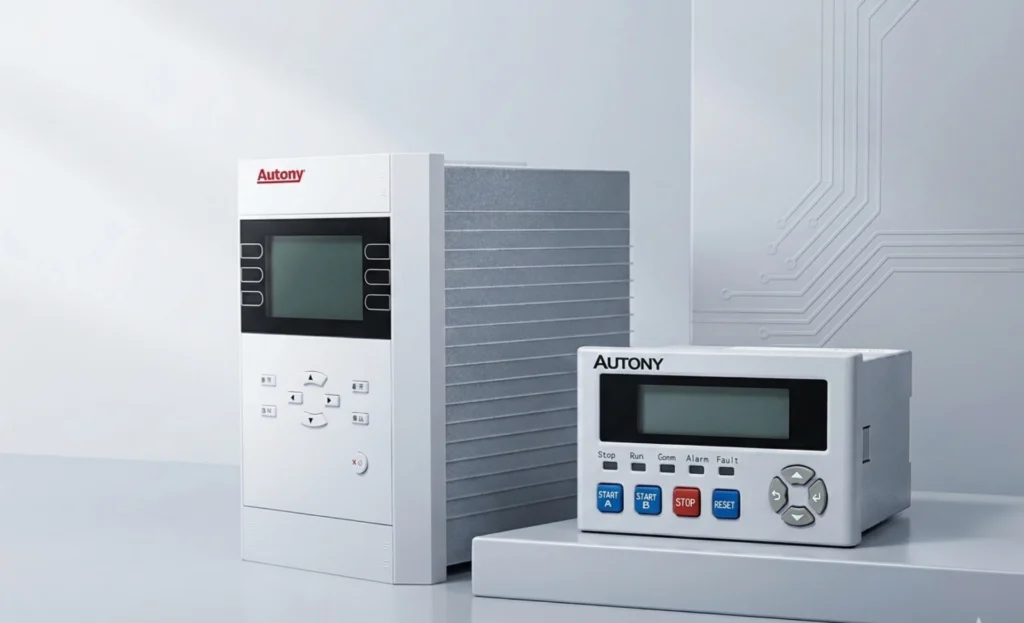
An electronic motor protection relay is a digital device that protects electric motors against a wide range of electrical faults and operating conditions.
Unlike conventional thermal overload relays, which use bimetallic strips or thermal elements to approximate motor heating, electronic relays use microprocessor-based algorithms to accurately model motor thermal characteristics and detect abnormal conditions in real time. These devices continuously monitor motor currents, voltages, and temperature to provide protection against overload, short circuits, current unbalance, phase loss, ground faults, and stall conditions — simultaneously.
For medium-voltage applications, electronic relays are considered essential and are widely applied. They offer significant advantages over traditional thermal overload relays:
- Enhanced accuracy through true thermal modeling (including both positive and negative sequence heating)
- Built-in protection for starting conditions (locked rotor, prolonged starting)
- Communication capabilities (Modbus, IEC 61850) for integration with SCADA systems
- Detailed fault recording with event logs and waveform capture for post-fault analysis
These features make electronic motor protection relays the preferred choice for critical motors in industrial processes, power plants, and medium-voltage switchgear applications, where reliable operation and fast fault clearing are essential for safety, process continuity, and reduced downtime.
Electronic Motor Protection Relay vs Thermal Overload Relay
| Feature | Electronic Motor Protection Relay | Thermal Overload Relay |
|---|---|---|
| Current Measurement | Electronic measurement | Thermal/bimetallic |
| Protection Accuracy | Higher | Lower |
| Current Unbalance | Available on many models | Limited |
| Phase Loss | Available | Basic |
| Locked Rotor | Available | Limited |
| Adjustable Protection | Flexible | Limited |
| Fault Indication | Digital/LED depending on model | Basic |
| Communication | Available on selected models | Usually unavailable |
| Motor Monitoring | More comprehensive | Basic |
| Industrial Applications | Medium/large/critical motors | General motor applications |
Electronic Motor Protection Relays – Supported Protection Functions
Electronic motor protection relays support a comprehensive range of protection functions to address various fault conditions and abnormal operating modes. Below is a summary of the key functions typically available in these devices, with their corresponding ANSI codes.
Core Protection Functions
| ANSI Code | Function | Description |
|---|---|---|
| 50/51 | Overcurrent Protection | Protects against phase-to-phase and three-phase short circuits. 50 provides instantaneous clearing; 51 offers time-delayed backup. |
| 49 | Thermal Overload Protection | Models motor thermal state based on current, protecting against sustained overload, repeated starts, and blocked cooling. |
| 46 | Negative Sequence Protection | Detects current unbalance from voltage imbalance, single-phasing, or reversed phase, preventing rotor heating. |
| 50N/51N | Earth Fault Protection | Detects ground faults in motor and cables. 50N for instantaneous clearing; 51N for time-delayed backup. |
| 27 | Undervoltage Protection | Protects against low voltage conditions that can cause stalling and excessive current draw. |
| 59 | Overvoltage Protection | Protects against sustained high voltage causing insulation stress and core saturation. |
| 51LR | Locked Rotor Protection | Detects rotor failure to accelerate during starting, tripping if starting time is exceeded. |
| 37 | Undercurrent Protection | Detects loss of load conditions (e.g., pump cavitation, belt failure). |
| 87M | Motor Differential Protection | Provides high-speed clearing for internal winding faults in motors ≥2 MW. |
| 40 | Loss of Excitation Protection | For synchronous motors — trips on loss of field excitation. |
| 81 | Frequency Protection | Detects over/under frequency conditions affecting motor and system stability. |
Additional Supervisory and Monitoring Functions
| Function | Description |
|---|---|
| Motor Starting Supervision | Monitors start duration, start current, and number of starts per hour to prevent excessive starting duty. |
| Current Unbalance | Detects phase current imbalance and trips when the difference exceeds a set threshold. |
| Phase Loss Protection | Detects loss of one phase, tripping to prevent single-phasing damage. |
| RTD Temperature Monitoring | Supports connection of RTD sensors (winding and bearing) for direct temperature monitoring. |
| Measurement and Recording | Measures current, voltage, power factor, and thermal capacity; records operational data. |
| Self-Diagnosis | Continuously monitors relay health and communication status, providing alarm on internal faults. |
Summary
Electronic motor protection relays integrate multiple protection, monitoring, and communication functions in a single device. They provide comprehensive protection for medium-voltage motors, supporting up to 50+ protection elements and offering flexible configuration, advanced communication, and fault recording capabilities — making them essential for critical motor applications.
87M Protection Relay
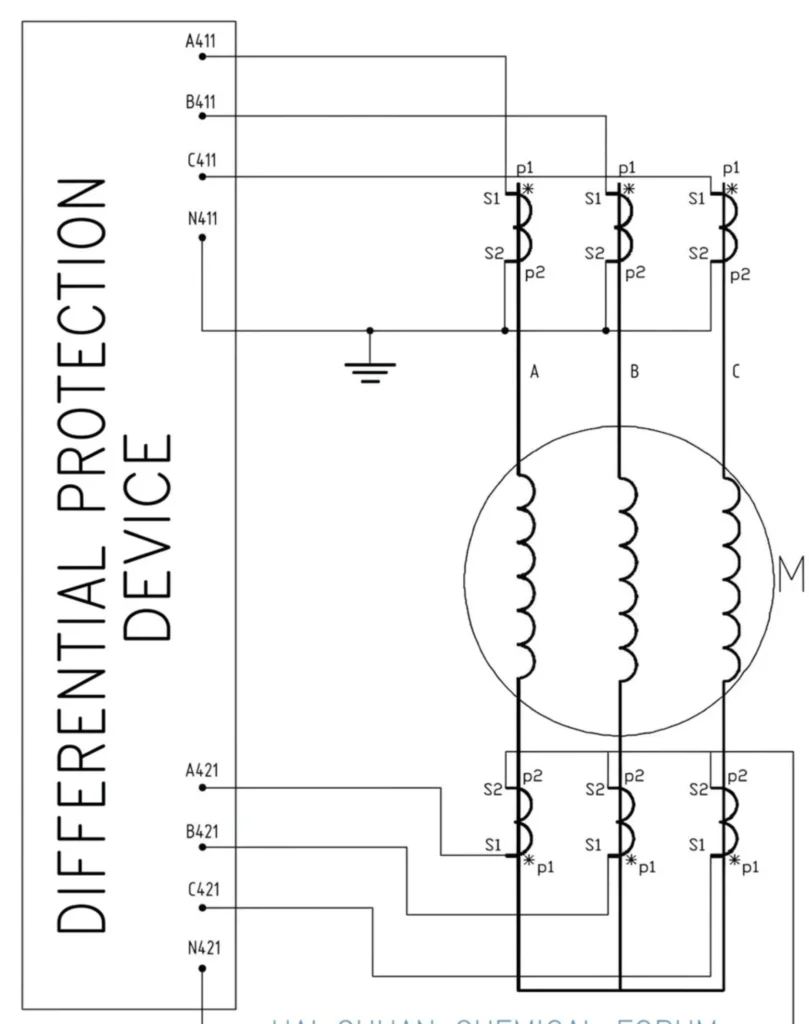
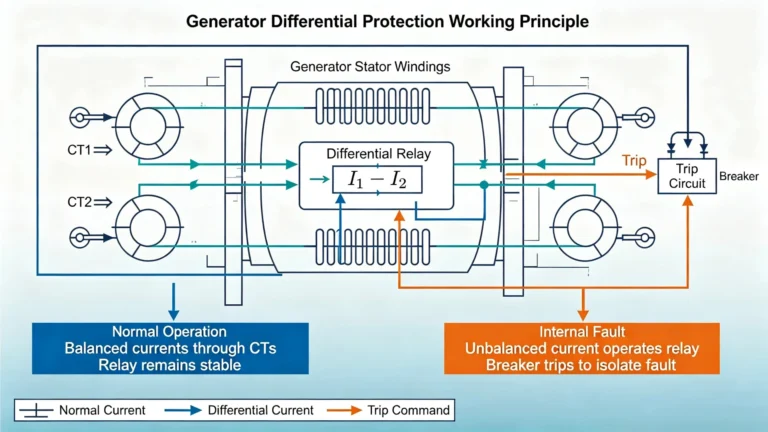
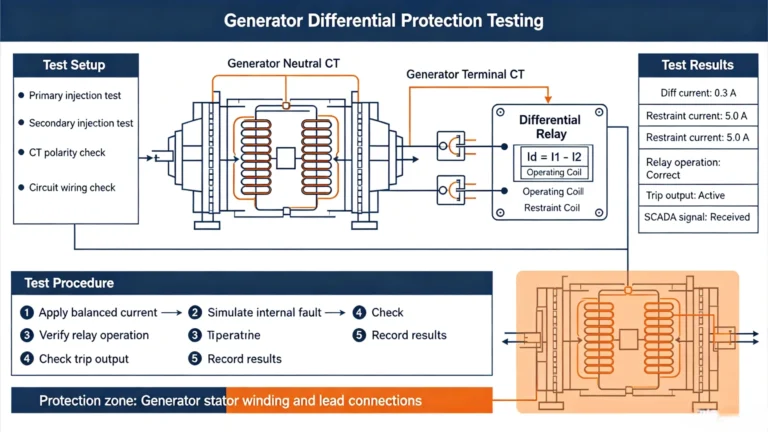
The 87M protection relay is a dedicated motor differential protection element that provides high-speed clearing for internal winding faults in medium-voltage motors. It operates on the current balance principle — comparing currents at the motor terminals and neutral point. Under normal conditions, these currents are equal, resulting in a differential current near zero. When an internal fault occurs, the balance is broken and the resulting differential current triggers instantaneous tripping.
This protection is typically applied to motors rated 2 MW and above, where internal faults can cause catastrophic damage if not cleared rapidly. 87M provides clearing times within 30–50 ms — significantly faster than overcurrent protection alone.
For a 2000 kW / 6 kV motor with 300/1 A CTs, the secondary rated current (Ie) is approximately 0.73 A. The differential pickup is typically set to 0.4 × Ie for sensitive detection of winding faults, with a high-set element at 6 × Ie for severe internal faults. These settings ensure reliable operation while preventing nuisance tripping from CT errors or starting transients.
Applications of Electronic Motor Protection Relays
Electronic motor protection relays are deployed across industries where motor reliability is critical for process continuity and operational safety. Their comprehensive protection, communication, and fault recording capabilities make them the preferred choice for medium-voltage and critical motor applications.
Pumps
Protect centrifugal, submersible, and positive displacement pumps. Relays detect undercurrent for loss of suction or cavitation, overload for mechanical binding, and locked rotor for start failures.
Fans
ID fans, FD fans, and cooling tower fans benefit from overload, stall, and thermal protection. RTD inputs support vibration monitoring for mechanical wear detection.
Compressors
Reciprocating and screw compressors require start supervision, thermal overload with start count management, and under/overvoltage protection to prevent winding damage.
Conveyors
Belt conveyors in mining and material handling require stall protection, undercurrent for belt breakage, and thermal modeling for high-load operation.
Crushers
Crushers face high impact loads and material jams. Relays provide fast overload protection, locked rotor detection, and undercurrent for belt failure or feed loss.
Mills
Ball mills and grinding mills are high-inertia loads with long starting times. Relays provide extended start supervision, thermal protection, and start count management.
HVAC Motors
Motors for chillers, AHUs, and cooling towers require overload, phase loss, and unbalance protection. Communication supports integration with building management systems.
Water Treatment Systems
Pumps, aerators, and mixers in water/wastewater plants benefit from undercurrent, overload, and earth fault protection. Communication enables SCADA integration for automated operation.
Industrial Machinery
Extruders, presses, mixers, and machine tools require comprehensive fault detection, thermal protection, and diagnostic data to reduce unplanned downtime.
Mining Equipment
Conveyors, crushers, mills, and hoists in mining require robust protection against high fault currents, frequent starts, and severe mechanical loads.
Application Summary Table
| Application | Key Protection Functions | Why Electronic Relays Are Used |
|---|---|---|
| Pumps | 37, 49, 51LR | Loss of suction, dry-run protection |
| Fans | 49, 51LR, RTD inputs | Variable load, wear detection |
| Compressors | 49, 51LR, 27/59 | Repeated starts, high starting current |
| Conveyors | 51LR, 37, 49 | Mechanical jams, belt breakage |
| Crushers | 51LR, 49, 37 | High impact loads, material jams |
| Mills | 51LR, 49, start supervision | Long starting time, high inertia |
| HVAC | 49, 46, communication | BMS integration, phase loss |
| Water Treatment | 37, 50N/51N, 49 | Loss of prime, wet environments |
| Industrial Machinery | 49, 50/51, 46 | Versatile protection for variable loads |
| Mining Equipment | 51LR, 49, 50/51 | Harsh conditions, frequent starts |
How to Select an Electronic Motor Protection Relay
Selecting the right electronic motor protection relay requires evaluation of motor characteristics, application requirements, and installation conditions. The following checklist guides the selection process.
Selection Checklist
| Selection Parameter | What to Check |
|---|---|
| Motor Voltage | Low voltage (≤690V), medium voltage (6kV/10kV), or high voltage — relay must match system voltage |
| Rated Current | Match relay current measurement range to motor full-load current and starting current |
| Motor Starting Method | DOL, star-delta, VFD, or soft starter — affects protection requirements and starting current characteristics |
| Required Protection Functions | Overload, phase loss, earth fault, negative sequence, etc. — select relay with appropriate ANSI functions |
| CT Ratio | For medium-voltage motors — relay input must match CT secondary rating (1A or 5A) |
| Communication Requirements | Modbus RTU, Modbus TCP, IEC 61850 — required for SCADA integration and remote monitoring |
| Installation Method | Panel mount, DIN rail mount, or switchgear retrofit — determines relay form factor |
| Environmental Conditions | Temperature, humidity, dust, and vibration — ensure relay is rated for installation environment |
Additional Considerations
| Consideration | Details |
|---|---|
| Motor Size | For motors ≥2 MW, differential protection (87M) is typically required |
| Process Criticality | Critical motors may require redundant protection and advanced communication |
| Grounding System | Solid, low-resistance, or high-resistance grounded — affects earth fault protection selection |
| Starting Duty | Frequent starting requires thermal protection with start count management |
| Diagnostic Requirements | Fault recording, event logs, and waveform capture — essential for post-fault analysis |
Selection Summary Table
| Parameter | Recommendation |
|---|---|
| Motor Voltage | Match relay voltage rating to system voltage |
| Rated Current | CT primary > motor FLC; relay range covers starting current |
| Protection Functions | Select based on motor type and application (see checklist) |
| Communication | IEC 61850 for new substations; Modbus/RS485 for retrofit |
| Installation | DIN rail for panels; panel mount for switchgear |
| Application | Select relay with functions specific to application (pump, fan, etc.) |
| Motor Size | ≥2 MW → differential protection required |
Electronic Motor Protection Relay Specifications
| Parameter | Specification |
|---|---|
| Protection Type | Electronic / Digital |
| Motor Application | Three-phase motors |
| Rated Voltage | [Specify based on actual product] |
| Current Range | [Specify based on actual product] |
| Frequency | 50/60 Hz |
| Protection Functions | Overload, phase loss, unbalance, earth fault, etc. |
| Communication | [Specify based on actual product] |
| Setting | Adjustable |
| Installation | Panel mount / DIN rail / Embedded |
| Standards | [Specify based on actual certifications] |
Why Choose Our Electronic Motor Protection Relay
Application Support
We help select the right motor protection solution based on motor rating, voltage, starting method, and application requirements — for pumps, fans, compressors, conveyors, and more.
Protection Configuration
Protection functions and settings can be customized for each motor application — from thermal overload and phase loss to earth fault and negative sequence protection. Settings can be configured at production or adjusted on-site.
Project Support
Suitable for industrial plants, water treatment, pumping stations, power systems, and other motor-driven applications. Our team provides support from selection and commissioning to ongoing maintenance.
OEM / Custom Requirements
We support OEM and custom needs, including custom labeling, adjustable protection parameters, and tailored packaging. Contact us to discuss your specific requirements.
Request an Electronic Motor Protection Relay Solution
Tell us your motor rated power, voltage, rated current, and required protection functions. Our technical team will recommend a suitable electronic motor protection relay for your specific application.
Get Started
| Request a Quote | Receive a customized quotation based on your motor and project requirements |
| Send Motor Parameters | Share your motor nameplate data and application details for a tailored recommendation |
| Contact Our Technical Team | Speak with our engineers for expert guidance on protection selection and configuration |
Electronic Motor Protection Relay – Frequently Asked Questions
Q1. What is an electronic motor protection relay?
A digital device that uses microprocessor-based algorithms to monitor motor currents, voltages, and temperature — providing protection against overload, short circuits, phase loss, unbalance, earth faults, and stall conditions.
Q2. How does it protect a motor?
It continuously measures electrical parameters. When values exceed preset thresholds, it trips the motor or issues an alarm — preventing damage and downtime.
Q3. Electronic relay vs thermal overload relay?
Thermal overload relays provide basic overload protection only. Electronic relays offer multiple functions (overload, phase loss, unbalance, earth fault, stall), communication, and fault recording — significantly more advanced.
Q4. What protection functions does it provide?
Overcurrent (50/51), thermal overload (49), negative sequence (46), earth fault (50N/51N), undervoltage (27), overvoltage (59), locked rotor (51LR), undercurrent (37), and differential (87M) for large motors.
Q5. Can it protect a three-phase motor?
Yes. It is specifically designed for three-phase motors, monitoring all phases for phase loss, unbalance, and other faults.
Q6. How do I select one for my motor?
Consider motor power, voltage, current, starting method, and protection needs. Motors ≥2 MW typically require differential protection. Our team can assist with selection.
Q7. Can it protect against phase loss?
Yes. Phase loss detection is a standard function — the relay monitors all three phases and trips to prevent single-phasing damage.
Q8. Can it detect motor overload?
Yes. Thermal overload protection (49) is a core function, modeling motor thermal state based on current measurements.
Q9. Electronic vs digital motor protection relay?
The terms are often used interchangeably. Both refer to microprocessor-based devices. Modern relays are essentially digital with advanced functionality.
Q10. Can it be used for pumps and compressors?
Yes. Widely used for pumps, compressors, fans, conveyors, crushers, mills, and other motor-driven equipment.
About Author

Hello, I'm Leno Zhang. I have 15 years of experience in the power relay protection industry with extensive pre-sales and after-sales project experience. Our company specializes in various complete sets of relay protection and automation equipment. I can assist customers in solving all practical on-site project challenges and provide optimal integrated solutions.
Tell Us Your Requirement
High Quality
Stable performance, reliable design, ensuring safe operation for power system protection and grid stability.
Fast Delivery
Timely delivery to support your urgent orders and project schedules efficiently and professionally at any time.
Best Warranty
Professional Warranty: Reliable after-sales support for stable relay protection and long-term customer satisfaction.