
-
Leon Zhang Sales Manager
-
Email: sale@relayprotect.com
-
Phone/WhatsApp: +86 13655813266
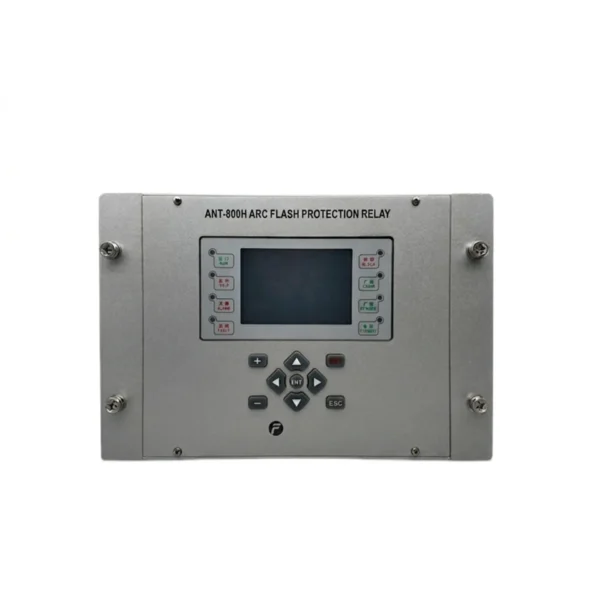
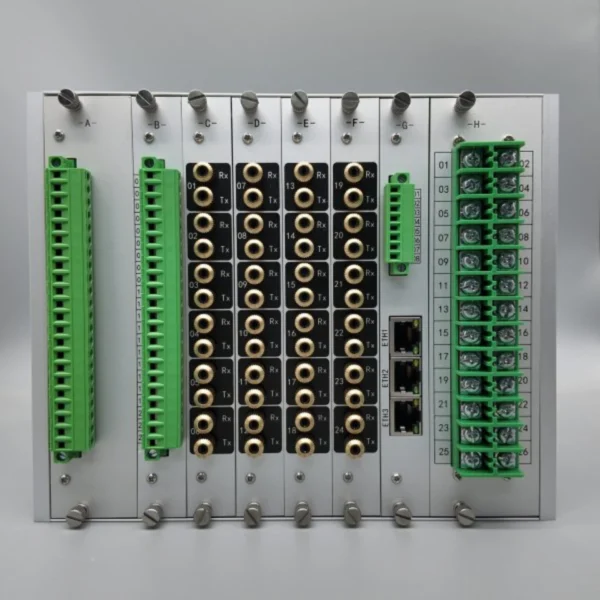
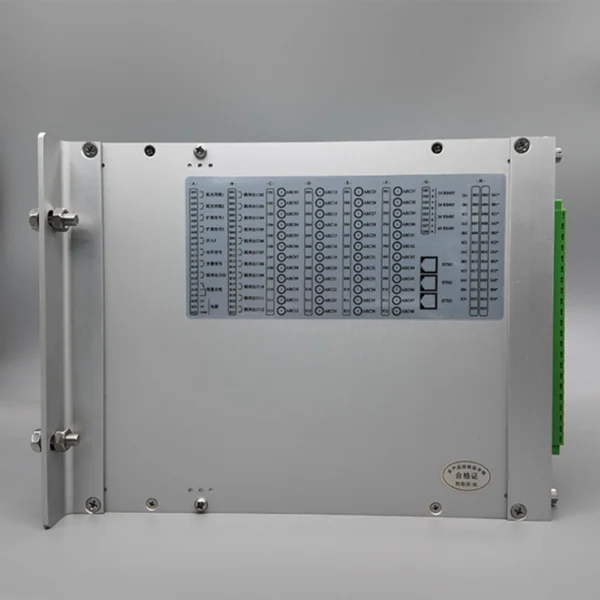
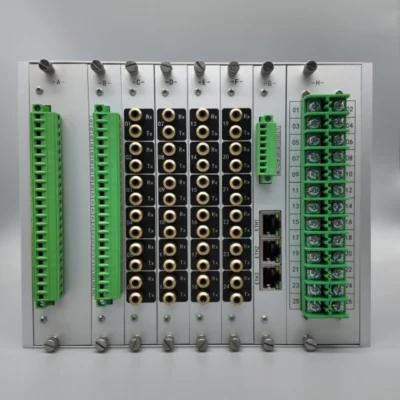
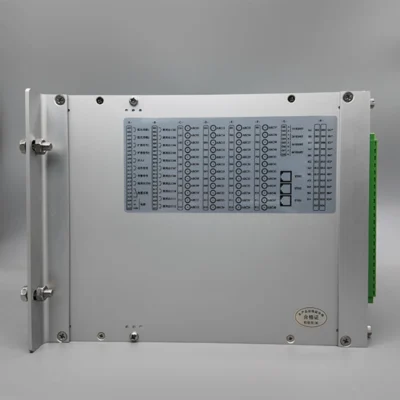
Arc Flash Protection Relay | ATN-800H Arc Protection Relay
Our arc flash protection relay detects high-speed arc flash events and provides a rapid trip signal to isolate the affected electrical equipment, helping reduce equipment damage, downtime and personnel safety risks.
Communication Mode
Optional: RS-485, CAN bus, Ethernet, IEC 60870-5-103 (IEC-103),IEC 61850
Send your requirements, we will quote for you within 12 hours
MOQ: 1 setLead time: 7-15 working daysPayment: T/T, L/C, Western Union, PayPalWarranty: 12 monthsTrade terms: EXW, FOB, CIF, DDUCertification: CEDifferent rating, protocol or mounting: send the specification and we confirm before you order.
Description
What is an ATN-800H arc flash protection relay?
An ATN-800H arc flash protection relay detects the light emitted by an internal arc and trips the upstream breaker in a few milliseconds, before the pressure rise has time to deform the switchgear. Light alone is not enough to trip, because a flash from a nearby welding operation or an open door would cause a nuisance trip, so the element is supervised by a current criterion and both conditions must be satisfied. The optical sensors are fibre or lens type, mounted in each compartment, and the relay maps sensors to zones so only the faulted section is isolated. The reason it matters is time: an arc fault cleared in milliseconds limits damage to the compartment, while the same fault cleared by overcurrent protection in a few hundred milliseconds can destroy the switchboard. Typical duty is a 10 kV or 35 kV metal-clad board. Zone schedule review and quotation in 12 hours, MOQ 1, 7-15 working days.
Overview of Arc Protection Relay
- Arc flash protection relay, the ATN-800H arc protection relay is a high-speed protection device designed to detect electrical arcs in LV and MV switchgear and initiate a trip command to isolate the fault.
- An arc protection relay combines fast arc detection with high-speed circuit breaker tripping to reduce the duration and energy of an arc fault.
- It provides arc flash protection and automatic control functions for substation power systems, and adapts to various operating modes including single busbar and sectionalized double busbar.
- Equipped with arc sensors offering over 180° blind-free horizontal coverage, the arc flash relay boasts high sensitivity and excellent anti-electromagnetic interference performance.
Product Features
- Supports arc alarm, arc tripping, zero current alarm, zero voltage alarm, MT interlock and delayed circuit breaker failure protection.
- Equipped with comprehensive self-check function.
- Relay outlet response time<3ms, arc tripping time<8ms.
- Built-in RS485 and Ethernet ports, compatible with Modbus protocol.
- Arc blocking function available via external switches and maintenance pressing plates.
- Event logging function records trips, alarms and remote signal changes in real time.
- Compatible with various arc sensors, adjustable arc action threshold.
- Multilingual switching available, supporting Chinese, English and Russian.
Block Diagram of the Arc Flash Protection Function
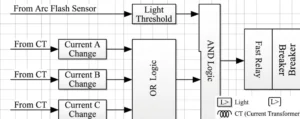
The ATN-800H arc protection relay receives signals from optical arc sensors installed inside the switchgear. When the configured arc detection conditions are met, the arc flash relay sends a high-speed trip signal to the circuit breaker. Current inputs and communication interfaces can also be integrated into the protection scheme.
How the Arc Protection Relay Works
Arc protection relays detect internal arcing faults in switchgear and issue a trip command within milliseconds to limit equipment damage. The process follows three clear steps.
1. Arc Sensor Detects the Arc
The arc protection relay receives a high‑speed optical signal from the arc sensor when an electrical arc occurs inside the switchgear. Fibre‑optic or light‑guide sensors installed in each compartment capture the arc’s intense light and send it to the arc flash relay within less than 1 ms.
2. Protection Logic Confirms the Fault
Depending on the protection configuration, the arc flash relay can use arc light together with current detection to reduce the possibility of unwanted operation. The relay validates the fault only when both light and overcurrent conditions are met, preventing false trips caused by external flashes or disturbances.
3. Relay Sends the Trip Command
Once the configured protection conditions are satisfied, the arc protection relay activates its trip output and sends a command to the circuit breaker. The arc flash relay output operates in 2–7 ms, and the breaker then opens to extinguish the arc and isolate the faulty section.
For a detailed explanation of arc fault protection principles and arc fault relay operation, see our Arc Fault Protection Relay Guide.
Arc Flash Protection Relay Applications
Arc flash protection relays are deployed across a wide range of electrical installations where fast fault detection and personnel safety are critical.
| Application | Typical Voltage | Key Benefit |
|---|---|---|
| Medium-Voltage Switchgear | 3.6–40.5 kV | High-speed clearing |
| Low-Voltage Switchboards | ≤1 kV | Personnel safety |
| Metal-Enclosed Switchgear | 3.6–40.5 kV | Localized protection |
| Substations | 3.6–500 kV | Enhanced substation safety |
| Motor Control Centers | ≤1 kV | Equipment and personnel safety |
| Industrial Systems | ≤40.5 kV | Production continuity |
| Power Plants | 3.6–40.5 kV | Generation equipment protection |
| Renewable Energy | 3.6–40.5 kV | Maintenance safety |
Arc Protection Relay Technical Specifications
The following specifications define the main detection, tripping, communication and installation characteristics of the ATN-800H arc protection relay.
| Item | Specification |
|---|---|
| Working Power | AC/DC 85-265V |
| Rated Current Input | 5A/1A, 50Hz/60Hz |
| Measuring Range | 0.06-10In |
| Error | ±2.5% |
| Number of ARC Channels | 24/36/48 channels optional |
| Sensor Type | Visible Light, Ultraviolet Light |
| Transmission Medium | Plastic Optical Fiber |
| Visible Optical Threshold | 8000lux(±20%) |
| UV Threshold | 5mw/cm²(±20%) |
| UV Spectrum Bandwidth | 280nm~400nm |
| ARC Trip Time | ≤8ms |
| ARC & Current Trip Time | ≤15ms |
| MT Trip Time | ≤15ms |
| Circuit Breaker Failure Delay Time | 100-300ms |
| Relay Output Quantity | 12 Trip Output |
| Communication Interface | 2RS485, 3ETH optional |
| Baud Rate | 4800/9600(Default)/19200 |
| Communication Protocol | Modbus RTU / Modbus TCP |
| Working Temperature | -10℃-+55℃ |
| Storage Condition | -25℃-+70℃, 5-95%RH |
What to Consider When Selecting an Arc Protection Relay
Detection Speed
Response speed is critical for arc protection relays. Quick response limits arc‑flash energy and lowers risks of equipment damage and personal harm. Check total operating time covering sensor response, relay logic and breaker delay. Do not trust nominal specs only; verify test data suited for your actual switchgear conditions.
Number of Protection Zones
Protection zones define independent compartments the unit can monitor, such as busbar, cable and breaker chambers. Match zone quantity to your switchgear layout. Too few zones leave fault areas unprotected, while excessive zones increase costs. Flexible zoning also allows for later substation expansion.
Arc Sensor Type
Optical point sensors and fibre‑optic line sensors are the main options. Point sensors monitor fixed spots, and linear fibre offers continuous coverage for large compartments. Assess on‑site space and light interference. Many relays pair arc light detection with current check to prevent false trips.
Current Blocking Function
Current blocking is an anti‑false‑trip supervision feature. The relay needs both arc light and over‑current signals before sending trip orders. It prevents misoperation from welding sparks or stray light. Ensure adjustable settings so it still responds correctly to low‑magnitude arc faults.
Trip and Communication Interfaces
Trip outputs control circuit breakers, while communication links connect to SCADA for fault logs and alarms. Hard‑contact outputs handle local tripping. Confirm interface compatibility with your existing protection setup and sufficient ports for both onsite switching and remote data transmission.
Need an Arc Flash Protection Relay for Your Switchgear?
Protect equipment and personnel with high-speed arc flash detection and tripping.
Quick Access
| Request Technical Specifications | Download technical data, wiring diagrams, and application notes |
| Request a Quote | Get a customized quotation |
| Submit Switchgear Configuration | Our engineering team reviews your layout and recommends the optimal solution |
Why Choose Us?
Response <1 ms, total clearing time (including breaker) <50 ms
Light + current dual detection prevents nuisance tripping
Supports fiber-optic and point-type sensors
Designed for medium-voltage and low-voltage switchgear
Contact our technical team today to discuss your requirements.
FAQ
Q1: What Is an Arc Protection Relay?
An arc flash protection relay is a high-speed protection device that detects the intense light emitted by an electric arc and sends a trip signal to isolate the fault within milliseconds. It is the core component of any arc flash protection relay system, providing fast fault clearing that conventional overcurrent relays cannot achieve. As a dedicated arc flash detection relay, it responds in less than 1 ms, reducing incident energy and minimizing equipment damage.
Q2: How Does an Arc Protection Relay Work?
An arc flash protection device uses fiber-optic or point-type sensors installed inside switchgear enclosures to monitor for arc light. When light exceeds a preset threshold and fault current is present, the device sends a trip signal to the upstream breaker. This dual-condition logic, used in modern arc flash relay protection schemes, ensures reliable tripping for actual arc faults while preventing nuisance tripping from external light sources.
Q3: What Is the Difference Between an Arc Protection Relay and an Overcurrent Relay?
Conventional overcurrent relays detect faults by measuring current magnitude, which can take 25–45 ms or more. An arc flash relay detects the light from an arc almost instantly, typically within 1 ms. By combining arc flash detection and protection, the relay significantly reduces total fault clearing time (including breaker operation) to under 50 ms, limiting arc energy exposure.
Q4: What types of sensors are used in arc flash protection equipment?
Arc flash protection equipment supports both fiber-optic sensors (for long-distance light detection across large enclosures) and point-type sensors (for localized detection in specific compartments). This flexibility allows optimal sensor placement for any switchgear configuration. The arc flash detection relay continuously monitors sensor signals and initiates tripping when both light and current conditions are met.
Q5: Where Is an Arc Protection Relay Used?
Arc flash protection equipment is installed in medium-voltage and low-voltage switchgear, motor control centers (MCCs), substations, power plants, and renewable energy facilities, anywhere arc flash hazards pose risks to equipment and personnel. An arc flash protection relay system is particularly valuable in applications where fast clearing time is critical for personnel safety and equipment protection.
Q6: Does the arc flash relay trip on light alone?
No. The arc flash relay uses a dual-condition logic: it trips only when both arc light is detected and fault current is present. This prevents nuisance tripping from external light sources such as camera flashes, welding arcs, or direct sunlight. This current-blocking feature is standard in most arc flash protection equipment, ensuring security while maintaining high-speed operation for real arc events.
Q7: Can the arc flash detection and protection system be retrofitted?
Yes. The arc flash detection and protection system is designed for both new installations and retrofit projects. Compact dimensions, flexible sensor mounting options, and multiple communication interfaces ensure easy integration into existing switchgear panels without major modifications.
Q8: What communication protocols does the arc flash protection relay system support?
The arc flash relay supports standard protocols including Modbus RTU, Modbus TCP, and IEC 61850 for seamless integration with SCADA and substation automation systems. This allows remote monitoring of arc flash protection equipment status, event reporting, and system-wide coordination.
Q9: Does the arc flash protection device provide fault recording?
Yes. The arc flash protection device records event logs with time stamps and fault data, enabling post-event analysis and helping identify the root cause of arc flash incidents. This data is essential for improving system safety and maintenance planning.
Q10: How does arc flash detection and protection improve personnel safety?
Arc flash detection and protection reduces fault clearing time from hundreds of milliseconds to under 50 ms, dramatically lowering incident energy released during an arc flash. This reduces burn hazards, minimizes equipment damage, and provides a safer working environment for operating and maintenance personnel. An arc flash protection relay system is a critical component of any comprehensive electrical safety program.
MOQ 1 unit for samples | Bulk orders ship in 7-15 working days | 12-month warranty | EXW, FOB, CIF, DDU | Payment by T/T, L/C, Western Union or PayPal. New to ordering? See how to order – process, MOQ and lead time.
Q11: How do I place an order?
Send your specification through the contact form, by email to sale@relayprotect.com or on WhatsApp. We check the rating, the protocol and the wiring against your application, confirm the model, and return a quotation. No account or registration is needed.
Q12: What is the minimum order quantity?
The minimum order quantity is one unit. A single unit can be ordered for evaluation or for a pilot installation, and project quantities are quoted separately.
Q13: What is the lead time?
Standard models ship in 7 to 15 working days after the order is confirmed and payment is received. Custom ratings, protocols or mounting arrangements are confirmed in writing before the order is placed, so the delivery date is known in advance.
Q14: Which payment methods and trade terms do you accept?
Payment by T/T, L/C, Western Union or PayPal. Trade terms are EXW, FOB, CIF and DDU. Every relay carries a 12-month warranty.
Related products

High Quality
Stable performance, reliable design, ensuring safe operation for power system protection and grid stability.
Fast Delivery
Timely delivery to support your urgent orders and project schedules efficiently and professionally at any time.
Best Warranty
Professional Warranty: Reliable after-sales support for stable relay protection and long-term customer satisfaction.
Reviews
There are no reviews yet.