

-
Leon Zhang sales consultant
-
Email: zxl635973785@gmail.com
-
Phone/WhatsApp: +86 13655813266
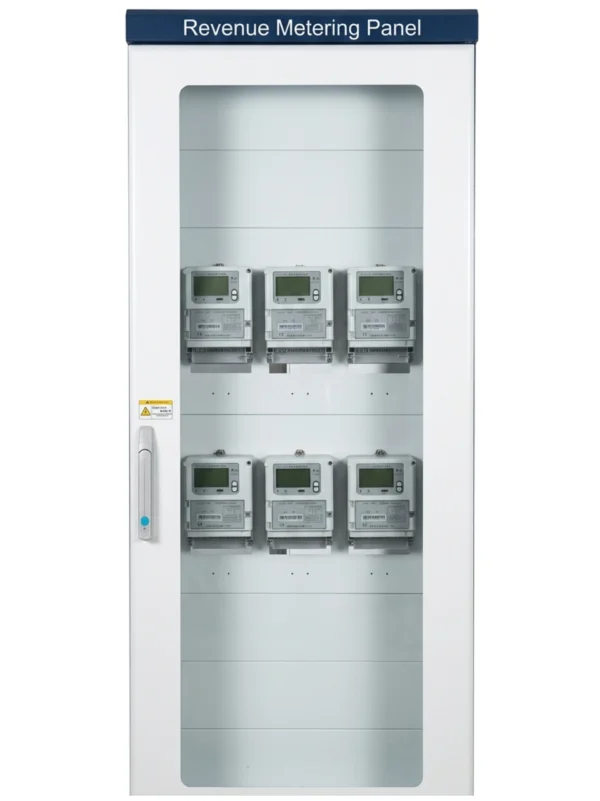
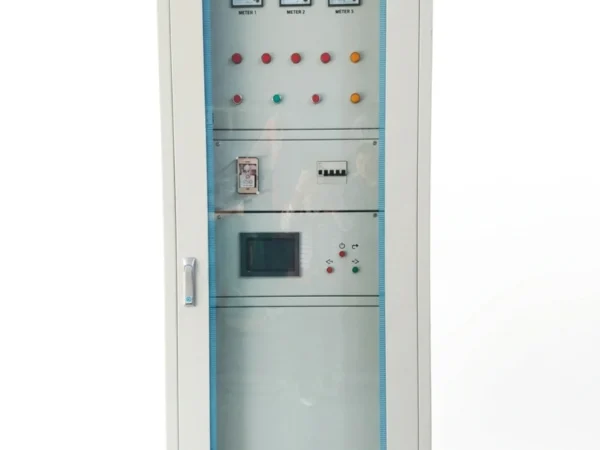
High-Precision Metering Panel ATN-400
This legal power trading metering panel is directly used for electricity fee settlement. With double-layer sealed structure, anti-prying screws and one-time lead seals, it prevents data tampering and fully complies with DL/T 448 standards.
Send your requirements, we will quote for you within 12 hours
Description
What is a Metering Panel?
- A Metering Panel, also widely referred to as Revenue Metering Panel, Tariff Metering Panel, Billing Metering Panel, High Voltage (HV) Metering Panel, Metering Cubicle and Smart Grid Metering Cubicle in the power industry, is a dedicated enclosed cabinet designed for power system metering. It is specially used to install energy meters and supporting metering equipment for power measurement and data management.
- In accordance with national standards, a complete energy metering system consists of four core components: energy meter, metering CT/PT, metering secondary circuit, and metering cabinet. This fully enclosed panel integrates all above devices to achieve accurate energy measurement, automatic data collection and standardized operation management, covering conventional power stations, photovoltaic power plants and various smart grid scenarios.
Composition & Structure
|
Component
|
Description
|
|---|---|
|
Cabinet Body
|
Made of powder-coated cold-rolled steel plate with IP30 protection rating. It features a front single-opening glass door for convenient meter reading and a rear double-opening metal door for easy equipment maintenance.
|
|
Energy Meters
|
Core metering devices mounted on the panel front, compatible with electronic and smart kWh meters to meet diverse grid metering requirements.
|
|
Acquisition Terminal
|
Specialized data acquisition equipment for remote meter reading and real-time energy data upload.
|
|
Instrument Transformers
|
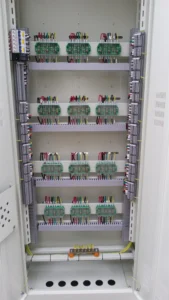
Metering-grade CT/PT installed inside the rear cabinet, connected to energy meters via standardized secondary cables.
|
|
Terminal Blocks
|
Adopts Phoenix or equivalent high-quality terminals, ensuring standardized, neat and safe wiring.
|
|
Auxiliary Equipment
|
Optional accessories include power quality monitor, control switch, encryption device, server and other supporting components.
|
|
Anti-Theft Design
|
Equipped with a double-enclosed protective structure and tamper-proof screws on both front and rear sides, effectively preventing electricity theft and data tampering.
|
Typical dimensions: 2260 × 800 × 600 mm (H × W × D); cabinet color is customizable.
Main Functions
|
Function
|
Description
|
|---|---|
|
Energy Metering
|
Accurately measures active and reactive energy, serving as the authoritative basis for official electricity billing and tariff settlement.
|
|
Data Acquisition & Upload
|
Automatically collects and uploads metering data to power dispatch systems and marketing management systems through the acquisition terminal.
|
|
Gateway & HV Metering
|
Provides high-precision metering for key grid gateway points, including the high-voltage side of main transformers and startup/backup transformers, applicable to all high-voltage metering scenarios.
|
|
Anti-Electricity Theft
|
The integrated tamper-proof and fully enclosed structure prevents manual data modification and effectively avoids electricity theft risks.
|
|
Power-off Data Protection
|
Built-in data retention function ensures that recorded energy data will not be lost after external power interruption.
|
|
Communication & Networking
|
Supports RS485 and Ethernet communication protocols, and can be seamlessly connected to DCS, NCS and dispatch data networks to adapt to smart grid operation requirements.
|
Application Places
|
Application Scenarios
|
Typical Usage
|
|---|---|
|
Thermal / Hydro Power Plants
|
Installed in central control rooms for gateway metering at main transformer HV side, startup/backup transformer HV side and line outlet side.
|
|
110kV ~ 500kV Substations
|
Applied for official power billing and tariff metering, supporting unified data management with energy acquisition terminals.
|
|
Large Industrial & Mining Enterprises
|
Used for internal power consumption statistics, energy metering and operational performance assessment.
|
|
New Energy & Solar Power Plants
|
Dedicated to photovoltaic power generation metering and grid-connected electricity settlement for new energy projects.
|
|
Smart Grid Projects
|
Functions as a smart grid metering cubicle to realize intelligent monitoring, statistics and unified management of grid energy data.
|
Installation & Usage
|
Step
|
Key Points
|
|---|---|
|
① Foundation Positioning
|
Fix the cabinet firmly on the channel steel foundation with expansion bolts, and control the verticality deviation within 1.5 mm.
|
|
② Equipment Installation
|
Install energy meters on the front panel and CT/PT devices at the rear of the cabinet. Arrange secondary cables in standard routes and complete standardized wiring.
|
|
③ Power-on Commissioning
|
Check CT/PT polarity and phase sequence, verify metering accuracy via standard energy injection, and confirm normal communication of the acquisition terminal.
|
|
④ Inspection & Acceptance
|
Install tamper-proof seals after commissioning. Professional metering personnel conduct inspection and file relevant data into the power marketing system.
|
|
⑤ Routine Maintenance
|
Check the integrity of cabinet seals during monthly meter reading, and perform full calibration of metering devices annually.
|
Market Reference Price
|
Product Type
|
Price (RMB)
|
|---|---|
|
Basic Metering Panel (8~16 channels)
|
¥5,000 ~ ¥8,000 / panel
|
|
Standard Metering Panel (32~64 channels, with acquisition terminal)
|
¥10,000 ~ ¥20,000 / panel
|
|
High-end Smart Metering Panel (with PMU / power quality / encryption function)
|
¥20,000 ~ ¥35,000 / panel
|
FAQ
Q Why Do Metering Panels Need Anti-Electricity Theft & Lead Seal Design?
A:The metering panel is a legal metering device for power trading, whose data is directly linked to electricity fee settlement. Adopting a double-layer enclosed structure, anti-prying screws and disposable lead seals, it effectively prevents artificial circuit tampering and parameter modification to ensure authentic and valid metering data, complying with the industrial specification requirements of DL/T 448.
Q What is a High-Precision Metering Panel?
It is a special secondary panel used in substations and power plants for trade-grade electric energy metering. It adopts high-accuracy energy meters to precisely measure active/reactive power, electricity consumption for grid settlement and billing.
Q What is its difference from ordinary measurement?
Metering panel uses 0.2S / 0.5S high-precision metering devices, which is legal trade measurement data, while general control panel data is only for monitoring reference.
Q What parameters does it measure?
Three-phase voltage, three-phase current, active power, reactive power, power factor, frequency, forward & reverse active/reactive electric energy.
Q Main purpose
Used for grid electricity settlement, plant power generation statistics, tariff billing, power consumption assessment and energy data archiving.
Q What accuracy class is adopted?
Standard metering grade:
- Energy meter: 0.2S or 0.5S
- Metering CT/PT: 0.2 class
Q Why independent CT/PT loops for metering?
Metering winding is dedicated and independent from protection/measurement winding, avoiding current distortion and accuracy loss caused by protection saturation.
Q Why metering loop cannot be equipped with fuse or circuit breaker?
Prevents open-loop loss of metering data and electricity missing measurement, complying with national grid metering safety regulations.
Q What is metering sealing function?
The panel and meter terminal cover are lead-sealed officially. Unauthorized opening or modification is forbidden to ensure metering credibility and anti-tampering.
Q Does it support remote data upload?
Yes. It uploads real-time power, daily electricity and historical energy data to electric energy acquisition system via RS485 or Ethernet.
Q What is energy data freezing function?
Automatically freezes meter reading data at fixed time (00:00 daily) to form standardized billing data for power settlement.
Q Metering data zero or inaccurate
Metering CT/PT wiring error, polarity reversal, secondary loop open, or parameter ratio setting mismatch.
Q Remote energy data missing
485/Ethernet communication failure, meter address conflict, or acquisition device offline.
Q Negative energy reading
Reverse wiring of current loop or reverse power flow during generator low-load operation.
Q Pre-commissioning test items
Accuracy calibration, CT/PT polarity verification, ratio matching check, communication point debugging, sealing confirmation.
Q Daily maintenance rules
No unauthorized wiring modification; regularly check meter running status; preserve sealed integrity; backup energy data periodically.
Q16 Metering Panel vs Measurement & Control Panel
- Metering Panel: High precision, trade billing legal data, dedicated metering winding, sealed management.
- Measurement & Control Panel: General accuracy, only for real-time monitoring and equipment control, not for settlement.
2 reviews for High-Precision Metering Panel ATN-400
Related products
High Quality
Stable performance, reliable design, ensuring safe operation for power system protection and grid stability.
Fast Delivery
Timely delivery to support your urgent orders and project schedules efficiently and professionally at any time.
Best Warranty
Professional Warranty: Reliable after-sales support for stable relay protection and long-term customer satisfaction.
xiao zhang –
Metering Panel integrates multi-function meters for centralized power data measurement and remote communication, widely used in distribution cabinets and substations.
Jack –
Centralized power data, neat wiring.