

-
Leon Zhang sales consultant
-
Email: zxl635973785@gmail.com
-
Phone/WhatsApp: +86 13655813266

China Motor Protection Relay Manufacturer for Global Industrial Projects
China Motor Protection Relay Manufacturing
China has become a global hub for motor protection relay manufacturing. As a China Motor Protection Relay Manufacturer deeply rooted in this ecosystem, we fully leverage the advantages of China’s mature industrial supply chain to deliver high‑quality products to customers worldwide.
China Manufacturing Capability
Our manufacturing base is located in Baoding, China’s Electric Valley, which boasts one of the world’s most complete electrical equipment supply chains — ensuring direct access to high-quality raw materials and precision components.
Built on decades of industry experience, we operate under an ISO 9001-certified quality management system and hold internationally recognized certifications including CE, UL, and CCC, demonstrating the maturity and reliability of China manufacturing.
Engineering Team
Our engineering team is the core of our manufacturing capability, with average industry experience exceeding 10 years, covering:
- Hardware Design – Precision analog circuits, digital signal processing, EMC-compliant PCB
- Firmware & Software – Real-time control algorithms, communication protocol stacks
- Protection Algorithms – Thermal overload, differential, ground fault, and other protection logic
- Application Support – Customization and on-site commissioning
Production Capacity
| Metric | Details |
|---|---|
| Annual Capacity | Scalable to accommodate large-scale projects and small-batch customization |
| Production Lines | ESD-safe workstations with automated SMT placement + precision manual operations |
| Lead Time | Standard products within 15 working days; custom orders per project schedule |
| Coverage | Standard products, OEM/ODM, project-based orders |
Testing Facilities
| Facility | Purpose |
|---|---|
| Automated Functional Test Benches | 100% verification of power, I/O, display, and communication |
| 0.05-Class Standard Power Sources | High-precision calibration and accuracy testing |
| Current/Voltage Injectors | Protection function verification with simulated fault signals |
| Communication Protocol Analyzers | Modbus, Profibus, IEC 61850, and other protocol testing |
| Temperature/Humidity Chambers | Environmental stress testing (-40°C ~ +85°C) |
| Vibration/Shock Test Systems | Mechanical durability verification |
| Insulation/Hipot Testers | Dielectric strength and insulation integrity |
| EMC Test Systems | Surge, burst, ESD immunity verification |
Quality Management
| Pillar | Implementation |
|---|---|
| Incoming Quality Control (IQC) | 100% inspection for critical components; AQL sampling for general parts |
| In-Process Control (IPQC) | Layered audits; solder joint/torque/visual inspection |
| Outgoing Quality Control (OQC) | Comprehensive electrical, mechanical, and cosmetic inspection before packaging |
| Supplier Management | Approved vendor list; regular audits; batch traceability |
| Continuous Improvement | Defect analysis; CAPA system; closed-loop field feedback |
Certifications: CE, UL, CCC, RoHS
Manufacturing Process
Engineering Design → System architecture, schematic capture, PCB layout, algorithm development — rigorous review before production release
Component Sourcing & Inspection → Approved suppliers + 100% IQC + batch traceability
PCB Assembly & Hardware Manufacturing → ESD-controlled SMT placement, through-hole soldering, CT/PT termination, IP sealing
Firmware Loading → Verified firmware flash → parameter initialization → checksum validation
Calibration & Accuracy Adjustment → Two-stage calibration with 0.05-class standard sources + temperature compensation
Functional & Protection Testing → 100% automated testing simulating start/running/fault conditions, verifying each protection element
Communication & Integration Testing → All protocols and register mapping verified under real-network conditions
Environmental & Insulation Testing → Batch environmental sampling + 100% insulation/hipot testing on every unit
Factory Acceptance Testing (FAT) → Witnessed testing for project-based orders
Final Inspection, Packaging & Shipment → Comprehensive OQC + anti-static packaging + certificates included
China Manufacturing Advantages
| Advantage | Benefit |
|---|---|
| Complete Supply Chain | Short lead times, low logistics costs |
| Mature Quality System | ISO, CE, UL, CCC certification assurance |
| Technical Talent Pool | Professional power protection engineering team |
| Cost-Effective | Controlled costs without quality compromise |
| Export Experience | Mature logistics channels covering 100+ countries |
To learn more about our manufacturing capabilities or to arrange a factory visit, please contact us. We welcome on-site inspections.
Why Choose a Motor Protection Relay Manufacturer in China?
When sourcing motor protection relays for your projects — whether you are an EPC contractor, panel builder, plant operator, or distributor — the choice of manufacturer has a direct impact on project cost, delivery schedule, and long-term operational reliability. Here is why choosing a Chinese manufacturer with proven capabilities makes business sense.
Manufacturing Cost
Cost efficiency is one of the most compelling reasons to source from China — but it is not about the lowest price. It is about getting the best value for your investment.
| Aspect | Advantage |
|---|---|
| Economies of scale | High-volume production across a complete supply chain reduces unit costs without compromising quality |
| Mature supply chain | Proximity to raw materials, PCBs, components, and enclosures reduces procurement costs and logistics expenses |
| Lower operating costs | Competitive labor and facility costs translate into more affordable pricing for end customers |
| No quality trade-off | Cost savings come from supply chain efficiency and scale — not from cutting corners in materials or testing |
The result: you receive a high-quality protection relay at a price that protects your project budget.
Product Customization
Chinese manufacturers are typically more flexible when it comes to product customization. Unlike many Western brands that offer only standard off-the-shelf models, we understand that every motor application has unique requirements.
| Customization Area | What We Can Offer |
|---|---|
| Electrical parameters | Custom CT/PT ratios, voltage/current ranges, frequency settings |
| Protection functions | Enable/disable specific protection elements; custom trip curves; special logic |
| Communication protocols | Modbus, Profibus, IEC 61850, DNP 3.0 — or custom protocol development |
| Physical configuration | Custom enclosures, colors, terminal types, mounting options, panel cutouts |
| Firmware & software | Custom algorithms, special features, version locking, even source code licensing |
| Branding | Private labeling, custom nameplates, packaging, and user manuals |
We treat customization as a standard service — not a special favor.
Shorter Engineering Communication
One of the hidden costs in international sourcing is communication friction. Language barriers, time zone differences, and cultural gaps can delay projects and create misunderstandings.
Chinese manufacturers with international experience have addressed these challenges:
| Communication Advantage | How It Benefits You |
|---|---|
| English-speaking engineering teams | Direct technical discussions without translation loss |
| Fast response times | Queries answered within 24 hours — often the same working day |
| Proactive technical support | Engineers who understand IEC, IEEE, and international standards |
| Clear documentation | Technical documents, drawings, and manuals provided in professional English |
| Regular communication cadence | Weekly project update calls, progress reports, and transparent milestone tracking |
You are not just buying a product — you are partnering with a team that speaks your language, both literally and technically.
OEM / ODM Capability
If you need private-label products or fully custom-engineered solutions, Chinese manufacturers offer a level of OEM/ODM flexibility that is increasingly rare among established Western brands.
| Service | What It Includes |
|---|---|
| OEM (Private Label) | Your logo, your brand, your packaging — our proven relay platform with full warranty coverage |
| ODM (Custom Design) | Custom hardware, firmware, algorithms, and enclosures developed to your exact specifications |
| Joint development | Co-definition of product roadmaps; shared IP arrangements available |
| Long-term supply agreements | Guaranteed component availability, version stability, and continuous supply — no sudden discontinuation |
| Certification support | Assistance with UL, CSA, CE, CCC, or other market-specific certifications under your brand name |
This flexibility allows you to offer a differentiated product in your market without the overhead of building your own factory.
Technical Documentation
Comprehensive technical documentation is essential for engineering design, installation, commissioning, and long-term maintenance. Chinese manufacturers serving global markets invest heavily in producing professional-grade documentation.
| Document Type | What We Provide |
|---|---|
| Product datasheets | Detailed specifications, performance curves, and ordering information |
| User manuals | Step-by-step installation, operation, and configuration guides in clear English |
| Application notes | Guidance for specific motor applications (pumps, fans, compressors, etc.) |
| Technical drawings | Dimensional drawings, wiring diagrams, terminal connection details |
| Setting guides | Recommended protection settings for various motor types and sizes |
| Test reports | Factory test records, calibration certificates, and FAT reports |
| Protocol mapping tables | Complete Modbus/IEC 61850 register maps for SCADA integration |
| Compliance certificates | CE, UL, CCC, RoHS, and other relevant certifications |
We understand that poor documentation creates risk for your project — which is why we treat documentation quality as a design deliverable, not an afterthought.
EPC Project Support
Engineering, Procurement, and Construction (EPC) projects have unique requirements: tight schedules, multi-vendor coordination, and strict technical compliance. Chinese manufacturers experienced in EPC projects provide dedicated support to keep your project on track.
| EPC Support Service | How We Assist |
|---|---|
| Tender stage assistance | Technical specifications, compliance statements, and competitive quotes for bid submissions |
| Engineering coordination | Interface with your design institute or engineering team on protection schemes and equipment selection |
| Expedited delivery | Accelerated production schedules to meet critical project milestones |
| Factory Acceptance Testing (FAT) | Witnessed testing with your project team before shipment |
| On-site commissioning support | Engineers available for on-site or remote commissioning assistance |
| Package supply | Complete relay panels or kitted solutions with all accessories included |
For large-scale projects, we act as an extension of your engineering team — not just a component supplier.
Export Experience
Chinese motor protection relay manufacturers with established global footprints have extensive export experience that simplifies cross-border procurement.
| Export Capability | How It Helps You |
|---|---|
| Global shipping logistics | Established relationships with freight forwarders for reliable and cost-effective delivery |
| Export documentation | Commercial invoices, packing lists, bills of lading, certificate of origin, and customs clearance support |
| Trade compliance | Knowledge of export control regulations, tariff classifications, and country-specific import requirements |
| International payment terms | Flexible options including T/T, L/C, and other trade finance arrangements |
| Global installed base | Proven track record in your region or similar project types — references available |
We have shipped motor protection relays to customers in Europe, North America, the Middle East, Southeast Asia, and beyond.
Spare Parts and After-Sales Support
A relay is not a one-time purchase — it requires long-term support. Chinese manufacturers with global service strategies provide spare parts availability and after-sales services that protect your investment over the equipment’s entire lifecycle.
| After-Sales Service | What We Offer |
|---|---|
| Spare parts availability | Stocks maintained for all standard products; long-term availability for custom configurations |
| Product lifecycle management | Clear discontinuation notice (min. 12 months) with migration guidance to new models |
| Warranty and repair | Standard product warranty with repair or replacement services |
| Technical support hotline | 24/7 email and phone support for installation, configuration, and troubleshooting |
| On-site field service | Available for critical projects (travel and logistics arranged on a case-by-case basis) |
| Firmware updates | Periodic firmware improvements and feature enhancements available for field upgrades |
| Training | Online or on-site training for your engineering and maintenance teams |
Summary: Why a Chinese Manufacturer Makes Sense
| Consideration | Benefit |
|---|---|
| Cost | Better value through supply chain efficiency — not by sacrificing quality |
| Customization | Flexible electrical, mechanical, and firmware configuration as standard practice |
| Communication | English-speaking engineers with international experience |
| OEM/ODM | Private labeling and custom development capabilities |
| Documentation | Professional technical documents you can use from design to maintenance |
| EPC support | Project management and expediting for large installations |
| Export experience | Global shipping, documentation, and trade compliance expertise |
| After-sales support | Spare parts, warranty, and technical support over the product lifecycle |
For your next motor protection relay project, consider a Chinese manufacturer that combines cost advantage with technical competence, customization flexibility, and global service capability. Contact us to discuss how we can support your specific project requirements.
Motor Protection Relay Factory Production Process in China
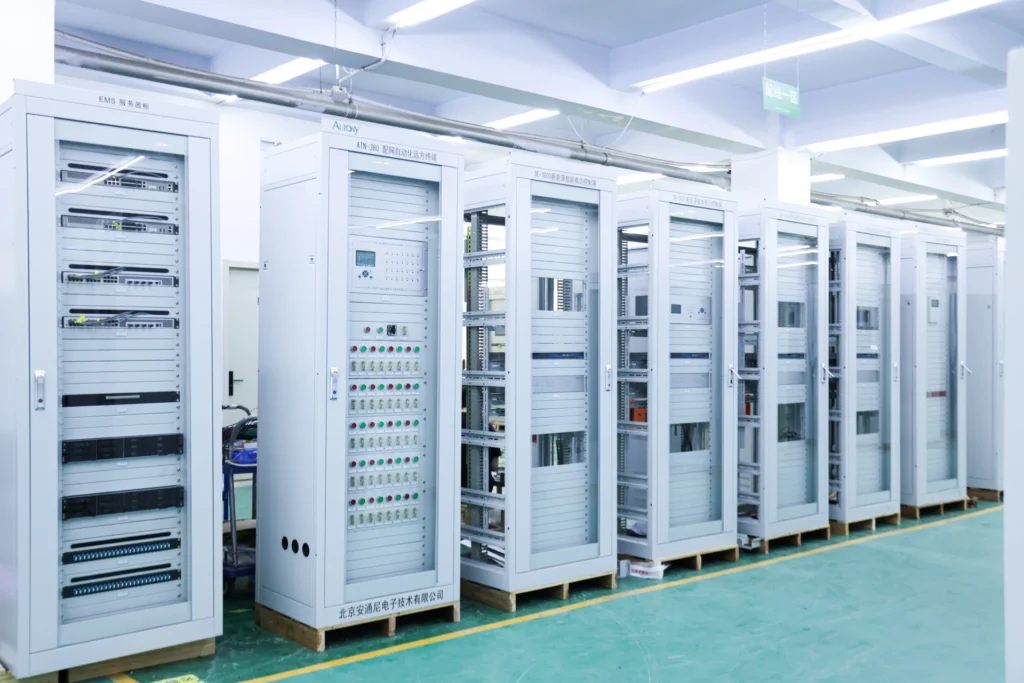
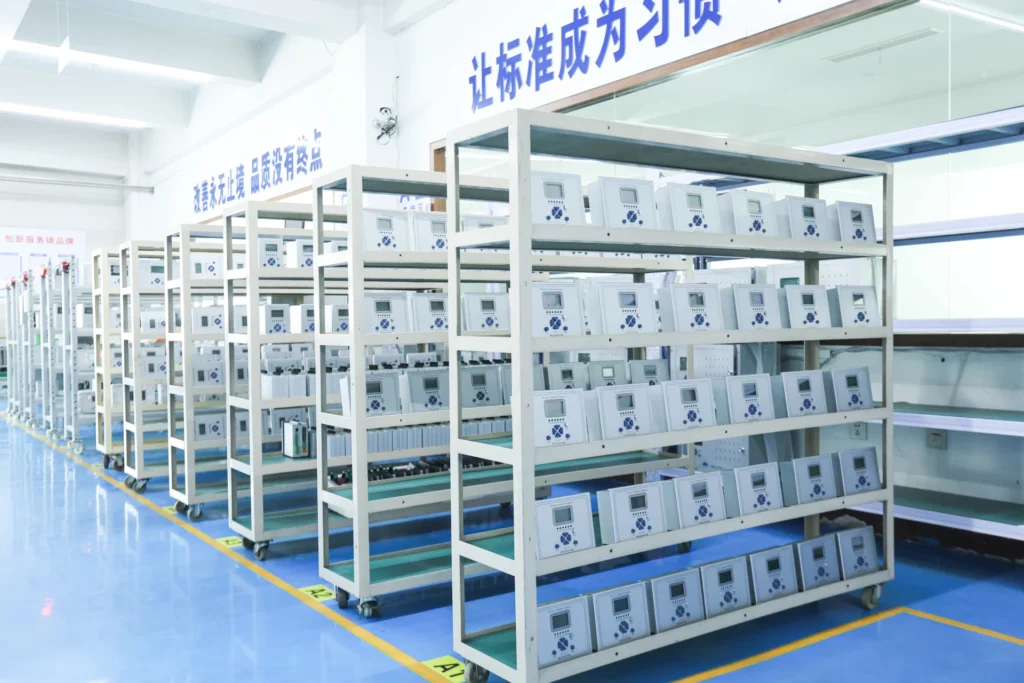
From engineering design to final testing, our motor protection relays follow a controlled, traceable manufacturing process with quality checkpoints at every stage.
| Stage | Key Activities | Quality Control |
|---|---|---|
| R&D | System architecture, algorithm development, PCB layout, simulation validation | Design reviews; performance verification before release |
| Component Procurement | Sourcing from qualified suppliers; incoming inspection of critical parameters | 100% critical component inspection; batch traceability |
| PCB Assembly | ESD-safe SMT placement, through-hole soldering, AOI inspection | Solder quality; placement accuracy; 100% AOI |
| Firmware Loading | Secure flashing, parameter configuration, checksum validation | Code integrity; version control; configuration backup |
| Assembly | Enclosure mounting, CT/PT termination, wiring, HMI/LED installation, IP sealing | Serial number traceability; torque verification; visual inspection |
| Calibration | Two-stage calibration with 0.05-class reference sources; temperature compensation | ±0.5% FS accuracy; individual calibration certificate |
| Protection Testing | Fault signal injection verifying all protection elements | Trip accuracy ±2%; time delay ≤±3% or ≤±40ms |
| Communication Testing | Live network testing of all supported protocols; register mapping validation | Packet loss <0.1%; 100% mapping accuracy |
| FAT | Customer-witnessed testing (on-site or remote); protection, communication, trip verification | Signed FAT report; customer acceptance prior to shipment |
| Export Packaging | Anti-static, shock-proof packaging; certificates, manuals, and documentation included | Final inspection; global logistics dispatch |
Factory visits and virtual tours welcome — contact us to schedule.
Motor Protection Relay for EPC Projects
EPC projects demand more than just a product — they require a reliable partner who understands the complexities of large-scale engineering, procurement, and construction. From initial specification review to final commissioning, we work alongside your engineering team to ensure our motor protection relays integrate seamlessly into your project’s overall protection scheme.
Our experience spans power plants, water treatment facilities, mining operations, petrochemical plants, and infrastructure projects across multiple regions. We understand the documentation requirements, quality standards, and delivery schedules that EPC contractors face — and we are structured to meet them.
Technical Specification Review
Every EPC project comes with its own set of technical specifications — often hundreds of pages of requirements that must be carefully reviewed and addressed.
| Service | Details |
|---|---|
| Specification analysis | We review project technical specifications to identify all relay-related requirements: protection functions, accuracy classes, communication protocols, enclosure ratings, and compliance standards |
| Compliance matrix | We provide a detailed compliance matrix mapping our product capabilities against each specification requirement — highlighting full compliance, partial compliance with alternatives, or exceptions with justification |
| Gap analysis | Where project specifications require custom features, we identify the gaps early and propose cost-effective solutions |
| Submittal package | We prepare complete submittal documentation including datasheets, dimensional drawings, wiring diagrams, and certification copies for project approval |
| Value engineering | We offer alternative solutions that meet specification requirements while reducing overall project cost — without compromising quality or reliability |
Datasheet Support
EPC projects typically involve multiple stakeholders: owners, consultants, design institutes, and procurement teams. Our datasheets are designed to serve all of them.
| Document Type | What We Provide |
|---|---|
| Product datasheets | Complete technical specifications in professional, standardized format — ready for inclusion in submittal packages |
| Schedule of compliance | Cross-reference of product parameters with project schedule of requirements (SOR) |
| Technical comparison tables | Side-by-side comparison with competitor products to support procurement decisions |
| Application-specific datasheets | Customized datasheets tailored to your specific motor application (pump, fan, compressor, etc.) |
| Drawing package | Dimensional drawings, mounting hole details, terminal connection diagrams, and panel cutout dimensions in both PDF and editable formats (DWG/DXF upon request) |
Protection Setting Support
Setting calculations are one of the most technically demanding aspects of motor protection engineering — and one where errors can have serious consequences.
| Service | Details |
|---|---|
| Setting calculation service | We calculate recommended settings based on motor nameplate data, CT/PT ratios, starting current, and system fault levels — delivered in a clear, standardized setting table format |
| Coordination studies | We assist with protection coordination studies to ensure selectivity between upstream and downstream protection devices |
| Setting file preparation | We prepare relay setting files that can be directly downloaded into the relay via communication port — reducing manual entry errors |
| Multiple setting groups | For motors with dual operation modes, we can configure and provide settings for multiple setting groups |
| Local engineer training | We can train your project engineers on setting principles and calculation methods for the specific relay model used in your project |
Wiring Diagram Support
Proper wiring is essential for correct relay operation. We provide comprehensive wiring documentation that simplifies installation and reduces on-site errors.
| Service | Details |
|---|---|
| External connection diagrams | Detailed diagrams showing all connections to CTs, PTs, control circuits, trip circuits, and alarm circuits — with clear terminal labeling |
| Typical circuit configurations | Pre-designed wiring schemes for DOL starting, star-delta, soft starter, and VFD applications |
| Project-specific drawings | Custom wiring diagrams that incorporate your project’s specific component selection and control philosophy |
| Panel layout recommendations | Guidance on panel arrangement for optimal wiring and heat dissipation |
| Installation checklists | Step-by-step checklists for the installation team to ensure all connections are verified before energization |
Factory Acceptance Testing (FAT)
For EPC projects, witnessed FAT is often a contract requirement — and we make the process efficient and transparent.
| Service | Details |
|---|---|
| FAT procedure preparation | We prepare detailed FAT procedures based on project specifications and contract requirements — submitted for your review and approval before testing begins |
| FAT agenda | We provide a clear test schedule so your team knows exactly what will be demonstrated and when |
| Witnessed testing | Your project team or client representatives can witness testing at our factory — or remotely via live video feed |
| Test coverage | Standard FAT includes: visual inspection, insulation resistance testing, protection function verification with fault injection, accuracy verification, communication handshake, and I/O performance |
| Custom test items | Additional project-specific test items can be included upon request |
| FAT report | We issue a formal, signed FAT report with test results, calibration data, and witness signatures — ready for project documentation and client acceptance |
| Photographic/video records | We can provide photos and video recordings of key test items for your internal records |
Packaging
Proper packaging is critical for international shipments — especially for EPC projects where equipment often travels long distances through multiple handling points.
| Packaging Feature | Details |
|---|---|
| Standard packaging | Anti-static bags + shock-proof foam inserts + outer corrugated cartons — suitable for standard air/sea freight |
| Export packaging | Heavy-duty cartons or plywood cases with internal cushioning and moisture barrier — compliant with ISPM 15 export pallet standards |
| Custom crating | For large panel-mounted relays or bulk orders, we provide custom crating with protective framing |
| Labeling | Clear handling instructions (fragile, keep dry, this side up) with project-specific delivery labels |
| Documentation enclosure | Each shipment includes: calibration certificates, test reports, user manuals, wiring diagrams, and packing list — sealed in waterproof document bags affixed to the outside of the package |
Shipment
EPC projects run on tight schedules — and we understand that delayed delivery can have cascading effects on your project timeline.
| Shipment Service | Details |
|---|---|
| Flexible production scheduling | We accelerate production to meet urgent project deadlines when required |
| Multiple shipping options | Express air freight, standard sea freight, or consolidated container shipping — we arrange the most cost-effective and reliable option |
| Logistics coordination | We coordinate with freight forwarders and handle export documentation — including commercial invoices, packing lists, bills of lading, and certificates of origin |
| Delivery tracking | We provide tracking information and regular status updates throughout transit |
| Incoterms flexibility | We support Ex-Works (EXW), FOB, CIF, CFR, DAP, or other terms as required by your procurement department |
| Partial shipments | For projects with phased delivery requirements, we can arrange partial shipments to match your site installation schedule |
Commissioning Support
Commissioning is where the protection system proves itself under live conditions. Our commissioning support ensures a smooth start-up and minimizes the risk of costly delays.
| Service | Details |
|---|---|
| Remote commissioning support | Our engineers provide real-time guidance via phone, email, or video call during the commissioning process — available across time zones |
| On-site commissioning support | For large or critical projects, we can deploy experienced field engineers to your site (subject to schedule and visa availability) |
| Pre-commissioning checklist | We provide detailed checklists covering wiring verification, parameter confirmation, and pre-energization checks |
| First-start monitoring | We support real-time monitoring during the first motor start and trial operation — ensuring protection functions perform correctly during high-inrush conditions |
| Setting verification under load | We guide your team through load testing and setting verification under actual operating conditions |
| Operator training | We provide on-site or online training for your operations and maintenance teams — covering relay operation, configuration, and basic troubleshooting |
| Handover documentation | We supply a comprehensive handover package including final settings, test results, and as-built documentation for your project records |
Why Choose Us for Your EPC Projects?
| Requirement | How We Deliver |
|---|---|
| Technical compliance | Full compliance documentation including datasheets, certification, and test reports ready for client approval |
| Schedule reliability | Production planning and logistics management that respects your delivery deadlines |
| Quality consistency | Standardized processes and 100% testing ensure every unit meets project quality requirements |
| Global reach | Export experience to over 100 countries — including documentation and logistics support for international projects |
| Engineering partnership | We act as an extension of your engineering team — providing technical support from design through commissioning |
For your next EPC project, choose a motor protection relay partner that delivers more than just hardware — we deliver confidence. Contact our EPC project team to discuss your specific requirements.
Export and International Project Support
We provide comprehensive export and international project support for overseas customers.
Export Packaging – Anti-static, shock-proof materials with heavy-duty cartons or plywood cases compliant with ISPM 15 standards.
Technical Documentation – Datasheets, dimensional drawings, wiring diagrams, setting guides, and compliance certificates in PDF/DWG/DXF formats.
English Manuals – Clear, professional English documentation with custom branding available for OEM partners.
Factory Acceptance Test (FAT) – On-site or remote video witnessed testing with formal test reports issued.
Remote Commissioning Support – Phone, email, and video guidance for installation, configuration, and first-start monitoring.
Spare Parts – Long-term availability with recommendations for critical applications.
Warranty – Coverage for manufacturing defects with prompt repair or replacement.
International Shipping Coordination – Flexible Incoterms (EXW, FOB, CIF) with full export documentation and global delivery.
For international project inquiries, contact our export team — we serve customers across Europe, North America, the Middle East, Southeast Asia, and beyond.
FAQ
Q1:Why choose a China motor protection relay manufacturer?
A:Cost-effective pricing, complete supply chain, flexible customization, and ISO/CE/UL/CCC certifications. We export to 100+ countries with proven quality and reliability.
Q2:Can you provide OEM motor protection relays?
A:Yes. Full OEM services including custom branding, nameplates, packaging, and manuals. ODM services also available for hardware, firmware, and algorithm customization.
Q3:What is your motor protection relay production lead time?
A:Standard orders: 15–20 working days. Custom orders: 4–8 weeks depending on scope. Expedited production available for urgent projects.
Q4:Can you provide FAT before shipment?
A:Yes. Factory Acceptance Testing with on-site or remote video witness. Formal signed FAT report issued upon successful completion.
Q5:Can you provide technical documents for EPC projects?
A:Yes. Complete documentation packages including datasheets, drawings, wiring diagrams, setting guides, test reports, and compliance certificates — all in professional English.
Q6:Can you customize protection functions?
A:Yes. Enable/disable protection elements, customize trip curves, adjust setting ranges, configure dual settings, modify communication protocols, and develop custom algorithms.
Q7:Do you support overseas commissioning?
A:Yes. Remote commissioning via phone, email, and video calls. On-site field engineers available for critical projects (subject to schedule and visa).
Q8:How do you test motor protection relays before shipment?
A:100% testing per unit: functional, protection (accuracy ±2%), communication, two-stage calibration (0.05-class), insulation/hipot, plus batch environmental sampling. All results documented and serial-number traceable.
About Author

Hello, I'm Leno Zhang. I have 15 years of experience in the power relay protection industry with extensive pre-sales and after-sales project experience. Our company specializes in various complete sets of relay protection and automation equipment. I can assist customers in solving all practical on-site project challenges and provide optimal integrated solutions.
Tell Us Your Requirement
High Quality
Stable performance, reliable design, ensuring safe operation for power system protection and grid stability.
Fast Delivery
Timely delivery to support your urgent orders and project schedules efficiently and professionally at any time.
Best Warranty
Professional Warranty: Reliable after-sales support for stable relay protection and long-term customer satisfaction.