

-
Leon Zhang sales consultant
-
Email: zxl635973785@gmail.com
-
Phone/WhatsApp: +86 13655813266
Blog
87M Relay: How It Works and When Is It Required?
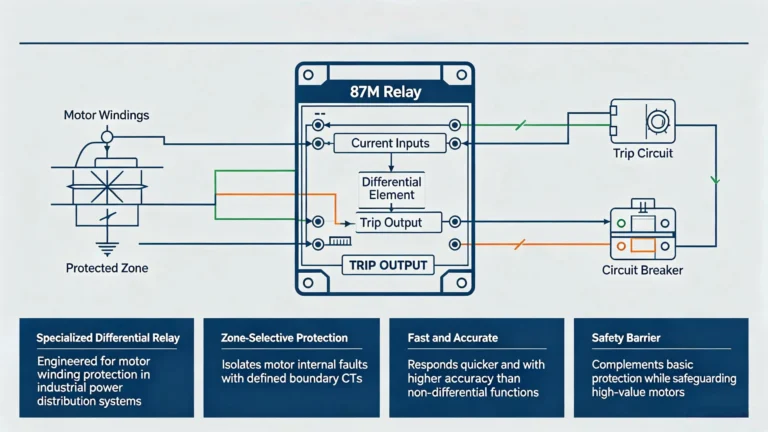
87M Relay: How It Works and When Is It Required? An 87M relay is the ANSI function number for motor differential protection: it compares the current entering and leaving a motor stator winding and trips when the two no longer match.…
Motor Differential Protection: Working Principle, 87M Scheme and Applications
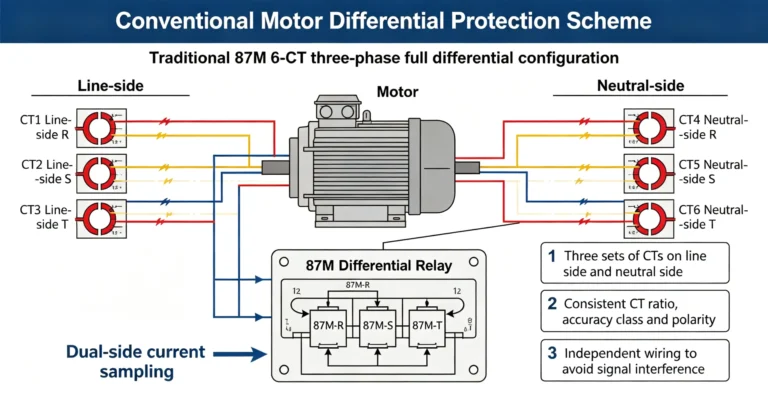
Motor differential protection is a fast, selective primary protection technology that compares the inbound and outbound currents of a defined motor protection zone to detect internal stator winding faults. Classified as ANSI 87M in standard power system protection nomenclature, it…
Motor Protection Relay Functions: ANSI 48, 49, 50, 51 and Beyond
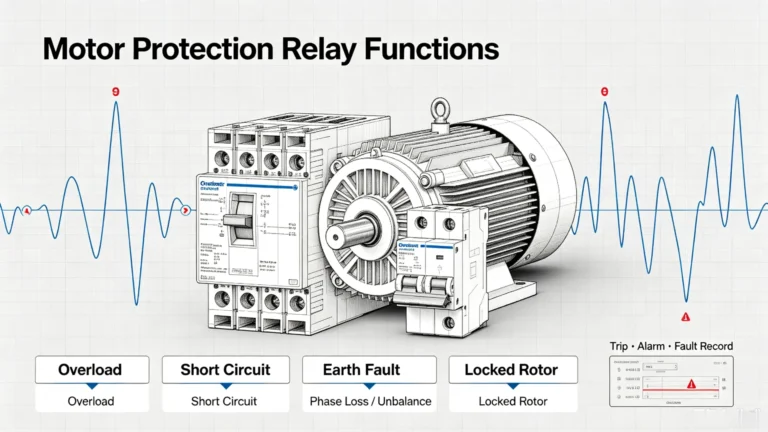
Motor protection relay functions are the protection stages inside a motor protection relay that watch one motor and trip the starter before the winding is damaged. On most feeders that set is short: 49 thermal overload, 48 locked rotor, 50/51…
How to Select a Digital Fault Recorder for a Substation
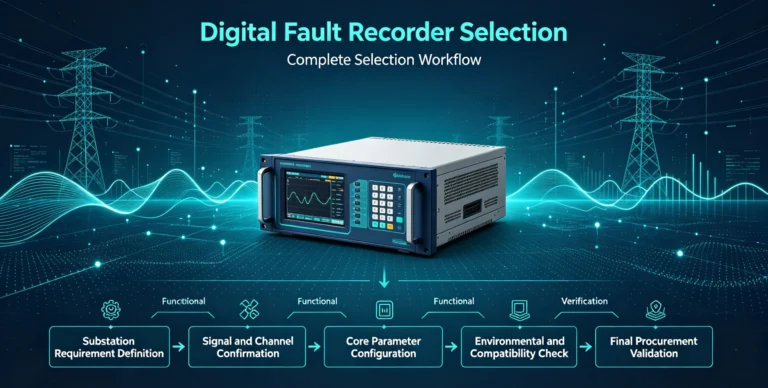
Digital fault recorder selection comes down to seven checks: analogue channel count, sampling rate, pre-fault and post-fault window length, trigger logic, time synchronisation accuracy, storage retention and protocol support. Get those seven right for one specific substation and the recorder…
Digital Fault Recorder vs Protection Relay: What Is the Difference?
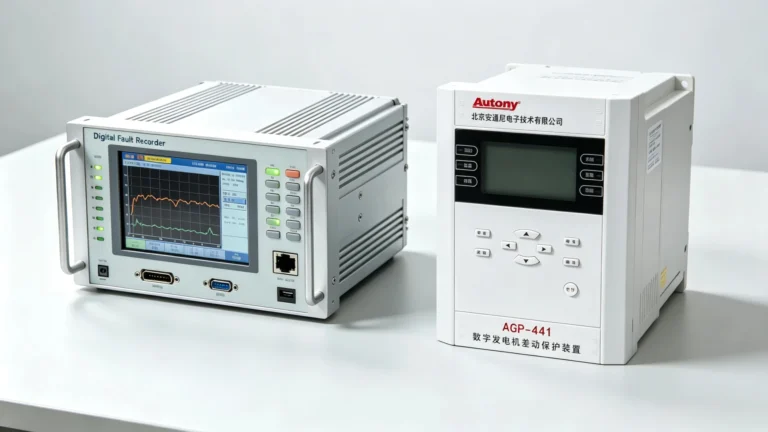
Digital fault recorder vs protection relay: one device clears the fault, the other keeps the record. A protection relay compares current and voltage with set thresholds and trips a breaker in tens of milliseconds. A digital fault recorder (DFR) samples…
How Does a Digital Fault Recorder Work? Sampling, Triggering and Storage
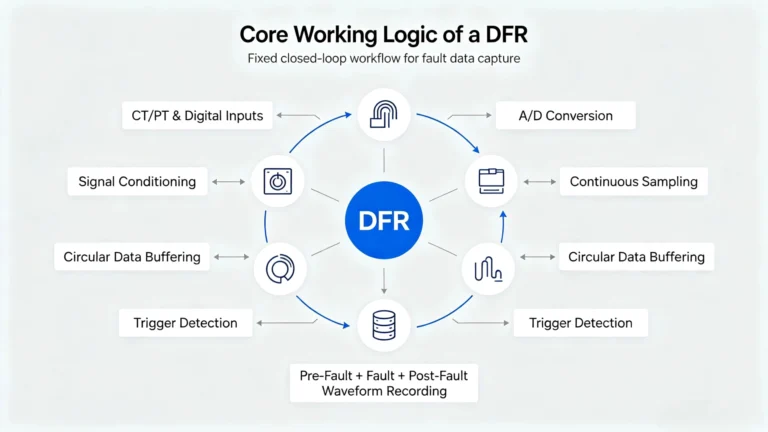
A digital fault recorder works by keeping a rolling record and never deciding anything. It samples CT and VT secondaries around the clock, holds the last few seconds in a circular buffer, opens a file the moment a threshold or…
How to Select a Transformer Protection Relay
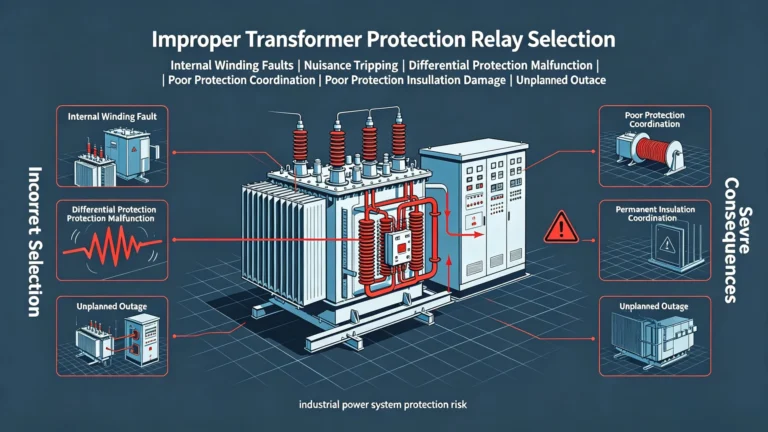
Introduction: Why Transformer Protection Relay Selection Matters Improper transformer protection relay selection leads to severe on-site risks, including undetected internal winding faults, frequent nuisance tripping, malfunction of differential protection, poor system protection coordination, permanent transformer insulation damage, and unplanned power…
High Quality
Stable performance, reliable design, ensuring safe operation for power system protection and grid stability.
Fast Delivery
Timely delivery to support your urgent orders and project schedules efficiently and professionally at any time.
Best Warranty
Professional Warranty: Reliable after-sales support for stable relay protection and long-term customer satisfaction.