

-
Leon Zhang sales consultant
-
Email: zxl635973785@gmail.com
-
Phone/WhatsApp: +86 13655813266
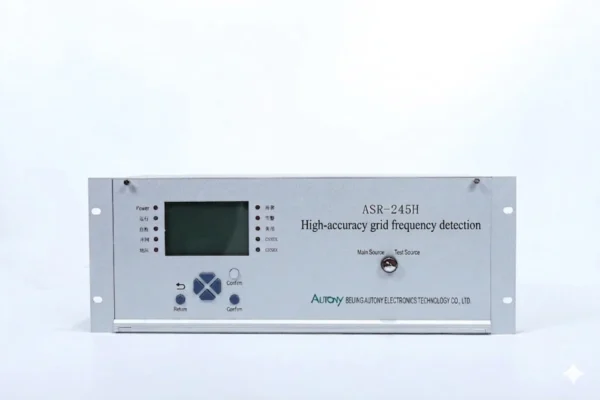
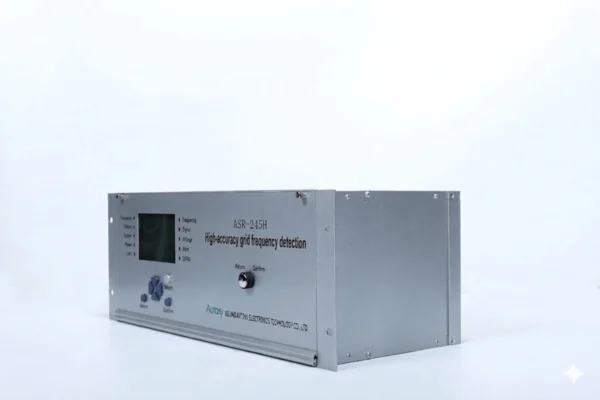
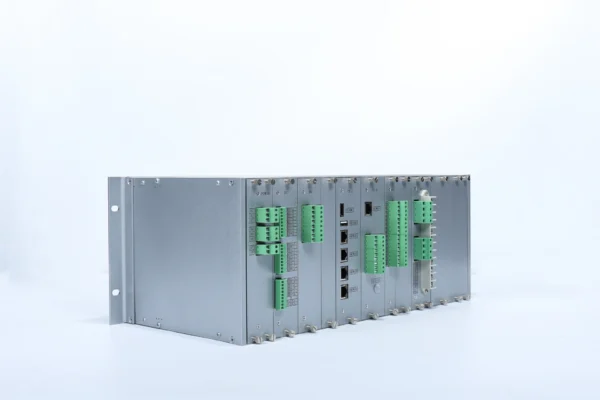
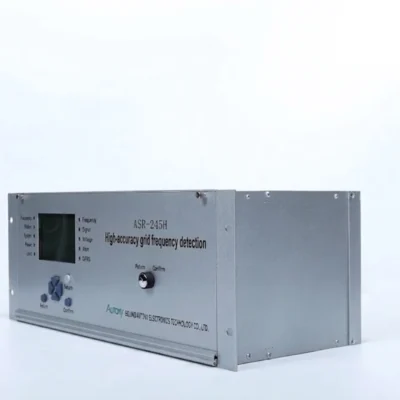
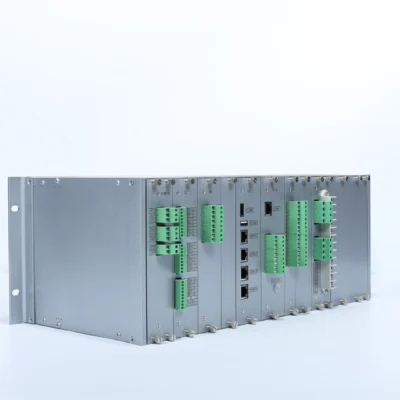
High-accuracy grid frequency detection ASR-245H
Overview of High-accuracy grid frequency detection
Wideband measuring device and processing unit form substation system for high-accuracy grid frequency detection.
Communication Mode:Optional: RS-485, CAN bus, Ethernet, IEC 60870-5-103 ,IEC 61850
Send your requirements, we will quote for you within 12 hours
Description
Overview of High-accuracy grid frequency detection
- Wideband measuring device and processing unit form substation system for high-accuracy grid frequency detection.
- The measuring device is mainly used for data acquisition and calculation,and realizes unified measurement of fundamental wave, harmonic and inter-harmonicsignals of power grid signals in the wide frequency domain.
- The wideband measurement processing unit is applied to receive, store and forward wideband measurement data, and features data analysis and preprocessing functions.
- It enables customized transmission of original measured data, preprocessed analysis data and diagnostic analysis result data to the master station.
Micro phasor measurement unit
Grid Synchronization Monitor-Synchronized Phasor Measurement
- Synchronously collect three-phase voltage and three-phase current at measurement points.Calculate three-phase fundamental voltage and three-phase fundamental current.
- Obtain positive-sequence fundamental voltage phasor, positive-sequence fundamental current phasor,system frequency and rate of change of frequency.
High-Precision Frequency Meter-Binary Quantity Acquisition
- Collect binary status information at measurement points,including circuit breaker positions and disconnector positions.
Grid-Connected Monitoring Device-Real-time Data Recording
- Continuously record the fundamental-frequency forward-sequence phasors of the measured voltage and current, the fundamental-frequency phasors of the three-phase voltage and current, the frequency, the rate of change of frequency, and the switch status signals;
- The device can generate event marks when the following power system events occur,to facilitate users to obtain dynamic data during event periods:
- Frequency out-of-limit;
- Rate of change of frequency out-of-limit;
- Amplitude over upper limit, including over-limit of positive sequence voltage,positive sequence current, negative sequence voltage, negative sequence current,zero sequence voltage, zero sequence current, phase voltage and phase current.
- Amplitude below lower limit, including under-limit of positive sequence voltage, phase voltage, etc.
-
Binary state change
-
Low frequency oscillation
-
Subsynchronous oscillation
-
Wideband oscillation
-
Harmonic current out-of-limit, harmonic voltage out-of-limit
-
Inter-harmonic voltage out-of-limit, inter-harmonic current out-of-limit
-
Grid connection trigger
- Record device alarm information, operation logs and binary state change records in real time.All data are stored in chronological order without loss after power failure,facilitating query and fault analysis for operators.
Subsynchronous and Supersynchronous Oscillation Monitoring
- Adopt sampled voltage and current values to calculate instantaneous power in real time and conduct spectrum analysis.Monitor oscillations within the instantaneous power range of 2.5~45Hz and 55~95Hz.
- Upload the top 10 dominant oscillation frequencies and corresponding amplitudes in descending order of oscillation intensity.
Wideband Oscillation Monitoring
- Calculate instantaneous power in real time with voltage and current sampling values and perform spectrum analysis.Monitor oscillations in the instantaneous power range of 100~300Hz.
Harmonic Monitoring
- Monitor 2nd to 50th harmonics of voltage and current channels.
Inter-harmonic Monitoring
- Monitor inter-harmonics within 2.5-2500Hz of voltage and current channels.
Real-time Data Communication
-
Transmit voltage phasors, current phasors, frequency, power and device status information to the wideband measurement processing unit in real time.
-
Send subsynchronous oscillation components, harmonic and inter-harmonic components of voltage and current channels to the wideband measurement processing unit in real time.
-
Support real-time phasor data uploading and one-to-multiple transmission. It can communicate with multiple wideband measurement processing units simultaneously without mutual interference.
-
The real-time transmission rate of dynamic phasor data is adjustable, with optional rates of 25, 50 and 100 times per second.Dimensions
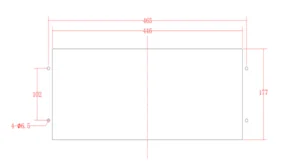
Dimensions of High-accuracy grid frequency detection
Rated Specifications of High-accuracy grid frequency detection
Power Supply Voltage
- 220V or 110V (as per order requirements),allowable deviation: -20% ~ +15%,ripple factor no more than 5%
AC Circuit Parameters
- AC Voltage: Rated 57.73V, measuring range 0V~120V
- AC Current: Rated 1A or 5A (per order), measuring range 0~2 times rated value
- Rated Frequency: 50Hz
Sampling Rate
- 12800Hz
Subsynchronous Monitoring Parameters
- Monitor instantaneous power oscillation.Monitoring frequency range: 2.5Hz~45Hz, 55Hz~95Hz.
- Oscillation event setting values:
① Instantaneous power fluctuation amplitude, unit: MW② Oscillation duration, unit: second
- Uploaded oscillation information:
① Oscillation amplitude, unit: MW② Oscillation frequency, unit: Hz③ Oscillation event flag
Wideband Oscillation Monitoring Parameters
-
Monitor instantaneous power oscillation, monitoring frequency range: 100Hz~300Hz.
- Oscillation event setting values:
① Instantaneous power fluctuation amplitude, unit: MW② Oscillation duration, unit: second
- Uploaded oscillation information:
① Oscillation amplitude, unit: MW② Oscillation frequency, unit: Hz③ Oscillation event flag
Harmonic Monitoring Parameters
-
Monitor voltage and current channels, harmonic monitoring range: 2nd to 50th harmonics.
- Oscillation event setting values:
① Voltage/current harmonic limit value② Oscillation duration, unit: second
- Uploaded oscillation information:
① Oscillation amplitude, unit: MW② Oscillation frequency, unit: Hz③ Oscillation event flag
Inter-harmonic Monitoring Parameters
-
Monitor voltage and current channels, inter-harmonic monitoring range: 2.5~2500Hz.
- Upload oscillation information:
① Inter-harmonic oscillation phasor② Oscillation frequency, unit: Hz③ Oscillation event flag
-
Support oscillation data uploading.
External Interfaces
- 4 Gigabit Ethernet electrical ports
- 1 RS-485 serial port
- 1 B-code input port
- 1 pulse output port
FAQ
Q:What is the difference between a Wide-Area Measurement System and a PMU?
A:
| Comparison Dimension | PMU | Wideband Monitoring Device |
|---|---|---|
| Frequency Range | 45~55Hz power frequency fundamental wave | 0~2500Hz full frequency band |
| Oscillation Monitoring | 0.1~2.5Hz low frequency + 10~40Hz/60~90Hz sub-synchronous & super-synchronous oscillation | All above plus 100~300Hz wideband oscillation |
| Harmonic Monitoring Function | Not supported | Supports 2.5~45Hz/55~100Hz inter-harmonics and 100~2500Hz harmonics (amplitude & phase included) |
| Functional Relation | Basic version | PMU superset, compatible and replaceable with PMU |
| Sampling Rate | 3.2kHz / 6.4kHz | 12.8kHz (higher) |
| Core Standards | IEEE C37.118.1/2 | Q/GDW 12214-2022 (National Standard) |
Q What is high-accuracy grid frequency detection?
It is a dedicated measuring unit that tracks power system real-time frequency with ultra-high sampling precision, and outputs frequency value, overfrequency / underfrequency alarm and trip signals.
Q Core application scenarios
Grid-connected generators, distributed PV/wind stations, substation auxiliary protection, load shedding control, islanding detection and power quality monitoring.
Q Typical measurement precision
Standard accuracy reaches ±0.001 Hz ~ ±0.005 Hz, far higher than common multifunction relay frequency measurement (usually ±0.01 Hz).
Q Normal rated frequency & action range
System rated value 50 Hz or 60 Hz; detection range generally 45~55 Hz (50Hz system) or 55~65 Hz (60Hz system).
Q What core functions are supported?
Real-time frequency display, over-frequency protection (81O), under-frequency protection (81U), frequency change rate df/dt monitoring, time-delay setting, relay contact output and communication data upload.
Q What is df/dt frequency rate of change detection?
Judges rapid frequency collapse caused by major power shortage or grid splitting, triggers fast load shedding or generator disconnection to prevent system collapse.
Q What input signal does the device need?
Directly access PT secondary three-phase line voltage; no CT current signal required.
Q Can it work with single-phase voltage input?
Most models support single-phase voltage sampling, but three-phase input improves anti-interference ability and avoids loss of measurement upon single PT fuse failure.
Q How does delay protection prevent maloperation?
Users configure definite time delay for over/under frequency threshold, filtering transient frequency fluctuation from motor startup or short-circuit faults.
Q What is frequency blocking condition?
When voltage drops below a preset threshold, frequency protection can be locked to avoid misjudgment under serious voltage distortion.
Q Available output modes
DO relay trip/alarm contacts; RS485 / Ethernet upload frequency data via Modbus or IEC 104 to SCADA system.
Q Frequency reading displays abnormal or jumping
PT wiring error, loose terminal, severe harmonic distortion, weak voltage signal or electromagnetic interference on secondary cable.
Q No action when frequency exceeds limit
Threshold value set out of range, delay time too long, output relay damaged or control power lost.
Q Device prompts voltage loss alarm
PT fuse blown, voltage loop open circuit or no input AC voltage.
Q Key commissioning items
Inject standard variable frequency power source to calibrate measurement accuracy, verify alarm and trip output, debug upper computer communication.
Q16 Daily maintenance notes
Check PT loop integrity regularly; keep device away from strong electromagnetic interference; periodically verify measurement precision.
Q Why use an independent high-precision frequency detector?
Relay onboard frequency measurement is auxiliary function for backup protection; independent dedicated unit features higher sampling rate, better anti-harmonic performance and faster response for grid stability control.
2 reviews for High-accuracy grid frequency detection ASR-245H
Related products
High Quality
Stable performance, reliable design, ensuring safe operation for power system protection and grid stability.
Fast Delivery
Timely delivery to support your urgent orders and project schedules efficiently and professionally at any time.
Best Warranty
Professional Warranty: Reliable after-sales support for stable relay protection and long-term customer satisfaction.
xiao zhang –
High-accuracy grid frequency detection monitors real-time system frequency precisely and outputs early warning for abnormal deviation to secure grid stable operation.
Jack –
The product has high accuracy and meets the acceptance standards.