

Power Grid Status and Electrical Parameter Monitoring
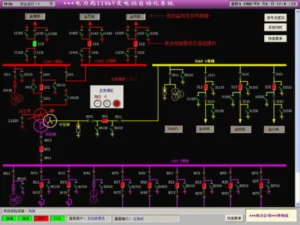
The SCADA system provides continuous real-time monitoring of grid status and key electrical parameters across all critical equipment, enabling operators to maintain system stability, optimize performance, and respond swiftly to abnormal conditions.
| Parameter | Description | Significance |
|---|---|---|
| Voltage | RMS voltage at each busbar, feeder, and equipment terminal | Detects overvoltage, undervoltage, and sags/swells; ensures power quality and equipment safety |
| Current | Load current flowing through feeders, transformers, and lines | Monitors loading conditions; detects overcurrent, unbalance, and earth faults |
| Active Power (MW) | Real power consumed or generated by feeders and equipment | Balances generation and load; optimizes power flow and energy management |
| Reactive Power (MVAr) | Reactive power flow in the system | Maintains voltage stability; controls power factor; reduces system losses |
| Power Factor | Ratio of active power to apparent power (cos φ) | Assesses load characteristics; improves energy efficiency; avoids penalties |
| Frequency | Grid frequency measured at busbars and generators | Detects over/under frequency events; triggers load shedding or generation adjustment |
| Equipment Status | Operating status of breakers, isolators, transformers, switchgear (open/closed, normal/alarm/trip) | Provides real-time situational awareness; enables fault detection and rapid restoration |
In summary, real-time monitoring of these parameters ensures stable grid operation, enhances equipment protection, and supports informed decision-making by operators.
Fault Detection and Alarm Management
The SCADA system continuously monitors electrical parameters and equipment status to detect abnormalities in real time. Upon fault detection, it generates alarms, logs events, and alerts operators for rapid response and fault isolation. The table below outlines key fault types, detection methods, and corresponding alarm actions.
| Fault / Alarm Type | Detection Method | Alarm Action |
|---|---|---|
| Overcurrent | Monitored via CTs; triggered when current exceeds preset threshold (definite-time or inverse-time characteristic) | Annunciator alarm, SCADA event log, remote notification; initiates breaker trip if sustained |
| Short Circuit | Detected by protection relays (overcurrent, differential, or distance elements); characterized by a sudden surge in current with voltage dip | Instantaneous trip command to circuit breaker; fault recorded with time-stamped waveform; alarm displayed on HMI |
| Earth Fault | Detected via zero-sequence current (core balance CT or residual connection); sensitive detection for ground leakage | Alarm and trip (depending on setting); fault location and resistance value recorded for analysis |
| Overvoltage | Monitored via PTs; triggered when voltage exceeds high limit (e.g., >110% of nominal) | Alarm generated; may initiate corrective actions (e.g., tap changer operation, capacitor bank switching) |
| Overload | Detected by thermal overload protection or long-term overcurrent monitoring; based on I²t thermal model | Pre-alarm at threshold, trip at critical level; load shedding recommended if persistent |
| Breaker Status | Monitored via auxiliary contacts (open/closed), spring charge status, SF6 pressure, trip/close circuit integrity | Alarm for position mismatch, failure to trip/close, low gas pressure, or loss of control supply |
| Communication Failure | Detected via heartbeat signals or periodic polling between SCADA master and field IEDs/RTUs | Alarm for loss of communication, data stale flag; indicates potential hardware or network issue |
In summary, the SCADA system provides comprehensive fault detection and alarm management, enabling operators to quickly identify, isolate, and rectify system abnormalities, thereby minimizing outage duration and enhancing overall grid reliability.

Jack –
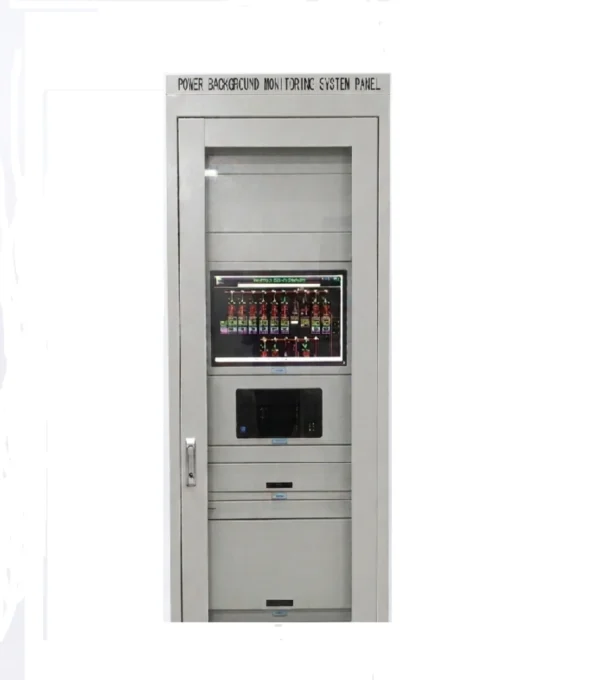
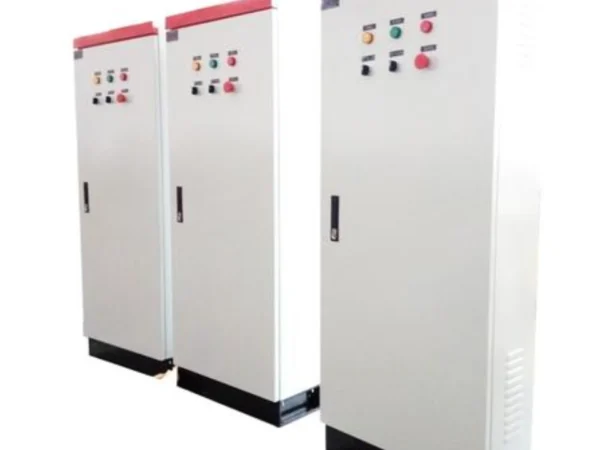
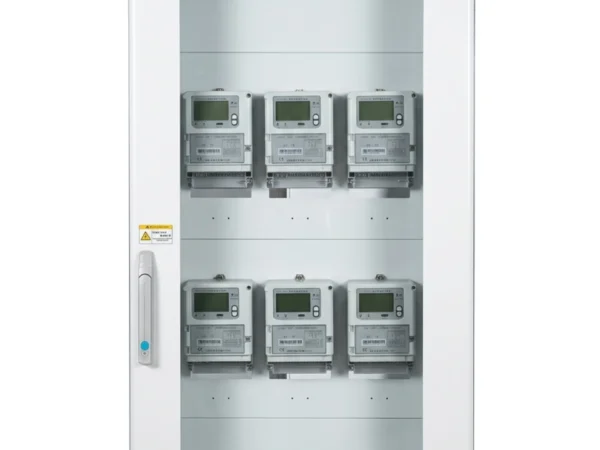
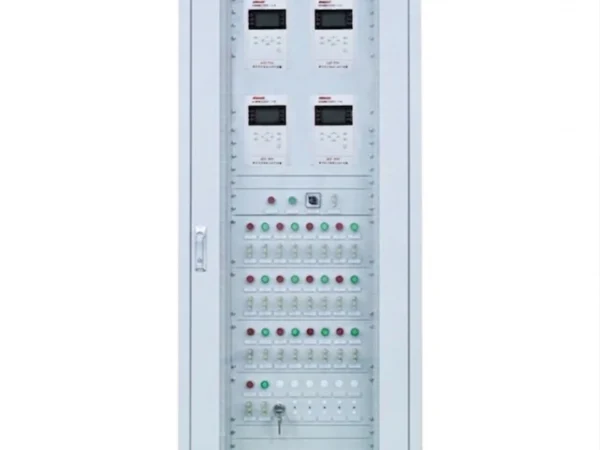
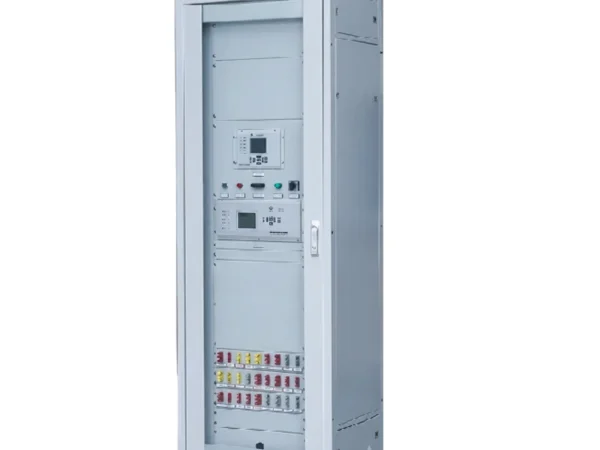
The power SCADA monitoring cabinet features rational design. It can be installed inside power distribution rooms to save space, making it an excellent product.