

-
Leon Zhang sales consultant
-
Email: zxl635973785@gmail.com
-
Phone/WhatsApp: +86 13655813266
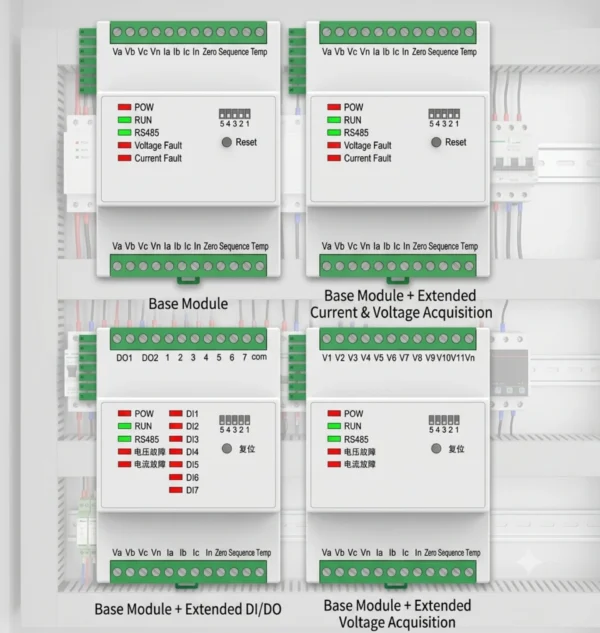
27L low voltage current monitoring with Power Quality & Waveform Recording
The ATN-343H adopts an industrial-grade microprocessor as its core with high processing speed. It can achieve high-precision measurement of basic parameters including three-phase voltage, three-phase current and zero-sequence current, and is also equipped with power quality monitoring, waveform recording, low voltage fault monitoring and low voltage grid monitoring functions.
Communication Mode:Optional: RS-485
Send your requirements, we will quote for you within 12 hours
Description
Overview of low voltage current monitoring
- The ATN-343H low voltage current monitoring acquisition module is composed of power supply modules and acquisition modules. One set of ATN-343 can be fitted with up to 1 power supply module and 4 acquisition modules at most.
- The ATN-343H adopts an industrial-grade microprocessor as its core with high processing speed. It can achieve high-precision measurement of basic parameters including three-phase voltage, three-phase current and zero-sequence current, and is also equipped with power quality monitoring, waveform recording, low voltage fault monitoring and low voltage grid monitoring functions.
- It can meet various data acquisition requirements by flexibly selecting and matching expansion boards. Built with super capacitors, the low-voltage acquisition module serves as backup power to support data upload after power failure.
- It supports multiple communication modes, enabling data exchange with upper computers via RS485, LoRa and Zigbee for low voltage equipment monitoring and intelligent power energy management.
- The acquisition module features compact size and easy installation, widely applied in low voltage data center monitoring, intelligent building power supply fields, industrial power management systems and energy efficiency management systems.
Detailed Description of the Low Voltage Monitor Function
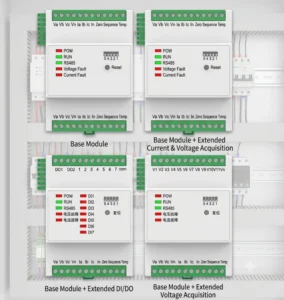
Low-Voltage Monitoring and Data Acquisition Module
| Function | Description | Remarks |
|---|---|---|
| Basic Measurement | Three-phase phase voltage & average value, three-phase line voltage & average value, three-phase current & average value, zero-sequence current (on-site collection or three-phase calculation optional, on-site collection by default); three-phase active power & total value, three-phase reactive power & total value, three-phase apparent power & total value, three-phase power factor & total value, frequency, calculated neutral current, one group of temperature measurement | |
| Energy Metering | Three-phase and single-phase energy data:
Forward active energy, reverse active energy, total active energy, net active energy Forward reactive energy, reverse reactive energy, total reactive energy, net reactive energy Four-quadrant reactive energy, apparent energy, TOU energy Monthly energy values of the latest 12 months available for three-phase energy |
|
| Power Quality | Fundamental wave data: power factor & total value, active power & total value, three-phase voltage/current phase angle
Harmonic data: Total harmonic active power Odd-order, even-order and total harmonic distortion rate of three-phase voltage/current Individual harmonic distortion rate of 2nd~11th order for three-phase voltage/current K-factor of three-phase current Odd-order, even-order and total TDD of three-phase current Crest factor of three-phase current Voltage/current unbalance degree |
|
| Demand Function | Real-time demand of three-phase current, total active power, total reactive power and total apparent power
Current month maximum demand and time stamp of above parameters Current month maximum demand and time stamp of total active/reactive/apparent power in different tariff periods Last month maximum demand and time stamp of three-phase current, total active/reactive/apparent power Last month maximum demand and time stamp of total active/reactive/apparent power in different tariff periods |
|
| Time-of-Use Tariff | Supports setting 12 billing seasons, 20 tariff tables, 12 daily time periods, 4 billing day types, 90 special days and 8 tariff rates
Dual sets of schemes available for billing seasons, daily periods and special days |
|
| Event Recording | 10 event records with 1ms resolution; including DI status change, DO action, residual current alarm, temperature alarm, limit violation, self-check, event clearing, etc. | |
| Setting Value Over-limit | Up to 2 groups of over-limit settings; monitors voltage, current, neutral current, frequency, temperature and other variables; supports SOE generation and DO action triggering | |
| Data Freezing | 60 daily freezing records and 36 monthly freezing records
Freezes device energy and demand data, and records freezing data & time |
|
| Communication Mode | Standard equipped with 1 RS-485 port; LoRa and Zigbee are optional
Protocol: MODBUS-RTU Baud rate: 1200/2400/4800/9600/19200/38400bps Supports reading and writing module parameters and settings via MODBUS-RTU; supports remote fault reset, remote control, waveform recording trigger, time synchronization, restart and other commands |
|
| Basic Statistical Data | Statistics on voltage swell times, voltage sag times, short-time power interruption times, etc. Data stored in the module in file or table form for access by communication platform | |
| Fault Waveform Recording | Cyclic storage of at least 4 groups of waveform data with upload function
Trigger conditions: overcurrent fault, line voltage loss, overvoltage, sudden change of zero-sequence current, etc. Parameters configurable locally and remotely Waveform data includes no less than 4 cycles before fault occurrence and 8 cycles after fault occurrence; no less than 20 sampling points per cycle; contains voltage, current and switch status (with DI/DO module) |
Stored in standard format complying with Comtrade 1999 (GB/T 22386-2008). Only CFG (ASCII configuration file) and DAT (binary data file) are adopted |
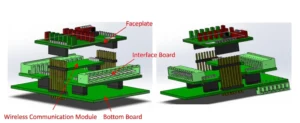
System Configuration
FAQ
Q:what are the benefits of low voltage monitoring solutions
A:
- Low voltage monitoring solutions bring comprehensive and reliable operational advantages for power distribution management.
- Firstly, equipped with low voltage monitoring relay, they can realize real-time fault judgment and rapid protection response, effectively avoid sudden power failures and equipment damage.
- Secondly, the integrated low voltage monitoring system and low voltage system monitoring and control achieve unified data collection, remote regulation and automatic operation of on-site power equipment, greatly reducing manual maintenance workload.
- In addition, professional low voltage network monitoring helps staff grasp the overall operating status of the power grid in real time, timely discover line load abnormalities and hidden dangers.
- Meanwhile, low voltage power quality monitoring accurately detects harmonic distortion, voltage deviation, unbalance and other power quality problems, ensuring stable and high-quality power supply for all loads.
- For power distribution infrastructure, low voltage substation monitoring realizes full-range status supervision of low-voltage substations, improves the safety level of power distribution stations.
2 reviews for 27L low voltage current monitoring with Power Quality & Waveform Recording
Related products
High Quality
Stable performance, reliable design, ensuring safe operation for power system protection and grid stability.
Fast Delivery
Timely delivery to support your urgent orders and project schedules efficiently and professionally at any time.
Best Warranty
Professional Warranty: Reliable after-sales support for stable relay protection and long-term customer satisfaction.
xiao zhang –
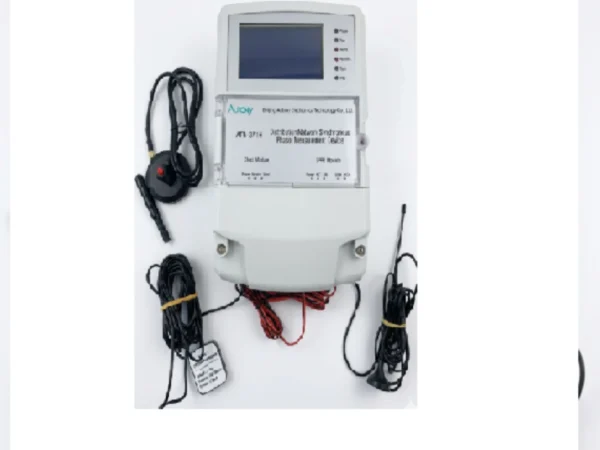
Low Voltage Current Monitor tracks real-time current and triggers alarm upon overload or phase loss, safeguarding low-voltage electrical equipment reliably.
Jack –
Front USB port makes data extraction quick and convenient.