

-
Leon Zhang sales consultant
-
Email: zxl635973785@gmail.com
-
Phone/WhatsApp: +86 13655813266
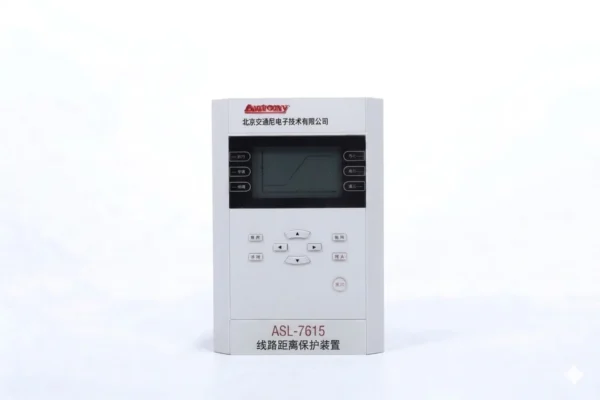
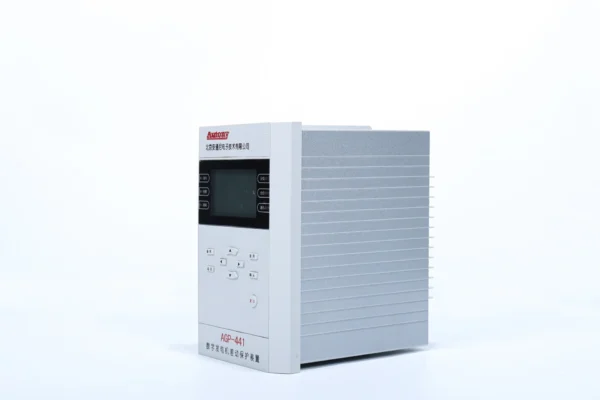
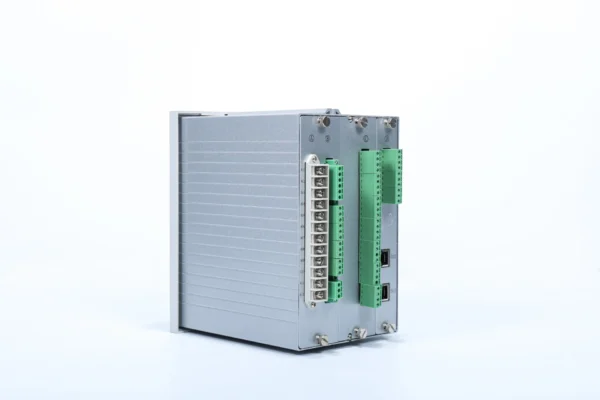
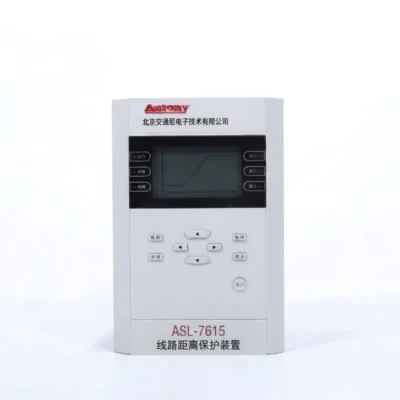
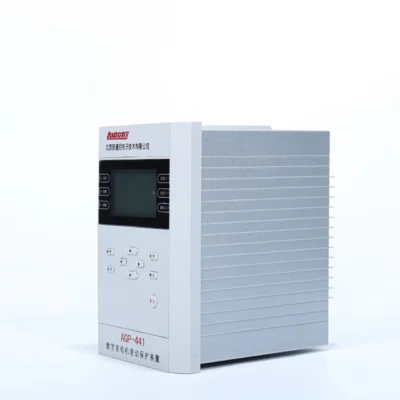
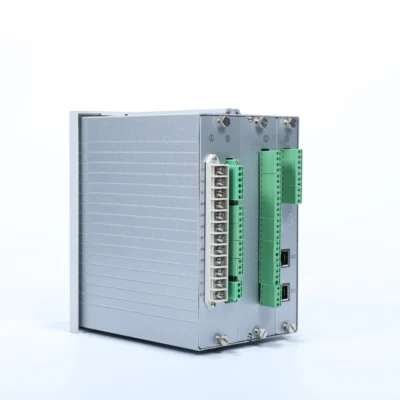
Line Distance Protection Relay | ANSI 21
ASL-7615 is a numerical line distance protection relay designed for transmission line protection, featuring ANSI 21 distance protection and integrated backup protection functions.
Function Configuration
21/51/51N/51G/79/27/49/81
Communication Mode:Optional: RS-485, CAN bus, Ethernet, IEC 60870-5-103 (IEC-103)
Send your requirements, we will quote for you within 12 hours
Description
What is a Line Distance Protection Relay?
ASL-7615 is a numerical line distance protection relay designed for transmission line protection, featuring ANSI 21 distance protection and integrated backup protection functions.
It is suitable for transmission lines and distribution networks up to 110 kV, and is widely used in substations, power plants, industrial distribution systems, and renewable energy plants (such as wind farms and photovoltaic stations) — meeting the protection requirements under various operating conditions.
Function Configuration of Line Distance Protection Relay
Main Protection Functions
| No. | Function Name | ANSI Code |
|---|---|---|
| 1 | Three-stage Distance Protection | 21 |
| 2 | Three-stage Phase Overcurrent Protection | 51 |
| 3 | Two-stage Zero-sequence Overcurrent Protection | 51N / 51G |
| 4 | Three-phase Single-shot Auto-reclosing | 79 |
| 5 | Post-closing Phase / Zero-sequence Current Acceleration Protection | 51ACC |
| 6 | Under-frequency Load Shedding Protection | 81U |
| 7 | Under-voltage Load Shedding Protection | 21 / 27 |
| 8 | Overload Alarm | 49 |
| 9 | Zero-sequence Current Alarm | 51N |
| 10 | Ground Fault Alarm | 51G |
| 11 | Frequency Anomaly Alarm | 81 |
| 12 | Spring Uncharged Alarm | — |
| 13 | Control Circuit Break Alarm | — |
| 14 | TWJ Abnormal Alarm | — |
| 15 | PT Broken Line Alarm | 60 |
| 16 | CT Broken Line Alarm | 60 |
| 17 | Fault Waveform Recording | — |
Main Measurement & Control Functions
- 8-channel remote signal binary input acquisition and device remote signal displacement;
- Remote measurement of 14 analog quantities including Ia, Ib, Ic, 3I0, Ua, Ub, Uc, Uab, Ubc, Uca, P, Q, COSφ and F;
- Remote opening and closing control;
- Small current ground fault line selection test trip (auto-reclosing function supported, external zero-sequence current input required);
- Time synchronization.
Principle of Line Distance Protection
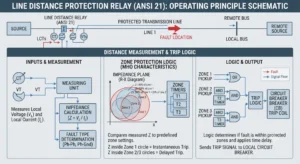
Distance relay protection determines the fault distance by measuring the impedance between the fault point and the protection installation point. It uses the ratio of busbar voltage to line current at the installation point as the measured impedance. This impedance is proportional to the fault distance and is largely unaffected by system operating conditions, ensuring that the protection range remains essentially constant.
Transmission Line Protection Distance Relays — Setting List
| No. | Setting Name | Setting Range (IN=1A or 5A) | Unit | Remarks |
|---|---|---|---|---|
| 1 | Variation Starting Current Setting | (0.05 ~ 3)IN | A | |
| 2 | Line Positive Sequence Impedance Setting | (0.05~655)/In | Ω | |
| 3 | Line Positive Sequence Impedance Angle | 30°~89° | — | |
| 4 | Total Line Length | 0~655 | km | |
| 5 | Phase Distance Zone I Setting | (0.05~125)/In | Ω | |
| 6 | Phase Distance Zone II Setting | (0.05~125)/In | Ω | |
| 7 | Phase Distance Zone II Time Delay | 0.01~10 | s | |
| 8 | Phase Distance Zone III Setting | (0.05~125)/In | Ω | |
| 9 | Phase Distance Zone III Time Delay | 0.01~10.00 | s | |
| 10 | Overcurrent Zone I Setting | (0.05 ~ 20)IN | A | |
| 11 | Overcurrent Zone I Time Delay | 0 ~ 10 | s | |
| 12 | Overcurrent Zone II Setting | (0.05 ~ 20)IN | A | |
| 13 | Overcurrent Zone II Time Delay | 0.1 ~ 10 | s | |
| 14 | Overcurrent Zone III Setting | (0.05 ~ 20)IN | A | |
| 15 | Overcurrent Zone III Time Delay | 0.1 ~ 10 | s | |
| 16 | Overcurrent Undervoltage Setting | 10 ~ 100 | V | Line Voltage |
| 17 | Overcurrent Negative Sequence Voltage Setting | 2 ~ 57 | V | U2 |
| 18 | Zero-sequence Overcurrent Zone I Setting | (0.05 ~ 20) | A | |
| 19 | Zero-sequence Overcurrent Zone I Time Delay | 0 ~ 10 | s | |
| 20 | Zero-sequence Overcurrent Zone II Setting | (0.05 ~ 20) | A | |
| 21 | Zero-sequence Overcurrent Zone II Time Delay | 0.1 ~ 10 | s | |
| 22 | Overcurrent Acceleration Setting | (0.05 ~ 20)IN | A | |
| 23 | Overcurrent Acceleration Time Delay | 0.00~ 3 | s | |
| 24 | Zero-sequence Overcurrent Acceleration Setting | (0.05 ~ 20)IN | A | |
| 25 | Zero-sequence Overcurrent Acceleration Time Delay | 0.00~ 3 | s | |
| 26 | PT Broken Line Phase Overcurrent Setting | (0.05 ~ 20)IN | A | |
| 27 | PT Broken Line Phase Overcurrent Time Delay | 0.1 ~ 10 | s | |
| 28 | Overload Setting | (0.05 ~ 20)IN | A | |
| 29 | Overload Time Delay | 1 ~ 3600 | s | |
| 30 | Synchronization Closing Angle | 10°~ 50° | — | |
| 31 | Auto-reclosing Time Delay | 0.1 ~ 10 | s | |
| 32 | High Current Reclosing Block Setting | (0.05 ~ 20)IN | A | |
| 33 | Under-frequency Load Shedding Frequency | 45 ~ 49.5 | Hz | |
| 34 | Under-frequency Load Shedding Time Delay | 0.1 ~ 40 | s | |
| 35 | Under-frequency Slip Block Setting | 0.5 ~ 20 | Hz/s | |
| 36 | Under-frequency Voltage Block Setting | 30 ~ 100 | V | Line Voltage |
| 37 | Under-voltage Load Shedding Voltage Setting | 30 ~ 100 | V | |
| 38 | Under-voltage Load Shedding Time Delay | 0.1 ~ 40 | s | |
| 39 | Voltage Change Rate Block Setting | 10 ~ 200 | V/s | Line Voltage |
| 40 | Power Swing Block Overcurrent | (0.05~20)In | A | |
| 41 | Distance Protection Resistance Setting | (0.05~125)/In | Ω | |
| 42 | Accelerated Distance Zone III Time Delay | 0.0~10 | s |
Outline and Installation Dimensions
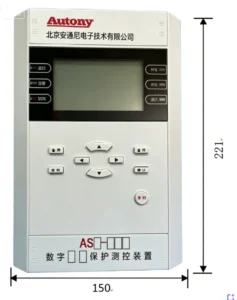
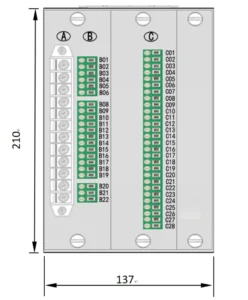
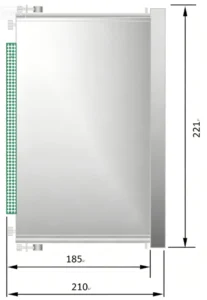
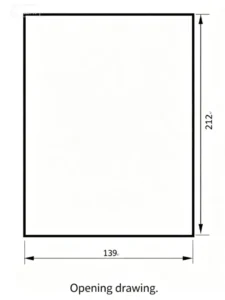
For more information about the ASL-7615 or to discuss your specific project requirements, please contact our technical support team.
FAQ
Q1: What voltage levels is the ASL-7615 designed for?
The ASL-7615 is typically designed for transmission and distribution lines up to 110 kV. For specific voltage level selection, please refer to your project requirements.
Q2: What communication protocols are supported?
Standard configurations typically support IEC 61850, Modbus, and other mainstream protocols for integration into digital substations. The actual protocol stack depends on the factory configuration — different models may be equipped with different interface combinations as standard.
Q3: Does the relay support auto-reclosing?
Yes. The relay typically integrates auto-reclosing functionality, supporting single-phase, three-phase, and combined reclosing schemes to meet various system restoration strategies.
Q4: Can the relay be customized?
Yes. Hardware and software customization is available. Protection logic, communication interfaces, and the number of binary inputs/outputs can be tailored to project requirements. Please consult our sales or technical support team for details.
Q5: What information is required for quotation?
To provide an accurate quotation, the following information is typically required:
-
CT/PT Parameters: Ratios, rated current, etc.
-
Protection Function Requirements: Number of protection zones and backup protection needs
-
Communication Interface Requirements: Specific protocols and physical port types
-
Installation and Power Supply Conditions: Panel dimensions and DC supply voltage
Q6: Can you provide technical support for relay settings?
Yes. We provide comprehensive technical support, including setting guide, logic configuration, and on-site commissioning. For specific projects, offline setting software may also be available. Please contact our technical support team for recommended settings tailored to your system.
3 reviews for Line Distance Protection Relay | ANSI 21
Related products
High Quality
Stable performance, reliable design, ensuring safe operation for power system protection and grid stability.
Fast Delivery
Timely delivery to support your urgent orders and project schedules efficiently and professionally at any time.
Best Warranty
Professional Warranty: Reliable after-sales support for stable relay protection and long-term customer satisfaction.
xiao zhang –
This line distance protection relay (ANSI 21) adopts segmental impedance-type distance logic, effectively resisting load swing and fault transition resistance. Equipped with fault location function and optional multi-protocol communication, widely used for overhead transmission and cable line protection in global power grid projects.
Jack –
Communication protocol compatible with mainstream platforms, stable data upload — good product.
Jack –
Solid hardware workmanship, clearly marked terminals, easy installation.