Description
Overview of Digital Fault Recorder Panel
- Fault Wave Recorder Cabinet, also universally known as Digital Fault Recorder Panel (DFR Panel), Fault Recorder Panel, Disturbance Recorder Panel, and Fault and Disturbance Recorder Panel in the power industry, is regarded as the black box of power system.
- It covers multiple professional refined types including IEC 61850 Fault Recorder Panel complying with international universal standards, Time Synchronized Fault Recorder with high-precision timing function, and dedicated Power Plant Disturbance Recorder Panel for power generation scenarios.
- This series of equipment can instantly capture voltage, current waveforms and switch status during power grid faults, providing accurate original data for fault analysis and relay protection verification. It is essential monitoring equipment for safe power grid operation.

Main Technical Requirements
- High sampling accuracy: Analog sampling rate ≥4kHz, steady-state and transient signal coverage, error ≤0.5%. The high-precision sampling capability is the core advantage of Time Synchronized Fault Recorder, which ensures synchronous and accurate collection of fault waveform data across the whole grid.
- Sufficient access channels: 16~64 analog channels, 32~128 digital channels, compatible with busbar, transmission line and transformer access. It meets the channel access demands of conventional Fault Recorder Panel and large-scale Fault and Disturbance Recorder Panel for complex power grid working conditions.
- Complete trigger modes: Support sudden change, overvoltage, undervoltage, overcurrent, frequency deviation and other triggers. Pre-recording ≥2 cycles before fault, post-recording ≥5 seconds after fault. The comprehensive trigger mechanism enables Disturbance Recorder Panel to fully capture transient and steady-state disturbance signals of power grid.
- Stable communication protocol: Comply with DL/T 667 and IEC 61850 standards, connect with dispatching network and fault information sub-station. Specially designed IEC 61850 Fault Recorder Panel realizes seamless data interconnection with smart substation systems based on standard protocol specifications.
- Strong environmental adaptability: Working temperature -10℃~+55℃, humidity ≤85% non-condensing, meet EMC anti-interference standards. All series of DFR Panel and fault recording cabinet equipment can adapt to harsh on-site operation environments of substations and power plants.
- Large storage capacity: Built-in high-capacity hard disk, store over 1000 fault records, support COMTRADE data export. It meets the long-term data storage and tracing demands of Power Plant Disturbance Recorder Panel for frequent grid-connected fluctuation monitoring of power generation units.

Application Places
- Substations: Mandatory equipped for 220kV and above substations; installed for key 110kV substations; optional for 35kV/10kV grid-connected stations. Conventional Digital Fault Recorder Panel and standard Fault Recorder Panel are the mainstream configuration for substation fault monitoring.
- Power plants: Thermal power, hydropower, wind power and photovoltaic power station booster stations, record grid connection faults and unit power fluctuations. The professional Power Plant Disturbance Recorder Panel is specially customized for power plant grid-connected working conditions, targeting unit disturbance and grid connection fault recording scenarios.
- Industrial power users: Large steel plants, chemical plants, data centers and self-provided power stations for internal power grid fault tracing. The cost-effective Disturbance Recorder Panel and basic DFR Panel can fully meet the daily fault monitoring and disturbance tracing demands of industrial self-provided power grids.
Installation & Commissioning
Installation Standards
- Standard cabinet size: 2260mm×800mm×600mm, tempered glass front door, double rear doors for heat dissipation. This unified cabinet size is applicable to all series products including Fault and Disturbance Recorder Panel, IEC 61850 Fault Recorder Panel and Time Synchronized Fault Recorder.
- Installation position: Placed in secondary equipment room, installation height ≥800mm, grounding resistance ≤0.5Ω, keep away from high magnetic field equipment, ensuring stable signal collection of DFR Panel and avoiding electromagnetic interference to fault waveform recording data.
- Wiring specification: Use shielded twisted-pair cable for analog signals, control cable for digital signals, separate AC and DC power circuits to avoid signal interference, which is the standard wiring requirement for all types of Fault Recorder Panel and disturbance recording equipment.
Commissioning Steps
- Power-on inspection: Check power supply status, eliminate abnormal alarms and confirm indicator lights work normally, applicable to the whole series of fault recording panels.
- Channel calibration: Input standard analog signals to verify sampling precision; test digital signal on-off status consistency, focusing on calibrating the high-precision sampling and synchronous acquisition performance of Time Synchronized Fault Recorder and IEC 61850 Fault Recorder Panel.
- Trigger function test: Simulate short circuit, overvoltage and other faults to check complete wave recording function, verify the comprehensive disturbance capture capability of Fault and Disturbance Recorder Panel.
- Communication joint debugging: Connect with monitoring system, realize remote data access and protocol matching, and complete network adaptation for IEC 61850 standard-based equipment.
- Parameter confirmation: Save trigger setting values and channel parameters, back up all configuration files to ensure the stable and reliable operation of Power Plant Disturbance Recorder Panel and substation DFR Panel.
4. Selection Guidelines
Select by Voltage Level
- 110kV and below station: Economic type, 16~32 channels, basic functions, cost-effective. Ordinary DFR Panel and basic Disturbance Recorder Panel can fully meet the operation requirements.
- 220kV substation: Standard type, 4kHz sampling rate, 32~64 channels, meet conventional wave recording demands, and conventional Fault and Disturbance Recorder Panel is the preferred configuration.
- 330kV & above high-voltage station: High-performance type, sampling rate ≥10kHz, over 64 channels, support GOOSE and SV sampling. It is matched with high-end IEC 61850 Fault Recorder Panel and Time Synchronized Fault Recorder to meet high-precision monitoring demands of ultra-high voltage power grids.
Select by Station Scale
- Small substation (less than 10 lines): 16~32 analog channels, 32 digital channels, adapted to basic Fault Recorder Panel.
- Medium substation (10~30 lines): 32~64 analog channels, 64 digital channels, matched with standard Digital Fault Recorder Panel.
- Large hub substation (over 30 lines): More than 64 analog channels, 128 digital channels, support multi-cabinet expansion, suitable for high-capacity Fault and Disturbance Recorder Panel and IEC 61850 intelligent recording equipment.
Select by Functional Demand
- Basic type: Local wave recording and data analysis only, applicable to conventional Disturbance Recorder Panel and ordinary DFR Panel.
- Intelligent type: Remote data reading, intelligent fault diagnosis, suitable for smart substations, corresponding to IEC 61850 Fault Recorder Panel with network communication and intelligent analysis functions.
- Redundant backup type: Dual power supply and dual CPU design, preferred for core power plants and key grid-connected stations, specially matching high-reliability Power Plant Disturbance Recorder Panel and Time Synchronized Fault Recorder.
Daily Maintenance Notes
- Regularly inspect operating status, storage space and communication connection of all Fault Wave Recorder Cabinet, DFR Panel and supporting recording panels.
- Export and backup fault recording data periodically to prevent data loss, especially for Time Synchronized Fault Recorder and Power Plant Disturbance Recorder Panel which store key grid-connected operation data.
- Do not modify trigger setting values without approval to avoid affecting the fault capture accuracy of Fault and Disturbance Recorder Panel.
- Troubleshoot power supply and wiring firstly when equipment alarms occur, ensuring the normal operation of IEC 61850 Fault Recorder Panel and other intelligent recording equipment.
Equipment Picture Description
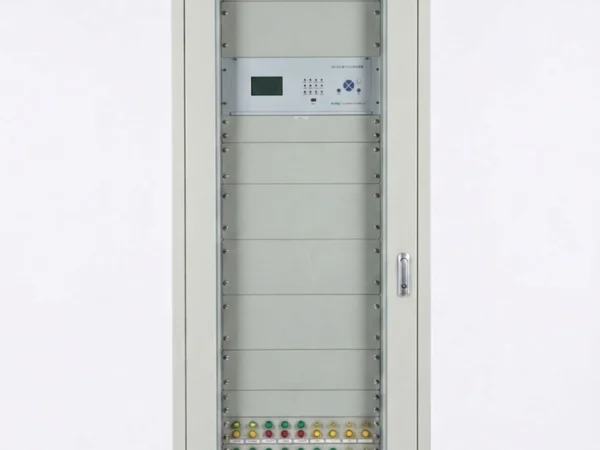
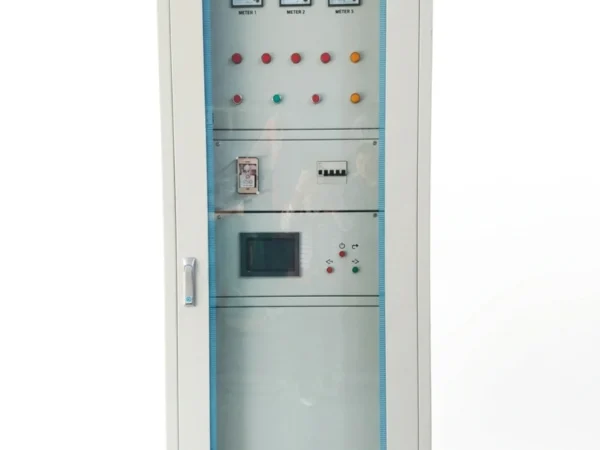
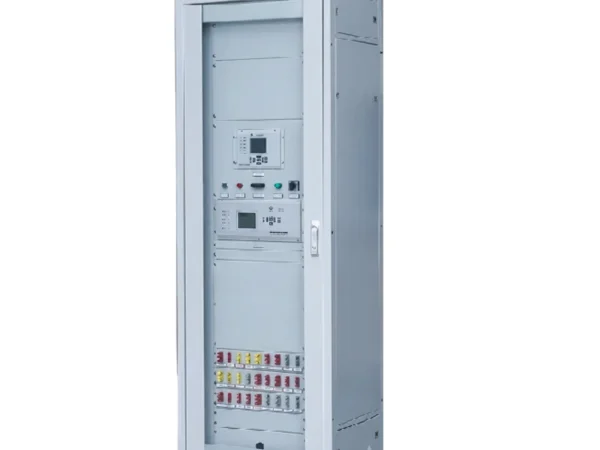
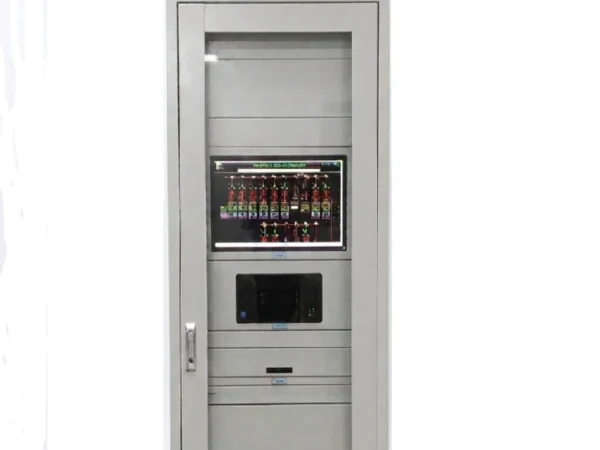
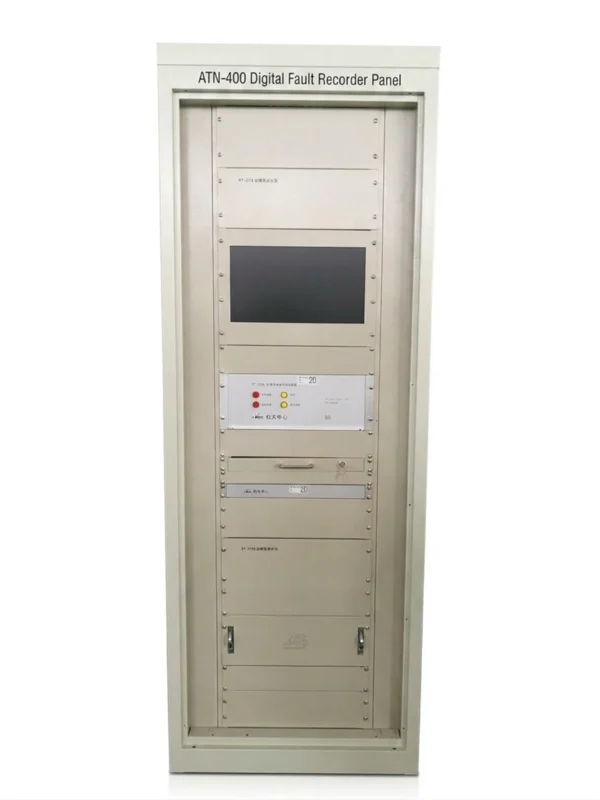
- Front view: Standard power secondary cabinet, equipped with liquid crystal display, operation buttons, status indicator lights, communication interface and power switch. The overall layout is unified for all series including Digital Fault Recorder Panel (DFR Panel), Fault Recorder Panel, Disturbance Recorder Panel and upgraded IEC 61850 Fault Recorder Panel, Time Synchronized Fault Recorder and Power Plant Disturbance Recorder Panel.
- Internal structure: Main wave recording device, signal acquisition module, power supply module, terminal row and lightning protection components. The modular design is adopted by all Fault and Disturbance Recorder Panel products, which facilitates targeted maintenance and function upgrading of standard, intelligent and power plant dedicated recording panels.
FAQ
Q:What is the general price of digital fault recorder panels?
A:The mainstream transaction price of fault recorder panels for conventional 110kV substations ranges from 50,000 to 70,000 yuan per set; simple plant station types cost 20,000 to 30,000 yuan, while high-end EHV and power plant models start at 100,000 yuan.


Reviews
There are no reviews yet.