

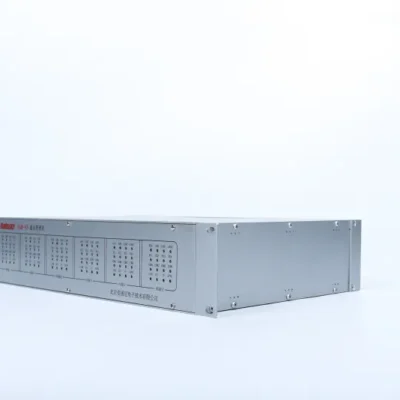
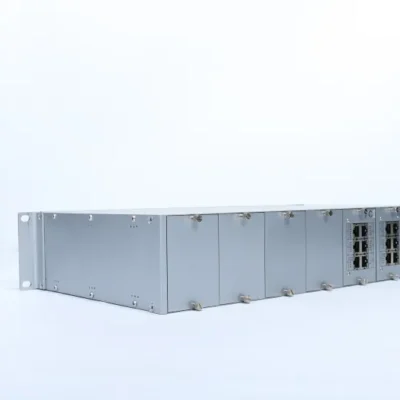
Description
Technical Parameters • Installation Dimensions • Application Scope
Main Functions
a) Communicate with and manage various microcomputer protection devices.
b) Communicate with and manage various measurement & control devices and smart electricity meters.
c) Communicate with and manage intelligent auxiliary equipment in substations, such as DC power supplies.
d) Communicate with and manage the host computer system of the substation.
e) Communicate with the remote control center and realize telecontrol communication.
f) Inspect and monitor the communication status of all connected equipment and devices.
g) Realize configuration and maintenance via network communication.
Main Features
Main Technical Parameters
Electrical Parameters
- Power supply: AC/DC 220V (110V available upon request)
- Frequency: 50Hz
- Power consumption: ≤ 8W (whole device)
Communication Ports
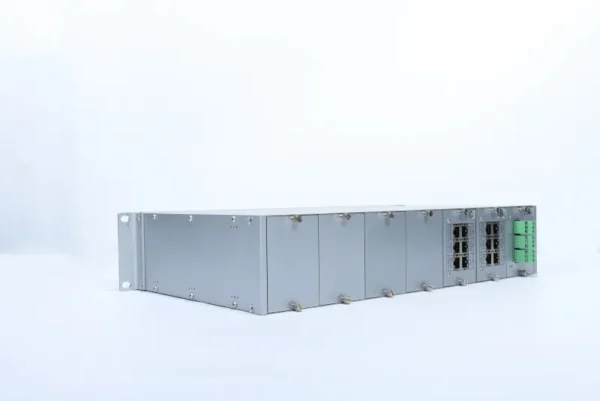
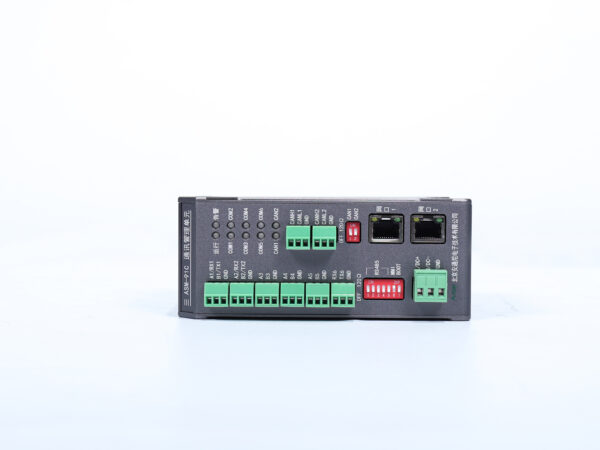
2.2.1 Ethernet Interface
- Channels: 1~6
- Speed: 10/100M
- Medium: standard 8-core twisted-pair cable
- Supported protocols: all TCP/IP-based communication protocols
2.2.2 Serial Communication Interface
- Channels: 4~24
- Mode: RS232/RS485
- Baud rate: 300bps, 600bps, 1200bps, 2400bps, 4800bps, 9600bps
- Medium: shielded twisted-pair cable
- Supported protocols: various serial communication protocols
2.2.3 CAN Communication Interface
- Channels: 1~6
- Mode: CAN
- Baud rate: 100Kbps
- Bit error rate: < 10⁻¹⁹
- Medium: shielded cable
- Supported protocols: various CAN bus‑based communication protocols
2.2.4 Device Capacity
- Connected devices: ≤ 128
- Data capacity per device:
- Telemetry points: ≤ 64
- Tele-signaling / remote control points: ≤ 128
- Remote regulation points: ≤ 8
- Energy metering points: ≤ 16
- SOE event buffer: ≤ 128 records
- Protection event buffer: ≤ 128 records
- Forwarding channels: ≤ 3 (customizable for special requirements)
- Single-channel forwarding capacity: customizable, typically ≤ 2048 points
Alarm & Fault Relay Output
FRAM
Insulation Performance
Mechanical Performance
a) Operating conditions: withstand vibration response and shock response tests at severity Level I.
b) Transportation conditions: withstand vibration endurance, shock endurance and bump tests at severity Level I.
Electromagnetic Interference Resistance
2.7.1 High-frequency Interference
2.7.2 Electrostatic Discharge Interference
The device complies with severity Level III in GB/T 15153.1-1998 Table 13, withstanding 6kV contact discharge.
10 positive and 10 negative discharges are applied to accessible surfaces at intervals ≥1s. Temporary indicator errors are allowed during testing.
2.7.3 Fast Transient Burst Interference
Application Scope
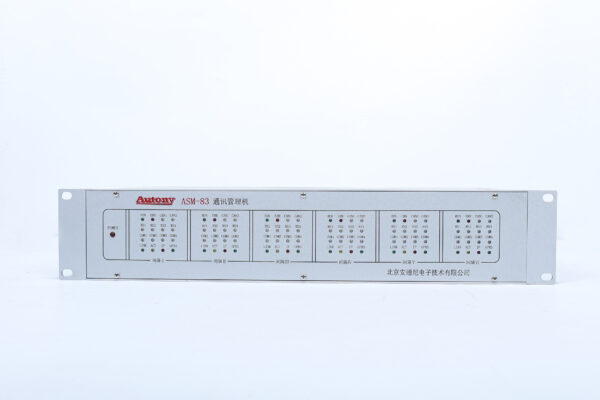
The ASM-83 communication management unit is an important part of substation integrated automation systems, suitable for substations of 110kV and below.
It is mainly used to collect on-site information of the entire power transformation and distribution automation system, transmit data to the local background or remote dispatch master station, and send commands from the background or master station to each measurement and control device to realize local or remote control.
It can complete data exchange with bay-level equipment, protocol conversion, central signal processing and other functions.
Reviews
There are no reviews yet.