

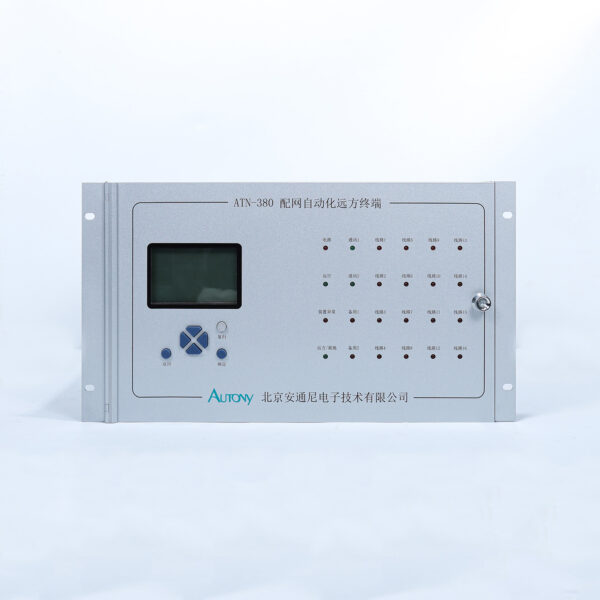
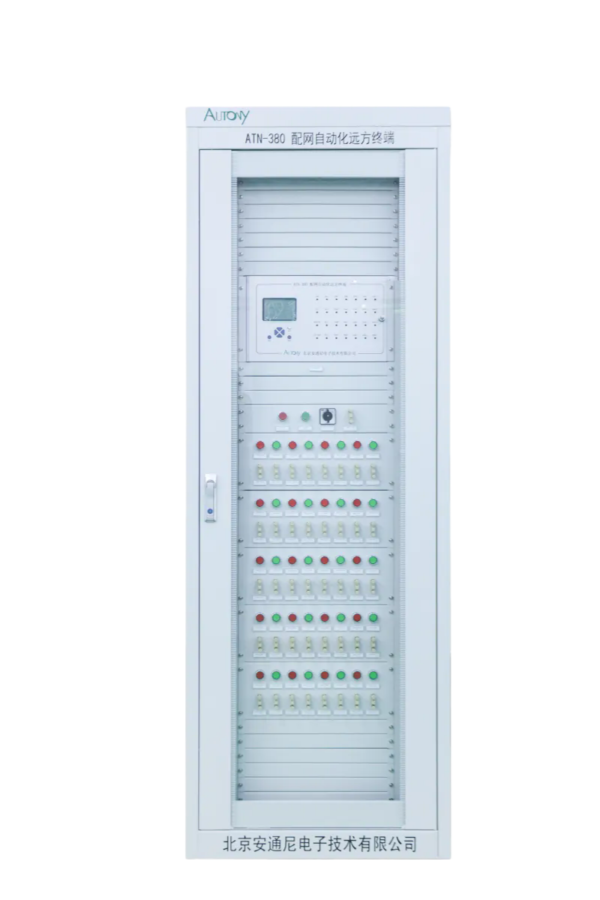
Description
Function Configuration
1. Fault Detection Function
1.1 Main Fault Handling Functions
(1) Three-stage overcurrent protection tripping function: optional tripping or alarm;
(2) Overload: optional tripping or alarm;
(3) Single-phase earth fault protection function: tripping on earth fault;
(4) Overvoltage protection function: alarm;
(5) Undervoltage protection function: alarm;
(6) PT wire break: single-phase and three-phase PT wire break detection;
(7) Three-time reclosing: accelerated tripping upon reclosing onto a faulty line;
(8) Fault recording: capable of activating the fault recording function;
(9) Supports dual AC power supply with automatic dual-power switching function;
(10) Equipped with backup power supply (battery) function.
1.2 Fault Discrimination Function
1.3 Telemetry Over-limit Detection Function
(1) Current over-limit detection;
(2) Voltage over-limit detection;
(3) Zero-sequence voltage over-limit detection;
(4) Zero-sequence current over-limit detection.
2. Communication Function
Communication configuration includes Ethernet ports and serial communication ports:
(1) Standard configuration with 2 Ethernet ports supporting 10/100BASE-T adaptive Ethernet communication;
(2) 4 serial communication ports supporting RS-485/RS-232 communication.
Supports multiple communication modes:
(1) Fiber-optic network communication (with an additional fiber switch);
(2) Power line carrier communication;
(3) Wireless communication (GPRS): communicates with the master station or relevant personnel’s mobile phones via a matching GPRS/CDMA intelligent wireless communication module.
Supports flexible configuration of multiple protocols for communication ports:
(1) Multiple communication ports enable connection with multiple master stations and substations;
Supports communication with master stations and substations via multiple protocols such as IEC 60870-5-101 and IEC 60870-5-104.
Technical Parameters
1. Rated Data
- Operating voltage: AC/DC 220V, AC/DC 110V, DC 48V or DC 24V, with fluctuation range of 80%~120% of rated voltage.
- Telecommand signal voltage: DC 24V, DC 48V or DC 220V;
- Rated voltage: AC 220V or AC 100V;
- Rated current: AC 5A or AC 1A;
- Frequency: 50Hz.
1.2 Power Consumption
- AC voltage: < 0.5 VA per phase;
- AC current: < 0.75 VA per phase;
- Total power consumption: ≤ 30 VA.
1.3 Overload Capacity
- AC voltage: 1.2 × rated voltage, continuous operation;
- AC current: 1.2 × rated current, continuous operation;
- 20 × rated current, 1 second.
2. Main Technical Specifications
2.1 Telecommand Signal Resolution
2.2 Remote Control Output
- AC 220V circuit: AC 250V, 8.0A
- DC circuit: DC 24V, 8A
- Contact life: > 100,000 operations
2.3 Power Supply
- Main power supply: AC 220V, allowable deviation -20% ~ +20%; equipped with automatic dual AC power switching function;
- Backup power supply: configurable per customer requirements (sealed lead-acid batteries, lithium batteries, supercapacitors, etc., with different capacities and voltages);
- Switch operation power output voltage/power: +24V, short-time 450W (load connected to switch for 3~5s); adjustable as required.
2.4 Communication Interfaces
All electrical ports adopt 10/100Base-TX, compliant with IEC 60870-5-104 protocol;
RS485 interface supports standard IEC 60870-5-101 protocol.
2.5 Reliability
Fast transient disturbance test, high-frequency disturbance test, surge test, electrostatic discharge test, and radiated electromagnetic field test all meet Level 4 requirements specified in DL/T 721-2013 Remote Terminal Unit for Distribution Automation System;
Mean time between failures (MTBF) ≥ 50,000 hours.
2.6 Insulation Performance
- Insulation resistance between input/output circuits to ground and between circuits ≥ 5 MΩ.
- Power supply, AC input/output circuits and normally open contacts of output relays can withstand AC withstand voltage test of 50Hz, 2.0kV RMS for 1 minute without breakdown or flashover.
- Power supply, input/output circuits to ground and between circuits can withstand short-time impulse voltage of 5kV standard lightning wave.
3. Operating Environment Conditions
3.1 Operating Environment
- Ambient temperature: operation: -20℃ ~ +70℃; storage: -30℃ ~ +80℃. No irreversible damage to the device under extreme temperatures without excitation; normal operation after temperature recovery.
- Atmospheric pressure: 80~110 kPa (equivalent to altitude ≤ 2,000 m);
- Relative humidity: ≤ 95%, no condensation;
- Other conditions: no corrosive acidic/alkaline or explosive substances in the surrounding air.
3.2 Mechanical Performance
- Chassis protection: indoor protection class not lower than IP20 (GB/T 4208); outdoor protection class not lower than IP54 (GB/T 4208);
- Industrial-grade product: operating temperature -40℃ ~ +70℃, anti-magnetic, shockproof, moisture-proof, lightning-proof, dustproof and anti-corrosion;
- Cabinet-mounted design for easy expansion.
Reviews
There are no reviews yet.